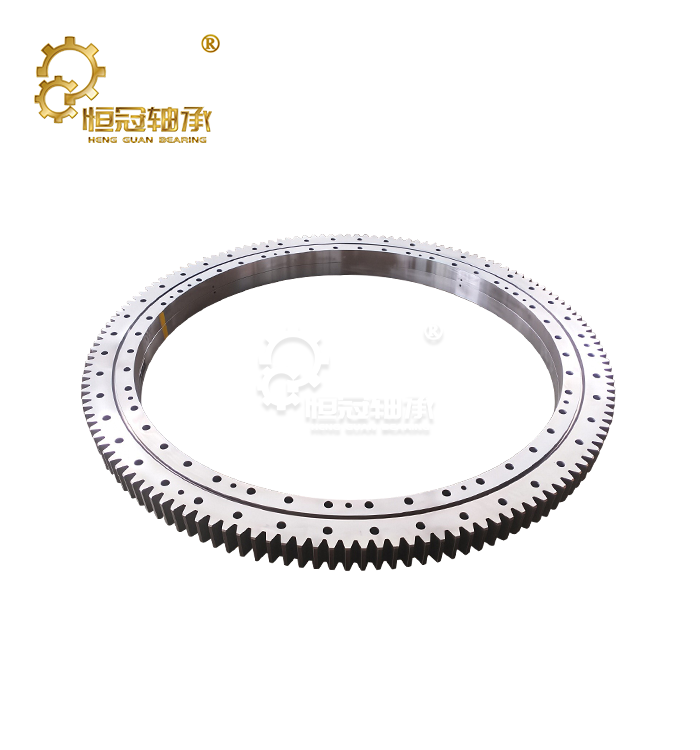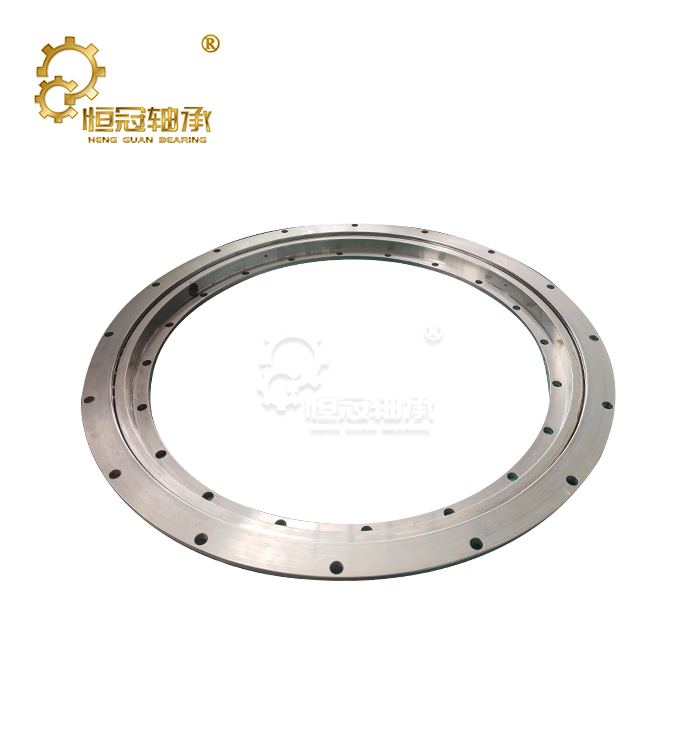




Best Deck Crane Slewing Bearing for Offshore Cranes: Features and Selection Tips
When you work with an offshore crane that has to deal with saltwater corrosion, waves that move in unpredictable ways, and extreme loading cycles, choosing the right rotational component isn't just a matter of opinion; it's a safety issue. A specialized Deck Crane Slewing Bearing made for marine deck cranes is the pivot point that determines Deck Crane Slewing Bearing whether your lifting equipment works reliably or breaks down catastrophically while moving cargo. This heavy-duty part has to handle axial forces from the weight of the crane, radial loads from wind and the way the crane works, and tilting moments caused by booms extending over water, all at the same time. Our guide shows procurement managers, marine engineers, and OEM partners the most important things they need to think about when picking bearing solutions that work perfectly in harsh offshore conditions.
Understanding Deck Crane Slewing Bearings: Functions and Design
When it comes to marine lifting equipment, the Deck Crane Slewing Bearing assembly is the mechanical brain of the whole system. Unlike regular industrial bearings, these special parts have to be able to handle the stresses of working on a ship, where the foundation is always moving.
Core Structural Elements
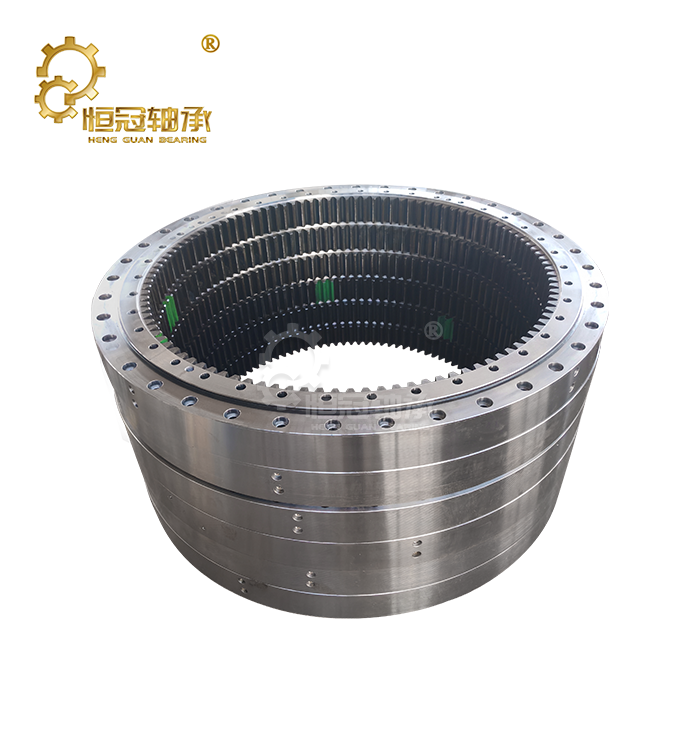
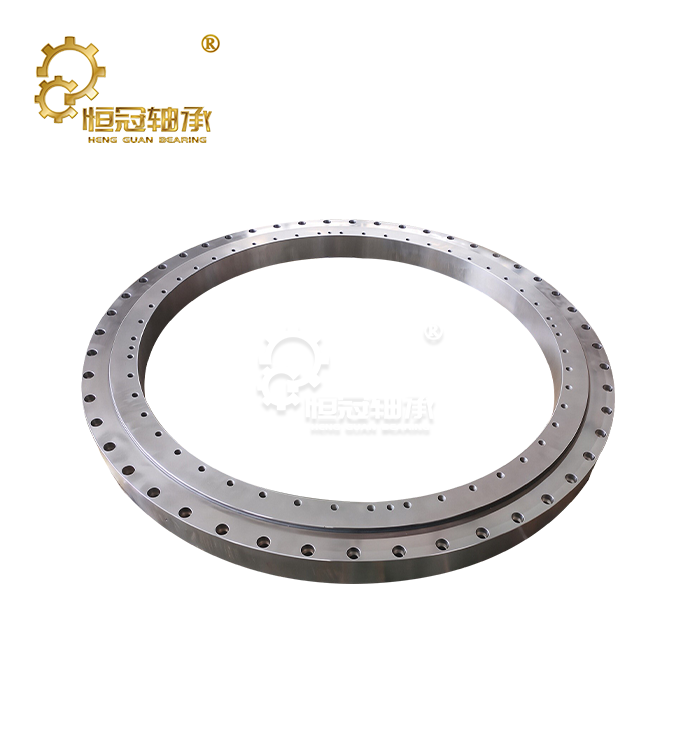
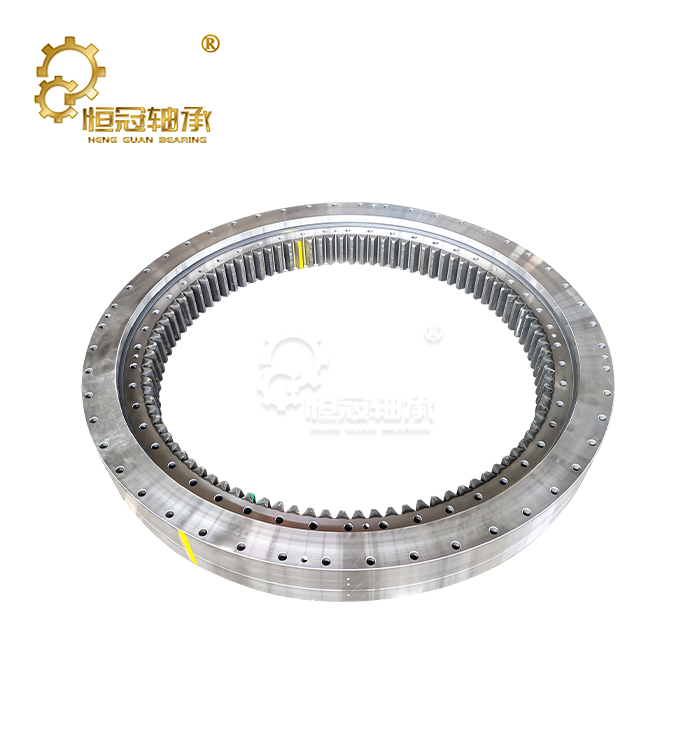
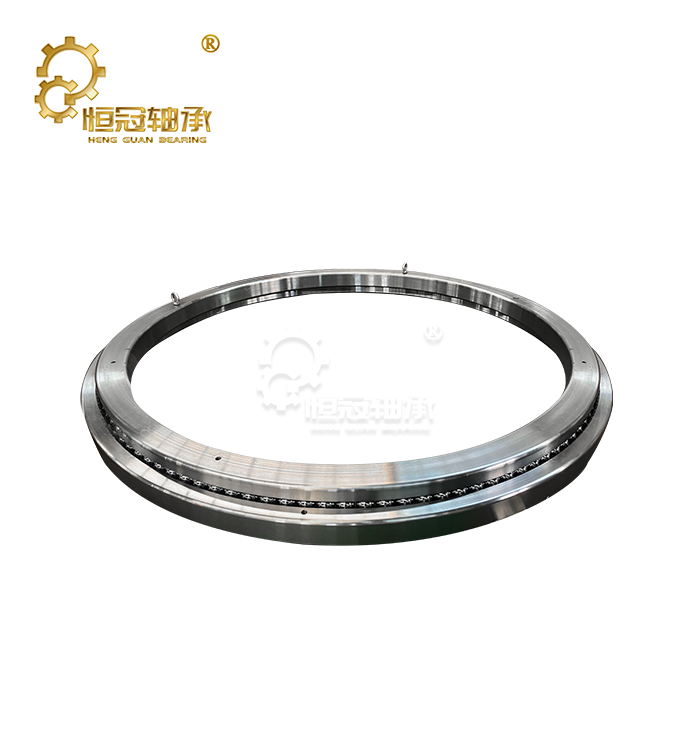
A Deck Crane Slewing Bearing is built so that it combines several load-bearing paths into a single, small unit. This design philosophy is shown by our three-row roller configuration, which is 4950 × 4100 × 270 mm. The structure has precision-ground inner and outer raceways made from 42CrMo alloy steel that has been heated all the way through and then cooled and tempered. This metalworking process makes the surface hard (55–62 HRC) and the core tough (240–300 HB). This makes the bearing resistant to fatigue spalling and able to handle shock loads from changing sea conditions. Whether they are GCr15SiMn bearing steel balls or cylinder-shaped rollers, the rolling elements themselves spread the load over large contact areas. This way of distributing force is very important when cranes have to work with unbalanced loads or when they have to do their job at sea, where the roll and pitch of the ship constantly change the force vectors. The geometry makes sure that there isn't a single point where stress builds up and starts a crack to spread.
Sealing Technology for Marine Environments
Protecting against saltwater intrusion is probably the most important design challenge. Our sealing system uses nitrile rubber seals with multiple lips that are strengthened with stainless steel shields. This multi-layered defense stops grease from washing away during high-pressure washdowns and keeps salty seawater from getting to the precisely machined raceways. The seal material is resistant to oil and wear, so it stays in place even when it's exposed to hydraulic fluids, fuel spills, and temperature changes from very cold in the Arctic to very hot in the tropics.
Load Distribution Mechanics
When compared to single-row or double-row options, the three-row roller configuration we make can hold more weight. The middle row handles the radial forces that come from slewing, and the rows on either side handle the axial loads and tilting moments. This separation of force pathways lets each row be optimized for its own purpose. This makes a bearing that can keep precise rotational control even when the crane boom is fully extended with a load in the air. In rough seas, when a deck crane lifts cargo from a supply ship, the bearing has to account for how the ships are moving relative to each other. Our integrated design lets you handle all of these complicated loading situations at the same time, without the need for extra stabilization systems. When procurement experts look at the total cost of ownership, they can directly connect this capability to operational efficiency and safety margins that they can measure.
Types of Slewing Bearings for Deck Cranes and Their Comparative Advantages
In marine lifting applications, different slewing bearing for marine crane suppliers types of Deck Crane Slewing Bearing units are used for different tasks. Knowing about these differences helps engineers match the bearing properties to certain crane models and duty cycles.
Three-Row Roller Bearings
Three-row cylindrical roller construction is what we recommend most for heavy-duty offshore deck cranes. This design works really well in situations where a lot of weight needs to be carried within a small space. The bearings we make can handle combined loads that would be too much for weaker structures. This is very important when cranes have to lift subsea equipment that weighs dozens of tons while the ship pitches in calm seas.In this arrangement, the roller elements make line contact instead of point contact, which spreads forces over a much larger surface area. This shape makes the contact stress much lower and the fatigue life much longer than with ball-type bearings. When proper maintenance procedures are followed, offshore operators who use our three-row roller bearings report service intervals of more than 50,000 operational hours. This is longer than the typical 30,000-hour lifespan for similar ball bearing designs in similar duty cycles.
Double-Row Ball Bearing Alternatives
Double-row ball configurations work well for lighter-duty tasks like hose handling, cranes, or extra lifting tools. These bearings are better because they can rotate faster and are easier to install. Because they have four points of contact, balls can hold loads from more than one direction, but not as much as rollers can. When precise positioning is more important than raw load capacity, marine operators choose ball bearings. Ball bearings have less friction, which makes low-speed slewing motions smoother. This is helpful when positioning delicate equipment or making sure that hose connections are lined up with manifold flanges. But because the contact area is smaller, these bearings need to be checked more often and are more likely to break from shock loads.
Material Selection for Corrosion Resistance
The base material is the most important factor in determining how long a bearing will last in saltwater. Our ring parts are made from high-strength alloy steels like 50Mn and 42CrMo, which were chosen because they are both strong when stretched and resistant to corrosion. The strict standards of classification societies like DNV, ABS, Lloyd's Register, and Bureau Veritas are met by these grades. In addition to choosing the base material, we also use protective treatments with multiple layers. The first step is zinc-spray metallization, which makes a protective layer. Next, ISO 12944-compliant C5-M marine-grade epoxy coating systems are applied. This combination protects against salt spray for more than 5,000 hours, which is a lot longer than the average time between replacements for offshore equipment. If bearing makers don't take these safety steps, their products will start to pit and corrode within months of being installed. The resulting roughness in the raceways speeds up wear, raises friction, and eventually causes the bearings to fail before they should. Our method guarantees that the precision-ground surfaces will keep their original shape throughout the bearing's useful life, keeping the smooth rotational performance that crane operators depend on.
How to Choose the Best Deck Crane Slewing Bearing for Offshore Cranes
Load Rating Analysis
First, figure out how much weight your crane can hold altogether. The static weight of the crane's upper structure, the maximum weight it can lift, and the dynamic amplification factors caused by the movement of the vessel must all be taken into account in this analysis. When operating in Sea State 4 conditions, a crane that is rated for 50-ton lifts actually puts a lot more stress on its Deck Crane Slewing Bearing. Our engineering team helps with load calculations that take all important factors into account. We look at your crane's geometry, including the length of the boom, the radius of its slewing, and its center of gravity, to figure out what the real bearing loads are. With an outer diameter of 4950 mm, the three-row roller bearing we make can easily handle the heavy loads that are common on bulk carrier cranes and equipment for offshore construction vessels. Check the loads that were calculated against the static and dynamic load ratings that the manufacturer has made public. For important marine applications, a good safety factor is usually between 1.5 and 2.0. This gives you a buffer against loading situations you didn't expect. When bearings are used close to their rated capacity, their service life is shortened, and they are more likely to break.
Environmental Compatibility Assessment
Which safety features are required and which are optional will depend on your operational environment. Cranes that work in the Arctic need bearing designs that keep the right consistency of grease at temperatures below -40°C. On the other hand, equipment that is stationed in the waters of the Middle East or Southeast Asia has to deal with constant high temperatures that can damage seals and lubricants. When ships are in tropical coastal waters, where humidity, temperature, and salt concentration all work together to make conditions that are very corrosive, they need more protection against corrosion. Our special anti-corrosion treatment protects against these things, so the equipment keeps working even after decades of being exposed to saltwater all the time. Check out the crane's operating schedule and duty cycle. When equipment works all the time in harsh conditions, it needs stronger protection than standby cranes that are only used sometimes in safe harbors. Based on these specific operational profiles, we make changes to our protective coatings, slewing bearings for marine crane suppliers, and seal configurations.
Maintenance Accessibility and Support Infrastructure
When planning maintenance, it's important to keep in mind that offshore equipment works in places that are hard to reach for specialized help. You should choose bearing designs that allow for easy inspections and regular maintenance tasks that crews on ships can do with common tools. Our bearing design includes lubrication fittings that are placed in a way that makes them easy to reach even after installation. Complete regreasing operations can be done by maintenance staff without taking apart nearby crane parts. This ease of access has a direct effect on the rate of maintenance compliance, which in turn affects the reliability of the bearing. Think about whether replacement parts and technical support are easy to find in the areas where you do business. We have a support network that goes to more than 50 countries, and all of the ports in North America are covered. This infrastructure makes sure that you can always get replacement seals, mounting hardware, and technical help in an emergency, no matter where your vessels are working.
Customization Capabilities for Specialized Applications
Standard catalog bearings aren't always the best choice for marine equipment that isn't standard. Custom bearing designs are usually needed for mounting arrangements that aren't standard, size needs that aren't standard, and loading patterns that are specific to the application. We're experts at making custom solutions for clients who can't skimp on performance. We can make bearings with diameters ranging from 50 mm to 10,000 mm, and we offer a range of precision grades, such as P0, P6, P5, and P4, depending on your needs for accuracy. Because of this, we can make sure that the bearings we use are the best ones for your specific crane model, so you don't have to change your equipment to fit the limitations of standard bearings. Our reverse engineering skills are especially useful for offshore operators. We can recreate bearing specifications from existing parts or incomplete documentation when replacing old bearings or upgrading old crane systems. When original equipment manufacturers stop supporting old crane models that still work well, this service comes in very handy.
Maintenance and Troubleshooting of Deck Crane Slewing Bearings
Proactive maintenance plans increase the life of Deck Crane Slewing Bearing units and stop catastrophic failures that could put crew safety at risk and stop operations. The unique problems that come up in marine environments can be solved in a planned way.
Lubrication Management Protocols
Proper lubrication is still the single most important thing that determines how long a bearing lasts. For marine crane bearings to work properly, they need special greases that won't wash away in water and stay the same at a lot of different temperatures. We suggest marine-grade lithium complex or polyurea-based greases that are applied on a schedule based on how often they will be used. For heavy-duty jobs like loading iron ore or coal onto bulk carriers, the interval between grease changes could be as short as 250 operating hours. Intervals can be 1,000 hours or more for lighter-duty equipment. The important thing is to make a schedule based on how your business actually works, not on general suggestions. During the lubrication process, pump new grease through all the channels until you see the bearing seals purging. By getting rid of contaminants and old lubricant, this process protects all bearing surfaces completely. Keep an eye on the purged grease for signs of water contamination, metal particles, or changes in color that could mean problems are starting to happen.
Seal Inspection and Corrosion Monitoring
The multi-lip seals that cover the bearing raceways wear down over time due to chemical attacks and mechanical wear. Set up inspection times that let you find damage to the seal early, before water gets in and damages the bearing surfaces.
Visual checks should be done to see if the seal lip is broken, hardening, or coming away from the mounting surfaces. Pay extra attention to places where pipes or equipment from the outside could touch seals and damage them. Even small damage to a seal can let water in, which speeds up corrosion and wear. Monitoring for corrosion is mostly done on the outside bearing surfaces and mounting interfaces. Surface rust on painted areas means that the protective coating is wearing off. This needs to be fixed before the corrosion gets to important bearing parts. Our multilayer protection system gives us a lot of leeway, but we still keep a close eye on things to make sure that any problems are fixed during planned maintenance and not when they need to be fixed right away.
Early Warning Signs and Ways to Diagnose
Crane operators with a lot of experience learn to spot small changes in the way their equipment works that mean bearing problems are starting to happen. If there is more resistance during slewing motions, strange vibration patterns, or grinding sounds, you should look into them right away. Set up regular measurement plans to keep track of the rotational resistance, mounting bolt torque, and bearing preload. With these numbers, you can see trends that you might not notice just by looking at something. Gradual increases in rotational torque are often a sign of deteriorating lubrication or contamination before it does a lot of damage. Systematic diagnosis keeps you from misidentifying symptoms when you're trying to fix something that might be wrong with the bearings. Vibrations could be caused by issues with the gear mesh instead of broken bearings, and binding could be caused by structural deflection in the crane pedestals instead of broken bearings. Our technical support team helps clients correctly identify problems and find their root causes. This way, corrective actions are taken that target the real problems instead of just the symptoms. When it comes to critical applications, the condition monitoring systems we suggest always keep an eye on the performance parameters of bearings. Accelerometers find vibration patterns that are specific to certain types of defects, and temperature sensors find areas that are getting hot because they aren't properly oiled or have too much preload. These systems give early warnings that allow planned maintenance to be done before problems happen, which saves money on repairs and keeps operations running smoothly.
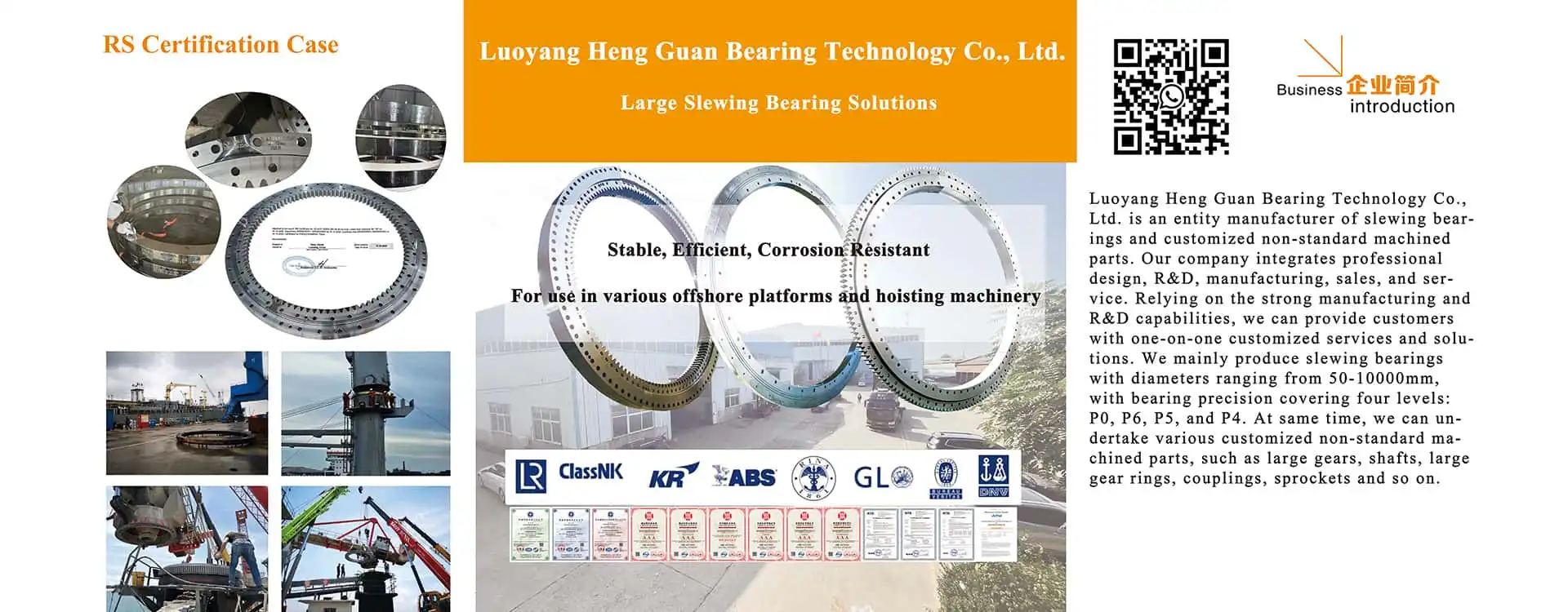
Procurement Insights and Our Specialized Slewing Bearing Solutions
For the Deck Crane Slewing Bearing procurement process for important marine parts, you have to balance technical performance requirements with business concerns like cost, delivery schedules, and long-term support obligations.
Supplier Evaluation Criteria
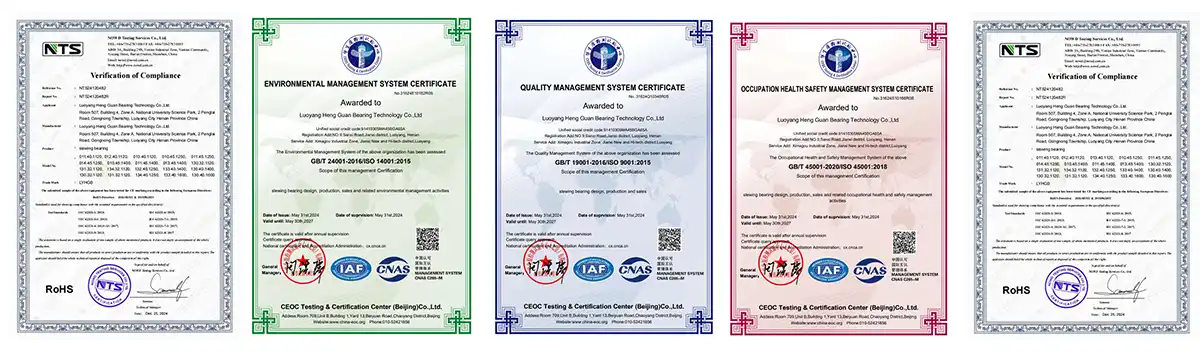
Finding qualified bearing manufacturers requires more than just looking at published specs and claims in catalogs. Manufacturing skills are a big part of what sets us apart. The advanced CNC vertical lathes, precision gear shapers, and high-tech heat treatment equipment we use in our ISO 9001-certified facility ensure consistent quality that other companies can't match. A lot of procurement managers don't realize how important location is at first. We run our business out of Luoyang, which is known as China's bearing manufacturing center. The city's decades of specialized knowledge and supporting infrastructure give us advantages in both capability and cost-effectiveness. We can offer high-quality goods at reasonable prices because we have a history of producing excellent goods and use modern manufacturing technology. A person's track record and presence in the market are important signs of confidence. Our products are used by people in more than 50 countries. They work especially well in tough situations, such as on offshore construction equipment, bulk carrier cranes, and specialized naval ships. This international customer base proves that we are good at technology and making consistent products.
Understanding Pricing Structures and Value Propositions
The price of marine crane bearings depends a lot on their size, the type of Deck Crane Slewing Bearing material they are made of, how they are protected, and any customization needs that the customer has. The 4950 × 4100 × 270 mm three-row roller bearing we sell is a big investment, but it's a great buy when you look at the total cost of ownership instead of just the purchase price. Think about how much it costs to run a business when bearings fail in offshore environments. For emergency bearing replacements, the crane has to be taken apart, which often requires special lifting equipment and more time for the ship to be off the water. Most of the time, these indirect costs are five to ten times higher than the price of the bearing itself. Buying high-quality bearings from reputable manufacturers that are properly specified cuts these risks down by a huge amount. When you buy in bulk, you can often save a lot of money. When shipyards are in charge of newbuild programs or when operators are updating multiple ships, they should talk about quantity pricing that takes into account the economies of scale we can achieve when buying materials and planning production schedules. These agreements are good for everyone because they save money and make planning easier.
Delivery Timelines and Logistics Considerations
Lead times for specialized marine bearings depend on whether your needs are met by standard configurations or have to be engineered from scratch. Standard products from our established production lines usually ship in four to six weeks. Depending on how complicated they are, customized solutions take eight to twelve weeks. Plan when to buy things so that they don't clash with the shipyard's maintenance windows and schedules. When unexpected problems happen, you may need to place a rush order, but if you plan your purchases to happen at standard lead times, you won't have to pay extra for faster production. We work closely with clients to set delivery dates that meet the needs of the project and make the most of the efficiency of production. Shipping goods across international borders and clearing customs can make buying marine equipment more difficult. We work with experienced logistics partners who handle these tasks quickly and correctly, making sure that bearings get to their final ports ready to be installed. Documentation meets the requirements for importing in all major markets, so there are fewer delays at customs.
Our Comprehensive Support Commitment
Heng Guan Bearing Technology stands out because it offers full lifecycle support that lasts long after the product is sold. Over fifty hardworking engineers on our team have more than twenty years of experience in designing and using slewing bearings. Because we have so much experience, we can give advice not only on choosing bearings but also on integrating and optimizing the whole system. We know that marine equipment often lasts for decades, which is longer than the typical product lifecycle management of the companies that make it. As part of our commitment, we will continue to support old equipment. For example, we offer reverse engineering services that can recreate bearing specifications when the original documentation is not available. This feature is very helpful for maintaining old crane fleets that can still do their job even though they are decades old. Our manufacturing capabilities allow us to meet a wide range of needs, from small prototypes for specialized research ships to large-scale production for shipyard newbuild programs. Our production capabilities can be scaled up or down to meet your needs without affecting quality or delivery dates. This is true whether your project needs a custom bearing configuration in non-standard dimensions or a lot of well-known designs. Quality assurance includes more than just the manufacturing process. It also includes detailed testing protocols. Before being shipped, every bearing is checked for dimensions, hardness, and operational suitability. We keep full records of all materials and manufacturing processes, giving you paperwork that meets the needs of classification societies and helps your quality management systems. We have set up a global support network so that you can get quick technical help no matter where your equipment is used. Our technical team is always ready to help with questions that come up during installation, commissioning, or ongoing operations. This keeps projects moving forward. This makes us different from manufacturers far away who don't make support a priority and instead treat it like an afterthought.
Conclusion
To choose the best Deck Crane Slewing Bearing for an offshore crane, you need to carefully look at its technical specs, features that protect the environment, and the supplier's abilities. Because marine environments have special problems like high loads, corrosive conditions, and moving forces, they need special bearing designs that can't be made with regular industrial parts. Our three-row roller bearing configuration is made from high-quality alloy steels that have been treated with advanced protective coatings. It provides the dependability and longevity that offshore operations need. Procurement teams can find solutions that improve both initial performance and total lifecycle value by systematically looking at load requirements, environmental factors, and maintenance issues. When you work with experienced manufacturers that offer full engineering support, customization options, and global service networks, you can be sure that your marine lifting equipment will work safely and efficiently for as long as it's supposed to.
|
|

FAQ
1. What determines the service life of a marine crane slewing bearing?
Service life is mostly determined by the type of load, the quality of maintenance, and how well environmental protection works. Bearings that are used less than 70% of their rated capacity and have good lubrication and sealing systems that are still working normally usually last longer than 50,000 hours of use. Life can be cut to 20,000 hours or less in harsh environments with poor maintenance. Regular greasing, checking of the seals, and checking for corrosion all greatly increase the service life.
2. How do I know if a bearing is suitable for offshore applications?
Offshore-suitable bearings are made of materials that don't rust, have marine-grade protective coatings, and have strong sealing systems. Check to see if DNV, ABS, or Lloyd's Register has approved the classification society. Test results for salt spray resistance, low-temperature impact toughness, and seal design details should all be included in the specifications. All of these features are built into our bearings so they can work in harsh maritime environments.
3. Why do three-row roller bearings cost more than ball bearing alternatives?
Three-row roller configurations need more complex manufacturing methods, better materials, and more precise measurements. The higher price is because it can hold more weight, last longer, and be more reliable in heavy-duty situations. Total cost of ownership calculations usually favor roller bearings, even though they cost more at first, because they require less maintenance and need to be replaced less often in demanding offshore duty cycles.
Partner with Heng Guan for Your Marine Bearing Requirements
Selecting a trusted manufacturer for your Deck Crane Slewing Bearing determines whether your offshore crane equipment delivers decades of reliable service or faces repeated failures and costly downtime. At Heng Guan Bearing Technology, we combine over 20 years of specialized slewing bearing expertise with state-of-the-art manufacturing capabilities to serve demanding marine applications worldwide. Our ISO 9001-certified facility in Luoyang produces precision bearings from 50 mm to 10,000 mm in diameter, including the heavy-duty three-row roller configurations that offshore cranes depend upon. We invite procurement managers, marine engineers, and OEM partners to contact our technical team at mia@hgb-bearing.com to discuss your specific requirements. Whether you need custom-engineered solutions for specialized vessels or volume production for fleet modernization programs, we deliver the quality, support, and reliability your operations demand.
References
1. American Bureau of Shipping. "Guide for Certification of Lifting Appliances." ABS Technical Publications, 2022.
2. Det Norske Veritas. "Offshore Standard DNV-OS-E101: Drilling Plant." DNV GL Standards, 2021.
3. Hamrock, Bernard J., Steven R. Schmid, and Bo O. Jacobson. "Fundamentals of Fluid Film Lubrication, Second Edition." Marcel Dekker AG, 2004.
4. Harris, Tedric A. and Michael N. Kotzalas. "Advanced Concepts of Bearing Technology: Rolling Bearing Analysis, Fifth Edition." CRC Press, 2006.
5. International Organization for Standardization. "ISO 12944-9:2018 Paints and Varnishes - Corrosion Protection of Steel Structures by Protective Paint Systems - Part 9: Protective Paint Systems and Laboratory Performance Test Methods for Offshore and Related Structures." ISO Standards, 218.
6. Society of Naval Architects and Marine Engineers. "Marine Structural Design Calculations." SNAME Technical Resources, 2020.

WHAT OUR CUSTOMERS SAY
Here is the customer's evaluation of us