



Internal Gear Rotary Slewing Bearing Price Guide: What You Should Know
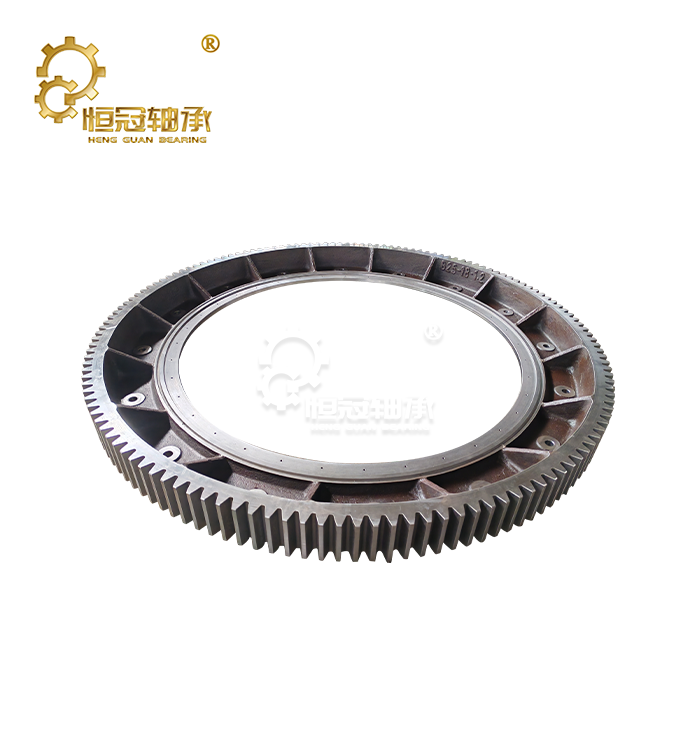
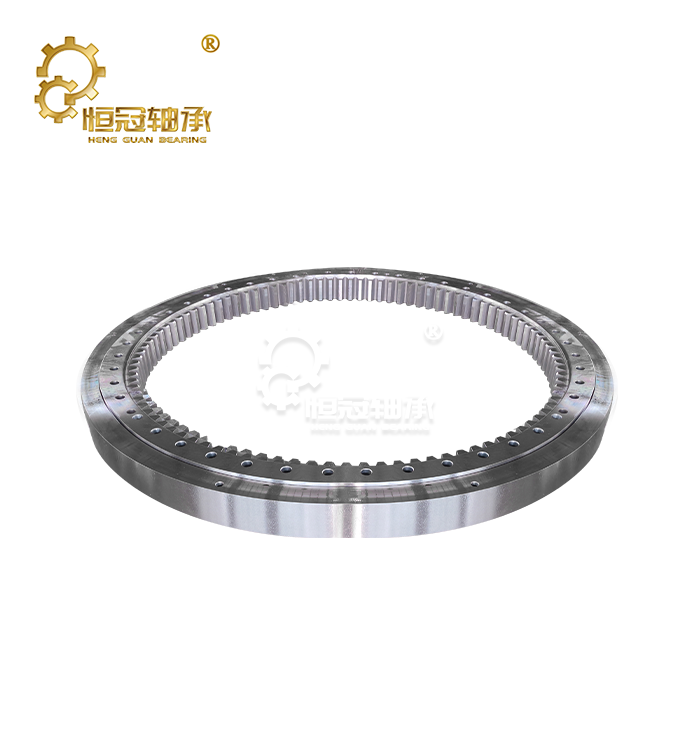
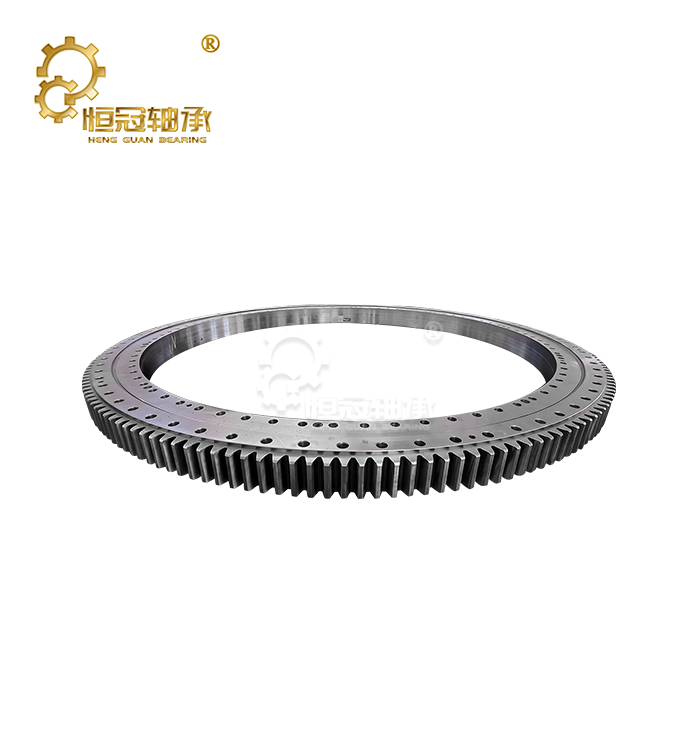
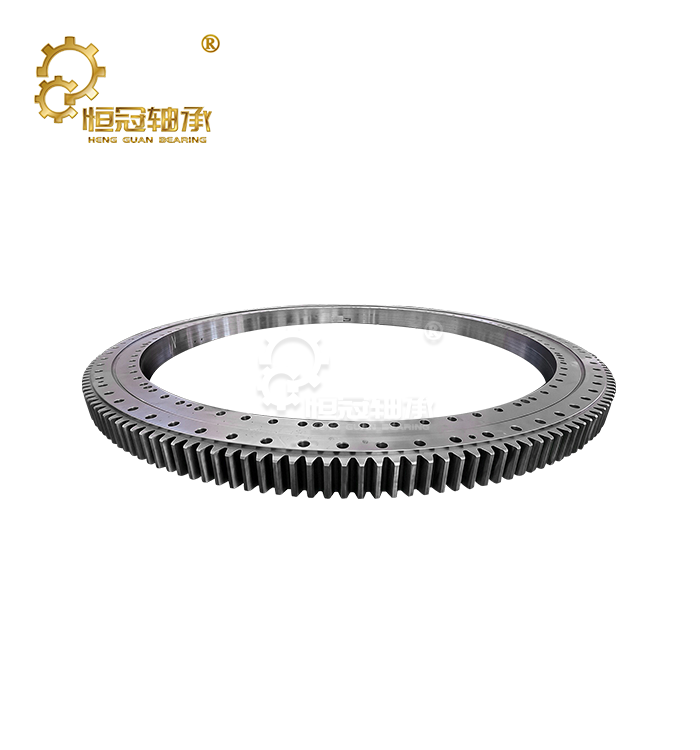
Internal Gear Rotary Slewing Bearings are special, large-diameter rotating parts that are made to handle axial forces, radial loads, and overturning moments all at the same time in heavy machinery. Simple bearings achieve simple Shaft rotation. Slewing bearings are integrated units including inner and outer rings, rolling elements, mounting holes, and gear structures for use in heavy-duty rotating applications.
For industries such as construction machinery, mining equipment, cranes, wind power systems, and material handling equipment, selecting the correct slewing bearing is not just a purchase decision but a long-term reliability factor. While a cheaper initial price may lead to increased maintenance expenses if the bearing breaks prematurely, a correctly built solution can improve equipment uptime and minimize the frequency of replacement.
This tutorial will cover the major aspects determining the pricing of internal gear rotary slewing bearings, how different designs stack up, and what purchasers should consider before placing an order.
How do internal gear rotary slewing bearings work, and why does their design matter?
Before we go into pricing, let’s have a look at the structure underlying these bearings. Internal gear rotary slewing bearings are made to handle axial loads, radial loads, and tilting moments. They also allow for controlled rotation between the fixed and the moving parts.
They generally include:
Inner & outer ring
Rolling elements include balls or rollers.
The race lane is precision machined.
internal teeth of gear
Seal arrangements
lubrication holes
Mounting holes
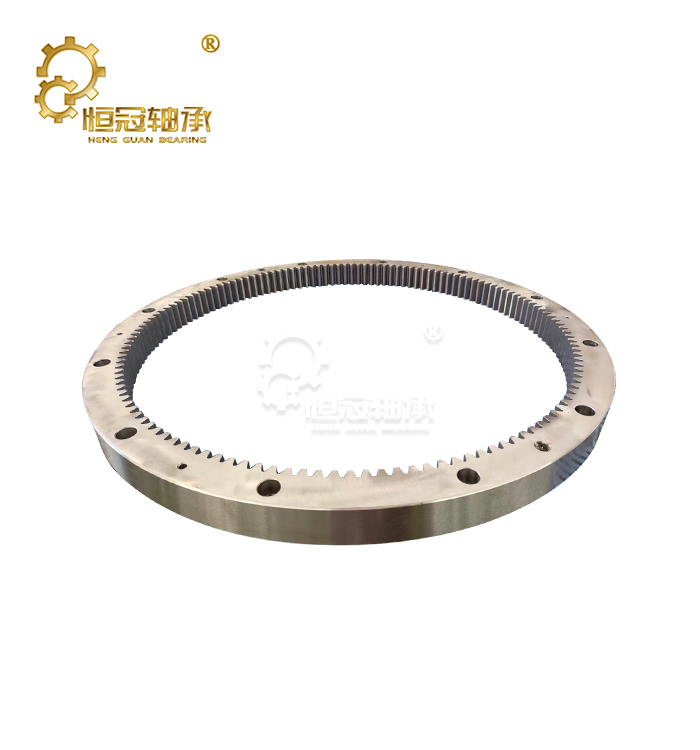
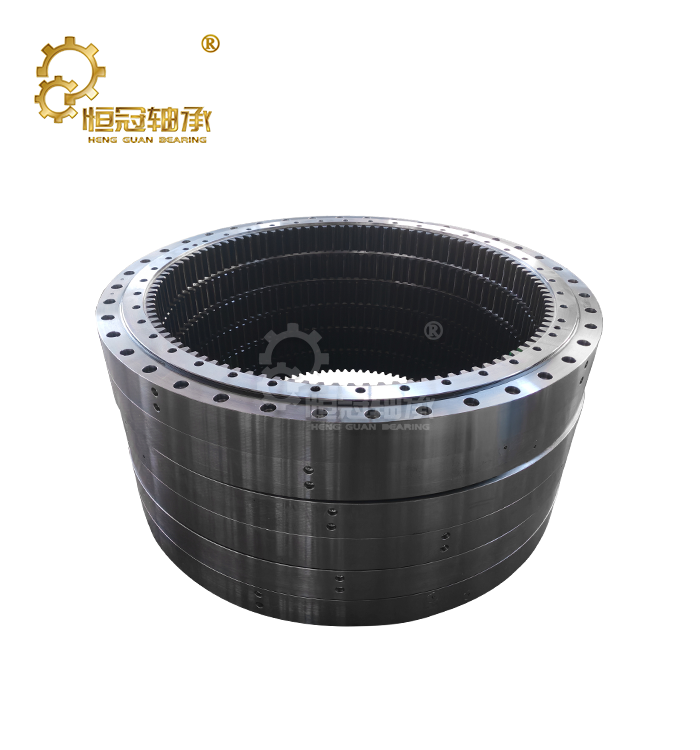
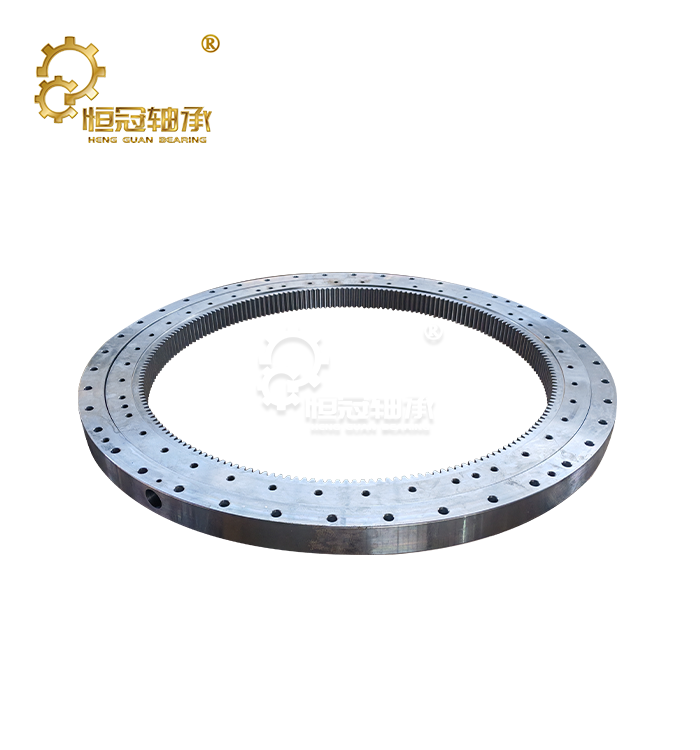
The internal gear arrangement means the teeth are on the inner ring and mesh with a drive pinion from the interior of the bearing assembly. This design allows for a compact layout and helps protect gear teeth from contamination from the outside. It is ideal for applications where space savings and environmental protection are crucial.
Key Components That Influence Manufacturing Cost
The production cost of an internal gear slewing bearing is highly associated with the complexity of each component.
4.1 Material Specification and Bearing Rings
Most heavy-duty slewing bearings are made of alloy steels such as 42CrMo or other high-strength alloys, as the rings have to survive multiple loading cycles.
Material selection impacts pricing by:
Cost of material
Requirements engineering
Heat treatment trouble
Machining time
Ultimate mechanical performance
Materials of higher grade tend to raise the cost of manufacture but also to give more resistance to deformation and fatigue damage.
Rolling Elements and Raceways
The accuracy of the raceway has a direct influence on the bearing performance. Poor raceway geometry causes uneven load distribution, higher wear, and reduced service life.
Manufacturers commonly use:
Precision turning, grinding, and hardness testing
Dimension check
Additional processing may be necessary for demanding applications to get the desired contact performance.
Internal Gear Processing
Internal gear is one of the key elements impacting price.
Price varies on:
Module gear
Teeth count
Precision Teeth
Gear face width
Requirements for Heat Treatment
More machining and inspection operations are required for internally geared slewing bearings than for non-geared slewing bearings.
What Determines Internal Gear Rotary Slewing Bearing Price?
There are various interrelated elements that affect the price of an internal gear rotary slewing bearing. Buyers should not compare quotations solely on the basis of product dimensions but rather consider the full engineering specification.
Bearing Size and Load Requirements
Diameter is the most obvious pricing driver.
Large-bore bearings require the following:
Additional materials
Bigger machine tools
Longer cycle times
More sophisticated transport arrangements
A bearing for a small excavator and a bearing for a port crane may look similar in structure but may have radically distinct manufacturing requirements.
Load capacity is a major cost factor as well.
A bearing working under the following:
Large axial loads
Large overturning moments
Turnings in the round
Shock loading needs tougher materials and more complex design calculations.
For example, mining equipment and huge cranes sometimes require bespoke solutions since their bearings are continuously operating under tremendous mechanical stress.
Material Grade and Heat Treatment Requirements
Another big reason for pricing disparities is the quality of the material.
Typical materials include the following:
42CrMo bearing ring alloy steel
High-grade bearing steel for rolling elements
Hard substance for gears
Heat treatment methods may include the following:
Induction heating
Carburization
Quenching and tempering
These procedures increase the wear resistance and fatigue strength but also raise the cost of production.
Controlled heat treat processes from the manufacturer can produce a more consistent hardness distribution, which is crucial to long service life.
Manufacturing Accuracy and Quality Inspection
The precision requirements directly influence the cost of manufacture.
Need for More Accuracy in Internal Gear Rotary Slewing Bearings:
Advanced CNC Machining
Higher-dimensional control
Additional inspection methods
More producing time
Typical inspection procedures are the following:
Dimension measurement
Raceway examination
Testing the precision of gear
Testing for hardness
Review of Material Certification
Buyers need good quality documentation, such as inspection reports and material traceability records, to approve important applications.
Customization Requirements and Engineering Support
In general, standard versions tend to be cheaper because manufacturers can streamline production.
Additional engineering may be required for custom bearings, including:
Special hole designs for mounting
Modified gearing structures
Specialized Sealing Systems
Special corrosion prevention
Different operational temperature requirements.
OEM equipment makers often require modification, as the bearing must fit precisely into the frame of the machine.
Custom designs may add to initial expenses but may eliminate installation hassles and boost equipment reliability.
Internal Gear Rotary Slewing Bearings vs. Other Bearing Designs
Different slewing bearing structures have different performance advantages and cost levels.
Internal Gear vs. External Gear Slewing Bearings
The main difference is the position of the gear teeth.
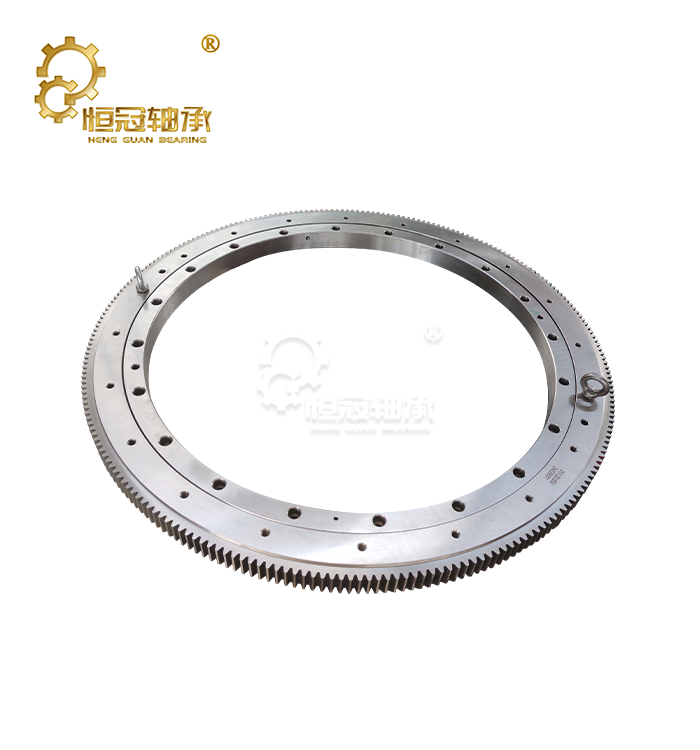
Internal gear designs place teeth inside the bearing ring, while external gear designs place teeth on the outside.
Advantages of Internal Gear Design
Internal gear configurations provide:
Better protection against dust and impact
More compact installation
Cleaner external appearance
Reduced exposure of gear teeth
They are commonly selected for applications where installation space is limited.
Advantages of External Gear Design
External gear designs may be preferred when:
Higher torque transmission is required.
Gear access is easier
Maintenance convenience is important.
The best choice depends on machine layout, operating environment, and load requirements.
Ball-Type vs. Roller-Type Slewing Bearings
Rolling element selection also changes price.
Four-Point Contact Ball Bearings
Advantages:
Compact structure
Good balance between cost and performance
Suitable for cranes and construction machinery
Three-Row Roller Bearings
Advantages:
Higher load capacity
Better performance under extreme conditions
Suitable for mining and heavy industrial equipment
Roller designs for internal gear rotary slewing bearings generally cost more because they require more complex manufacturing and can support higher loads.
How to Purchase Internal Gear Rotary Slewing Bearings at the Right Cost?
Price should not be the only purchasing consideration. A reliable procurement process helps avoid expensive failures after installation.
Define Technical Requirements Before Requesting Quotes
Before contacting manufacturers, buyers should prepare:
Bearing diameter
Maximum load
Rotation speed
Operating environment
Gear requirements
Mounting dimensions
Required service life
Providing complete technical information allows suppliers to offer accurate quotations.
Evaluate Manufacturer Capability
A qualified supplier should demonstrate the following:
Large-scale machining capability
Experienced engineering team
Quality inspection procedures
Material traceability system
Experience with similar applications
Manufacturers with advanced machining equipment can usually provide better consistency for large-diameter bearings.
Compare Total Cost Instead of Initial Price
The cheapest quotation is not always the most economical choice.
Total ownership cost includes the following:
Purchase price
Installation cost
Maintenance requirements
Downtime risk
Replacement frequency
For heavy equipment, unexpected bearing failure can interrupt production and create significant financial losses.
Why Choose an Experienced Internal Gear Rotary Slewing Bearing Manufacturer?
Selecting a manufacturer with engineering experience can help buyers reduce technical risks.
An experienced supplier can provide the following:
Application recommendations
Customized bearing design
Production drawings
Quality documentation
Installation guidance
For industries such as mining, ports, renewable energy, and construction, supplier expertise is often as important as product specifications.
A professional manufacturer should work with customers from the design stage through production and after-sales support.
Conclusion
Choosing the right Internal Gear Rotary Slewing Bearings requires more than comparing prices from different suppliers. The final cost depends on bearing size, material selection, manufacturing accuracy, gear design, customization requirements, and quality control standards.
For heavy-duty applications, buyers should evaluate both technical performance and long-term operating costs. A properly designed slewing bearing can improve equipment reliability, reduce maintenance requirements, and provide stable performance under demanding working conditions.
Working with an experienced manufacturer allows procurement teams to receive accurate engineering support, reliable quality documentation, and a bearing solution that matches the specific requirements of their equipment. The right supplier partnership helps ensure that the selected bearing delivers consistent performance throughout its expected service life.
|
|
FAQ
1. What determines the price range for internal gear rotary slewing bearings?
The load capacity and price change a lot depending on the structure and the diameter. In the 1,200 mm outer diameter range, single-row four-point contact designs can usually handle axial loads of around 800 kN and radial loads of around 600 kN. In bigger sizes, three-row roller configurations for an internal gear rotary slewing bearing can have an axial capacity of more than 20,000 kN. Turning moment capacity also goes up a lot with diameter; a 5,000 mm bearing can handle tilting moments of more than 50,000 kN·m.
2. How do I determine the correct bearing size for my application?
Precision selection is needed for certain applications. Standard grade P0 is good for general construction equipment that only needs moderate positioning accuracy. For applications that need tighter tolerances, like material-handling cranes, P6 precision works for an internal gear rotary slewing bearing. In automation systems, the P5 grade is used, and the P4 specification covers medical imaging systems and aerospace ground support equipment, where the accuracy of rotation has a direct effect on how well the system works.
3. What maintenance practices extend bearing service life?
The frequency of lubrication for an internal gear rotary slewing bearing depends on how hard the job is and the environment. Applications in dirty places might need to be oiled every 100 hours, while clean areas may allow for 300 to 400 hours. Visual seals should be checked every three months, and checking the torque on mounting bolts should be done every year after the first 50 hours of use. Monitoring of temperature and vibration should be part of regular equipment checks to find problems before they become major issues.
Partner with Heng Guan for Your Slewing Bearing Requirements
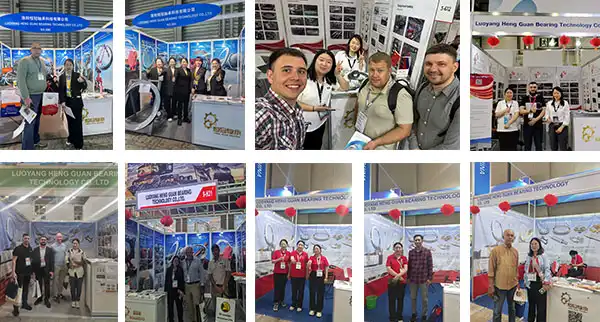
If you need help with your most difficult internal gear rotary slewing bearings needs, Heng Guan Bearing Technology is ready to help. Our ISO 9001-certified manufacturing processes and thorough testing procedures make sure that every bearing meets the exact requirements of your equipment. We know how to make engineered solutions perfect for your needs, from single-row four-point contact ball designs to three-row roller configurations with a diameter of up to 10,000 mm.Email our engineering team at mia@hgb-bearing.com to talk about how our technical support and ability to customize can help you meet your procurement needs and improve the efficiency of your operations.
References
1. Jones, T.A. They wrote "Advanced Concepts of Bearing Technology: Rolling Bearing Analysis, Fifth Edition," which came out in 2006 from CRC Press.
2. "Design and Application of Large Diameter Slewing Ring Bearings for Heavy Equipment," by D.P. Glover, was published in the Journal of Mechanical Engineering Science in 1974. Volume 228, Number 4, 2014.
3. 2006: "AGMA 6123-B06: Design Manual for Enclosed Epicyclic Gear Drives with Slewing Bearings," from the American Gear Manufacturers Association.
4. The ISO 76:2006 standard, "Rolling Bearings – Static Load Ratings," was published in 2006 by the International Organization for Standardization.
5. J.A. Wensing's PhD dissertation, "On the Dynamics of Ball Bearings," was completed at the University of Twente in the Netherlands in 1998.
6. The name Zhou is R.S. Journal of Tribology, Vol. 3. 113, American Society of Mechanical Engineers, 1991.

WHAT OUR CUSTOMERS SAY
Here is the customer's evaluation of us