



Swing Bearing Gear Options: Internal vs External Teeth
Swing bearing gear configurations represent a critical decision point for heavy machinery manufacturers and OEMs seeking optimal rotational performance.Priorities vary per industry. Excavators and cranes typically need high load capacity and easy service in the field. Wind turbines and automation equipment may be more interested in compact design, positioning accuracy and smooth operation. Understanding of the working of internal and external gear arrangements allows engineers to choose a good solution according to actual operating conditions rather than first cost or installation space alone.
Heng Guan Bearing Technology offers unique Swing bearing solutions for construction machines, industrial equipment, wind energy installations and other heavy-duty applications. The company supports OEM projects with bespoke dimensions, gear specifications, sealing designs and technical recommendations, depending on the customer’s requirements.

How Internal and External Gear Swing Bearings Are Designed?
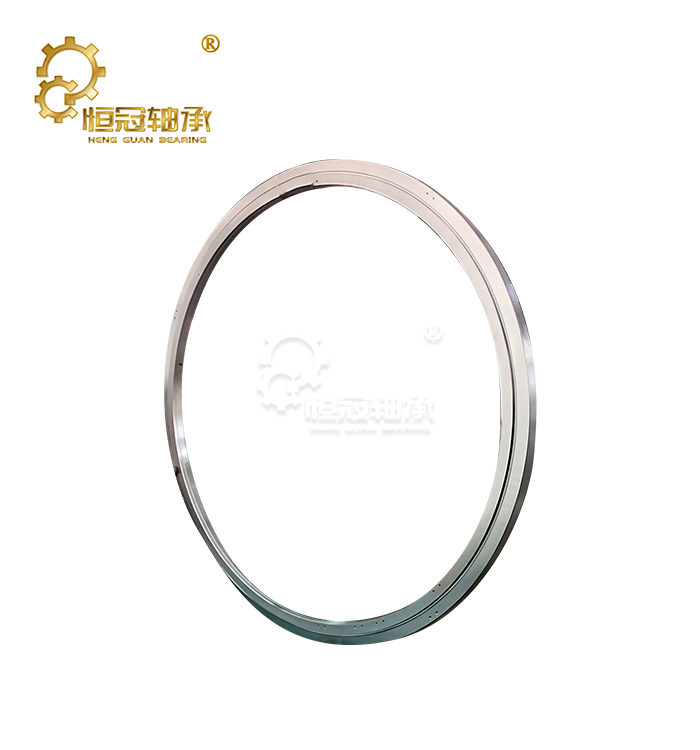
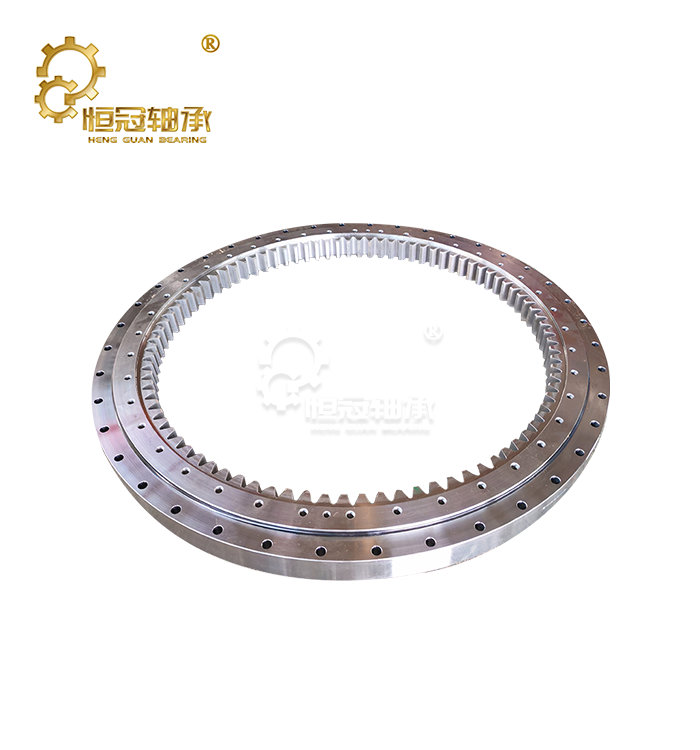
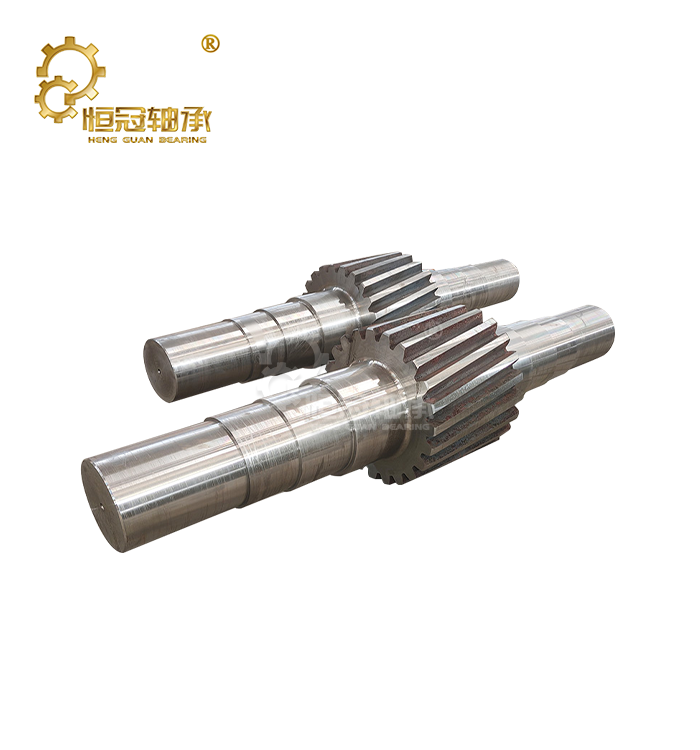
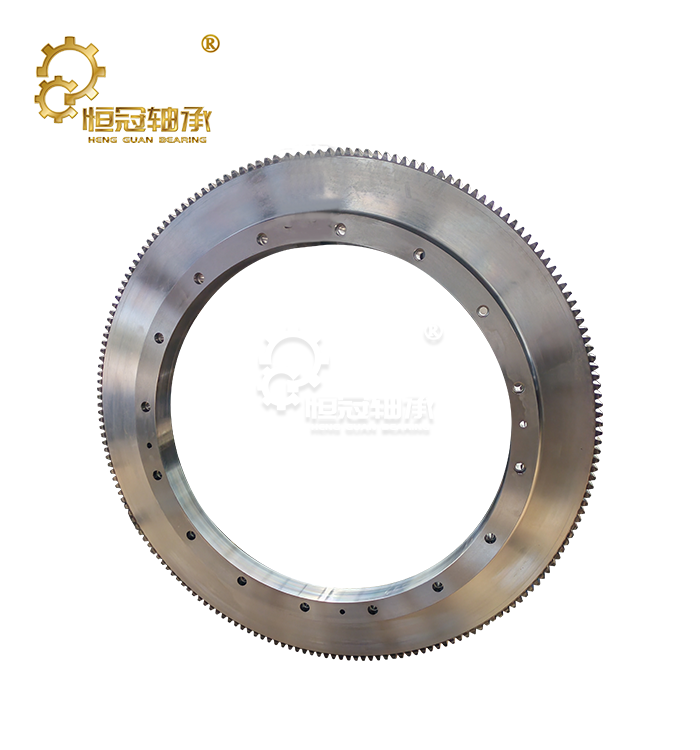
The fundamental difference between internal and exterior gear Swing bearing designs is the placement of the gear teeth.
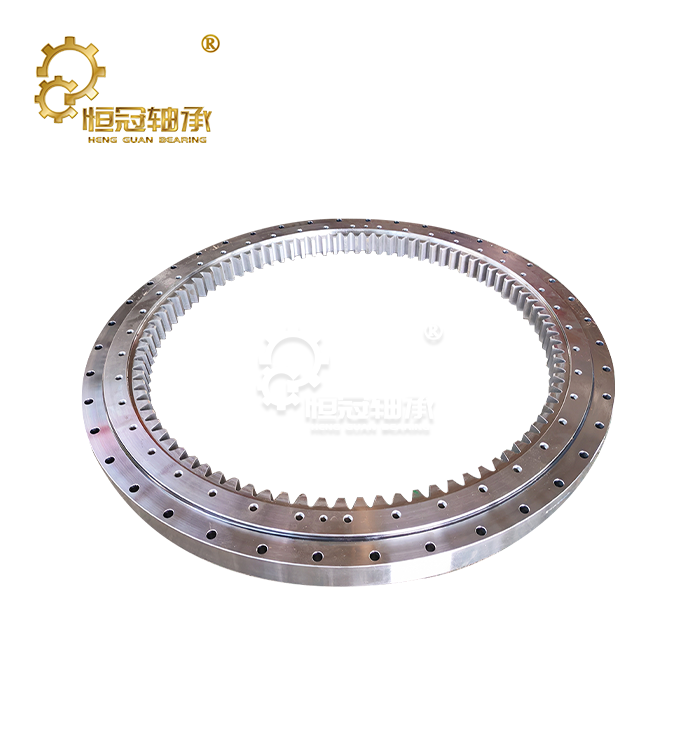
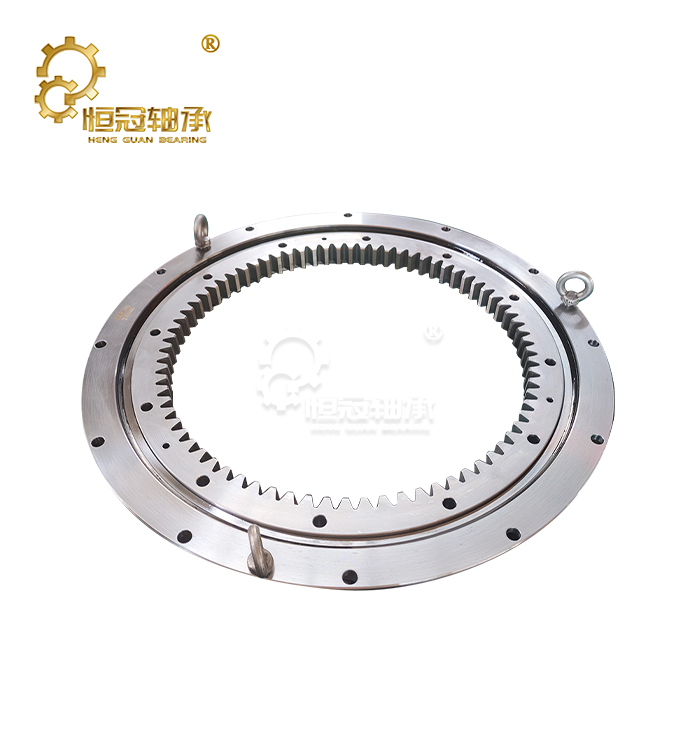
The teeth on an internal gear are cut on the inner circle of the bearing ring. The driving pinion is located in the bearing structure and engages with the internal teeth. This configuration provides a compact rotating system with decreased radial space needs.
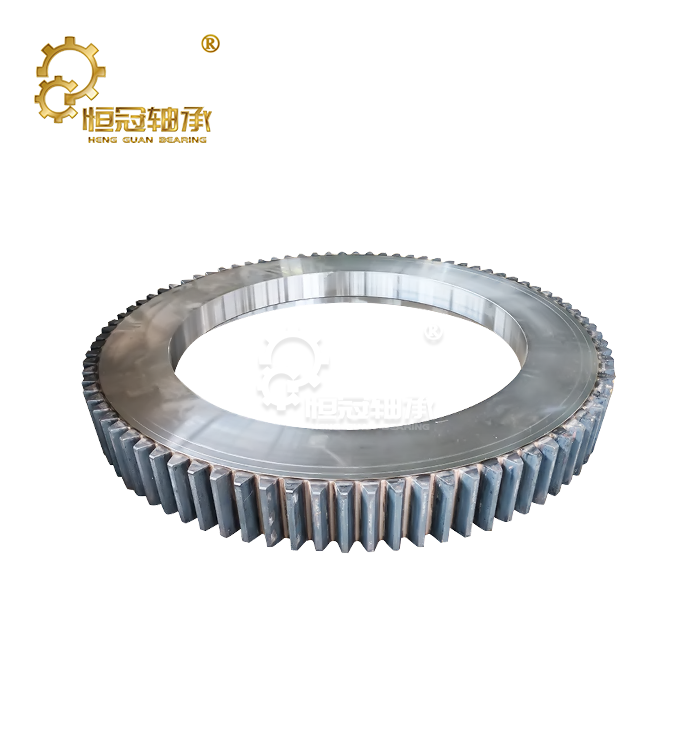
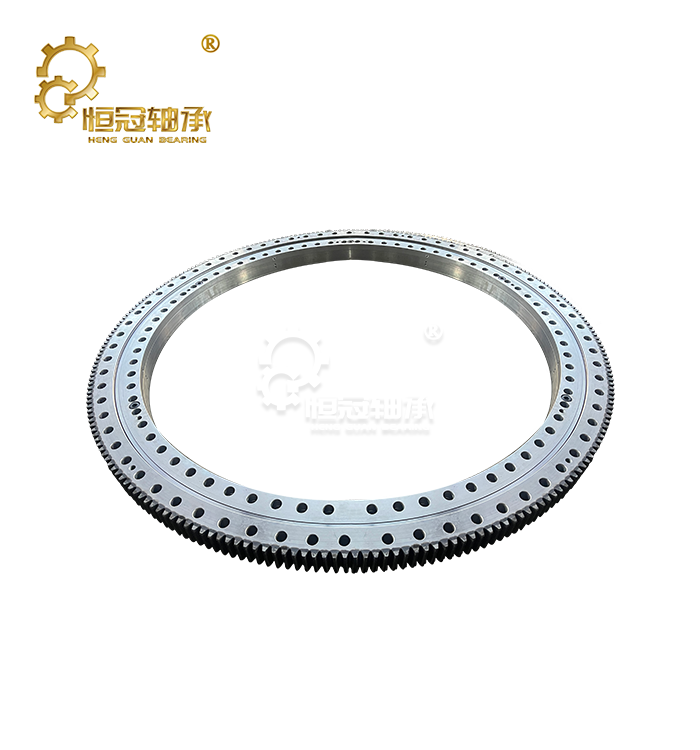
External gear arrangement has the teeth on the outer circle of the bearing ring. The outer teeth of the pinion engage from outside the bearing assembly. This design enables simpler access to the gear system and is often utilized in applications where a high-torque gearbox and easy maintenance are required.
Both types perform the same basic function, conveying rotational force while supporting axial, radial and moment loads. However, their mechanical qualities make them ideal for distinct applications.
Internal Gear Swing Bearing: Advantages and Limitations
The internal gear designs are often chosen when equipment designers require compact structures and effective space utilization.
Compact Structure for Space-Limited Equipment
One of the major benefits of internal gear Swing bearing designs is their smaller exterior footprint. The drive mechanism is included in the bearing assembly, which reduces the overall radial dimensions.
This makes internal gear arrangements appropriate for the following:
compact construction machines, automated manufacturing machines
small lifting system installations with limited space
It is also a way to simplify the packing of the equipment and improve the overall system integration for OEM engineers with strict dimensional specifications.
Smooth Operation and Precision Positioning
Internal gear systems usually maintain a steady pinion to ring gear engagement. The enclosed gear configuration can serve to eliminate external interference and also help to provide a smoother rotational motion.
These features are useful for applications that require:
precise placement, quiet operation, smooth movements, repeating rotation cycles
These performance characteristics can be useful in industrial automation equipment and in precision machinery.
Challenges of Internal Gear Configurations
Internal gear Swing bearing designs have space advantages but may introduce additional maintenance issues.
The gear teeth are enclosed in the bearing structure, which can make access for inspection and lubrication more difficult than with external gear systems. Special techniques could be required for technicians when checking tooth wear, lubrication condition or gear engagement.
For equipment that operates continuously in remote places, the planning of maintenance should be included in the earliest design stage.
External Gear Swing Bearing: Strengths and Application Benefits
In heavy-duty machinery external gear arrangements are often employed where torque capacity and servicing accessibility are of primary relevance.
Higher Torque Capacity for Heavy-Duty Applications
External gear Swing bearing systems give a larger exposed gear contact surface, allowing designers to optimize tooth sizes for demanding applications.
That is why they are suited for equipment like the following:
big excavators, cranes,
offshore equipment and mining equipment.
The external configuration makes it possible to optimize the gear module.
the tooth width
the surface treatment operations to satisfy the requirements of high-load running.
Easier Inspection and Maintenance Access
A primary benefit of an external gear system is its accessibility.
As the gear teeth are outside the bearing ring, operators are able to more easily
lubrication inspections
visual checks
wear monitoring maintenance modifications
Simplified maintenance can minimize service time and enhance equipment availability for construction and maritime equipment, where downtime can be costly.
Considerations When Selecting External Gears
For external gear systems, the pinion and driving mechanism are external to the bearing structure and therefore require more room for installation.
They might also require greater protection from:
dust, moisture, sea spray
industrial pollution
Good design of sealing and lubrication is critical to maintain long-term performance.
Comparing Internal and External Gear Swing Bearing Performance
The best configuration depends on the relationship between equipment requirements and operating conditions.
Load Handling and Torque Transmission
External gear Swing bearing designs generally have advantages in applications requiring high torque transmission. Their exposed gear arrangement allows manufacturers to use larger gear dimensions and optimize tooth strength.
Internal gear systems distribute forces efficiently within a compact structure and are suitable for applications where moderate loads and precision movement are more important than maximum torque capacity.
Engineers should evaluate:
static load
dynamic load
overturning moment
operating cycle frequency
shock loading conditions
before selecting a gear configuration.
Installation Space and Equipment Design
Space availability is often one of the first factors considered during equipment development.
Internal gear configurations are preferred when:
machine dimensions are limited
compact integration is required
external components must be minimized
External gear systems are better suited when:
sufficient installation space is available
maintenance access is important
high mechanical strength is required
The correct choice depends on the complete equipment layout rather than the bearing alone.
Maintenance Requirements and Service Life
Maintenance conditions directly influence total operating costs.
External gear Swing bearing systems usually provide easier access for inspection and lubrication, which can simplify routine servicing.
Internal gear systems offer better protection from direct environmental exposure because the gear teeth are enclosed. However, maintenance procedures may become more complex if inspection or repair is required.
A suitable lubrication system, sealing design, and regular inspection schedule are essential for both configurations.
Choosing the Right Gear Configuration for Different Industries
Different industries have different performance priorities. The ideal Swing bearing gear design depends on application conditions.
Excavators and Construction Machinery
Excavators are among the most common applications for geared Swing bearing systems.
Large excavators typically use external gear configurations because they require the following:
high torque output
strong shock load resistance
convenient maintenance access
During excavation operations, the bearing experiences frequent rotation, impact forces, and heavy working loads. External gear systems allow easier inspection and maintenance in demanding jobsite environments.
For compact excavators where installation space is limited, internal gear solutions may provide a better balance between size and performance.
Wind Turbine Equipment
Wind energy applications require reliable operation over long service periods.
The selection between internal and external gear Swing bearing designs depend on the following:
nacelle space limitations
maintenance accessibility
environmental exposure
noise requirements
External gears can provide easier maintenance access, which is valuable because wind turbines often require specialized service operations at height.
Internal gears may be considered for compact systems where space efficiency and reduced noise generation are priorities.
Marine and Offshore Equipment
Marine equipment faces additional challenges from the following:
saltwater corrosion
humidity
contamination
limited maintenance windows
External gear Swing bearing systems are commonly considered for cranes and offshore equipment because technicians can access the gear system more easily during scheduled maintenance.
However, these systems require reliable sealing and corrosion protection to prevent premature wear.
Internal gear designs may provide advantages where environmental protection is more important than easy access.
Industrial Automation Systems
Automation equipment usually prioritizes accuracy, repeatability, and smooth operation.
Internal gear Swing bearing configurations are often suitable for:
robotic systems
rotating platforms
precision handling equipment
Their compact design helps manufacturers integrate rotating components into limited spaces.
External gear systems may be preferred for larger automated handling equipment where higher torque output is required.
Engineering Factors to Consider Before Selecting a Gear Design
Selecting a Swing bearing configuration requires evaluating multiple technical factors rather than focusing on a single performance feature.
Gear Design and Material Selection
Gear performance depends heavily on material quality and heat treatment.
Common materials include:
50Mn steel
42CrMo4 alloy steel
Proper heat treatment improves:
tooth wear resistance
fatigue strength
impact resistance
Induction hardening is commonly applied to gear teeth to achieve suitable surface hardness while maintaining a tough internal structure.
Lubrication and Sealing Requirements
Lubrication directly affects gear life and operating reliability.
Internal and external gear systems require appropriate lubricant selection based on:
operating temperature
load conditions
rotation speed
environmental exposure
Sealing solutions such as double-lip seals and labyrinth structures help protect the bearing raceway and gear system from contaminants.
For outdoor applications, corrosion resistance and contamination protection should be considered during the design stage.
Manufacturing Accuracy and Quality Control
Precision manufacturing is essential for reliable Swing bearing performance.
Key quality considerations include the following:
gear tooth accuracy
raceway machining precision
dimensional inspection
hardness testing
load testing
For OEM customers, working with an experienced manufacturer helps ensure the bearing matches equipment requirements and operating conditions.
How to Select the Best Swing Bearing Gear Option?
A practical selection process should begin with the equipment requirements.
Engineers should evaluate:
Available installation space
Required torque capacity
Operating environment
Maintenance accessibility
Expected service life
Total ownership cost
Internal gear systems are usually preferred for compact and precision-focused applications.
External gear systems are often the better choice for heavy-duty equipment requiring maximum torque capacity and easier maintenance.
The final decision should balance performance requirements, production conditions, and long-term operating costs.

Conclusion
Selecting between internal and external gear Swing bearing configurations requires a clear understanding of equipment requirements, operating conditions, and maintenance expectations.
Internal gear systems provide advantages in compact designs, smooth operation, and space efficiency, making them suitable for precision equipment and applications with limited installation space. External gear systems offer higher torque capability, easier inspection, and better service accessibility, making them ideal for heavy-duty machinery such as excavators, cranes, and offshore equipment.
By evaluating load requirements, environmental conditions, installation limitations, and lifecycle costs, OEM engineers can choose a gear configuration that delivers reliable performance and long-term value. Heng Guan Bearing Technology supports customers with customized Swing bearing solutions, engineering guidance, and manufacturing capabilities for demanding industrial applications.
FAQ
1. What is the difference between internal and external gear Swing bearing designs?
The main difference is the location of the gear teeth. Internal gear designs place teeth inside the bearing ring for compact installation, while external gear designs place teeth outside the ring for easier maintenance and higher torque applications.
2. Which Swing bearing gear type is better for excavators?
External gear Swing bearing systems are commonly used for large excavators because they provide strong torque transmission and easier maintenance access. Compact excavators may use internal gear designs when installation space is limited.
3. Are internal gear Swing bearings more expensive?
Internal gear systems may have higher manufacturing costs because machining and assembly requirements can be more complex. However, they can provide value when space savings and precision operation are important.
4. How can I choose the correct Swing bearing configuration?
Selection should consider load capacity, available space, operating environment, maintenance requirements, and expected service life. OEM manufacturers can provide technical recommendations based on equipment specifications.
Partner with Heng Guan for Expert Swing Bearing Solutions
Selecting the optimal gear configuration requires deep technical expertise and understanding of your specific operational demands. Heng Guan Bearing Technology specializes in manufacturing high-precision swing bearing systems with both internal and external gear configurations for demanding industrial applications. Our experienced engineering team provides comprehensive technical consultation to help you choose the ideal configuration based on your load requirements, space constraints, and maintenance capabilities. With precision grades ranging from P0 to P4 and diameter capabilities from 20mm to 10,000mm, we deliver customized solutions for construction, wind energy, mining, swing bearings, and automation applications.Contact our technical specialists at mia@hgb-bearing.com to discuss your project requirements and receive detailed specifications from a trusted swing bearing manufacturer committed to delivering superior performance and reliability.
References
1. Johnson, M.R. "Rotational Bearing Systems in Heavy Machinery: Design Principles and Performance Analysis." International Journal of Mechanical Engineering, 2023.
2. Chen, L.W. "Comparative Study of Internal versus External Gear Configurations in Slewing Bearings for Wind Turbine Applications." Renewable Energy Technology Review, 2024.
3. Thompson, K.A. "Load Distribution Analysis in Multi-Row Slewing Bearings for Construction Equipment." Journal of Construction Machinery Engineering, 2023.
4. Rodriguez, P.J. "Maintenance Optimization Strategies for Industrial Swing Bearing Systems." Mechanical Maintenance Quarterly, 2024.
5. Anderson, S.T. "Material Science Applications in High-Performance Rotational Bearing Design." Advanced Materials in Mechanical Systems, 2023.
6. Wu, H.Y. "Cost-Benefit Analysis of Gear Configuration Selection in Heavy Industrial Equipment." Industrial Engineering Economics Review, 2024.

WHAT OUR CUSTOMERS SAY
Here is the customer's evaluation of us