



Can Slewing Rings Be Used in Robotic Joints?
The simple answer is yes, slewing rings can be employed in robotic joints, notably in applications where high load capacity, compact structural design, and the ability to bear coupled forces are needed. Slewing rings can take axial loads, radial loads, and tilting moment loads in one bearing assembly. Unlike traditional bearings, which usually require various components to accommodate varied loads.
The correct bearing solution is vital to the success of robotic manufacturers and system integrators since the performance of the joint directly influences the positioning accuracy, operational stability, maintenance frequency, and ultimately, the life of the machine. Slewing rings are particularly suited for industrial robots, heavy-duty robotic arms, automated handling systems, and other robotic equipment where structural strength is more critical than exceptionally rapid rotational speed.
Improvements in precision machining, sealing technologies, lubrication systems, and specialized bearing designs have enabled current slewing rings to handle many demanding robotic needs. However, the engineers should consider the load circumstances, the required accuracy, the operating speed, the installation area, and the environmental conditions before selecting them for a robotic joint.

Why Are Slewing Rings Suitable for Robotic Joint Applications?
How Do Slewing Rings Support Robotic Motion?
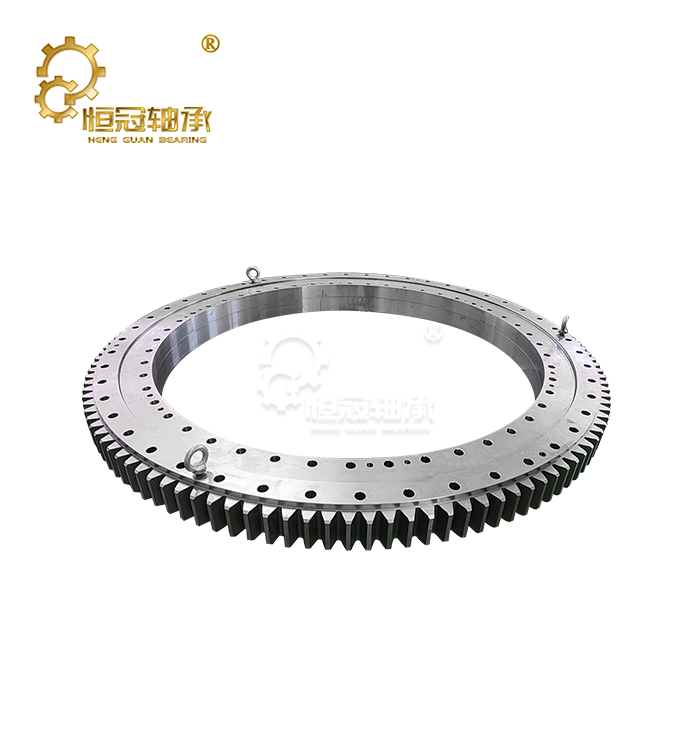
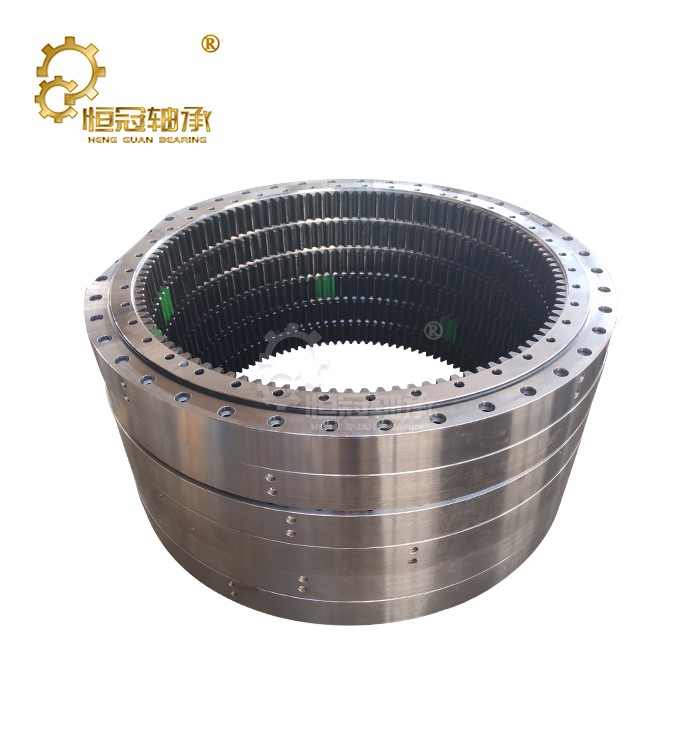
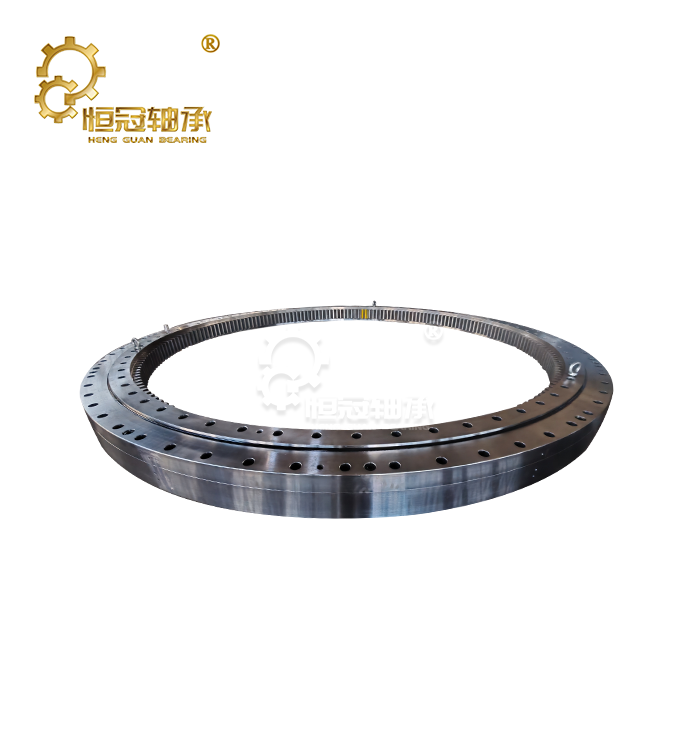
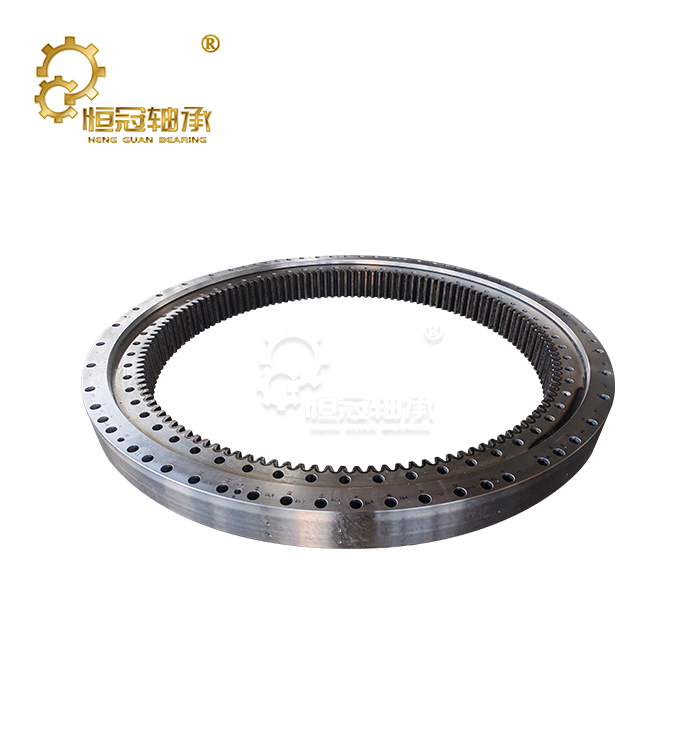
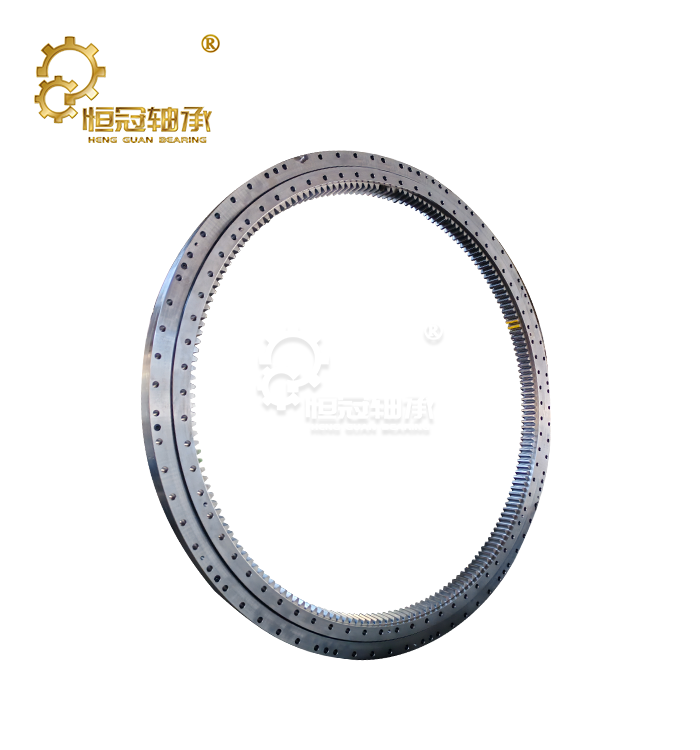
A slewing ring is a large-diameter rotational bearing that consists of an inner ring, an outer ring, rolling elements, and sealing components. Its main purpose is to allow controlled rotation between connected machine parts while carrying large mechanical loads.
The bearing of a robot joint must provide stable motion under the forces of the payload weight, acceleration and deceleration, and the reach of the arm. These forces are broadly classified into three types:
- Axial loads: Forces in line with the axis of rotation.
- Radial loads: Forces applied perpendicular to the axis of rotation.
- Moment loads. Tilting forces caused by the distance from the point of application of the load to the center of the bearing.
Such combined forces may necessitate several bearings in conventional bearing setups. Slewing rings combine these roles of load support in a single compact component and make the structure simpler.
This design benefit is particularly useful in robotic joints where installation space and mechanical reliability are critical issues.
Why Do Engineers Choose Slewing Rings for Robot Design?
One of the key motivations for engineers to look at slewing rings for robotic applications is that they can offer great stiffness with a very simple mechanical design.
A robotic joint must withstand deformation under various loads. Excessive deflection may diminish positioning accuracy and negatively impact welding, assembly, inspection, and material handling.
Slewing bearings increase joint stability by the following:
- Large contact surfaces between the rolling elements and the rails
- High resistance to overturning moments
- Internal clearance or preload choices are customizable.
- Compact integration vs. numerous bearing systems
Fewer mechanical components also mean less maintenance and fewer places for things to go wrong for industrial robots working constantly.
Where Are Slewing Rings Used in Robotics?
Industrial Robotic Arms and Automated Manufacturing Systems
One of the most common applications is in industrial robotic arms, where slewing rings have advantages. In several applications such as automobile production, welding, palletizing, and heavy material handling, large robot arms are typically employed and need bearings that can withstand large moment loads.
A typical use is the base rotation axis of a robotic arm. In operation, this joint is subjected to high forces due to the rotating moment generated by the whole arm structure and the payload.
In these instances, slewing rings can provide the following:
- High load capacity in a compact space
- Steady rotation under different loading conditions
- Less mechanical complexity
- Extended service life with proper lubrication and maintenance
Manufacturers of customized robotic platforms can also customize the slewing rings with variable mounting configurations, gear teeth, sealing solutions, and precision requirements.
Heavy-Duty Robotics and Automated Equipment
There are robotic systems operating in settings where standard precision components may not be able to function. Examples include construction robots, mining automation equipment, offshore inspection robots, and heavy-duty handling machines.”
These applications frequently consist of:
- Contamination and dust
- Shock loadings
- Different operating conditions
- Heavy payloads
The slewing rings with strengthened constructions and improved sealing systems can give enhanced protection against tough working environments.
For example, a robotic joint of an automatic construction machine would have to suddenly handle both continuous movement and impact forces. If the slewing ring is selected correctly, it can give the necessary mechanical strength for such conditions.
Emerging Robotic Technologies
The increase in collaborative robotics, service robots, and autonomous systems has opened up new prospects for application-specific bearing solutions.
Smooth and predictable motion is vital in collaborative robots where humans may work directly alongside robotic equipment. Slewing rings can be used to help provide stable joint performance when the design requires higher load capacity.
Engineers must balance weight, efficiency, and durability for autonomous mobility robots and service robots. While various bearing technologies may be used in smaller robotic systems, customized lightweight slewing ring designs might still be considered for higher load capacity needs.
Key Benefits of Using Slewing Rings in Robot Joints
Handling Combined Loads with One Bearing Solution
The main benefit of utilising slewing rings in robotic joints is that they can handle a number of load directions at the same time.
When a robotic arm works, it does not feel only one type of force. The bearing may be subject to a combination of radial force, axial force and tilting moment as the arm extends, rotates or changes direction.
Separate bearings for each load type can increase:
- Component number
- Complexity of assembly
- Space requirements
- Maintenance challenge
One bearing structure that combines both roles is the slewing ring, which helps engineers develop robots that are simpler and more reliable.
This integrated technique is especially advantageous for the bigger robotic joints for which mechanical stiffness and durability are more crucial than ultrahigh rotational speed.
Improving Joint Stability and Precision
In robotic applications, precision is of utmost importance. Even modest quantities of mechanical clearance might impair the positioning accuracy, especially in the case of repetitive motions.
High-grade slewing rings are produced with precisely controlled raceway geometry and internal components to reduce unintended motion.
Higher bearing accuracy can assist producers of robots to have:
- Repeatable placement.
- Consistent trajectories
- Stable operation with varying load
But engineers should recognise that slewing rings are not a replacement for all types of precision bearings. Which is the right solution depends on the performance requirements of the robot.
Other bearing solutions may be needed for applications where highly fast movement or placement to the micron is needed. The best use of slewing rings is in applications where load capacity, stiffness and structural integration are important.
Supporting Compact and Flexible Mechanical Designs
Robotic engineering is significantly affected by space optimisation. The typical robot joint comprises a number of components, e.g., motors, reducers, sensors, bearings, etc.
Slewing rings can minimise mechanical complexity and save installation space by combining many bearing functions into one component.
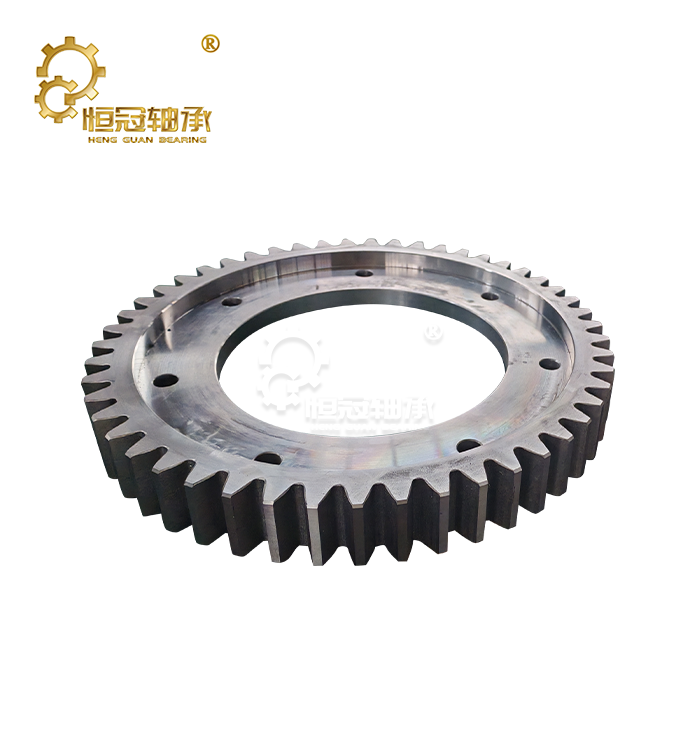
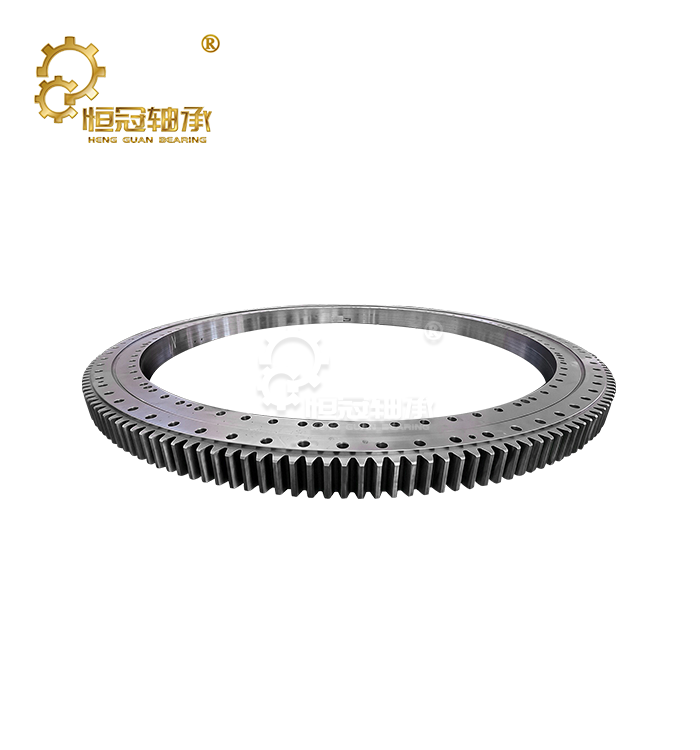
Some designs can even have gear teeth directly on the bearing ring to facilitate connecting to the driving systems.
Benefits of this kind of integration can include:
- Small mechanical parts
- Assembly made easy
- Fewer maintenance requirements
- More flexible design opportunities
Customised slewing ring solutions can provide further flexibility in the development of new robotic platforms for OEM robotic manufacturers.

Limitations Engineers Should Consider Before Using Slewing Rings
Speed and Accuracy Restrictions
Although slewing rings provide excellent load capacity, they are generally not designed for extremely high-speed rotation.
Robotic applications requiring rapid acceleration, very high rotational speed, or ultra-high precision may require alternative bearing technologies.
Before selecting slewing rings, engineers should evaluate:
- Required rotational speed
- Acceleration and deceleration cycles
- Positioning accuracy requirements
- Expected operating frequency
A proper application analysis helps prevent selecting a bearing that does not match the robot's actual working conditions.
Size and Cost Considerations
Compared with standard bearings, slewing rings may involve higher initial costs because they require larger structures, precision manufacturing, and specialized production processes.
However, the total lifecycle cost should also be considered.
A bearing solution that reduces component numbers and maintenance requirements may provide better long-term value even if the initial purchase price is higher.
Engineers should consider:
- Installation space
- Total equipment weight
- Maintenance accessibility
- Expected service life
For small lightweight robots, traditional bearing solutions may be more practical. For large robotic systems requiring high load capacity, slewing rings often provide significant advantages.
Evaluate Loads and Operating Conditions
Proper bearing selection begins with a detailed understanding of operating conditions.
Engineers should analyze:
- Maximum payload
- Arm length and moment loads
- Operating cycles
- Rotation speed
- Environmental conditions
Moment load calculation is especially important because robotic arms often generate significant tilting forces when carrying heavy objects at extended distances.
Selecting a slewing ring based only on static load capacity may result in insufficient performance during actual operation.
Consider Customization and Manufacturing Quality
Robotic applications often require customized bearing solutions rather than standard products.
Important factors include:
- Raceway accuracy
- Mounting interface design
- Sealing requirements
- Lubrication method
- Material selection
Working with an experienced slewing bearing manufacturer can help engineers choose a design that matches their specific robotic requirements.
A reliable supplier should provide technical support, quality inspection, and manufacturing capabilities to ensure consistent bearing performance.
Manufacturing experience is especially important because small variations in machining accuracy, assembly quality, and internal clearance can influence robotic joint performance.
Conclusion
Slewing rings can be an effective solution for robotic joints when applications require high load capacity, structural rigidity, and the ability to handle combined forces within a compact design. Their unique construction allows engineers to simplify mechanical systems while maintaining reliable rotational performance.
Although slewing rings are not suitable for every type of robot, they provide clear advantages in industrial robotic arms, heavy-duty automation equipment, and other systems where strength and durability are essential.
As robotics continues to expand into more demanding applications, the need for reliable bearing solutions will continue to grow. By carefully evaluating load requirements, accuracy expectations, operating conditions, and customization options, engineers can determine whether slewing rings are the right choice for their robotic joint designs.
|
|


FAQ
1. What is the typical lifespan of a slewing ring in robotic applications?
The operational lifespan of slewing rings in robotic applications varies considerably based on specific operating conditions, maintenance practices, and environmental factors. Properly selected and maintained slewing rings typically achieve 5-10 years of continuous operation, equivalent to 20,000-50,000 operating hours under normal industrial conditions. Applications with lighter loads and optimal maintenance can exceed these expectations significantly.
2. How do slewing rings compare to traditional bearing arrangements in robotic joints?
Slewing rings offer substantial advantages over traditional bearing arrangements through their integrated design approach that combines radial, axial, and moment load support within a single component. This integration eliminates the complexity associated with multiple bearing systems while reducing weight, simplifying installation, and improving overall system reliability. Traditional arrangements require careful coordination of multiple components that increase potential failure points.
3. Can slewing rings handle the high-speed requirements of modern industrial robots?
Slewing rings excel in load capacity and precision but have inherent speed limitations compared to specialized high-speed bearings. Most robotic applications operate well within these speed parameters, particularly for base rotations and major axis movements where load capacity and precision take precedence over rotational velocity. Typical robotic joint speeds of under 100 RPM align well with slewing ring capabilities.
4. What maintenance is required for slewing rings in robotic applications?
Maintenance requirements depend on bearing design and operating conditions, but typically include periodic lubrication according to manufacturer specifications, regular inspection for wear indicators, and monitoring of operating torque levels. Many modern sealed designs require minimal maintenance throughout their service life, while others may need relubrication at specified intervals to maintain optimal performance.
Contact Heng Guan for Custom Robotic Slewing Ring Solutions
Heng Guan's engineering team specializes in developing high-precision slewing ring solutions specifically designed for demanding robotic applications across automation, aerospace, and medical equipment sectors. Our comprehensive technical expertise spans from initial design consultation through manufacturing and ongoing support, ensuring your robotic systems achieve optimal precision and reliability. Located in Luoyang's renowned bearing manufacturing center, we leverage advanced production capabilities and decades of specialized experience to deliver custom solutions that meet your exact specifications.
Our product range includes precision slewing rings with P4, P5, slewing rings and P6 accuracy grades suitable for diverse robotic joint requirements. Whether you need compact designs for collaborative robots or heavy-duty solutions for industrial manipulators, our experienced team provides personalized engineering support to optimize your bearing selection. Contact our specialists at mia@hgb-bearing.com to discuss your specific robotic joint requirements and discover how our slewing ring manufacturer's capabilities can enhance your next project's performance and reliability.
References
1. Smith, J.A. and Brown, M.K. "Advanced Bearing Technologies in Industrial Robotics: Performance Analysis of Slewing Ring Applications." Journal of Robotic Engineering, Vol. 45, No. 3, 2023, pp. 234-251.
2. Chen, L. and Rodriguez, P. "Load Distribution Analysis in Robotic Joint Mechanisms: Comparative Study of Bearing Solutions." International Conference on Automation and Precision Manufacturing, 2023, pp. 412-428.
3. Williams, R.T. "Precision Motion Control in Collaborative Robotics: Bearing Selection Criteria and Performance Optimization." Robotics and Automation Review, Vol. 28, No. 7, 2023, pp. 156-173.
4. Anderson, K.M. and Thompson, D.L. "Service Life Prediction for Slewing Ring Bearings in Robotic Applications: Environmental and Load Factor Analysis." Tribology International, Vol. 182, 2023, pp. 108-124.
5. Nakamura, H. and Patel, S. "Integration Challenges and Solutions for Large-Scale Robotic Automation Systems." IEEE Transactions on Robotics, Vol. 39, No. 4, 2023, pp. 892-908.
6. Miller, A.C. and Johnson, R.K. "Future Trends in Robotic Bearing Technology: Smart Sensors and Predictive Maintenance Applications." Advanced Manufacturing Technology, Vol. 127, No. 9, 2023, pp. 3847-3862.

WHAT OUR CUSTOMERS SAY
Here is the customer's evaluation of us