



Slewing Gear Bearing Buying Guide for OEM Engineers
As an OEM engineer, selecting the right slewing gear bearing is crucial for your equipment's performance and reliability. Unlike normal bearings, slewing gear bearings are designed to carry combined loads such as axial forces, radial loads and overturning moments as well as controlled rotation through an integrated gear Qsystem.Q
When selecting a bearing for an OEM project, you should not decide solely on size or purchasing price. Engineers must specify the load circumstances, operating environment, mounting requirements, precision standards, supplier manufacturing competence, and long-term support. A good fit bearing design increases machine reliability, reduces unplanned downtime and saves replacement costs.
This paper provides a detailed overview of the important factors OEM engineers should consider when choosing slewing gear bearings for industrial applications.
|
|


Understanding Slewing Gear Bearings for OEM Applications
How Slewing Gear Bearings Work in Heavy Equipment?
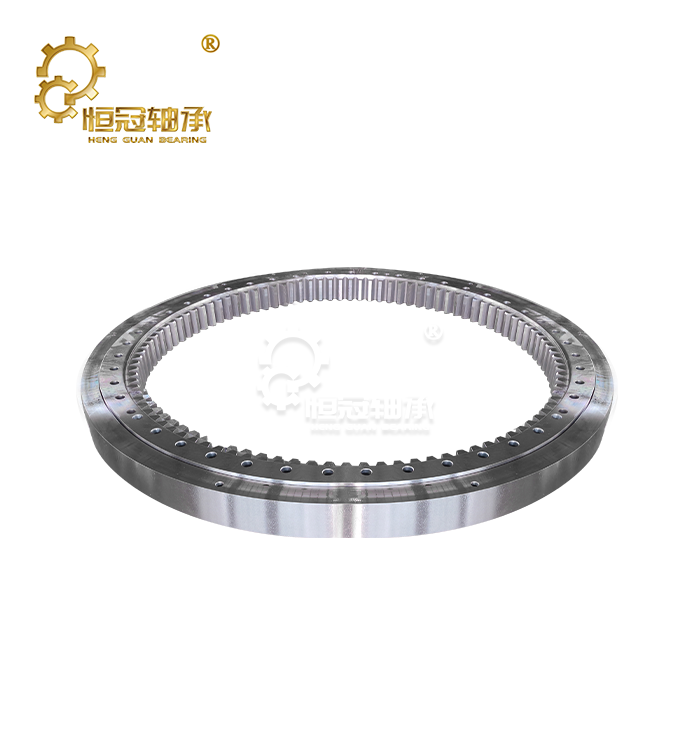
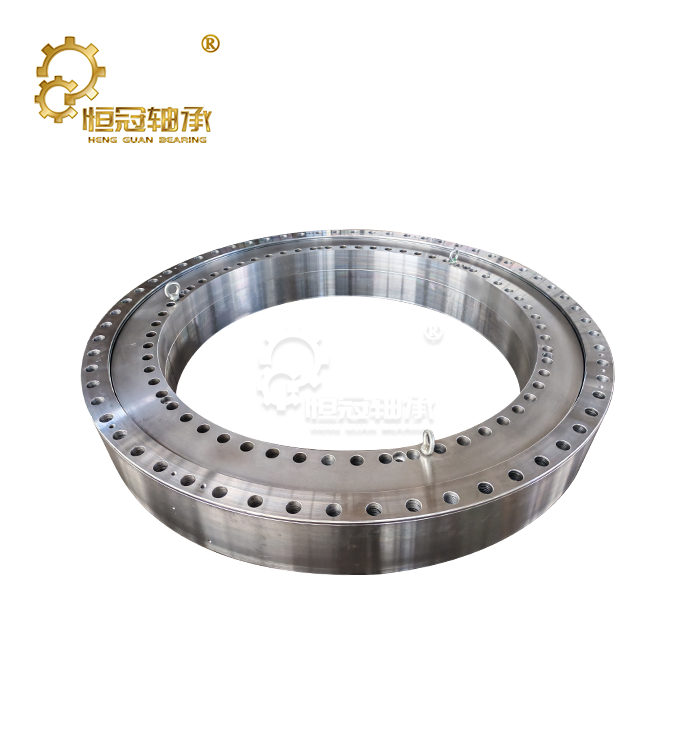
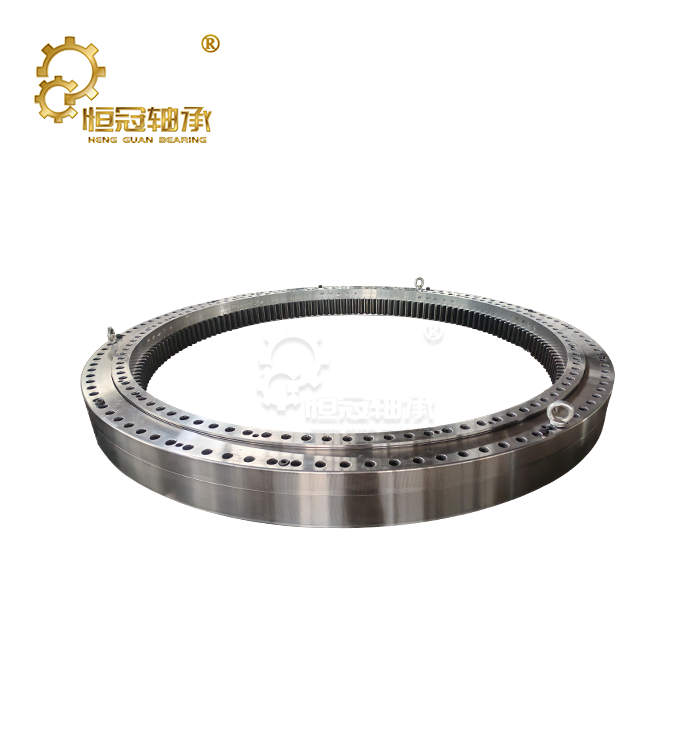
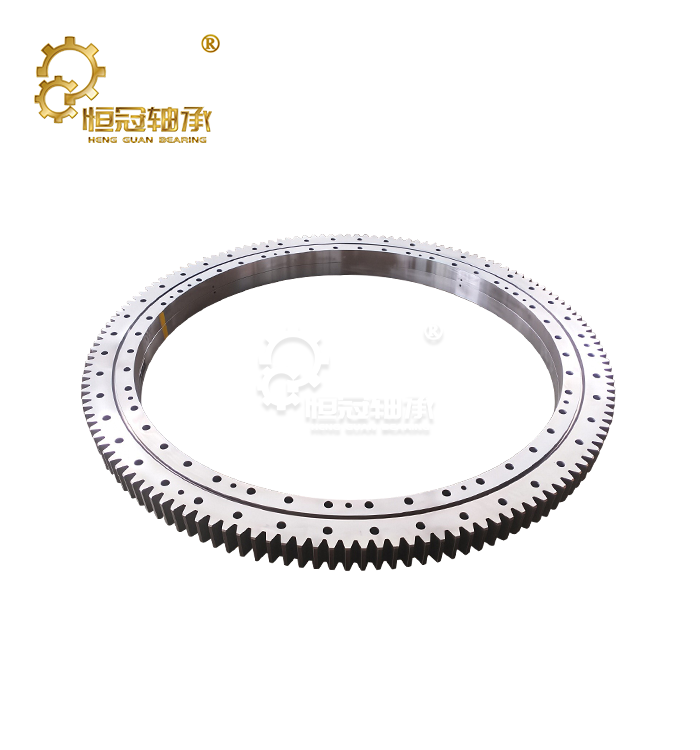
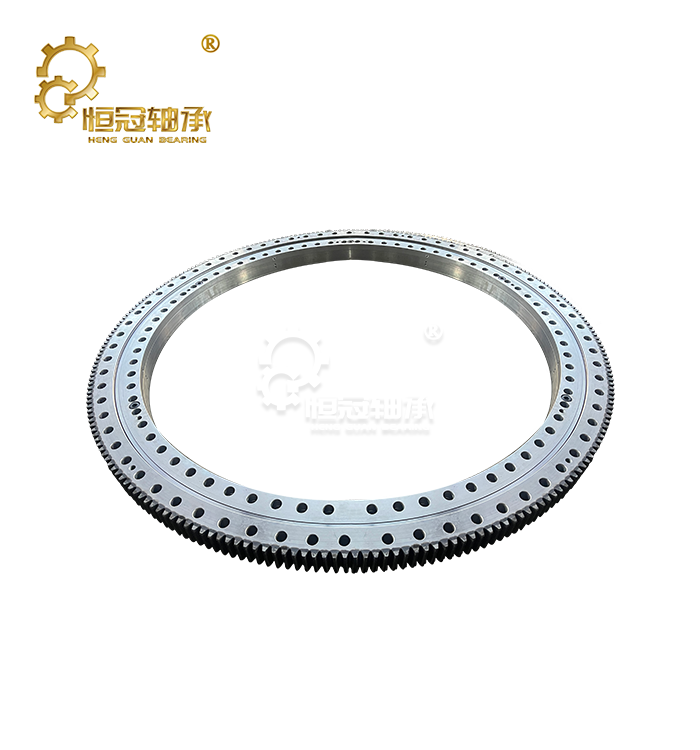
A slewing gear bearing is a combination of a gear mechanism with a large-diameter bearing construction that enables smooth rotation and supports heavy loads on industrial components. The bearing generally comprises an inner and outer ring, rolling bodies, races, seals and gear teeth machined on the inner or outer ring.
At work the bearing transmits different forces at the same time. Axial loads are produced by vertical forces. Radial loads are produced by horizontal movement. Overturning moments are produced by tilting due to external forces. This cumulative load capacity makes slewing gear bearings appropriate for applications where typical bearing configurations would necessitate numerous components.
The integrated gear design also reduces mechanical complexity by removing the need for separate gear assemblies for many applications. The bearing gear teeth can interact directly with a pinion, hydraulic motor, or other drive mechanism to drive rotation.
Materials and Manufacturing Features That Affect Performance
The material choice plays a crucial role in the bearing durability of heavy-duty industrial equipment. Alloy steels, such as 42CrMo or 50Mn, are commonly used for slewing gear bearings because of their strength, hardness and fatigue resistance.
The raceways are usually induction hardened in an effort to improve wear resistance under repeated loads. The depth of the hardened layer and hardness levels are selected according to the bearing size and application requirements to achieve the appropriate service performance.
The OEM engineer considers the quality of manufacture on the same level as the choice of materials. The key factors of production are:
Accuracy of raceway machining
Accuracy of Gear teeth
Uniformity of heat treatment
Control of surface hardness
Checking for assembly clearance
Quality of seal installation
These characteristics have a direct influence on operating smoothness, noise levels, load distribution and estimated service life.
Key Factors OEM Engineers Should Consider Before Purchasing
Load Capacity Analysis and Safety Factor Selection
The first step in selecting an appropriate slewing gear bearing is the load calculation. Engineers should not only be aware of the rated capacity of the equipment but also the actual operating conditions.
Main loads are:
Axial loading
Radial load
A moment to turn over
Shock and impact forces
Dynamic loads in operation
For example, in excavators, the digging cycles cause frequent load changes, and in cranes, the hoisting operations may have unexpected moment loads. The wind conditions change and the wind turbines are exposed to a constant cyclic loading.
A good safety factor accounts for the unknowns of operational situations. The needed element relies on the relevance of the application, environmental conditions and the repercussions of failure. Heavy-duty or safety-critical equipment usually requires bigger safety margins.
In practice, in OEM projects, engineers use load simulation or finite element analysis to determine the non-uniform stress distribution and to optimize the bearing selection before mass production.
Size Compatibility and Mounting Requirements
Choosing the right bearing size is not only about matching the exterior diameter. OEM engineers have to make sure the bearing fits into the overall mechanical structure.
Important dimensional considerations are the following:
Diameter of bearing
Mounting bolt circular diameter
Size of bolts and preload requirements
Installation height:
Gear position
Design of Connection Interface
Increased load capacity might be possible with a greater bearing diameter but this could increase the weight of the equipment and necessitate stiffer supporting structures.
Early coordination between the OEM design team and the bearing manufacturer during equipment development might avoid installation complications. Suppliers with engineering support can often suggest acceptable mounting options or bespoke measurements based on the machine construction.
Operating Environment and Sealing Performance
The reliability of a bearing, such as a slewing gear bearing, is directly affected by the environmental circumstances. The protective needs of a bearing in a clean indoor application are different from those of equipment working outdoors, offshore or in mining settings.
Typical environmental problems are
Dust pollution.
Water contact
Salt spray corrosion
• Severe temperature
Contamination of chemicals
Efficient sealing minimizes contamination into the raceway system and lowers lubricant deterioration. Depending on the application, manufacturers can provide various sealing options, including multi-lip rubber seals or specialised materials for hostile conditions.
Marine and offshore equipment also need corrosion protection. Surface coatings, material treatments and maintenance needs are some of the issues that must be considered before a bearing design is selected.
Comparing Different Slewing Bearing Configurations
Single Row and Double Row Ball Designs
The single row four-point contact ball bearing is one of the most often utilised variants due to its compact structure and ability to support combined loads.
Among their advantages are:
Weight loss
Small installation size
Lower friction
Design for cost efficiency
They are commonly utilised in construction machines, light cranes and positioning equipment.
Double row ball bearings have two rows of rolling elements to increase load capacity. This design provides a better load distribution and is applied in cases when stronger axial capacity or resistance to overturning moments is required.
The choice between single row and double row designs for OEM engineers depends on the load requirements of the equipment, the space available for installation, and the predicted working circumstances.
Four-Point Contact and Cross Roller Configurations
Four-point contact designs are commonly utilised when equipment must accommodate combined load capabilities with relatively smooth running. The ball-raceway contact pattern enables the bearing to sustain axial, radial and moment stresses in a compact design.
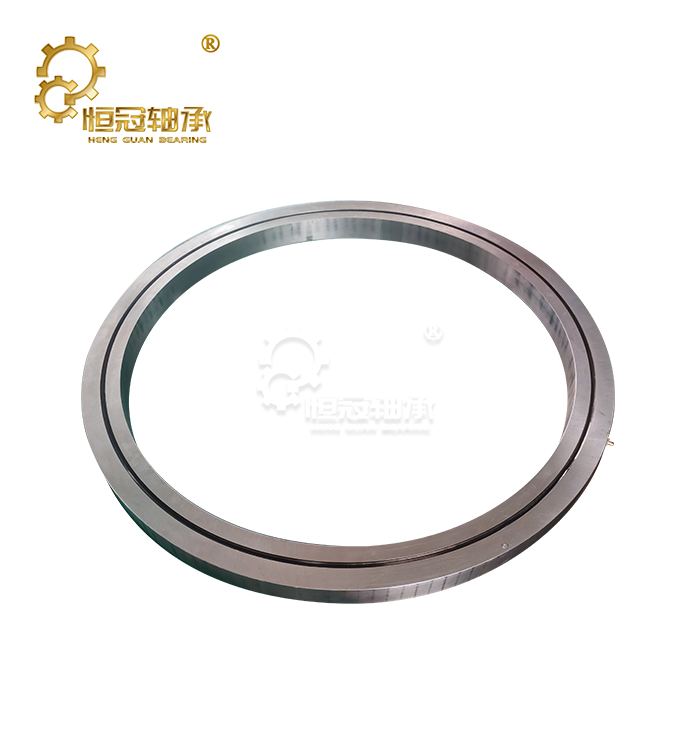
Cross roller bearings are made of cylindrical rollers set at right angles to each other. This arrangement has a stronger rigidity and better resistance to deformation; which is ideal for applications requiring accuracy of position.
Four-Point Contact and Cross Roller Configurations
Four-point contact designs are commonly utilised when equipment must accommodate combined load capabilities with relatively smooth running. The ball-raceway contact pattern enables the bearing to sustain axial, radial and moment stresses in a compact design.
Cross Roller Bearings Cylindrical rollers are arranged at right angles to each other. This arrangement offers stronger rigidity and better resistance to deformation, hence being suited for applications where the importance of the positioning precision and the structural stiffness overcomes the rotation speed.
For OEM engineers, the decision between these two configuration options is determined by the actual operating requirements:
Four point contact slewing bearings are generally applicable in the application of balanced load capacity, smooth rotation and cost-effective performance, such as excavators, cranes and rotating platforms.
Cross roller arrangements are preferable where there is a need for more rigidity, less deformation, and more accurate alignment, notably in precision machinery and automation.
The final selection should take into account the load characteristics, the frequency of rotation, accuracy requirements, installation conditions and estimated service life. Choosing the right configuration allows OEM makers to ensure dependable operation without adding excessive cost.

Comparing Different Slewing Bearing Configurations
External Gear and Internal Gear Designs
The gear position is another important factor when selecting a slewing gear bearing. OEM engineers usually choose between external gear and internal gear configurations based on equipment structure, installation space, and maintenance requirements.
External gear designs place the teeth on the outside circumference of the bearing ring. This configuration provides easier access for inspection and maintenance because the drive pinion is located outside the bearing structure. It is commonly used in cranes, excavators, and large rotating platforms where maintenance accessibility is important.
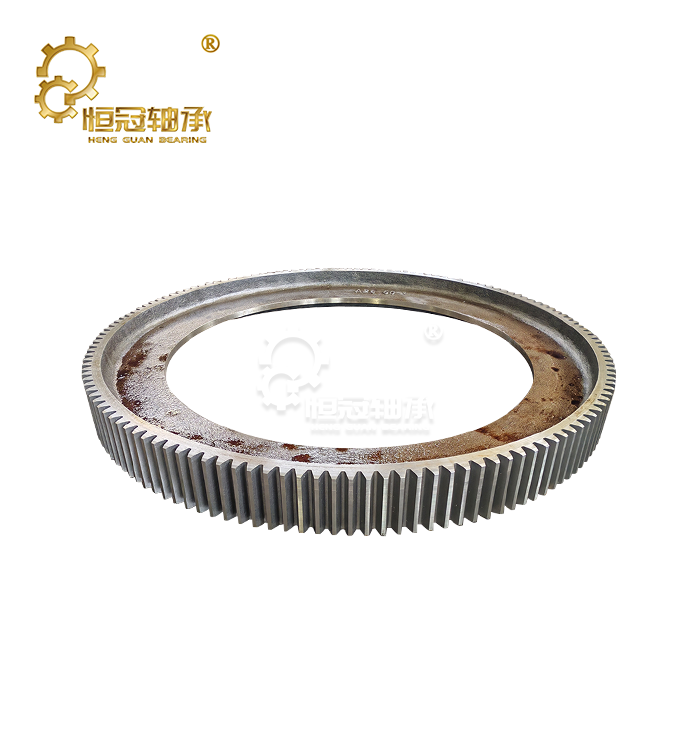
Internal gear designs place the teeth inside the bearing ring. This arrangement creates a more compact structure and offers better protection against external contamination. It is often suitable for applications with limited installation space or environments where the gear system requires additional protection.
When selecting between these two designs, OEM engineers should consider:
Available installation space
Drive system layout
Maintenance accessibility
Environmental exposure
Required gear protection level
The correct gear configuration can improve system integration and reduce future maintenance difficulties.
How to Evaluate a Slewing Gear Bearing Supplier?
Manufacturing Capability and Quality Control
Choosing a reliable supplier is just as important as selecting the correct bearing design. For OEM projects, supplier capability directly affects product consistency, delivery reliability, and long-term equipment performance.
A qualified manufacturer should have experience producing large-diameter bearings and the ability to control key manufacturing processes, including the following:
Ring forging and machining
Raceway grinding
Gear cutting
Heat treatment
Assembly inspection
Final performance testing
OEM engineers should review whether the supplier can provide technical documents such as drawings, inspection reports, material certificates, and quality records.
Manufacturing consistency is especially important for customized bearings because even small variations in machining accuracy or heat treatment can affect load distribution and operating life.
Certifications and Testing Standards
Quality certifications provide useful information about a supplier’s production management system. ISO 9001 certification demonstrates that the manufacturer follows structured quality control procedures throughout production.
However, certifications alone do not guarantee bearing performance. OEM buyers should also evaluate practical quality control capabilities, including the following:
Dimensional inspection
Hardness testing
Gear accuracy verification
Raceway inspection
Load testing
Final assembly checks
For demanding applications such as wind turbines, offshore equipment, or heavy lifting machinery, additional testing procedures may be required to verify reliability under specific operating conditions.
A supplier that provides detailed inspection documentation and engineering support can help OEM customers reduce development risks.
Engineering Support and Customization Ability
Many OEM projects require customized slewing gear bearing rather than standard products. The supplier’s engineering capability becomes critical when equipment involves unique loads, unusual mounting structures, or special environmental requirements.
Experienced manufacturers can assist with:
Load calculation review
Bearing type selection
Gear specification adjustment
Seal optimization
Mounting design recommendations
In practical applications, early supplier involvement often helps prevent design changes during later production stages. This can shorten development cycles and reduce unexpected engineering costs.
|
|


Cost Considerations When Purchasing Slewing Gear Bearings
Initial Price vs. Long-Term Operating Value
The lowest purchase price is not always the most economical choice for OEM applications. A cheaper bearing may increase maintenance frequency, shorten replacement intervals, or create unexpected downtime.
A more effective approach is evaluating the total cost of ownership, including
Initial purchase cost
Installation expenses
Maintenance requirements
Replacement frequency
Equipment downtime losses
For critical machinery, investing in higher-quality bearings can provide better long-term value by improving reliability and reducing operational interruptions.
For less demanding applications, standard bearing solutions may provide sufficient performance without unnecessary additional costs.
Custom Designs and Standard Solutions
OEM engineers often need to decide between standard bearings and customized solutions.
Standard slewing gear bearings usually offer:
Shorter production cycles
Lower development costs
Easier replacement availability
Customized bearings may provide advantages when equipment requires the following:
Special mounting dimensions
Unique load conditions
Specific gear requirements
Enhanced sealing performance
The right choice depends on production volume, technical requirements, and expected equipment lifecycle.
For large-volume OEM projects, customization costs can often be distributed across multiple units, making tailored solutions more practical.
Information OEMs Should Prepare When Requesting a Quote
To receive an accurate quotation for a slewing gear bearing, OEM engineers should provide detailed application information rather than only basic dimensions.
Important technical details include:
Bearing diameter requirements
Axial, radial, and moment loads
Rotation speed
Operating temperature range
Installation conditions
Gear type requirements
Lubrication method
Expected service life
Providing complete project information allows manufacturers to recommend a suitable bearing design and avoid incorrect specifications.
Early technical communication between OEM engineers and suppliers can improve product reliability and shorten development time.
Conclusion
Successful slewing gear bearing procurement requires more than comparing product prices. OEM engineers need to evaluate load requirements, bearing configuration, operating environment, manufacturing capability, and supplier support before making a final decision.
A properly selected bearing can improve equipment stability, extend service life, and reduce maintenance costs in demanding industrial applications. Working with an experienced manufacturer also helps OEM teams optimize designs, avoid compatibility issues, and achieve more reliable production results.
A systematic evaluation process ensures that the selected bearing meets both current operating requirements and future equipment development goals.
FAQ
1. What factors should OEM engineers consider when selecting a slewing gear bearing?
OEM engineers should evaluate load capacity, bearing configuration, installation dimensions, operating environment, rotation requirements, sealing performance, and supplier manufacturing capability. The correct selection depends on the complete equipment operating condition rather than a single specification.
2. How long is the typical production lead time for customized slewing gear bearings?
Production time depends on bearing size, design complexity, and customization requirements. Standard modifications may require several weeks, while fully customized designs usually need additional engineering review, manufacturing preparation, and testing before delivery.
3. What is the difference between external gear and internal gear slewing bearings?
External gear designs provide easier access for maintenance and flexible drive installation, while internal gear designs offer a more compact structure and better protection from contamination. The choice depends on equipment layout and operating environment.
4. How can OEMs reduce the risk of choosing the wrong bearing?
OEMs can reduce risks by providing detailed operating data, confirming load calculations, reviewing supplier experience, and requesting technical documentation before production. Early cooperation with manufacturers helps identify potential design issues.
Partner with Heng Guan for Reliable Slewing Gear Bearing Solutions
Choosing the right supplier can significantly influence equipment performance and project success. Heng Guan Bearing Technology provides customized slewing bearing solutions for OEM applications, supporting different industrial requirements with engineering assistance, manufacturing expertise, and quality control processes.
With experience in producing large-diameter bearings ranging from 20 mm to 10,000 mm, Heng Guan supports industries including construction machinery, wind energy, automation equipment, and heavy-duty rotating systems.
For OEM projects requiring reliable slewing gear bearing solutions, professional technical support and customized manufacturing capabilities can help improve product performance and reduce long-term operating risks.Contact our technical team at mia@hgb-bearing.com to discuss your specific requirements and discover how our customized solutions optimize performance while reducing total ownership costs for your critical applications.
References
1. American Gear Manufacturers Association. "AGMA 6123-B06: Design Manual for Enclosed Epicyclic Metric Module Gear Drives." Alexandria: AGMA Press, 2018.
2. Harris, Tedric A. and Michael N. Kotzalas. "Essential Concepts of Bearing Technology: Rolling Bearing Analysis, Fifth Edition." Boca Raton: CRC Press, 2019.
3. International Organization for Standardization. "ISO 14728-1:2017 Rolling Bearings - Slewing Rings - Part 1: Dynamic Load Ratings and Rating Life." Geneva: ISO Publishing, 2017.
4. Schaeffler Technologies AG. "Large Size and Slewing Bearings Technical Handbook." Herzogenaurach: FAG Industrial Services, 2020.
5. SKF Group. "Slewing Bearings: Design Guidelines and Application Examples for Engineers." Gothenburg: SKF Press, 2019.
6. Wensing, Jos A. "On the Dynamics of Ball Bearings in Slewing Applications: Theoretical and Experimental Analysis." Journal of Mechanical Engineering Science, Vol. 234, 2021.

WHAT OUR CUSTOMERS SAY
Here is the customer's evaluation of us