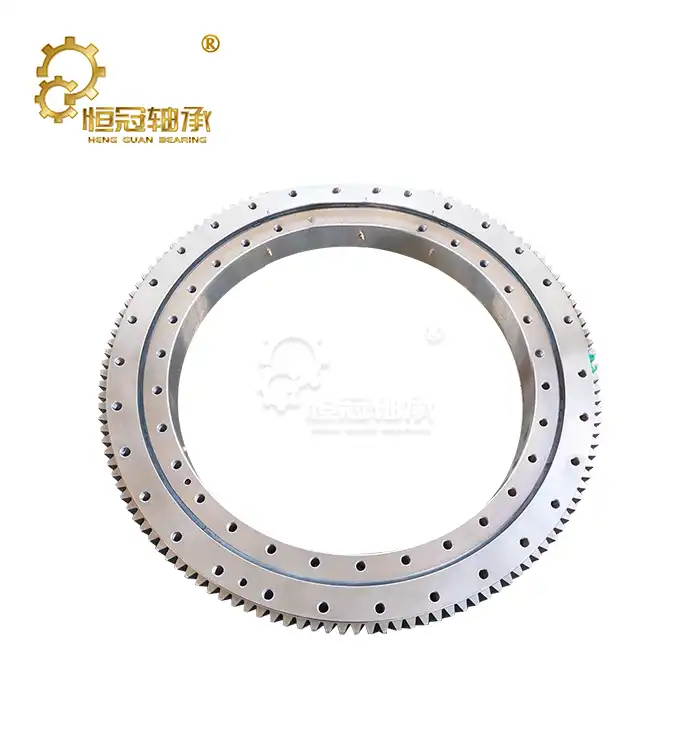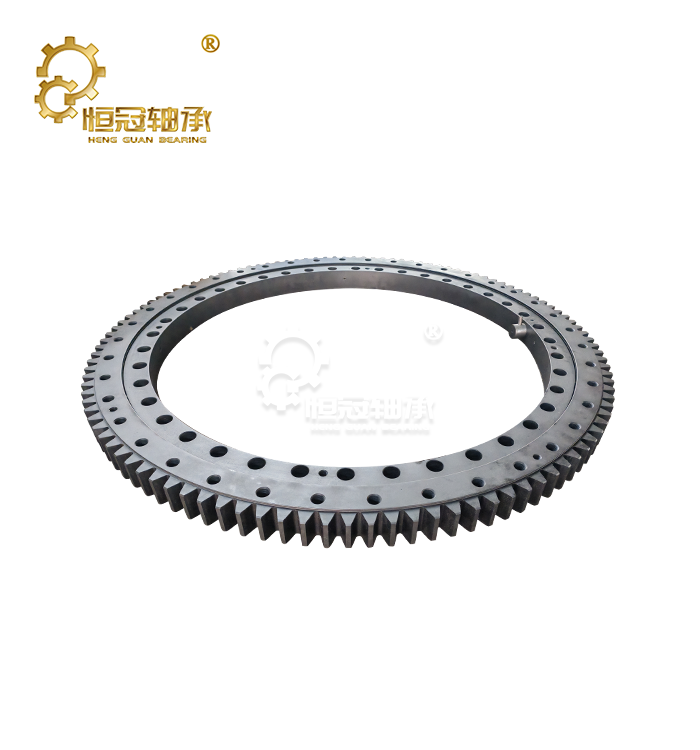




Slewing bearing sizes used in offshore drilling rigs
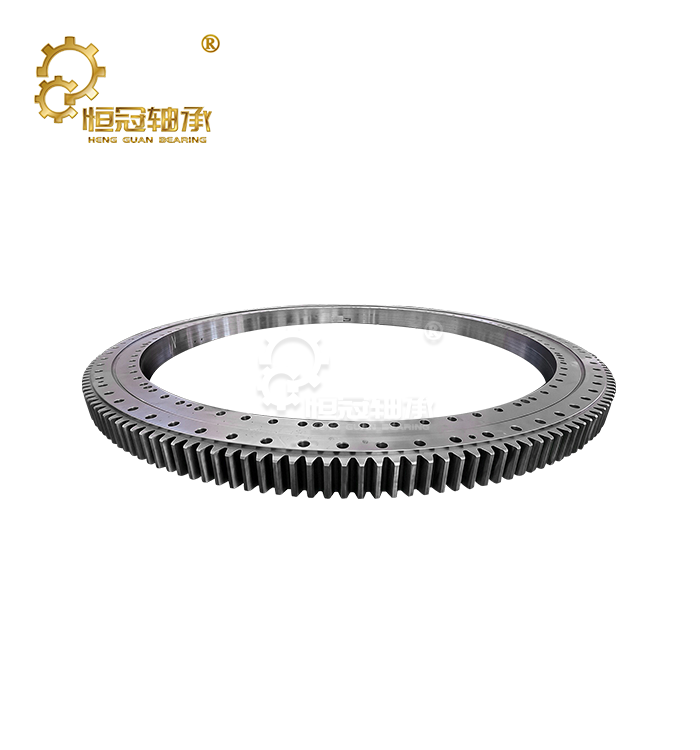
Offshore drilling rigs operate under demanding combinations of axial loads, radial loads, overturning moments, vibration, temperature variation, and marine exposure. A Drilling Rig Slewing Bearing offers the rotary interface between stationary and rotating elements in equipment where movement must be controlled and load transfer must be reliable. Thus the selection of bearing size is not a matter of just selecting the greatest diameter available. Engineers and procurement teams must together analyse the applied loads, overturning moment, speed of rotation, duty cycle, mounting structure, bolt pattern, gear requirements, sealing arrangement, lubrication system, and environmental conditions. There is not one-size-fits-all slewing bearing for all offshore drilling rigs. Dimensions are derived based on the load case and mechanical interface of the equipment, and validated by bearing calculations and structural analysis. The most useful method to procurement is to consider bore diameter, outer diameter, bearing height, mounting dimensions and load ratings as an integrated design package rather than as individual parameters.
How do slewing bearings function in offshore drilling equipment?
The Role of the Bearing in a Rotating Structure
A slewing bearing often connects a fixed support structure to a rotating assembly, transferring loads between them. Depending on the equipment design, the bearing may be required to support axial force, radial force, and overturning moment simultaneously.
This combination is especially crucial for offshore equipment, because the bearing is not working alone. The support structure may deflect under load, the platform may move, and operational loads may change during drilling, positioning, lifting, or other equipment movement. The bearing then must be selected together with the mounting structure and the drive mechanism.
Therefore, a big outside diameter alone does not assure acceptable performance. A bearing with a bigger diameter may give a useful increase in moment capacity. However, the actual results depend on the internal geometry, rolling-element arrangement, raceway dimensions, material qualities, mounting stiffness, and applied load distribution.
Selecting the Right Internal Bearing Arrangement
Slewing bearings come in several configurations, such as single-row ball, double-row ball, crossed-roller, and multi-row roller. The right arrangement depends on the desired mix of axial load, radial load, moment load, rotational characteristics, available installation space, and needed stiffness.
Multi-row roller setups are helpful where large combined loads and rigidity are essential. However, to say that there is one arrangement that is always the ideal for offshore drilling would be inaccurate. The correct design is determined by the actual load spectrum and the mechanical requirements of the rotating assembly.
Hence, for OEM applications, engineers should check the projected load capacity and stiffness of multiple variants before deciding on the bearing arrangement.
Why Does Bearing Size Affect Rig Performance?
Bearing dimensions matter. It’s more than just the physical fit of the component. They also influence:
Static load-carrying capability
Dynamic load capability
Overturning moment resistance
Structural stiffness
Gear diameter and drive layout
Mounting bolt specifications
Weight-bearing
Installation and transportation requirements
Lubricant Amount
Total equipment envelope
A bigger bearing may provide a higher load rating and rigidity but also adds weight, cost, inertia, and difficulty of installation. The goal thus is to choose the smallest bearing that will securely support the entire design load case with the desired safety margin, rather than blindly specifying the largest available bearing.
Key Dimensions Used When Sizing an Offshore Slewing Bearing
Bore Diameter and Outside Diameter
The center opening, or bore diameter, must allow for adequate clearance for Shafts, pipelines, cables, structural members, and other components that traverse the bearing. The outside diameter is part of the overall bearing geometry and influences the accessible mounting area.
No dimension should be picked on its own. A bearing manufacturer would generally ask for the load circumstances and mounting interface before offering a suitable diameter.
Commercial slewing bearings are available in a wide range of diameters and also in very large bespoke sizes. However, a range such as 800 mm to 7000 mm should be seen as a conceivable supplier capability or project-specific range and not an industry-wide offshore drilling standard.
Bearing Height and Cross-Section
The bearing height impacts the internal load route, stiffness, mounting envelope, and weight. A deeper section may give more structural capability, but the added material may increase weight and inertia.
Therefore, the correct height is a function of the internal bearing design and stresses applied. The simple ratio of bore diameter to bearing height should not be regarded as a general offshore design rule.
Bolt Circle and Mounting Interface
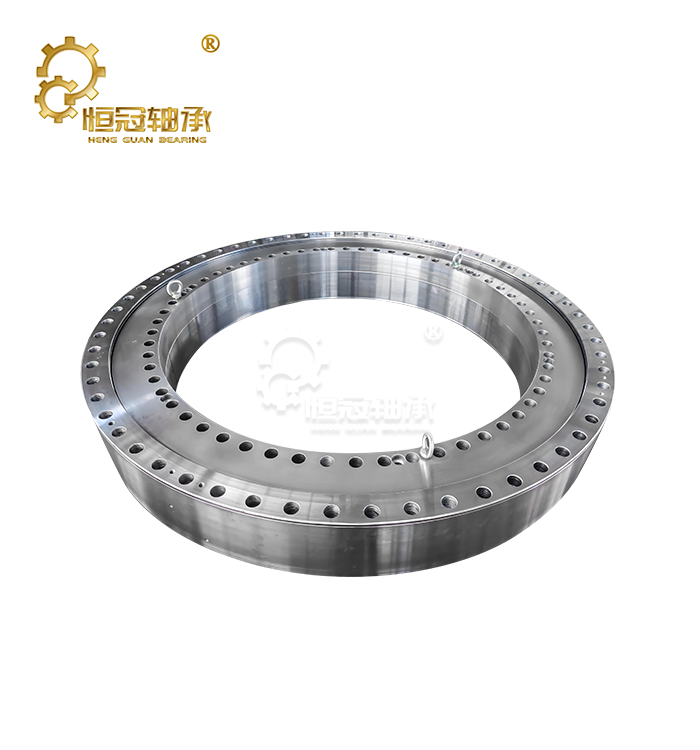
One of the most significant dimensions to acquire is the bolt circle diameter, which will determine if the bearing can be put on the current structure or not.
Engineers shall ensure that:
bolt hole diameter
Bolt hole number and spacing
Pitch circle diameter
Dimensions for mounting surface
Thickness of flange
Surface levelness
Stiffness of structure
Bolt grade and torquing technique.
Gear or drive connection
A bearing that can carry the load but cannot be fitted without considerable structural alteration is not a practical alternative.
Gear Diameter and Drive Compatibility
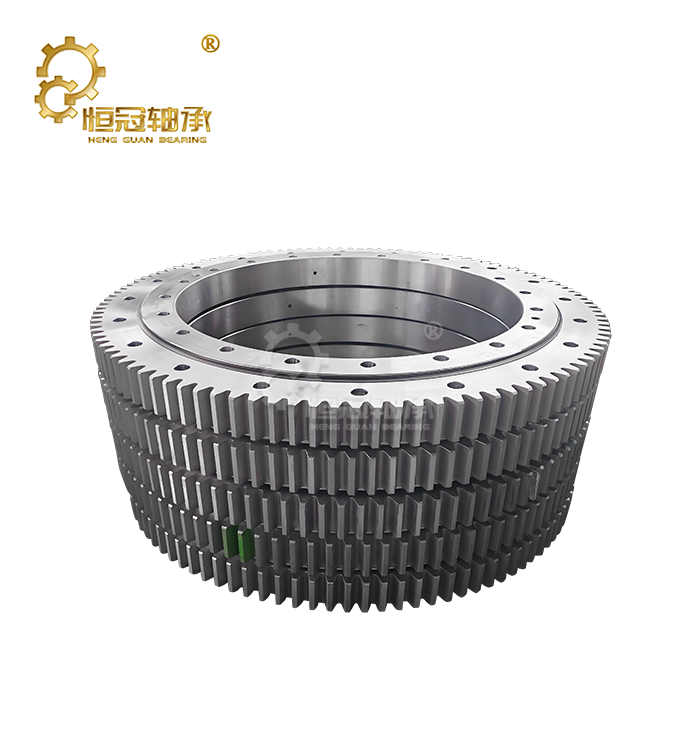
Many slewing bearings for rotating machinery include an incorporated gear. In these circumstances the bearing and gear geometry have to be examined simultaneously.
Some important parameters are gear module or pitch, number of teeth, accuracy of the gear, pinion engagement, backlash, torque of drive, and lubrication. Also, the drive motor and gearbox must be capable of providing appropriate starting and operating torque for the selected bearing and associated structure.
This is particularly the case for large assemblies such as drilling rig slewing bearing, where bearing friction, structural deformation, external loads, and acceleration requirements can all affect the needed drive torque.
Standards and Engineering References for Bearing Selection
Avoiding Misuse of Industry Standards
Slewing bearing selection should not be based on the assumption that one general standard specifies every offshore drilling bearing dimension.
API Spec 8C is a specification for drilling and production hoisting equipment. The current sixth edition was published in July 2025, and its scope covers equipment such as hoisting sheaves, travelling and hook blocks, drilling hooks, elevators, rotary swivels, and related hoisting equipment. It should therefore not be presented as a general dimensional standard for offshore slewing bearings.
For rolling-bearing calculations, ISO 76 provides methods for determining basic static load ratings and static equivalent loads, while ISO 281 addresses dynamic load ratings and rating life. These standards provide useful calculation references, although their applicability to a specific slewing-bearing design must be confirmed because large slewing bearings can have application-specific geometry, preload, clearance, and load-distribution conditions.
ISO 16123:2025 is specifically concerned with slewing bearings for marine cranes and addresses classification, inspection, testing, packaging, transportation, installation, and maintenance. It can be a relevant reference for certain marine applications, but project-specific offshore drilling requirements still need to be considered separately.
Project Specifications and Classification Requirements
For offshore equipment, international standards are only part of the engineering framework. Depending on the rig type and project, additional requirements may come from the equipment OEM, operator specifications, classification society, offshore structural requirements, material specifications, or inspection procedures.
Procurement teams should therefore request the applicable project specification before selecting a bearing. This prevents a technically suitable bearing from being rejected later because its material documentation, inspection level, traceability, or testing does not meet the project requirements.
Load Analysis Should Come Before Bearing Size
Axial, Radial, and Moment Loads
The most important input for bearing sizing is the complete load case.
A typical engineering calculation should distinguish between:
- Axial load: The force acting along the bearing axis.
- Radial load: The force acting perpendicular to the bearing axis.
- Overturning moment: The moment generated by an offset load or by the geometry of the rotating assembly.
The maximum values should not be considered alone. Engineers should also evaluate combinations of these loads during startup, normal operation, braking, emergency conditions, lifting, and other relevant operating states.
Static Capacity and Safety Margin
Offshore machinery may experience periods where the bearing rotates slowly or remains stationary while carrying a substantial load. Static capacity can therefore be as important as dynamic rating.
ISO 76 provides a framework for calculating basic static load ratings and static equivalent loads for rolling bearings, while also identifying limitations where application conditions cause abnormal load distribution, misalignment, preload, or other deviations from conventional conditions.
For a large slewing bearing, the manufacturer's application calculation should account for the actual internal geometry and load distribution rather than relying on a generic catalogue value.
Dynamic Rating and Operating Life
If the bearing undergoes repeated rotation, engineers should also evaluate dynamic loading and expected service life. ISO 281 provides methods for calculating basic dynamic load ratings and rating life, while noting that wear and corrosion require separate consideration.
This distinction matters in offshore environments. A bearing may have sufficient theoretical fatigue life but still experience premature problems because of contamination, inadequate lubrication, corrosion, mounting distortion, or abnormal oscillation.
Materials, Sealing, and Corrosion Protection
Bearing Ring Materials
Large slewing bearing rings are commonly manufactured from alloy or medium-carbon bearing steels selected according to the required strength, hardenability, toughness, and heat-treatment process.
Materials such as 42CrMo or 50Mn may be used in particular bearing designs, but the exact material specification should be confirmed from the manufacturer's drawing and material certificate. It is not appropriate to assume that every offshore drilling rig slewing bearing uses the same steel grade or hardness range.
Raceway hardness, effective hardening depth, core properties, and heat-treatment quality can all affect bearing performance. Procurement documents should therefore include the required material grade and heat-treatment requirements rather than relying only on a product description.
Raceway and Rolling-Element Quality
Raceways must provide suitable hardness, geometry, and surface condition for the intended load. Rolling elements also require controlled dimensional accuracy and surface quality.
Important inspection records may include:
Material certificates
Heat-treatment records
Raceway hardness
Dimensional inspection
Raceway geometry
Radial and axial clearance
Runout measurements
Gear inspection
Non-destructive testing where specified
Final assembly inspection
These records are especially valuable for offshore applications because replacing a large bearing at sea can be significantly more complicated than replacing a bearing in a workshop.
Sealing and Marine Exposure
Salt spray, moisture, contaminated grease, and temperature changes can all affect bearing service conditions. Seal design should therefore be selected according to the actual operating environment.
The sealing arrangement should protect the raceways and rolling elements from water and contaminants while retaining the specified lubricant. Seal material also needs to be compatible with the expected temperature range, lubricant, cleaning chemicals, and environmental exposure.
A manufacturer may recommend different seal materials or configurations depending on the installation location and operating conditions. The seal should therefore be treated as part of the bearing specification rather than as a secondary accessory.
Common Size-Related Failure Risks
Undersized Bearing Selection
An undersized bearing can operate with excessive contact stress, insufficient static safety margin, or excessive deformation. Depending on the load spectrum, this can accelerate raceway fatigue, wear, or permanent deformation.
However, bearing failure should not automatically be attributed to diameter. Incorrect mounting, inadequate lubrication, excessive bolt distortion, contamination, misalignment, and overload can produce similar symptoms.
Excessive Bearing Size
Oversizing also creates problems. A larger bearing may add unnecessary mass and increase procurement, transportation, installation, and drive-system requirements.
For floating offshore equipment, unnecessary weight can have broader structural and operational implications. The best bearing is therefore not necessarily the largest model available. It is the model that satisfies the load, stiffness, life, mounting, environmental, and project requirements with an appropriate engineering margin.
Oscillation and Standstill Conditions
Slewing bearings can experience difficult operating conditions when they move through small angular amplitudes or remain stationary while the surrounding structure experiences vibration or motion. Such conditions can cause localized wear and lubricant displacement.
This is one reason offshore maintenance programs should consider actual movement patterns rather than calculating service requirements only from total operating hours.
How to Select a Drilling Rig Slewing Bearing for Procurement?
Start With the Complete Load Data
Before requesting quotations, procurement teams should provide the manufacturer with enough engineering information to perform a meaningful selection.
A useful technical data package includes:
Maximum axial load
Maximum radial load
Maximum overturning moment
Operating speed
Duty cycle
Required design life
Operating temperature
Marine exposure conditions
Mounting dimensions
Bolt-hole pattern
Gear requirements
Available installation space
Lubrication method
Required seal arrangement
Applicable project standards
Providing this information early reduces the risk of receiving quotations based only on nominal diameter.
OEM Replacement Versus Custom or Aftermarket Supply
For an OEM replacement, the original drawing, bearing identification number, load calculation, and mounting interface should be checked first.
For older rigs, an equivalent replacement may be technically possible, but dimensional compatibility should be verified before procurement. Even a small change in bolt pattern, flange thickness, bearing height, gear geometry, or clearance can create installation problems.
Rather than selecting an aftermarket bearing solely because of a lower purchase price, procurement teams should compare the complete technical package, including the following:
Load calculation
Material traceability
Manufacturing tolerances
Inspection documentation
Heat-treatment records
Gear inspection
Quality-system certification
Previous application references
Warranty conditions
Spare parts and technical support
What to Request From the Manufacturer
A professional RFQ should request more than a unit price.
Ask the manufacturer to provide a general arrangement drawing, technical data sheet, load-rating information, recommended mounting requirements, lubrication instructions, seal specifications, material certificates, inspection documentation, and delivery information.
For a custom offshore bearing, the manufacturer should also confirm the proposed internal design and explain how the bearing has been checked against the supplied load cases.
This documentation creates a stronger technical basis for comparing suppliers and makes later inspection and maintenance easier.
Installation and Maintenance Requirements
Mounting Surface and Bolt Control
Large slewing bearings are sensitive to mounting distortion. If the support structure is not sufficiently flat or rigid, the bearing can experience uneven load distribution.
Installation should therefore follow the manufacturer's specified mounting tolerances. Bolt tightening should also follow the approved sequence and torque or hydraulic-tensioning procedure for the actual bolt grade and joint design.
It is not advisable to apply a universal statement such as “60–80% of bolt yield strength” to every slewing bearing installation. The required tightening method depends on the bolt specification, joint design, friction conditions, installation method, and manufacturer requirements.
Lubrication by Operating Condition
Lubricant quantity should also be based on the actual bearing design rather than on a fixed volume linked only to bearing diameter.
The manufacturer should specify:
Grease type
Base oil characteristics
NLGI grade
Water resistance
Temperature range
Relubrication interval
Grease quantity
Lubrication-point arrangement
Compatibility with existing grease
Automatic lubrication can be useful for large or difficult-to-access bearings because it allows controlled lubricant delivery. However, the system must be correctly configured for the bearing's operating speed and load conditions.
Inspection and Condition Monitoring
Offshore maintenance should combine scheduled inspections with condition-based observations where practical.
Inspection points can include:
Gear tooth condition
Seal condition
Grease contamination
Unusual temperature rise
Abnormal noise
Backlash or clearance changes
Bolt condition
Mounting-surface movement
Raceway or rolling-element damage
If abnormal vibration or operating torque is detected, engineers should investigate the complete system rather than assuming that the bearing itself is the only source of the problem.
Conclusion
Selecting the appropriate drilling rig slewing bearing size for an offshore application requires more than matching a bore diameter to the available installation space. The bearing must be evaluated against axial and radial loads, overturning moment, operating speed, duty cycle, required service life, mounting stiffness, gear requirements, lubrication, sealing, and marine environmental conditions.
There is no universal offshore drilling bearing size or simple diameter-to-capacity formula that can replace an application-specific calculation. Large bearings may be available in diameter ranges extending from hundreds to several thousand millimeters, but the correct size depends on the particular rig, rotating structure, load spectrum, and mounting interface. Static and dynamic bearing calculations can use recognized rolling-bearing calculation methods, while project-specific standards and OEM or classification requirements should be applied according to the equipment and application.
For procurement teams, the most reliable selection process begins with complete load data and a clear dimensional drawing. Material certificates, heat-treatment records, inspection results, mounting requirements, lubrication recommendations, and load calculations should then be reviewed before an order is placed. By evaluating the complete engineering package rather than focusing only on bearing diameter or purchase price, offshore drilling operators and OEMs can select a drilling rig slewing bearing that is better matched to the actual operating conditions and long-term maintenance requirements.
|
|
FAQ
1. What size slewing bearing does my specific drilling rig model require?
The size of your Drilling Rig Slewing Bearing relies on the maximum weight of your drill string, the height of your derrick, and the platform's estimated load capacity. Bearings with a diameter of 2500 to 3500 mm are usually used on rigs that can work in water depths up to 1500 meters. Ultra-deepwater units that can work in depths over 3000 meters need bearings with a diameter of 4500 to 6000 mm. If you look at the original equipment specs for your rig, you can get an idea of the standard sizes. However, if you change to a heavier drill string, you may need bigger new bearings. At Heng Guan, our engineering team does load calculations by looking at your unique working factors and suggesting the best dimensions.
2. How do single-row and three-row roller bearings differ for offshore applications?
Single-row ball bearing designs are good for workover rigs and jack-up platforms that don't need to carry a lot of weight. They have small cross-sections and are easier to maintain. Three-row roller setups work great for heavy-duty drilling tasks. The two horizontal rows spread out the heavy drill string weight, and the vertical row handles the rotating forces from torque and platform movement. Roller bearings can hold three to five times as much weight as equivalent-diameter ball bearings, which makes the extra weight and cost worth it for tough offshore work.
3. Can crane slewing bearings substitute for drilling rig applications?
Even though there are some identical dimensions, direct substitution is not a good idea because of basic design differences. Mobile crane bearings work best for short periods of heavy use followed by long periods of rest, while drilling rig bearings can handle constant spinning while carrying heavy loads. Specifications for offshore drilling call for marine-grade seals and special finishes that aren't used on land-based cranes to make them more resistant to rust. The heat treatment rates of different materials are very different. For example, in drilling bearings, fatigue resistance is more important than impact toughness, which is more important in crane use. Using bearings that aren't stated can void equipment approvals and insurance coverage, and it also increases the chance of a catastrophic failure during important operations.
Partner with Heng Guan for Reliable Drilling Rig Slewing Bearing Solutions
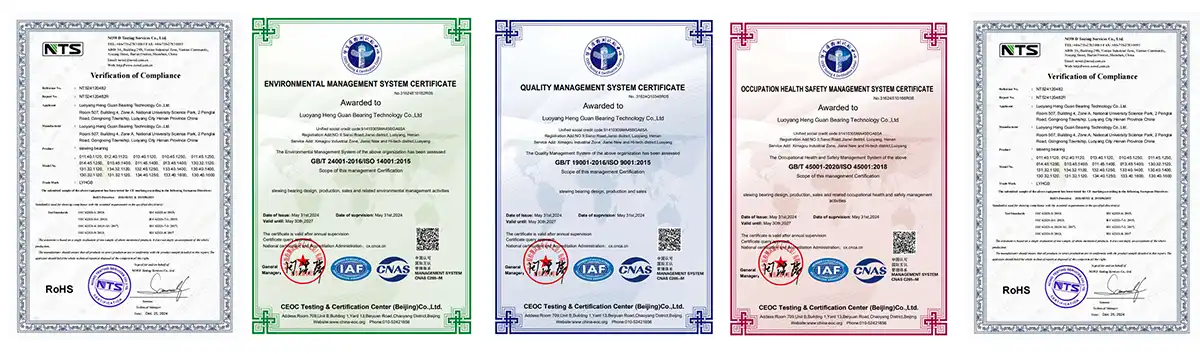
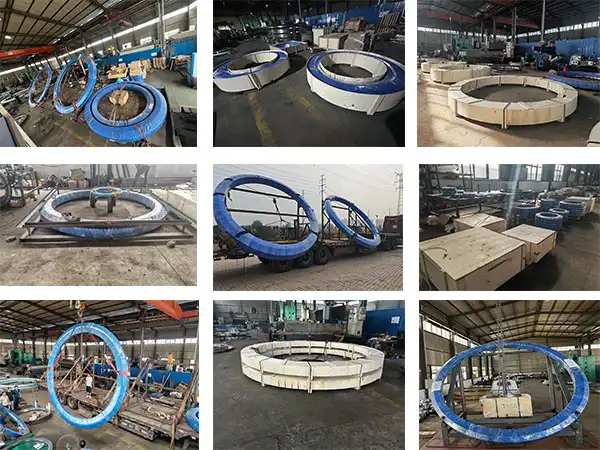
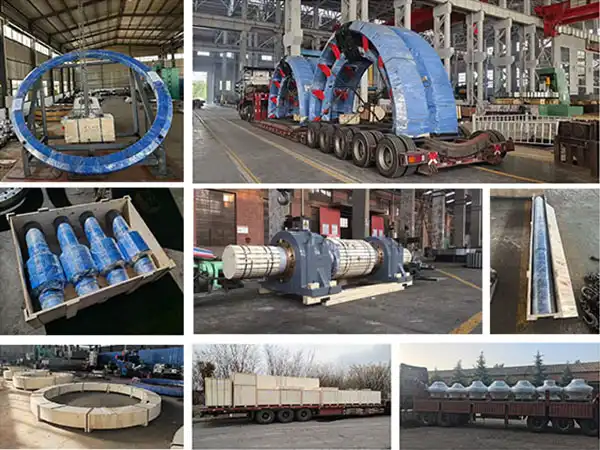
Luoyang Heng Guan Bearing Technology delivers precision-engineered slewing bearing solutions specifically designed for the demanding requirements of offshore drilling operations. We can make Drilling Rig Slewing Bearing sets with diameters from 800mm to 7000mm. These have three-row roller-reinforced designs that are best for managing composite loads in harsh marine settings. Our team of more than 50 engineers has been making specialized bearings for more than 20 years and can help with everything from the initial consultation and custom design to installation instructions and ongoing upkeep practices. Production methods that are ISO9001-certified guarantee consistent quality that meets international standards. Before the goods are shipped, they are put through advanced CNC cutting and thorough testing to make sure they meet performance and size requirements.
We are a well-known company that supplies Drilling Rig Slewing Bearing to users in Asia, Europe, and the United States. We know how important offshore drilling parts are and how failure can lead to high costs and safety risks. Our high-strength 50Mn and 42CrMo alloy steel construction, along with our precision GCr15 rolling elements and marine-grade NBR sealing systems, make for very long-lasting and corrosion-resistant products that are necessary for long-term performance abroad. Our competitive prices show how efficient our Luoyang production base is, and we don't cut corners on quality to meet the needs of foreign drilling operations. Email our technical team at mia@hgb-bearing.com to talk about your exact size needs, operational factors, and shipping dates. We offer custom solutions backed by full guarantees and quick help to make sure that your offshore drilling operations keep running at their best.
References
1. Chen, W., & Liu, X. (2021). Structural Design and Load Analysis of Large-Diameter Slewing Bearings for Offshore Equipment. Journal of Mechanical Engineering Science, 235(18), 3456-3472.
2. International Organization for Standardization. (2013). ISO 12855:2013 - Slewing Bearings. Geneva: ISO Standards Catalogue.
3. American Petroleum Institute. (2019). API Specification 8C: Drilling and Production Hoisting Equipment. Washington, DC: API Publishing Services.
4. Morrison, T. R., & Zhang, H. (2020). Materials Selection for Marine Environment Bearing Applications: Corrosion Resistance and Mechanical Properties. Materials Performance and Characterization, 9(4), 612-635.
5. Patel, V. K., & Eriksson, L. (2022). Comparative Analysis of Slewing Bearing Configurations in Heavy Industrial Applications. International Journal of Rotating Machinery, Volume 2022, Article ID 8834567.
6. Williams, J. D., & Nakamura, S. (2018). Installation and Maintenance Best Practices for Large-Diameter Slewing Bearings in Offshore Drilling Systems. Offshore Technology Conference Proceedings, Houston, Texas, Paper OTC-28967-MS.

WHAT OUR CUSTOMERS SAY
Here is the customer's evaluation of us