




RD 700 Slewing Bearing Load Capacity: What Buyers Should Check
Choosing the right slewing ring for a heavy-duty rotating structure starts with understanding load capacity, and getting it wrong is expensive — an undersized bearing on a quay crane or mining shovel seizes mid-cycle, halts a berth or a dig face for weeks, and forces a teardown that dwarfs the cost of the part itself. If you are comparing suppliers for an RD 700 slewing bearing, Heng Guan Bearing has put together this overview so you know which numbers actually matter before you sign a purchase order. Below, we'll look at how load ratings are worked out, which load types deserve your attention, and how mounting choices change real-world performance for equipment running continuous heavy-cycle duty.
How Is RD 700 Slewing Bearing Load Capacity Calculated?
A single number is not a typical way for engineers to rate a slewing ring. Rather, they will provide a load-moment diagram showing permitted axial load vs tilting moment for a specific rotational speed. This schematic for the RD 700 slewing bearing shows the ball-and-roller raceway geometry, the contact angle, and the ring cross-section. Because the RD 700 is essentially an RD 700 roller ball combination slewing ring, its rating curve is not a straight line as it would be for a single-row ball bearing — the upper cylindrical roller row (line contact) manages high-moment, high-axial conditions by spreading load over a wider contact path and reducing contact stress, while the lower ball row (point contact) helps with radial guidance, smoother rotation and minor self-alignment to offset structural deflection.
The series covers five roller diameter grades - Ø32, Ø36, Ø40, Ø45 and Ø50 mm - which are all matched to a unique pitch diameter and height envelope, such that the roller length-to-diameter ratio, ball size, ring section and bolt hole design are optimized for a particular load situation rather than being scaled evenly. Buyers should always ask the manufacturer for the real load diagram instead of just a single “maximum load” number, since a bearing that seems big on paper might be undersized when you include eccentric loading. Heng Guan Bearing supplies these curves with every quote so engineers can size the first time appropriately.
| Roller Grade | Pitch Dia. (DL) Range | Height H | Weight Range | Typical Application |
|---|---|---|---|---|
| Ø32 mm | 3,550 – 4,250 mm | 159 mm | 2,028 – 2,455 kg | Large port handling, mid-size wind, large mining excavator |
| Ø36 mm | 4,000 – 4,750 mm | 175 mm | 2,792 – 3,363 kg | Container crane, large wind turbine, stacker reclaimer |
| Ø40 mm | 4,500 – 5,300 mm | 183 mm | 3,673 – 4,329 kg | Quayside crane, ultra-large wind, heavy mining shovel |
| Ø45 mm | 5,000 – 6,000 mm | 203 mm | 5,201 – 6,129 kg | Offshore platform crane, ultra-large container crane, giant dragline |
| Ø50 mm | 5,600 – 6,700 mm | 221 mm | 6,397 – 7,708 kg | Super-heavy offshore crane, largest rotating excavator |
Axial, Radial, and Moment Loads: What Should Buyers Check?
Each slewing ring takes three load types simultaneously – axial (thrust), radial, and tilting moment – and purchasers are frequently guilty of verifying just one. For an RD 700 slewing bearing fitted to a jib crane, port gantry or excavator platform, the moment load is generally the critical load as it represents the overturning impact of an offset boom or attachment. Take, for example, a container crane lifting a 40–65–ton spreader and box 60 meters outboard of the bearing centerline. The resulting overturning moment dwarfs the pure axial load, and that’s exactly why the roller row exists: to carry that moment and axial thrust through line contact, allowing the ball row to keep radial clearance tight through continuous rotation.
This type of ball-and-roller combination construction is a common choice for a container crane slewing ring because the roller row takes the heavy axial and moment loads from lifting and slewing containers, while the ball row maintains radial guidance stability under the cyclic loads of continuous terminal duty. Before purchase, have your supplier confirm the maximum combined load case and not just the isolated axial or radial values. Ask for the eccentricity ratio the bearing was rated against, since actual operating situations seldom match a single clean load direction.
| Application | DL Range | Gear Config | Defining Load |
|---|---|---|---|
| Wind turbine yaw | 3,550 – 5,300 mm | External (121) | Huge axial weight + overturning moment from 150 m+ rotor |
| Container / mobile port / gantry crane | 4,000 – 6,000 mm | External (121) | 40 – 65 t load at 60 m offset → extreme moment |
| Mining excavator / dragline | 4,000 – 6,700 mm | Internal (122) | Upper structure >1,000 t; peak moment at full stick load |
| Offshore platform crane | 4,500 – 6,700 mm | Internal (122) | Salt spray + wave dynamic loads + continuous moment |
RD 700 Slewing Bearing Load Ratings and Safety Factors
Published load ratings are only useful once you know what safety factor sits behind them. Reputable manufacturers apply a static safety factor derived from ABMA and ISO methodologies, accounting for shock loading, duty cycle, and expected service life. For an RD 700 roller ball combination slewing ring, Heng Guan Bearing typically recommends a safety factor comfortably above the industry baseline for cranes and lifting equipment, since intermittent shock loads during hoisting are common and the raceway's induction-hardened surface (HRC 55 – 62, precision-ground after hardening with a profilometer-verified finish) is what resists the resulting contact-stress peaks.
Rings are forged from quenched-and-tempered 42CrMo alloy steel for core toughness, with rollers and balls in vacuum-degassed GCr15 bearing steel with controlled inclusion ratings — material choices that directly raise the fatigue life the safety factor is meant to protect. Buyers should also request fatigue life data (in hours or number of revolutions) rather than static capacity alone, because a bearing can pass a static check yet still wear prematurely under cyclic loading.
If your engineering team can share the load spectrum and duty cycle up front, our technical staff is reachable at mia@hgb-bearing.com to confirm the correct safety margin for your specific RD 700 slewing bearing application before production begins.
| Load Type | Governing Factor | Why It Matters |
|---|---|---|
| Static axial / moment | ABMA/ISO static safety factor | Prevents permanent raceway deformation under peak load |
| Dynamic radial | Fatigue life (revolutions) | Governs service life under continuous rotation |
| Shock / impact duty | Elevated safety margin | Hoisting shock on cranes exceeds the steady-rated load |
| Eccentric loading | Combined load-moment curve | Real loads are offset; single-figure ratings hide the peak |
| Material quality | 42CrMo rings, GCr15 rollers, controlled inclusions | Cleaner steel raises the fatigue limit, and the factor protects |
|
|
How Do Mounting and Operating Conditions Affect Load Capacity?
A slewing ring's catalog rating assumes a rigid, flat, evenly torqued mounting surface — conditions that are not always met on real machinery. Structural flatness, bolt preload, and mounting-frame stiffness all influence how evenly the load is distributed around the raceway of an RD 700 slewing bearing. Insufficient bolt torque or an uneven support structure concentrates stress on a smaller arc of the raceway, effectively lowering the usable load capacity below the rated figure — which is why each roller grade in the series has its bolt-hole pattern optimized independently rather than copied from the next size down.
Operating environment matters too: temperature extremes, contamination, and lubrication intervals all affect long-term performance, particularly for a container crane slewing ring exposed to salt air and constant vibration, or an offshore crane facing wave dynamic loads on top of the container moment. Sealing choice follows the environment — heavy multi-lip NBR for standard industrial duty, labyrinth seals for mining dust, and FKM (Viton) seals for marine salt-spray exposure, sometimes paired with multi-layer zinc/aluminum thermal spray coating for offshore corrosion resistance.
Buyers should specify mounting-surface flatness tolerances, bolt grade, sealing type, and lubrication schedule in their purchase documentation, and should not assume that two bearings with identical catalog numbers will perform the same on differently prepared structures.
| Sealing / Coating Option | Environment | Purpose |
|---|---|---|
| Heavy multi-lip NBR | Standard industrial duty | Keeps grease in, general contamination out |
| Labyrinth seal | Mining dust, abrasive grit | Non-contact barrier survives heavy particulate |
| FKM (Viton) seal | Marine salt spray, offshore | Resists heat, chemicals, and salt atmosphere |
| Zinc/aluminum thermal spray | Offshore corrosion duty | Multi-layer coating for long-term marine protection |
Conclusion
RD 700 slewing bearing capacity depends on more than one number — geometry, safety factors, and mounting conditions all matter together. The roller-and-ball combination structure, sized across five roller grades from Ø32 to Ø50 mm and pitch diameters from 3,550 to 6,700 mm, is engineered to carry the extreme overturning moments that quayside cranes, mining shovels, and offshore platforms generate. Heng Guan Bearing designs, tests, and customizes RD 700 slewing rings so buyers get dependable rotation support. Reach out and let us size your project correctly.
FAQ
Q1: What makes the RD 700 slewing bearing different from a standard ball slewing ring?
A: It combines an upper cylindrical roller row (line contact) with a lower ball row (point contact). The roller row carries the heavy axial and moment loads by spreading stress across a wider path, while the ball row provides smoother rotation, radial guidance, and self-alignment — giving higher axial and moment capacity than a pure ball design of the same envelope.
Q2: Is the RD 700 series suitable for container crane applications?
A: Yes, its combined structure is a common choice for a container crane slewing ring handling heavy, offset lifting loads. The Ø36 to Ø50 grades cover container and mobile-port crane duty from 4,000 to 6,000 mm pitch diameter, sized for 40–65–ton loads suspended 60 meters outboard.
Q3: How does Heng Guan Bearing determine safety factors for RD 700 bearings?
A: We follow ABMA/ISO methodology and adjust the factor upward for shock-heavy duty cycles common in lifting equipment. The 42CrMo forged rings, induction-hardened raceways (HRC 55 – 62), and vacuum-degassed GCr15 rolling elements all raise the fatigue limit that the safety factor is meant to protect.
Q4: Does bolt torque really affect slewing bearing load capacity?
A: Yes, uneven bolt preload or a non-flat mounting surface can reduce usable capacity well below the catalog rating. Each roller grade in the RD 700 series has its bolt-hole pattern optimized independently, so following the specified torque sequence and flatness tolerance is essential to realize the rated load.
Q5: Can the RD 700 slewing bearing be customized for gear type?
A: Yes, it is available without gear (120 prefix), with an external gear (121 prefix), or with an internal gear (122 prefix), depending on drive requirements. Internal gearing protects the drive from wave impact and debris on offshore and mining machines; external gearing is standard for port cranes and wind yaw systems.
Q6: What sealing should I specify for an offshore RD 700 installation?
A: For offshore salt-spray exposure, specify FKM (Viton) seals in place of the standard multi-lip NBR, and consider a multi-layer zinc/aluminum thermal spray coating for long-term corrosion protection. Labyrinth seals are the better choice for mining dust duty where abrasive particulate is the main concern.
Get an RD 700 Slewing Bearing Quote
Ready to confirm the right load rating for your project? Send your load spectrum, dimensions, and duty cycle to mia@hgb-bearing.com, and Heng Guan Bearing's engineering team will return a load-moment diagram and quotation tailored to your RD 700 slewing bearing application.
References
1. ANSI/ABMA STD 9. Load Ratings and Fatigue Life for Ball Bearings. American National Standards Institute / American Bearing Manufacturers Association.
2. Harris, T. A., & Kotzalas, M. N. (2006). Advanced Concepts of Bearing Technology: Rolling Bearing Analysis (5th ed.). CRC Press.
3. ISO 76:2006. Rolling bearings — Static load ratings. International Organization for Standardization.
4. ISO 281:2007. Rolling bearings — Dynamic load ratings and rating life. International Organization for Standardization.
5. Brändlein, J., Eschmann, P., Hasbargen, L., & Weigand, K. (1999). Ball and Roller Bearings: Theory, Design and Application (3rd ed.). John Wiley & Sons.
6. ABMA STD 26.2. Slewing Ring Bearings — Metric and Inch Design Standard. American Bearing Manufacturers Association.

WHAT OUR CUSTOMERS SAY
Here is the customer's evaluation of us
YOU MAY LIKE
_1767713770881.webp) VIEW MORESlewing Bearing Customize
VIEW MORESlewing Bearing Customize VIEW MORERKS.324012324001 Slewing Bearings
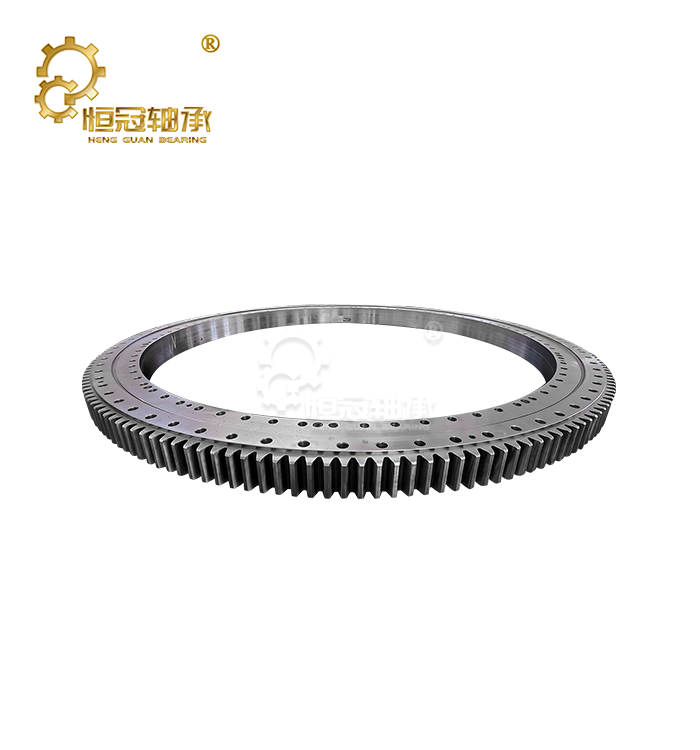 VIEW MORE130.50.3150 slewing bearing
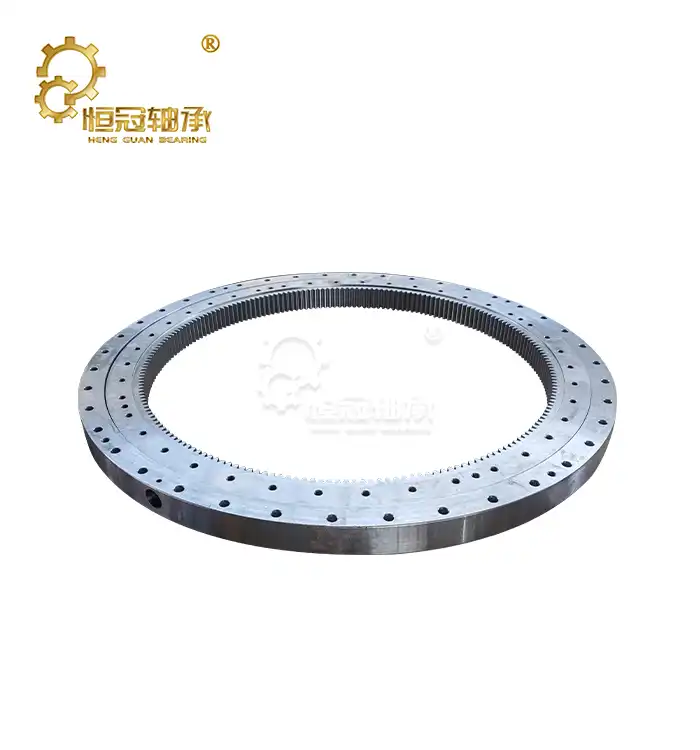 VIEW MORE131.40.1600 Slewing Bearing
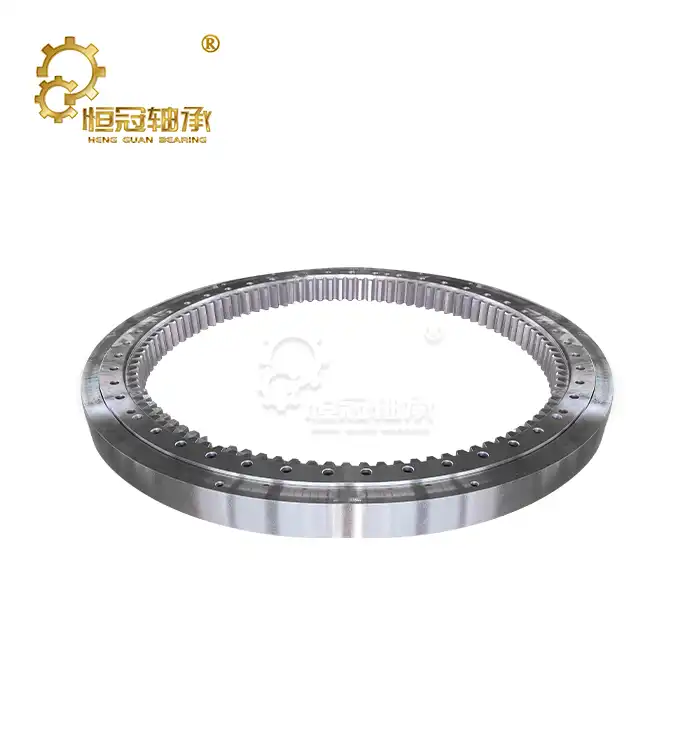 VIEW MORESingle-row ball slewing ring (HS series)
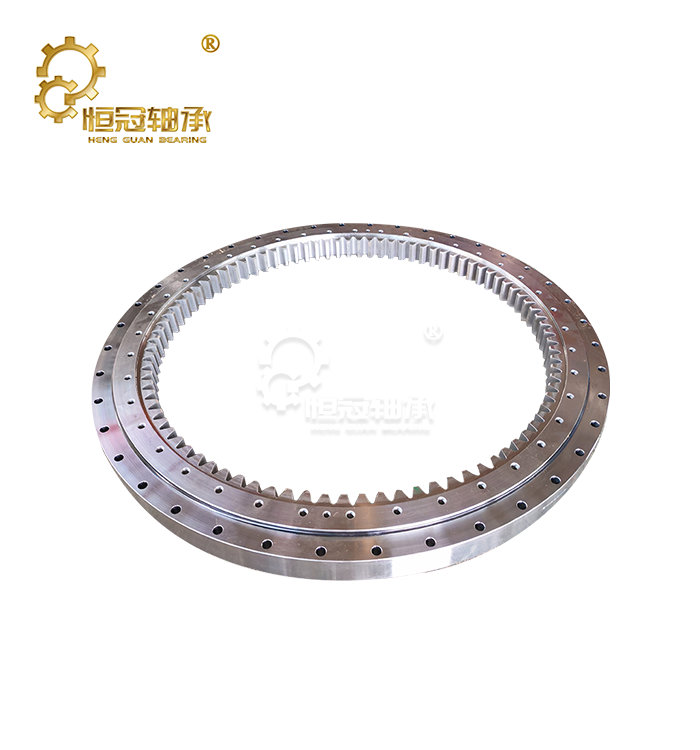 VIEW MORECat Excavator slewing bearing
 VIEW MORECrusher Gear Ring
 VIEW MOREIntegral Copper Cage Slewing Bearing