



Efficient Port Crane Slewing Bearing for Continuous Operation
In the tough world of port operations, keeping cranes working all the time is essential for keeping operations running smoothly and making money. Port crane slewing bearing systems are the most important parts of these lifting machines because they allow the machines to move smoothly while carrying heavy loads in rough sea conditions.
Unlike ordinary industrial bearings, port crane slewing bearings are subject to difficult working conditions such as strong axial loads, radial forces, overturning moments, salt spray, and frequent start-stop cycles. The reliability of container cranes, ship loaders, and other heavy-duty port equipment is directly influenced by the bearing’s design quality, the strength of the material, the sealing performance, and the maintenance requirements.
The bearing of choice in heavy-duty port cranes is the modern three-row roller slewing bearing. Their high load capacity and good load distribution capabilities make them very suitable. These bearings enable unexpected downtime and continuous port operations with improved raceway structures, resilient materials, and innovative manufacturing techniques.
How Do Port Crane Slewing Bearings Support Heavy-Duty Lifting Operations?
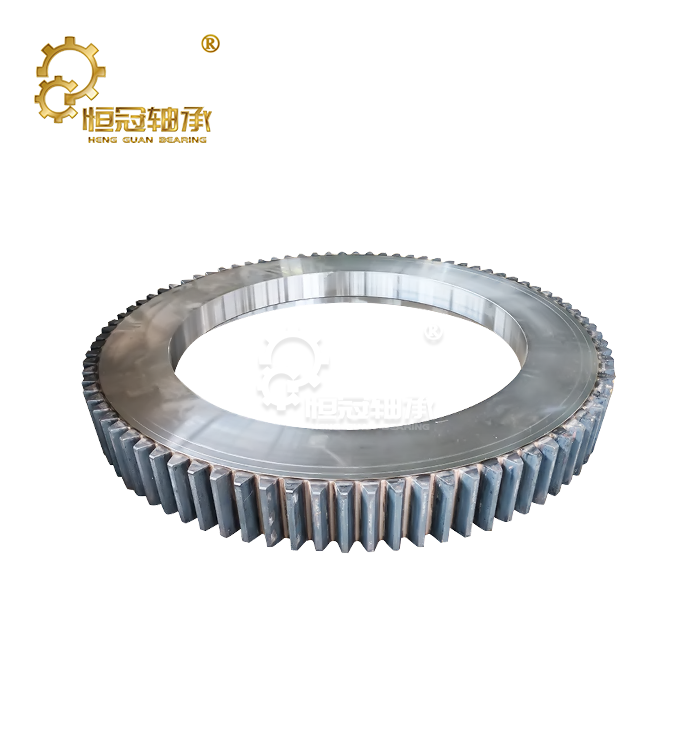
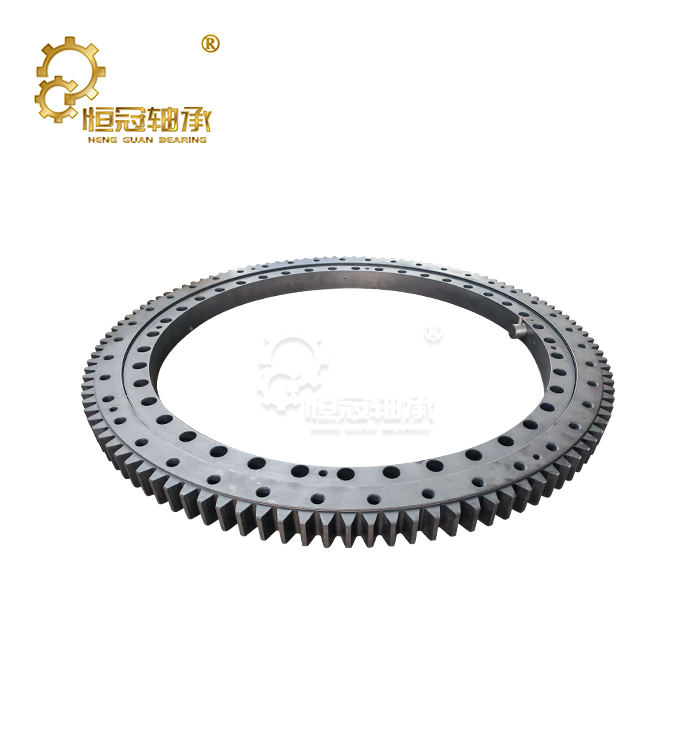
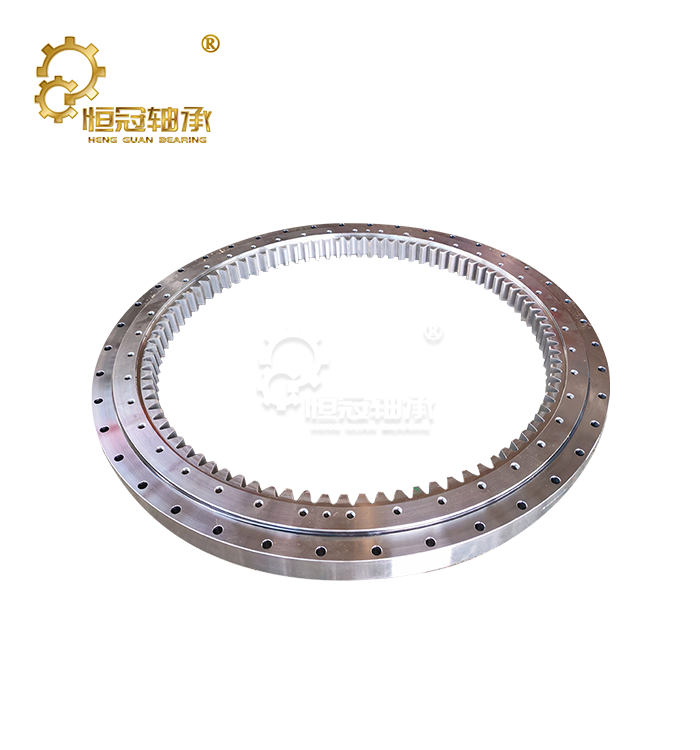
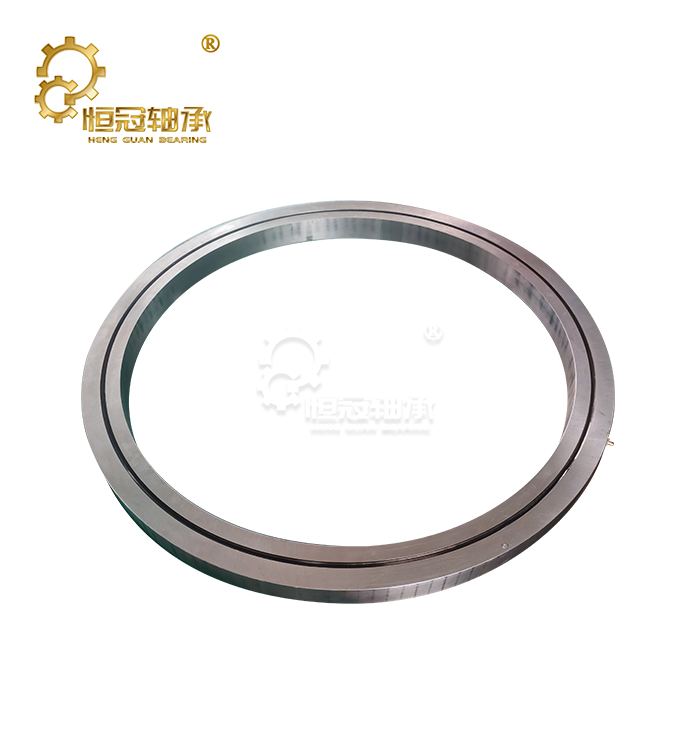
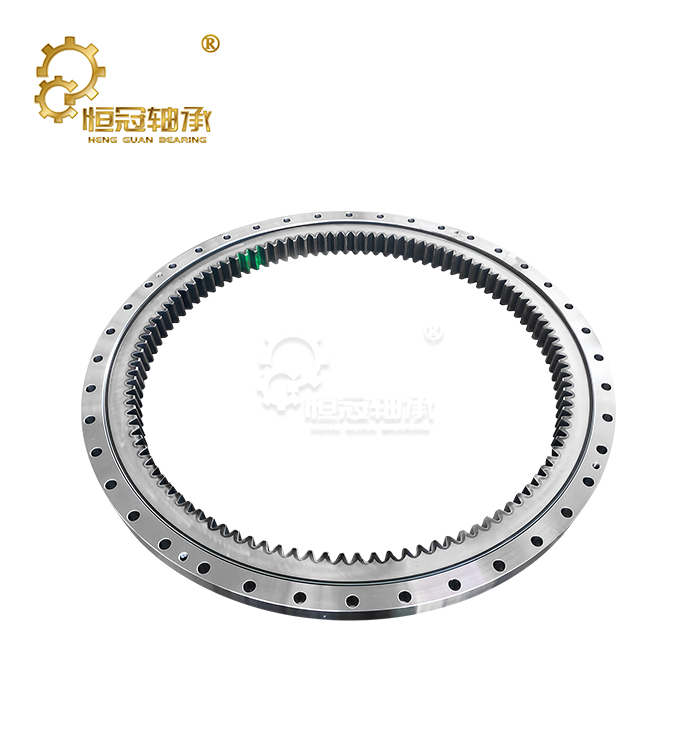
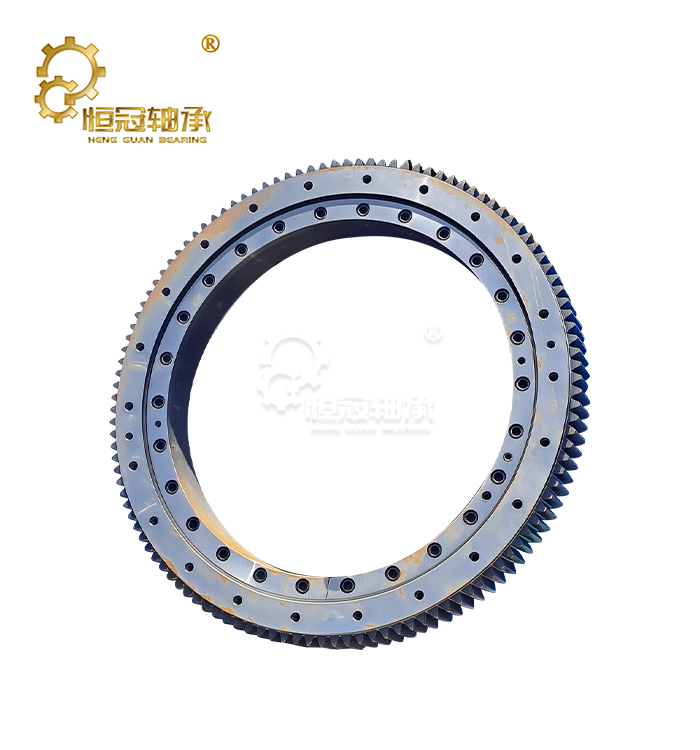
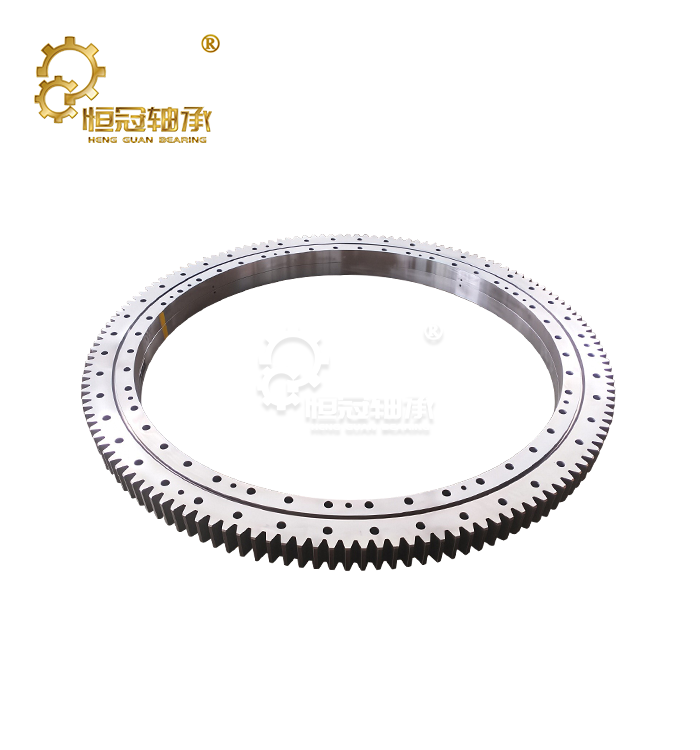
A slewing bearing is a large diameter rotating component that is mounted between the top rotating framework of the crane and the stationary base. The main purpose of it is to provide a regulated rotation that also transmits numerous forms of load created during actions of lifting.
Cranes in port applications often deal with containers, bulk materials, and big goods. The bearing must be able to cope during operation with:
Axial loads due to weight of lifted cargo
Radial forces due to movement of crane
Tilting moments due to off-center loading situations
Since these forces occur simultaneously, not individually, the structural design of port crane slewing bearings must be capable of maintaining stability during the continuous fluctuation of loads.
Three-row roller slewing bearings are most advantageous for heavy-duty port equipment because the independent roller raceways can better disperse different types of loads. Roller designs have wider contact surfaces than ball-type slewing bearings; therefore, the contact stress on the individual rolling parts can be lower for a given load.
The better load distribution extends service life and keeps rotation accurate even under heavy work schedules for crane applications that operate around the clock.
Structural Design Features That Improve Bearing Reliability
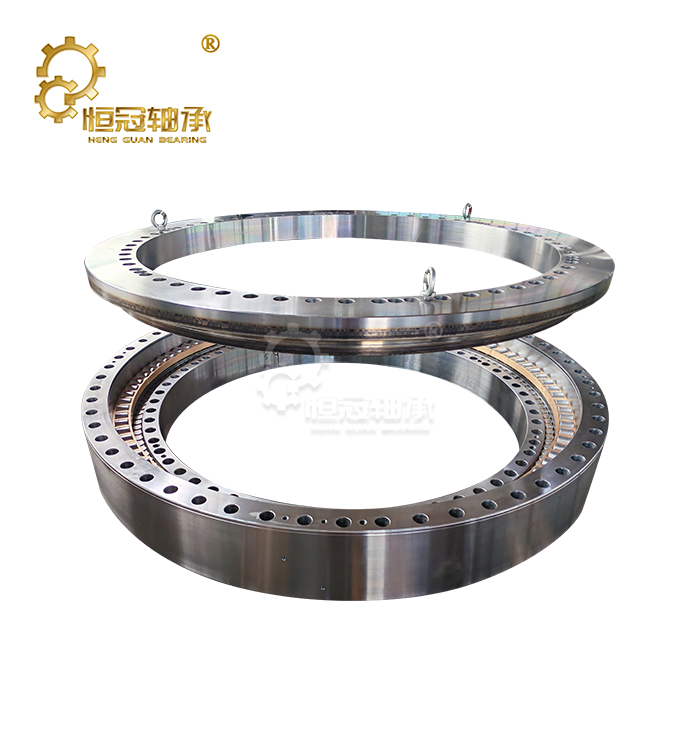
The performance of a port crane slewing bearing is greatly influenced by its internal structure and manufacturing accuracy. The bearing contains inner and outer rings, raceways, rolling elements, spacers, sealing systems, and mounting holes.
Raceways are machined to precision for proper contact between rollers and bearing rings. Proper raceway geometry is important for uniform load transfer and to reduce localized stress concentrations that might cause premature wear.
In heavy-duty applications, bearing rings are often made of high-strength alloy steels, such as 42CrMo and 50Mn, which have outstanding mechanical strength, impact resistance, and fatigue performance. Controlled heat treatment procedures are employed to optimize the material structure to improve hardness and endurance under repeated loads.
The rolling elements are usually made of good quality bearing steel such as GCr15SiMn. This material has good wear resistance, constant dimensional correctness, and reliability in long-term use.
Sealing protection is another significant design aspect. Port cranes are often exposed to seawater, humidity, dust, and corrosive particles. The high-grade nitrile rubber (NBR) or fluororubber (FKM) sealing systems prevent impurities from entering the bearing and at the same time preserve the performance of the lubricant.
Good design of the sealing structure helps to limit risks of internal contamination and enables longer maintenance intervals. This is of great importance for cranes operating in busy terminals where downtime can cause considerable economic losses.
Material Selection and Manufacturing Quality Behind Long-Term Performance
Reliable operation in port crane applications calls for careful selection of the material. The operational reliability of slewing bearings is closely related to the material fatigue resistance and the manufacturing precision, as they are subjected to millions of rotational cycles over their service life.
High-Strength Materials for Marine Operating Conditions
Heavy-duty port crane bearing rings need outstanding mechanical qualities to sustain impact loads and constant tension. Materials such as 42CrMo have a good mix of hardness and tensile strength, which can be used for large-diameter slewing bearing constructions.
The heat treatment methods such as quenching and tempering strengthen the internal structure of the material and increase resistance to deformation. Proper treatment will also help to retain the proper hardness of the raceway surfaces during prolonged operation.
The rolling components use GCr15SiMn bearing steel, which offers the hardness and wear resistance required for repetitive contact loads. The material is of consistent quality, so the rollers and raceways are always in stable contact. This prevents uneven wear and increases the bearing’s service life.
Precision Manufacturing and Quality Control
Manufacturing control of large slewing bearings should be tight, as slight dimensional deviations could impair load distribution and operating stability.
Inspections are generally performed by professional manufacturers during the entire production process, including:
Dimensional accuracy testing
Hardness testing of raceways
Surface quality check
Assembly clearance check.
Performance final check
For customized port crane slewing bearings, engineering teams will take into account crane construction, operating speed, maximum loading circumstances, and environmental parameters before choosing the optimum bearing design.
This tailored method helps ensure that the bearing meets the precise needs of container cranes, gantry cranes, ship unloaders, and other port equipment.
Maintenance Strategies to Extend Port Crane Slewing Bearing Service Life
But selecting a good bearing does not mean that it will run continually. Good maintenance practices also reduce unexpected breakdowns and maximize equipment availability.
A carefully structured maintenance program can help operators search for early warning signals, improve lubrication schedules, and reduce the chances of costly crane shutdowns.
Early Detection of Bearing Problems Through Condition Monitoring
The majority of port crane slewing bearing failures are gradual, leading to complete failure of the machine. Routine inspections allow maintenance professionals to identify problems early.
Some common warning signs include:
Unusual noise while operating
Increased levels of vibration
Over-rotation resistance
Extraordinary warming
Contamination of lubricant
Vibration monitoring has been a frequent practice in industrial equipment maintenance. Changes in vibration patterns are an indication of problems such as damage to raceways, roller wear, or lack of lubrication.
Temperature monitoring might also yield useful information. Overheating can be a sign of friction problems, lack of lubrication, overloads, or internal damage.
Operators can arrange repairs before failures disrupt port output by linking inspection data to maintenance records.
Maintenance Practices for Reliable Long-Term Operation
“Port cranes require a regular maintenance approach to work efficiently. Port crane slewing bearings are exposed to huge loads and harsh weather conditions. Maintenance plans should be based on real working conditions, not on fixed dates.
Lubrication Management and Contamination Control
Proper lubrication is one of the most important factors affecting the service life of slewing bearings. Poor lubrication can produce higher friction between the rolling elements and raceways, while too much or improper grease can also have a negative effect on performance.
Lubrication intervals for port crane applications should be adapted to the following:
Hours of crane usage
Load magnitude Ambient temperature
Exposure to seawater and dust
Operating hours per day
Good quality grease will provide a protective coating between the contacting surfaces, thereby decreasing wear and enhancing robustness to repeated loading. Automatic lubrication systems can improve the uniformity by delivering the proper amount of oil at the right time.
Preventing contaminants is as important as controlling the lubricants. Salt particles, moisture, and dust can enter into the bearing, accelerating the surface degradation and shortening the operating life. If you inspect the seals regularly, you can identify problems before they become big failures.
Inspection Procedures and Preventive Maintenance Planning
“Port operators can better control the risks of equipment through preventive maintenance. Maintenance staff can monitor performance indicators and service the bearings during planned downtime, rather than waiting for the bearings to fail.
Suggested actions for inspection include:
control of circumstances of bolt fastening
Monitoring of inappropriate noise and vibration.
Inspecting for seal damage
Lubrication condition assessment
Recording changes in operating performance
Service records can be very detailed and can be used to determine long-term performance trends. Lubrication dates, inspection findings, and operating hours are data that are important references for future maintenance decisions.
For large port facilities, where crane availability is key to cargo flow, preventive maintenance can significantly lower unscheduled downtime and enhance overall operational efficiency.

Selecting the Right Port Crane Slewing Bearing for Your Application
Choosing the correct slewing bearing requires a comprehensive evaluation of crane structure, loading conditions, operating environment, and expected service life. The lowest purchase price does not always represent the best solution because bearing replacement costs and crane downtime can greatly exceed the initial investment.
A professional selection process considers both technical performance and total cost of ownership.
Comparing Different Slewing-Bearing Designs for Port Equipment
Different slewing bearing structures are suitable for different crane applications.
Single-Row Ball Slewing Bearings
Single-row four-point contact ball bearings are commonly used in applications requiring compact designs and moderate load capacity. Their relatively simple structure makes them suitable for smaller cranes or equipment where installation space is limited.
However, for large port cranes handling heavy containers or bulk cargo, their load capacity may not meet demanding operating requirements.
Double-Row Ball Slewing Bearings
Double-row ball slewing bearings provide increased load capacity compared with single-row designs. They can support higher radial and axial loads while maintaining a relatively compact structure.
These bearings are often used in medium-duty lifting equipment where balanced performance between capacity and installation requirements is needed.
Three-Row Roller Slewing Bearings
For heavy-duty port cranes, three-row roller slewing bearings are usually the preferred choice because of their superior load-bearing capability.
The three independent roller raceways allow axial loads, radial loads, and moment loads to be distributed efficiently. This design reduces stress concentration and improves stability during heavy lifting operations.
For container gantry cranes, ship loaders, and other high-capacity port equipment, Port Crane slewing bearing solutions based on three-row roller technology provide reliable support for continuous operation.
Key Factors to Consider Before Purchasing
When selecting a slewing bearing supplier, buyers should evaluate more than product specifications. Manufacturing capability, engineering support, and quality assurance processes are equally important.
Important purchasing considerations include the following:
Load Requirements
The bearing must match the crane’s maximum lifting capacity, working radius, and expected load cycles. Incorrect load selection may result in accelerated wear or premature failure.
Operating Environment
Marine environments create additional challenges due to humidity, salt spray, and temperature changes. Bearings used in ports require effective sealing systems and corrosion-resistant surface protection.
Customization Capability
Every crane design has different mounting dimensions and operating conditions. A supplier with engineering customization capability can optimize bearing structure, mounting configuration, and material selection according to specific equipment requirements.
Quality Control Capability
Reliable manufacturers should provide inspection documentation and quality assurance information, including material certificates, dimensional inspection reports, and testing records.
A supplier’s ability to maintain consistent manufacturing quality directly influences long-term equipment reliability.
Installation Requirements for Maximum Bearing Performance
Correct installation is critical because even a high-quality bearing may experience reduced service life if installed incorrectly.
Large-diameter slewing bearings require careful handling, accurate positioning, and proper bolt-tightening procedures.
Professional Installation Procedures
Before installation, technicians should inspect the following:
Mounting surface flatness
Supporting structure accuracy
Bolt hole alignment
Bearing surface condition
Uneven mounting surfaces can create additional stress on bearing rings and lead to uneven load distribution.
During installation, lifting equipment should be used correctly to prevent impact damage. The bearing should be positioned according to manufacturer recommendations, and mounting bolts should be tightened using the specified torque sequence.
Proper bolt preload ensures that the bearing remains securely connected to the crane structure during operation.
After installation, functional testing should be performed to verify the following:
Smooth rotation
Proper clearance
Correct lubrication
Stable operating performance
Technical Support and After-Sales Service
For large port crane projects, technical support is an important factor when selecting a slewing bearing supplier.
Professional suppliers should provide assistance throughout the product lifecycle, including:
Bearing selection guidance
Installation support
Maintenance recommendations
Troubleshooting assistance
This technical cooperation helps reduce operational risks and ensures that the bearing performs according to design expectations.
A reliable supplier relationship can also simplify future replacement planning and maintenance management.
Improving Continuous Port Operations with Advanced Bearing Solutions
As global ports continue to increase automation and cargo-handling efficiency requirements, slewing bearing technology is also evolving. Modern solutions focus not only on load capacity but also on monitoring, predictive maintenance, and operational optimization.
Smart Monitoring and Predictive Maintenance Technology
Condition monitoring systems are increasingly applied to heavy industrial equipment. Sensors installed on crane components can collect information about:
Temperature changes
Vibration levels
Lubrication status
Operating conditions
This data allows maintenance teams to identify potential issues before they cause equipment interruption.
Predictive maintenance reduces dependence on emergency repairs and helps ports schedule maintenance activities during planned shutdown periods.
For high-frequency crane operations, combining advanced monitoring technology with reliable bearing design provides an effective approach to improving equipment availability.
Reducing Downtime Through Optimized Bearing Solutions
Port operators face increasing pressure to improve productivity while controlling maintenance costs. A properly selected and maintained slewing bearing contributes directly to the following:
Longer service intervals
Reduced unexpected failures
Improved crane availability
Lower lifecycle operating costs
The right bearing solution should not only meet current operating requirements but also provide sufficient reliability for future workload increases.
Working with an experienced slewing bearing manufacturer allows port operators to receive solutions tailored to their crane design, operating environment, and performance objectives.
|
|


Conclusion
Modern port operations require equipment that can perform reliably under continuous heavy-duty working conditions. As a critical rotating component, the port crane slewing bearing directly influences crane stability, lifting efficiency, and long-term operating costs.
Three-row roller slewing bearings provide excellent load distribution, high structural strength, and reliable performance for demanding port applications. However, achieving maximum service life depends on multiple factors, including proper material selection, precision manufacturing, correct installation, and effective maintenance management.
By choosing a professional bearing supplier with strong engineering capabilities, strict quality control, and customization experience, port operators can reduce downtime, improve equipment reliability, and maintain efficient cargo handling operations.
Investing in the right slewing bearing solution is not only a component purchase but also a long-term strategy for improving port productivity and operational stability in an increasingly competitive maritime industry.
FAQ
1. Why are three-row roller slewing bearings better for use in port cranes?
Three-row roller slewing bearings can handle axial, radial, and moment loads all at the same time because they distribute loads optimally across multiple contact points. The roller parts can hold more weight than ball bearings, and the three-row design makes sure that stress is distributed evenly, which increases the bearings' useful life in harsh port settings.
2. How do the elements of the surroundings affect the choice of bearings for port cranes?
Maritime settings have their own problems, such as corrosion from salt spray, high humidity, changing temperatures, and pollution from ship dust. Heavy-duty marine-grade materials, improved sealing systems, and corrosion-resistant treatments are used in our port crane slewing bearing designs to make sure they work well in these tough circumstances.
3. How often should repairs be done for continued operation?
Maintenance times rely on how hard the machine is used, the surroundings, and how the load changes over time. In general, lubrication should happen every 500 to 1000 hours of use, and full checks should be done every three months. Condition tracking tools can make the best use of these times by using the real condition of the bearings instead of set schedules.
4. What effect do exact grades have on the operation of port crane bearings?
Higher precision grades (P4, P5) have better geometric accuracy and tighter tolerances for dimensions. This makes the process easier, and the load is spread better. It costs more to buy top-precision grades at first, but they work better and last longer in demanding port crane uses.
Partner with Heng Guan for Superior Port Crane Slewing-Bearing Solutions
Luoyang Heng Guan Bearing Technology stands ready to support your port crane bearing requirements with over two decades of specialized engineering experience. Our comprehensive port crane slewing bearing portfolio includes custom-designed solutions that match your exact specifications while delivering exceptional performance in demanding maritime environments. With ISO 9001 certification, advanced CNC manufacturing capabilities, and global presence across 50+ countries, we provide reliable bearing solutions backed by comprehensive technical support. Our team of 50+ specialized engineers works only on developing slewing bearings, so we can come up with new solutions that make operations run more smoothly.Email our technical team at mia@hgb-bearing.com to talk about your unique needs and find out how our experience as a port crane slewing bearing maker can help your business with reliable, cost-effective solutions.
References
1. Zhang, L., & Wang, M. (2023). New technologies for heavy-duty port equipment slewing bearings. 45(3), 234–251 in the International Journal of Maritime Engineering.
2. Reynolds, R., and Nielsen, K. (2022). Strategies for Predictive Maintenance of Slewing Bearings in Port Cranes. The Port Technology Quarterly 18(4) is 67–82.
3. It's Chen, H., Li, X., and Rodriguez, A. (2023). Choice of Material and Resistance to Corrosion in Maritime Bearing Applications. Review of Marine Engineering, 39(2), 145–162.
4. It's Johnson, P., and Williams, S. (2022). A look at the costs and benefits of using premium bearing technologies in container terminal work. Magazine for Port Equipment International, 31(7), 89–104.
5. Singh, V., & Anderson, J. (2023). The best ways to install large-diameter slewing bearings in port cranes. No. 28(5), pp. 112-127, Heavy Lifting Magazine.
6. Davis, D., and Mitchell, C. (2022). Monitoring the condition of port crane bearing systems to improve their performance. Part 44(9) of Industrial Maintenance Quarterly is pp. 203-218.

WHAT OUR CUSTOMERS SAY
Here is the customer's evaluation of us