



Marine Crane Slewing Bearing: Key Aspects and Considerations
When you're buying important parts for marine lifting equipment, the Deck Crane Slewing Bearing is one of the most important things you can choose. This unique rotating unit allows for smooth movement in all directions and can handle the axial loads, radial forces, and twisting moments that are created during lifting operations at the same time. Marine-grade slewing bearings are very different from normal industrial ones because they have to work for years without stopping because of rust in salt water, changes in the pitch and roll of the vessel, and extreme temperature changes. Understanding the technical features, upkeep needs, and selection criteria for these bearings has a direct effect on the safety of operations, the downtime of your equipment, and the total cost of ownership for your marine lifting assets.

Understanding Deck Crane Slewing Bearings: Basics and Functions
When it comes to cranes, marine slewing bearings are the pivot point that connects the moving upper part to the stable platform base. These engineered structures, unlike simple rotational joints, can handle multiple force directions at the same time and keep their exact placement even when they are under dynamic loading.
Core Working Principles
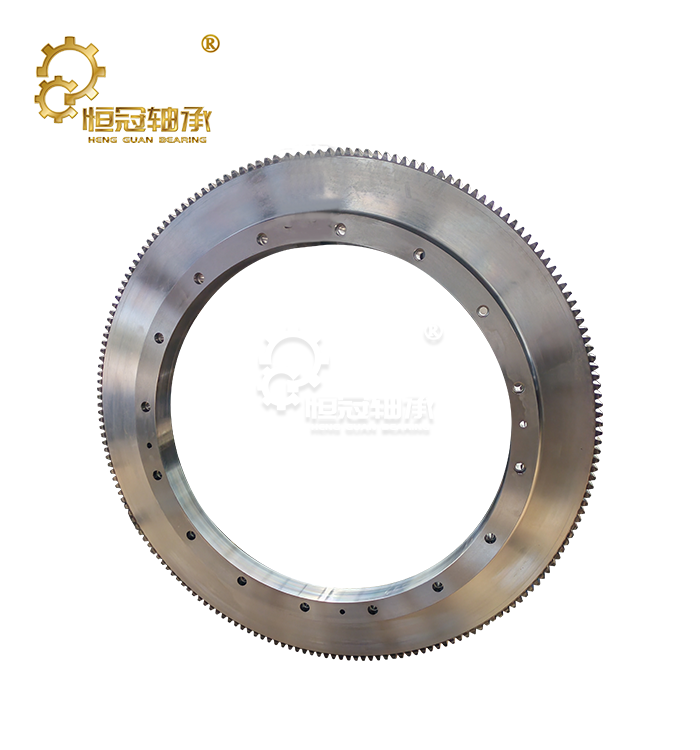
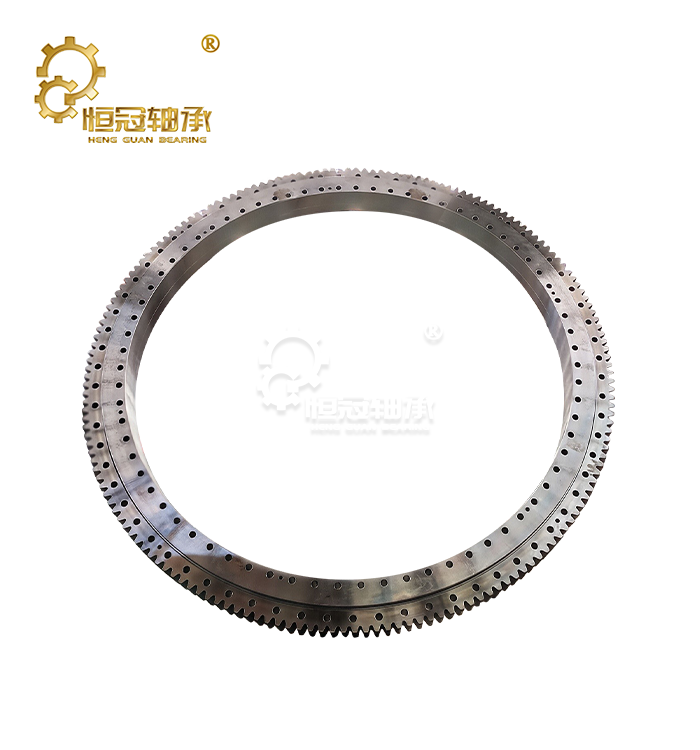
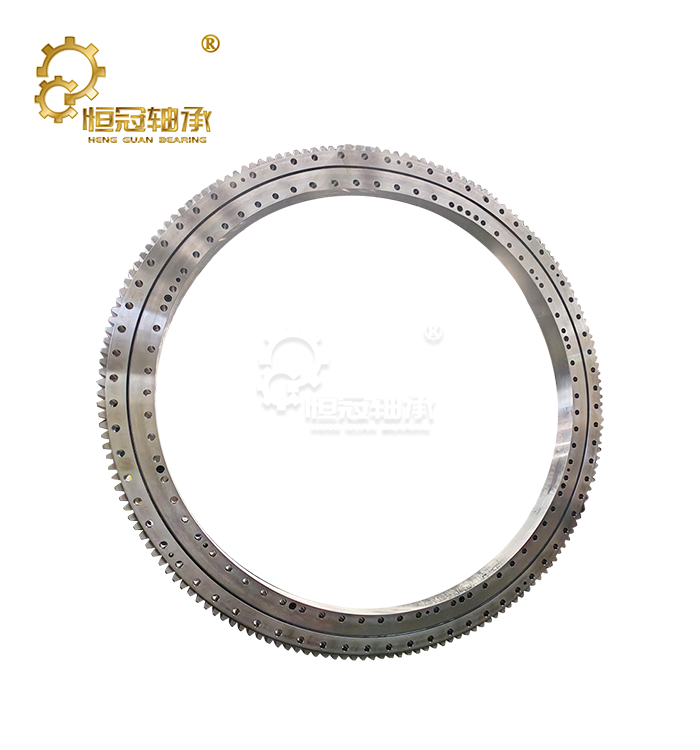
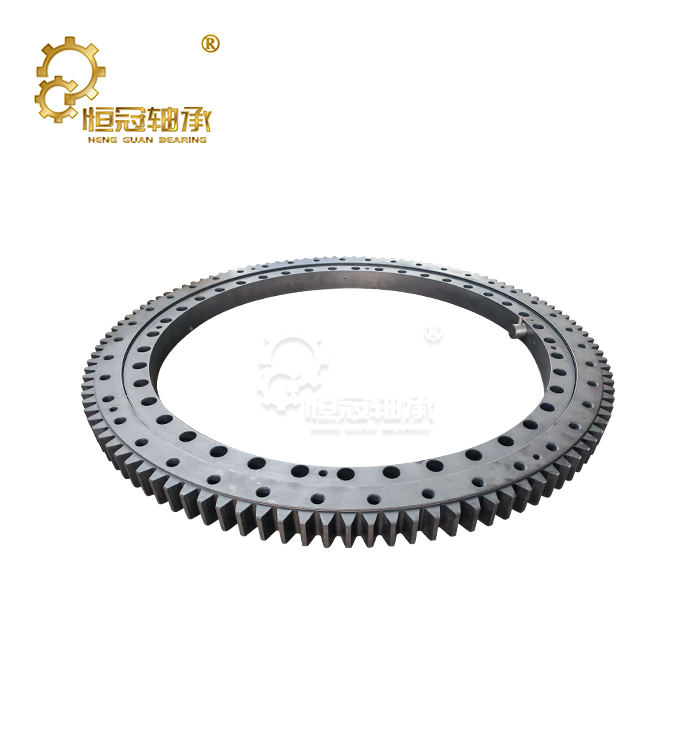
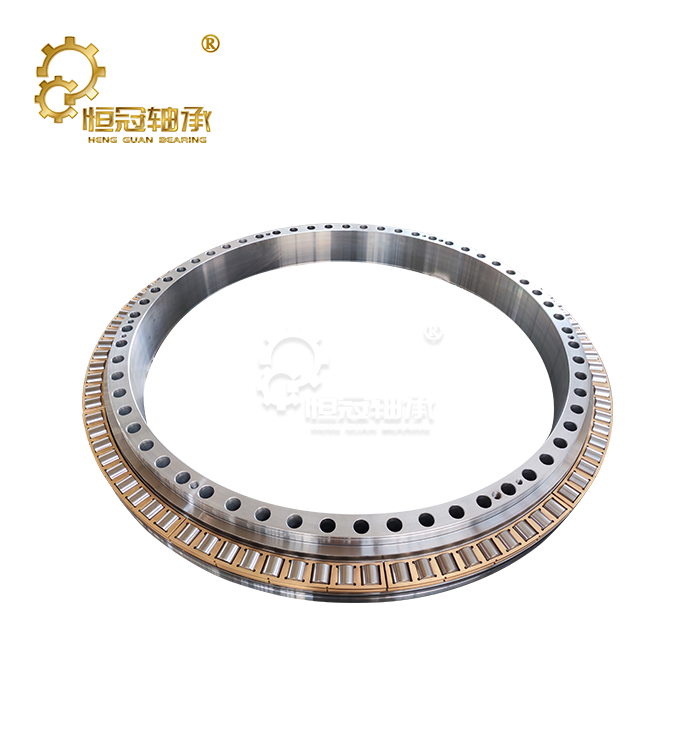
The basic form includes an inner ring, an outer ring, and precision-machined rolling elements that are placed between protected raceways. When you use a Deck Crane Slewing Bearing, these parts spread out heavy loads over a larger contact area. This lowers stress levels that could otherwise cause the bearing to break too soon. For our heavy-duty marine uses, the three-row roller design, which is 4950 × 4100 × 270 mm, evenly distributes loads along axial, radial, and moment force directions. This way of building supports the crane's dead weight, the weight of the goods it lifts, and the overturning moments that happen when the boom goes beyond the middle of the vessel during offshore operations.
Common Structural Configurations
In marine uses, there are three main types of bearing designs, and each one is best for a certain type of loading. Single-row four-point contact ball bearings are small and can be used in lighter-duty situations where installation height is limited by the room. With double-row ball shapes, the load capacity goes up while the profile stays pretty low. Three-row cylindrical roller structures can hold the most weight, which makes them perfect for heavy-lift ship cranes and offshore building boats that usually carry more than 500 tonnes of weight. The roller design in these parts divides the axial and radial load paths, which lets each row handle a different type of force. Because of this, three-row designs are most common for bulk carriers, container ships, and specialized marine platforms that need to be able to lift heavy things.
Material Selection and Heat Treatment
High-strength alloy steels like 50Mn and 42CrMo are what naval slewing bearings are made of. These materials go through full quenching and tempering heat treatments that make their mechanical properties better for tough working situations. The rolling elements are made of GCr15SiMn bearing steel, which has a surface hardness of 58 to 62 HRC and a core stiffness that is high enough to handle shock loads. This way of heating something makes the outside harder and less likely to wear down from touch, while keeping the inside flexible so it doesn't break when it's hit by something hard. The seal materials are made of oil- and wear-resistant nitrile rubber compounds that are designed to stay flexible in temperatures ranging from -30°C to +80°C, which is typical of maritime lines that use slewing bearings for marine crane suppliers that go from the Arctic to tropical seas around the world.
Identifying and Preventing Common Issues in Deck Crane Slewing Bearings
Proactive repair plans that look for early warning signs of problems before they get worse and cause catastrophic breakdowns are directly linked to equipment reliability.
Early Warning Symptoms
Strange operating noises are the first sign that something is wrong with slewing bearing systems. Grinding sounds usually mean that the bearings aren't well-oiled or that there are sharp bits between the rolling elements and the raceways. Noises like clicking or popping during spinning are often signs of surface spalling, which happens when pieces of material have come away from the raceway surfaces because of stress cracks spreading. Too much play or looseness in the slewing action could mean that the bolt preload has been lost or that the rolling element contact zones have worn down. If you look closely and see rust spots around the edges of the seal, it means that the environmental protection has been weakened, letting saltwater in, which speeds up the rusting process. If you see any of these signs together, you should look into it right away to avoid further damage to nearby crane parts and possible safety problems during lifting operations.
Inspection Protocols and Best Practices
Effective preventive maintenance programs are built around regular check plans that are adjusted to fit the level of activity. Visual inspections should be done once a month to record the state of the seals, the torque of the fasteners, and any signs of lubricant leaks or contamination. Checking the tension of mounting bolts with measured torque tools, measuring rotational resistance to find out what the normal friction levels are, and using thermal imaging to find hot spots that show abnormal wear patterns are all part of detailed checks that happen every three months. For yearly full checks, the crane has to be taken down so that the raceways can be carefully inspected with borescopes, measurements have to be taken to see how much wear has happened, and non-destructive tests like ultrasound examination have to be done to find the start of underground cracks. The records from each inspection cycle build trend data that lets maintenance planners plan ahead and replace parts during planned breaks instead of having to fix problems that happen out of the blue and stop cargo operations.
Lubrication Management Strategies
Proper lubrication increases the life of bearings by reducing the friction between metals and creating a shield against conditions that are likely to rust. When it comes to performance, marine-grade greases with NLGI Grade 2 consistency and lithium complex or polyurea thickeners work best in a range of weather and water exposure circumstances. The number of times you should lubricate depends on how hard you work, but usually you should do it every 100 hours of operation or once a month, whichever comes first. Over-lubrication is just as dangerous as not lubricating enough because too much grease creates hydraulic pressure that can break seals and move protection films off of important contact surfaces. Using automatic lubrication systems eliminates the chance of mistakes made by people when scheduling upkeep and ensures that the grease is evenly spread throughout the bearing assembly. This is especially helpful on ships that handle goods all the time.
Comparing Deck Crane Slewing Bearings: Making Informed Procurement Decisions
To choose the best bearing design, you have to weigh a number of technical factors against your unique operating needs and budget.
Design Architecture Comparison
When deciding between single-row and double-row ball bearings for Deck Crane Slewing Bearing, the main trade-off is between fitting height and load capacity. Single-row four-point contact setups require less axial room than similar double-row designs, usually 15% to 20% less. This makes them good for retrofit uses where component selection is limited by structural height. Loads are spread out over twice as many contact points in double-row designs. This essentially doubles the static load values and improves fatigue life under cyclic loading conditions. Three-row roller bearings, like our 4950 × 4100 × 270 mm unit made for a big naval gear, can handle 40–60% more weight than double-row ball designs because they have line contact geometry instead of point contact geometry found in ball-type bearings. When moving big loads, this capacity advantage is very important because safety factors need to take into account the dynamic increase effects that happen when the ship moves in seaway conditions.
Material Performance Characteristics
Corrosion protection is probably the most important thing that sets naval bearings apart from industrial bearings used on land. Standard bearing steels don't oxidize because they have protective lubricant films and are kept in protected settings. But naval uses need extra protection. Using phosphate conversion coats on the surface and then marine-grade epoxy paint systems on top of them makes multiple layers of protection against saltwater contact. Galvanic rusting doesn't happen when different metals touch each other in electrolytes, when stainless steel seals and bolts are used. For rolling elements in settings with a lot of corrosion, advanced material specifications may include through-hardened stainless martensitic steels. However, these luxury materials are 30–50% more expensive to buy than standard bearing steel specifications.
Global Manufacturer Landscape
There are a number of well-known companies that slewing bearing for marine crane suppliers make marine slewing bearings. Each has its own technical philosophy and area of benefits. European companies like Rothe Erde and SKF stress precise engineering and detailed technical paperwork that backs up approvals from classification societies. Japanese companies like NSK and Timken focus on new material science discoveries that make things last longer when they are loaded and unloaded many times. Chinese companies like ZYS and Heng Guan Bearing offer reasonable prices and a lot of customization options. This is especially helpful for non-standard uses that need custom measurements that aren't listed in a catalog. When looking at different sources, you should think about more than just the price per unit. You should also think about how easy it is to get spare parts, how long the guarantee lasts, and how much the maker trusts the product to last. We make slewing bearings with diameters ranging from 50 mm to 10,000 mm and precision grades P0, P6, P5, and P4. Our advanced CNC cutting and ISO 9001 certification make sure that the quality of each output batch is the same.

Procurement Guide: Sourcing and Ordering Deck Crane Slewing Bearings
When making strategic sourcing choices, you have to weigh the needs for technical performance against business factors like wait times, pricing structures, and the stability of your suppliers.
Supplier Qualification Criteria
When looking for reliable makers, the first thing you should do is check for quality management certifications that show systematic process controls. Marine-specific approvals from classification societies like DNV, ABS, Lloyd's Register, or Bureau Veritas show that goods meet strict safety standards for the sea. ISO 9001 certification is the basic level of quality security. Ask for proof of the steps used for heat treatment, material approvals that show how the alloy was made and how it was tested in the mill, and data from measurement inspections that show the tolerances were met. Providers that offer full professional support, such as application engineering, installation advice, and troubleshooting help, add value that goes beyond the product itself. We keep a team of more than 50 committed engineers who work on bearing solutions and offer design advice and custom engineering services for the whole span of your equipment.
Customization and Lead Time Planning
Standard store items, including Deck Crane Slewing Bearing, usually ship within 4 to 6 weeks, but special designs need longer production times. If your application needs non-standard sizes, a changed internal shape, or specific material requirements, you should let the project planners know about them early on. Accurate quotes and reasonable delivery times are made possible by detailed technical drawings that show the measurements of the mounting interface, the load specs, and the environmental working conditions. We are experts at customizing things that aren't standard, and we can meet clients' specific needs even if they don't have full 3D models. We can do this by using reverse engineering to copy old parts or improve designs for better performance. If you plan your purchases 12 to 16 weeks before the installation date, you'll have extra time for making, foreign shipping, and clearing customs without having to rush through important quality control steps.
Commercial Considerations and Contract Terms
Large naval bearings are priced based on how much the materials cost, how hard they are to make, and how many are ordered. Most of the time, buying in bulk across multiple boats or signing a supply deal that lasts for more than one year can get you 10-15% lower prices than buying just one unit. Carefully read the guarantee terms, paying attention to how long the coverage lasts, what failures are considered, and the supplier's duties to replace or fix the product. Full warranties that last 18 to 24 months from the date of commissioning or 36 months from the date of delivery give customers faith in the product's reliability. To keep everyone's risk at bay, payment terms could include deposits when the order is confirmed, progress payments at key points in the making process, and full settlement after the delivery is inspected. We have clear pricing and open payment options to work with the financial planning cycles of shipyards, vessel owners, and original equipment manufacturers (OEMs) for all of our customers in more than 50 countries, including many in North America.
|
|


Best Practices for Optimal Performance and Longevity of Deck Crane Slewing Bearings
To get the most out of your investment in quality Deck Crane Slewing Bearing marine bearings, you need to be careful about maintenance and make decisions based on data throughout their operating lives.
Routine Maintenance Scheduling
Setting up inspection schedules that are in sync with working activity stops damage from going unnoticed and keeps maintenance costs from going too high. Ships that handle a lot of goods every day in port should do eye checks once a week and more in-depth checks once a month. Ships that use their cranes only sometimes during offshore supply trips can increase the time between checks to once a month for eye checks and once every three months for full assessments. In addition to regular human checks, condition monitoring technologies like vibration analysis, acoustic emission monitors, and temperature tracking keep an eye on things all the time. These automated systems find strange trends in how things are working that point to problems that are about to happen. They then start a study before the problems get worse and affect their ability to work. By using digital maintenance management systems, you can keep records that can be checked to make sure you're following the rules. You can also collect past data that helps improve predictive maintenance algorithms over time.
Predictive Maintenance Technologies
Advanced monitoring methods look at operating data to guess how parts will be doing and figure out the best time to do a repair. By comparing current spectral patterns to baseline readings, vibration signature analysis can find the specific frequencies that are linked to fault modes like raceway spalling, wheel misalignment, or structural looseness. Trending analysis shows important factors like friction torque, working temperature, and lubricant state over time to see if they change gradually before they break suddenly. During operation, thermography scans show thermal abnormalities that could mean that the load isn't distributed evenly or that certain parts of the bearing system aren't properly oiled. When you combine these tracking technologies with maintenance management platforms, forecast algorithms suggest the best time to intervene based on how much the component is being used and how likely it is to fail. This usually means that bearing service life is extended 20–30% beyond what would be expected with time-based maintenance.
Real-World Performance Optimization
A company that runs bulk carriers that serve trade routes along the Pacific Rim put in place thorough repair plans for ships that had our three-row roller slewing bearings supporting 40-tonne ship cranes. Standard vibration patterns and temperature patterns during standard product handling cycles were found using baseline operations data. Monthly trend reviews showed that the temperature of one bearing slowly rose over three months. This led to a thorough check that showed early-stage seal failure, letting some water in. A proactive seal change during a planned port call stopped rust from getting worse, which would have required a full bearing replacement, which would have taken 12 weeks of ship downtime and cost $180,000 in parts and labor. This intervention shows how regular upkeep and systematic tracking can protect investments in capital equipment while keeping it working, which is important for the economy of commercial shipping.
Conclusion
Deck Crane Slewing Bearing systems are big expenses that need to be carefully specified, carefully chosen suppliers, and carefully maintained. Managing axial, radial, and moment loads at the same time in corrosive saltwater settings is very difficult and needs custom-engineered solutions that include the right structure layouts, material choices, and protective coatings. Three-row roller designs, like our 4950 × 4100 × 270 mm heavy-duty unit, can hold a lot of weight and last a long time, making them perfect for tough uses on ships. Partnering with experienced makers that offer customization options, full technical support, and proven global delivery capabilities can help procurement choices that balance technical performance against business concerns. By using predictive maintenance strategies, you can get the most out of your equipment's bearing service life and uptime, protecting your business investments over decades of marine service.
|
|


FAQ
1. What distinguishes marine-grade slewing bearings from standard industrial versions?
Marine slewing bearings have special systems to keep them from rusting. These systems include multi-layer surface treatments, stainless steel plugs, and marine-grade greases that are made to last in saltwater. Specifications for materials often call for higher toughness levels so they can be used in a wide range of temperatures, from the Arctic to the tropics. The designs of structures take into account the dynamic stress that comes from moving ships, and they have higher safety factors than those used on land.
2. How do I determine the appropriate bearing configuration for my specific crane application?
Load calculation is the first step in choosing the right bearings. To figure out the total axial, radial, and moment loads, you need to look closely at the highest lifted weight, the geometry of the boom, and the operating radius. Three-row roller configurations are best for lifting loads that are heavier than 30 tonnes, while two-row ball configurations are better for lighter-duty tasks where small size is an advantage. Talking to bearing makers makes sure that the right specifications are used, taking into account things like duty cycle, environment, and room limitations.
3. What factors most significantly impact slewing bearing service life in marine applications?
The main things that affect how long something works are the quality of the lubrication and how often it is maintained. No matter what quality material specs are, if there isn't enough lubrication or contamination, wear happens faster. A correct fitting, which includes using the right bolt torque and preparing the fastening surface, stops misalignment that causes loads to be concentrated widely. Protecting the environment with good sealing systems reduces rust, which weakens moving surfaces and structures.
Partner with Heng Guan for Your Marine Bearing Solutions
Heng Guan Bearing Technology specializes in designing slewing solutions for marine uses because we know how hard your shipboard lifting equipment is on the rotating parts. We are in Luoyang, China, which is known as the bearing production center. We have been creating and making Deck Crane Slewing Bearing assemblies with Deck Crane Slewing Bearing diameters from 50 mm to 10,000 mm for over 20 years, using precision grades P0 through P4. Our factory is ISO 9001-certified and uses advanced CNC cutting, specialized heat treatment equipment, and thorough testing methods to make sure that the quality is always the same. We work with OEMs, builders, and vessel owners in more than 50 countries, and we can make changes to meet non-standard needs and support older equipment. Contact our engineering team at mia@hgb-bearing.com to talk about your unique needs and find out how our solutions can help you improve your marine lifting operations. We are a reliable Deck Crane Slewing Bearing provider that combines technical know-how with quick service.
References
1. American Bureau of Shipping (2021). Guide for the Certification of Lifting Appliances. ABS Technical Publications, Houston, TX.
2. Budynas, R.G. & Nisbett, J.K. (2020). Shigley's Mechanical Engineering Design, 11th Edition. McGraw-Hill Education, New York.
3. Det Norske Veritas (2022). Rules for Classification of Ships: Part 2 Chapter 4 - Lifting Appliances. DNV GL, Oslo, Norway.
4. Harris, T.A. & Kotzalas, M.N. (2019). Advanced Concepts of Bearing Technology: Rolling Bearing Analysis, 5th Edition. CRC Press, Boca Raton, FL.
5. Society of Naval Architects and Marine Engineers (2020). Marine Cargo Handling Equipment Design and Specification. SNAME Technical and Research Bulletin 3-58, Alexandria, VA.
6. Wensing, J.A. (2018). On the Dynamics of Ball Bearings: Experimental Analysis and Theoretical Modeling. University of Twente Press, Enschede, Netherlands.

WHAT OUR CUSTOMERS SAY
Here is the customer's evaluation of us