



How to Maintain 133.50.3150 slewing bearing Performance?
The cost of downtime when a gantry crane slewing ring breaks in operation may soon dwarf the cost of the bearing replacement itself, with missed output, idle labour and emergency expedited delivery all adding up. A 133.50.3150 slewing bearing requires constant maintenance to be in good working order for years of heavy-duty usage; the original purchase price is of considerably less importance. Heng Guan Bearing Technology Co., Ltd. manufactures this type of three-row roller bearing for gantry cranes, port cranes, ladle turrets and bucket wheel excavators. From experience, we know that even the best-engineered rings need adequate maintenance to achieve their maximum service life. This handbook details the maintenance processes, lubrication techniques, inspection schedules and technical reference data that maintain your bearing working reliably year after year.
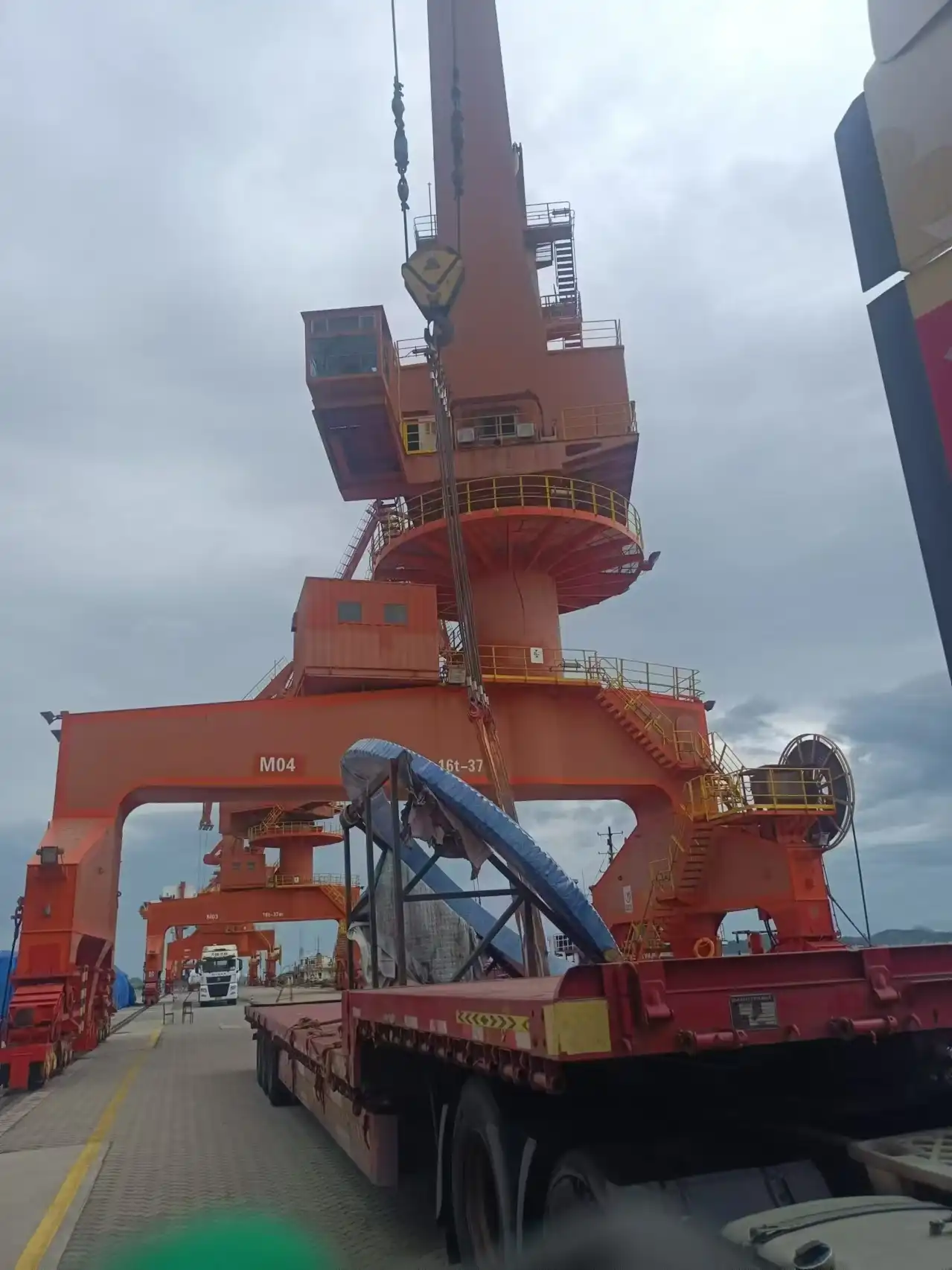
What Are the Key Maintenance Steps for 133.50.3150 slewing bearing?
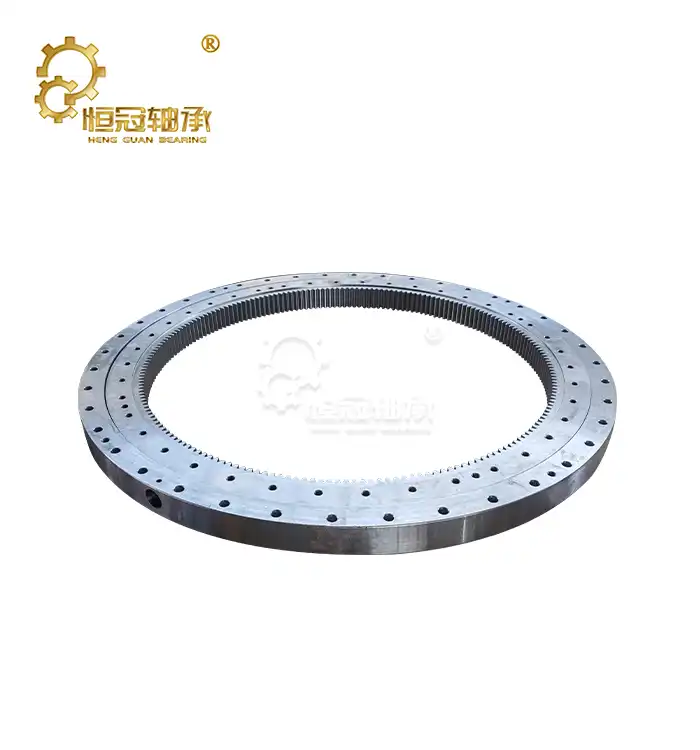
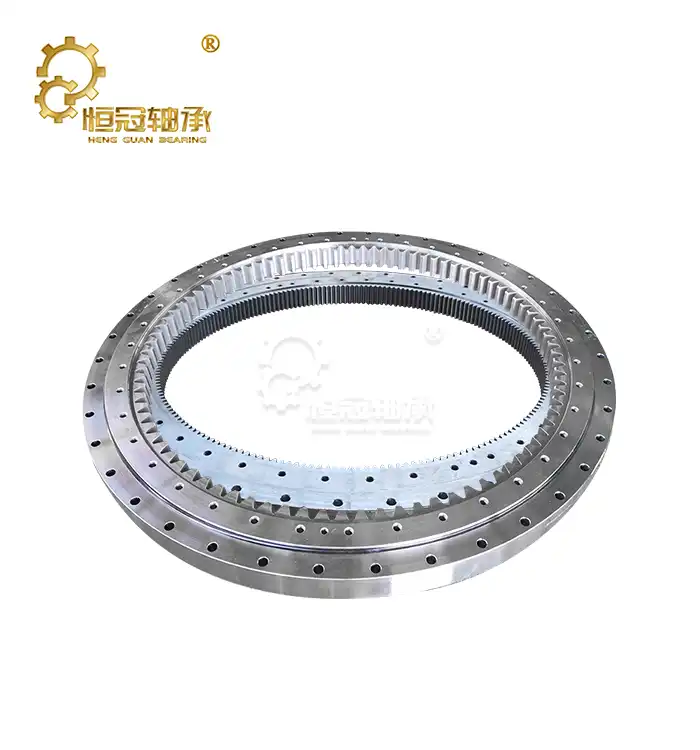
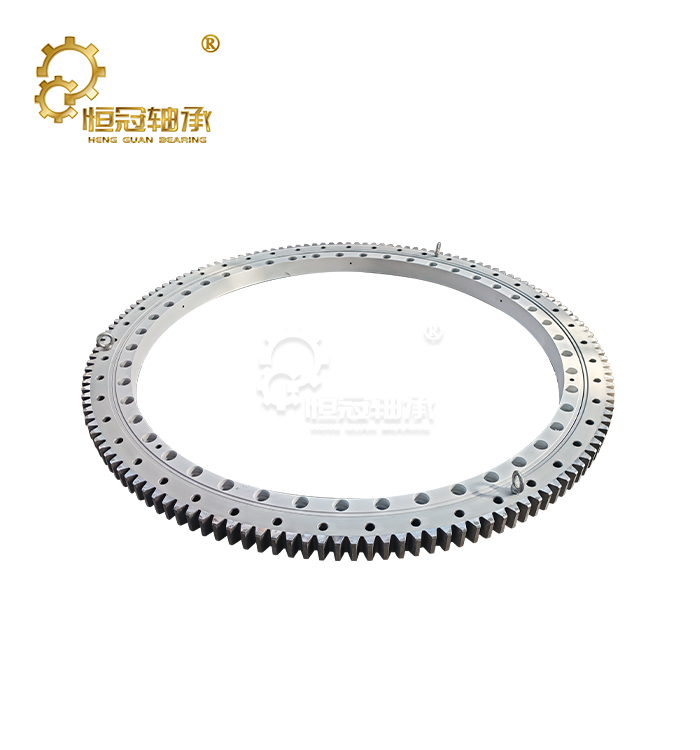
Any major rotating component will have long-term reliability based on a systematic maintenance schedule. For the 133.50.3150 slewing bearing, the main maintenance activities include routine greasing via the eight grease nipples provided, periodic verification of the torque applied to all 72 mounting holes, examination of the seals, and monitoring for any unusual noise or vibration during use.
Since this bearing is commonly a gantry crane slew ring carrying significant overturning moments, the mounting bolts should be tested against the manufacturer’s torque specification on a predetermined schedule rather than simply when issues show up. Internal gear (module M20, Z=139) needs grease application to avoid tooth pitting and wear. Not carrying out these annual inspections is one of the most prevalent causes of premature slewing bearing failure.
| Maintenance Task | Recommended Frequency | Key Action |
|---|---|---|
| Grease lubrication (raceway) | Every 100–200 operating hours | Pump until fresh grease exits seals |
| Gear tooth lubrication | Every 200–300 operating hours | Apply gear grease to internal ring gear |
| Bolt torque check ( 72 × M42 ) | Every 3–6 months | Verify against specified torque value |
| Seal condition inspection | Monthly | Check for cracking, displacement, or leakage |
| Noise/vibration monitoring | During each operating cycle | Log any changes from baseline |
| Gear tooth wear measurement | Annually | Measure tooth thickness with gear caliper |
Following a documented checklist — rather than relying on memory — helps ensure nothing gets overlooked during busy production periods. Operators should also keep a maintenance log recording grease type, quantity applied, and any observations, since trends in grease consumption or noise levels often reveal developing problems before they become critical.
133.50.3150 slewing bearing Lubrication, Inspection and Service Guide
Proper lubrication is undoubtedly the single most critical issue for 133.50.3150 slewing bearing maintenance. It immediately protects the raceways and rolling elements from wear and corrosion. Lubricate the ring via the eight grease holes located around the ring. Continue until new grease is visible at the seals, indicating that old, tainted grease has been displaced. This bearing is used often as a slewing ring for gantry cranes and is exposed to dust, moisture, and temperature changes outside. Therefore, the frequency of application is just as important as choosing a grease rated for the working environment. The table below gives a summary of the essential technical parameters which should be available to maintenance professionals for determining service intervals.
| Parameter | Specification |
|---|---|
| Model | 133.50.3150 ( internal gear, 13-series ) |
| Structure Type | Three-row cylindrical roller |
| Outer Diameter ( D ) | 3432 mm |
| Inner Diameter ( d ) | 2868 mm |
| Total Height ( H ) | 270 mm |
| Mounting Hole Circle — Outer ( D1 ) | 3342 mm |
| Mounting Hole Circle — Inner ( D2 ) | 2958 mm |
| Mounting Holes ( n ) | 72 × Ø45 through holes / M42 threaded |
| Grease Holes ( n1 ) | 8 |
| Hole Depth ( L ) | 84 mm |
| Internal Gear — Module ( m ) | 20 |
| Internal Gear — Teeth ( Z ) | 139 |
| Internal Gear — Tip Diameter ( da ) | 2768 mm |
| Gear Tooth Width ( b ) | 180 mm |
| Gear Circumferential Force | 452 kN ( normalized ) / 626 kN ( Q&T ) |
| Static Load Rating ( Cor ) | 3810 kN |
| Dynamic Load Rating ( Cr ) | 3590 kN |
| Weight | approx. 5000 kg |
Beyond lubrication, a full inspection should check for gear tooth wear on the internal ring gear, seal cracking along the triple-lip NBR or FKM sealing elements, and any signs of water ingress, since moisture trapped inside the raceway accelerates corrosion significantly. If you are unsure which lubricant grade fits your climate or duty cycle, our technical team at mia@hgb-bearing.com can offer recommendations based on your specific application, operating temperature range, and environmental exposure.
How Often Should You Inspect a 133.50.3150 slewing bearing for Wear?
Inspection frequency depends largely on operating conditions, but a general guideline works well for most applications. Bearings operating continuously in harsh environments — such as port cranes exposed to salt spray or mining equipment in abrasive dust — should be inspected more frequently than those in lighter-duty indoor settings. For a 133.50.3150 slewing bearing used as a gantry crane slewing ring, we recommend a detailed visual and functional inspection at least quarterly, alongside daily operator checks for abnormal noise or rotational resistance.
| Operating Condition | Suggested Inspection Interval | Key Focus Areas |
|---|---|---|
| Heavy outdoor/dusty / marine | Monthly | Seal integrity, grease contamination, gear wear |
| Standard industrial ( gantry crane ) | Quarterly | Bolt torque, noise level, grease quantity |
| Light-duty or indoor use | Semi-annually | Visual seal check, lubrication top-up |
| Post-installation ( first 100 hours ) | One-time | Retighten all bolts to full torque spec |
Catching early warning signs — like slight play in the rotation, grease discoloration, or increasing motor current draw during slewing — allows for corrective action before a minor issue turns into costly downtime. Maintenance teams should also pay attention to the gear mesh, since the internal gear's 139 teeth operate under cyclic loading and can develop pitting if lubrication film breaks down.
Best Practices to Extend 133.50.3150 slewing bearing Service Life
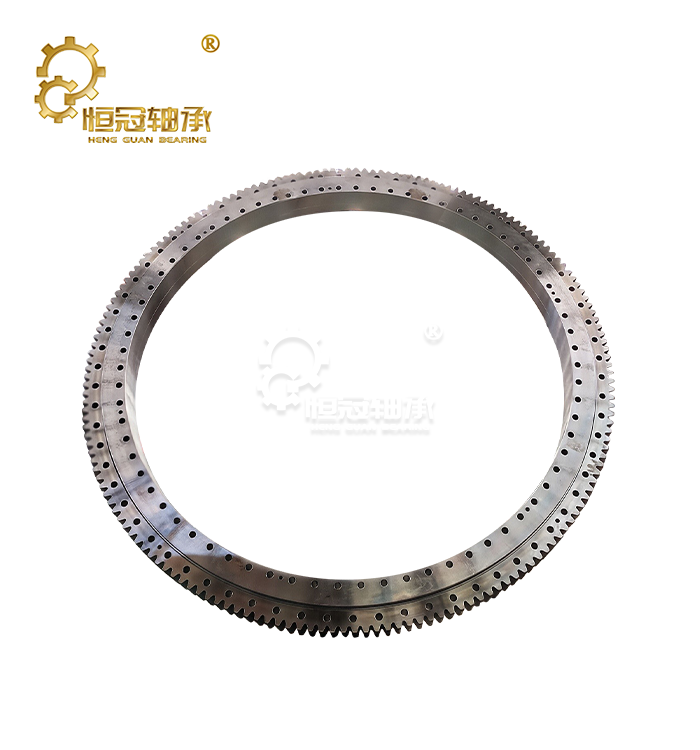
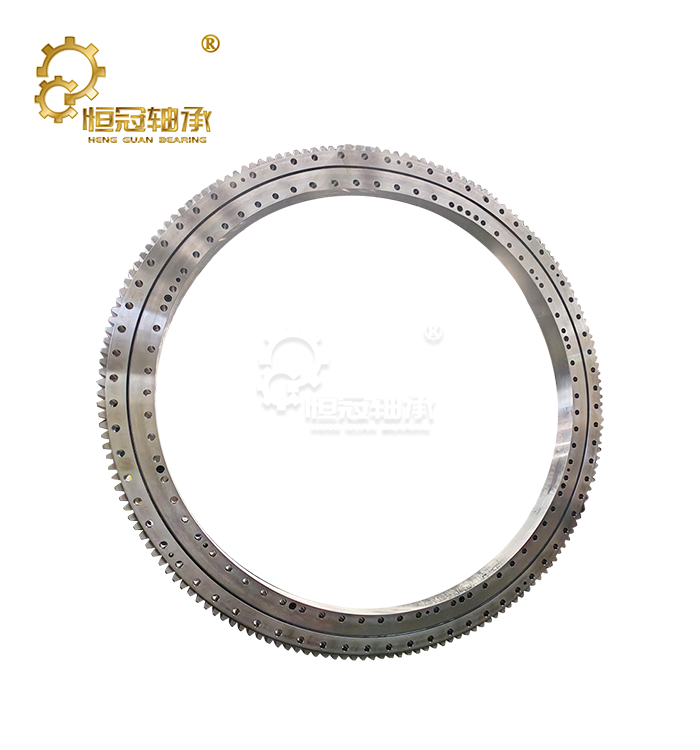
Extending the operational life of a 133.50.3150 slewing bearing comes down to consistency: sticking to the lubrication schedule, keeping all 72 mounting bolts properly torqued, and addressing seal damage before contaminants enter the raceway. It also helps to avoid overloading the bearing beyond its rated capacity — the static load rating of 3810 kN and dynamic rating of 3590 kN exist for good reason, and repeated overloading accelerates fatigue even when other maintenance steps are followed correctly. The companion models in this size series ( 130.50.3150 gearless and 131.50.3150 external gear ) share identical mounting dimensions, so if a retrofit is ever needed, the bolt pattern and envelope dimensions remain the same.
| Life Extension Practice | How It Helps | Impact on Service Life |
|---|---|---|
| Strict lubrication schedule | Maintains oil film, prevents metal-to-metal contact | +30–50% |
| Bolt torque verification | Prevents ring deformation and uneven load distribution | +20–30% |
| Seal replacement at first sign of wear | Blocks water and abrasive contaminants | +15–25% |
| Avoiding overload beyond rated capacity | Prevents raceway fatigue and gear tooth fracture | +20–40% |
| Annual gear tooth measurement | Catches wear before failure cascades | Prevents catastrophic failure |
| Maintenance logging & trend analysis | Predicts replacement timing, prevents unplanned downtime | Operational reliability |
As a trusted gantry crane slewing ring supplier, Heng Guan encourages customers to keep maintenance logs so patterns in wear or grease consumption can be tracked over time, making it easier to plan replacement before a failure disrupts operations. Our engineering team is also available to review your maintenance procedures and suggest improvements based on your specific operating conditions.
Conclusion
Consistent lubrication, scheduled inspections, proper torque checks, and load management keep the 133.50.3150 slewing bearing performing reliably — helping equipment operators avoid costly downtime and extend service life well beyond the warranty period. Heng Guan Bearing combines manufacturing expertise with practical maintenance support to keep your rotary equipment running.
FAQ
Q1: How often should the 133.50.3150 slewing bearing be greased?
Generally every 100–200 operating hours for the raceway and every 200–300 hours for the internal gear teeth, though harsh environments may require more frequent lubrication.
Q2: What are early warning signs of wear?
Unusual noise during rotation, vibration, grease discoloration, increased motor current draw, or slight play in the rotation are common early indicators.
Q3: How often should the 72 mounting bolts be checked?
Mounting bolt torque should be verified every 3–6 months, and all bolts should be retightened to full specification after the first 100 operating hours following installation.
Q4: Can this bearing be used on gantry cranes?
Yes, it is commonly used as a gantry crane slewing ring due to its three-row roller structure that handles high axial, radial, and moment loads simultaneously.
Q5: What happens if maintenance is skipped?
Skipping lubrication or inspections accelerates raceway wear, gear tooth pitting, and seal degradation, significantly increasing the risk of premature failure and unplanned downtime.
Q6: Is the 133.50.3150 interchangeable with other models in the same size?
Yes, the 130.50.3150 ( gearless ) and 131.50.3150 ( external gear ) share identical mounting dimensions and can be used as replacements when a different drive configuration is needed.
Get Maintenance Support From Our Engineering Team
Need guidance on maintaining your 133.50.3150 slewing bearing? Send your operating conditions and current maintenance schedule to mia@hgb-bearing.com today — Heng Guan's engineering team will respond within 24 hours with lubricant recommendations, a customized inspection checklist, and spare part availability for your equipment.
References
1. American Bearing Manufacturers Association (ABMA), Standards for Rolling Element Bearing Maintenance.
2. Harris, T. A., Kotzalas, M. N., Rolling Bearing Analysis, CRC Press.
3. International Organization for Standardization, ISO 9001 Quality Management Systems Requirements.
4. National Lubricating Grease Institute (NLGI), Grease Selection and Application Guidelines.
5. Society of Automotive Engineers (SAE), Technical Papers on Slewing Bearing Maintenance in Heavy Equipment.
6. Journal of Mechanical Engineering Science, Wear Analysis and Service Life of Large Slewing Bearings.

WHAT OUR CUSTOMERS SAY
Here is the customer's evaluation of us