



How to choose the right ct bearings for industrial machinery
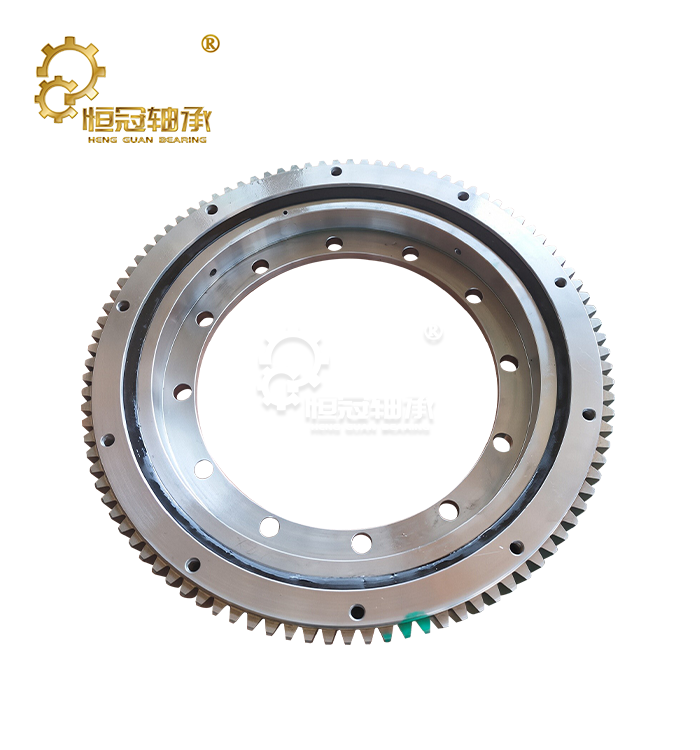
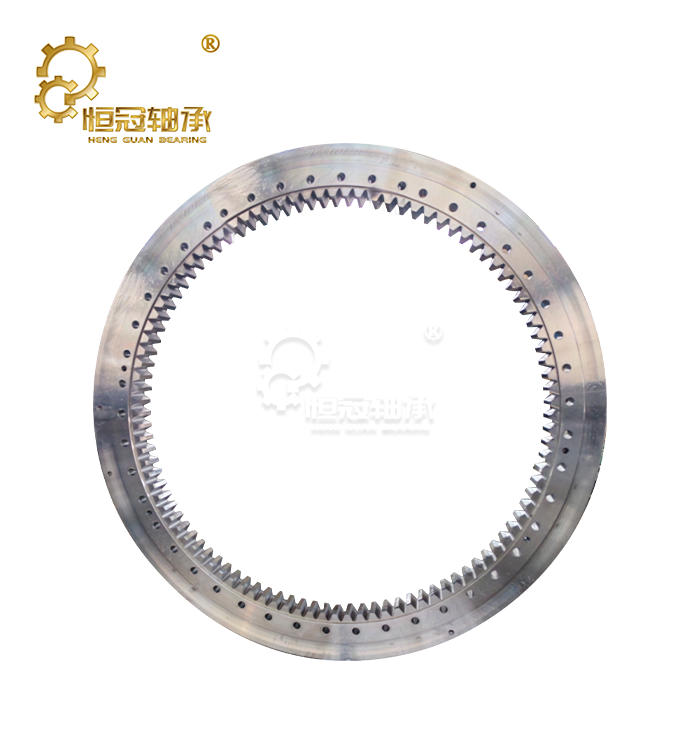
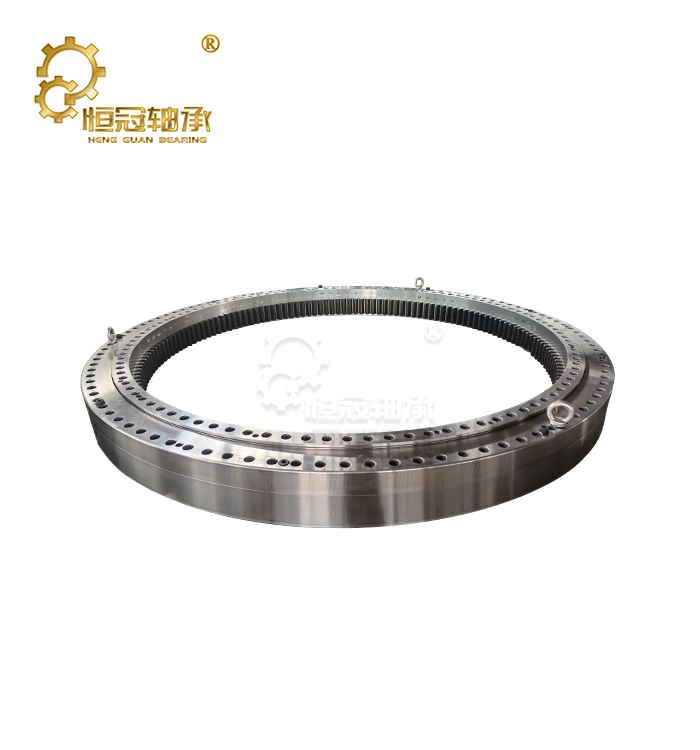
Selecting the correct rotational support component is a key decision for industrial equipment manufacturers and maintenance teams. The wrong bearing choice can lead to excessive vibration, unstable movement, increased maintenance costs, and unexpected downtime. For applications that require smooth rotation, accurate positioning, and long service life, CT Bearings provide an effective solution through their four-point contact ball slewing ring design.
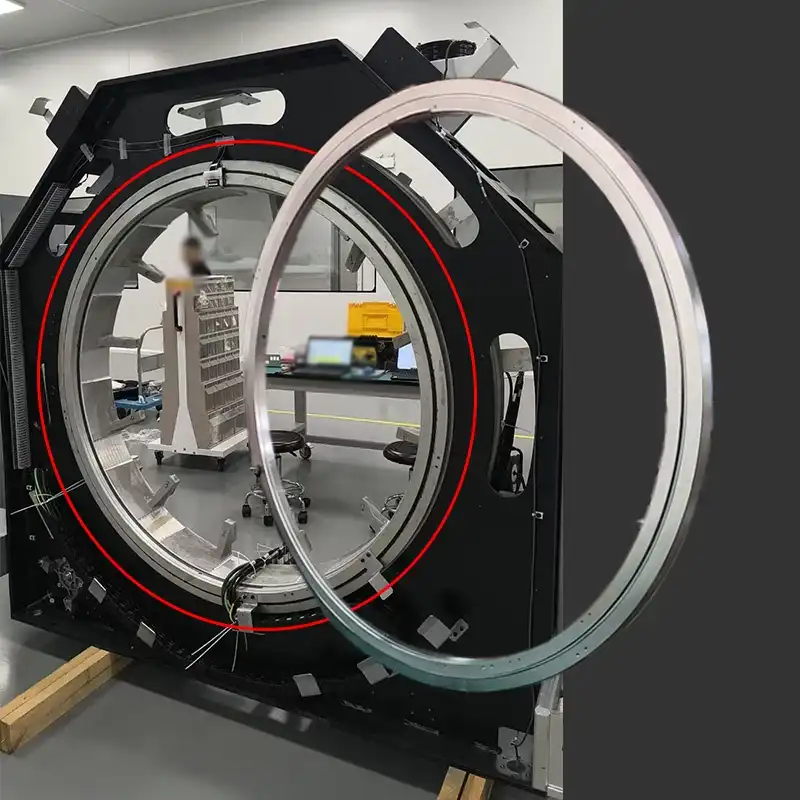
CT bearings differ from the ordinary rolling bearings, which are generally designed for single-direction loads. CT Bearings are able to withstand mixed forces comprising radial load, axial load, and tilting moment. This makes them suited for equipment where rotation accuracy and small installation are crucial, such as medical imaging systems, semiconductor manufacturing equipment, precision automation machines, and industrial inspection systems.
But choosing the correct CT bearings is more than just matching dimensions. Engineers must consider the operating conditions, the load requirements, the accuracy level, the performance of the material, the lubrication conditions, and the supplier’s capabilities. This tutorial discusses the biggest elements to consider when choosing CT Bearings for industrial machinery and how to make a wise purchase.
Understanding the Design and Working Principle of CT Bearings
How Does Four-Point Contact Technology Improve Rotational Performance?
The structural design of CT bearings is based on a four-point contact ball bearing configuration. In this design each ball can have four contact sites with the raceway under the proper loading circumstances. This enables a single bearing unit to support several sorts of forces at the same time.
The design offers a variety of benefits for industrial machinery:
- less installation area than systems with several bearings
- Capability to support both axial and radial loads
- Improved rotational stability under various operating conditions
- Less mechanical complexity in the equipment's design.
This arrangement is particularly useful in applications where the spinning part has to be accurately positioned under different forces. For example, in medical imaging equipment, smooth, continuous rotation is required to ensure image quality, whereas in semiconductor manufacturing equipment, very precise movement is required to avoid positioning errors.
The interior geometry of the CT bearings directly affects performance. Operating torque, vibration levels, and service life are influenced by raceway accuracy, ball size uniformity, preload management, and machining quality.
Why Are CT Bearings Widely Used in Precision Industrial Applications?
Many industrial machines require rotational movement but cannot accommodate large or complicated bearing arrangements. CT Bearings solve this challenge by combining load capacity and precision performance within a compact structure.
Typical applications include the following:
CT scanning systems require stable rotation because the imaging components must move precisely around the patient area. Any excessive vibration or uneven movement may influence scanning accuracy.
For this reason, manufacturers usually prioritize the following:
- Low rotational runout
- Smooth torque characteristics
- High dimensional accuracy
- Long operating reliability
- Semiconductor and Electronics Manufacturing Equipment
Semiconductor production involves highly sensitive processes where even minor positioning errors can affect manufacturing results. Equipment used for wafer handling, inspection, and automated assembly requires bearings with excellent motion stability.
In these environments, factors such as:
- Precision grade
- Clean operating conditions
- Low particle generation
- Consistent movement
- become important selection criteria.
- Industrial Automation and Robotic Systems
Modern automation equipment often requires repeated rotational movement over thousands or millions of operating cycles. CT Bearings help provide stable mechanical support while reducing the complexity of the transmission structure.
Applications include:
- Rotary inspection platforms
- Robotic positioning systems
- Automated assembly machines
- Optical measurement equipment
Key Factors to Consider Before Selecting CT Bearings
Evaluate Load Conditions and Operating Forces
The first step in selecting CT Bearings is understanding the actual forces applied during operation. A bearing that works well under static conditions may fail prematurely if dynamic loads, impact forces, or changing directions are not considered.
Engineers should evaluate three primary load types:
Radial load:
The force acting perpendicular to the rotation axis. This commonly occurs in rotating platforms, support structures, and industrial positioning systems.
Axial load:
The force acting parallel to the rotation axis. Vertical lifting mechanisms and rotating equipment with external pressure often generate significant axial forces.
Tilting moment:
The force created when the load is positioned away from the bearing center. This is especially important for large rotating structures where uneven loading occurs.
Because CT Bearings can handle combined loads, they are often selected for applications where multiple forces exist simultaneously. However, correct sizing still requires accurate calculation based on speed, duty cycle, load distribution, and expected service life.
Match Bearing Dimensions With Equipment Requirements
Dimensional compatibility is another critical factor. Engineers should not only consider the inner and outer diameter but also installation height, mounting holes, clearance requirements, and connection structure.
Important dimensional parameters include:
- Inner diameter
- Outer diameter
- Bearing height
- Mounting hole pattern
- Raceway size
- Rotating clearance
A properly selected CT bearings model should fit the mechanical structure without requiring unnecessary modifications.
For customized industrial equipment, manufacturers often provide technical drawings or CAD models before production. This allows engineers to confirm installation compatibility and avoid costly redesigns.
Select the Appropriate Precision Grade.
Precision requirements vary significantly between industries. A bearing used in heavy machinery does not require the same accuracy level as a component used in semiconductor equipment.
Common precision classifications include:
P0 Precision Grade
P0 is suitable for general industrial applications where standard rotational accuracy is acceptable. It is commonly used in equipment where load capacity is more important than ultra-high positioning accuracy.
P5 Precision Grade
P5 provides improved dimensional control and rotational accuracy. It is often selected for automation systems and equipment requiring more consistent movement.
P4 Precision Grade
P4 represents a higher precision level designed for applications where minimal runout and stable positioning are essential. Semiconductor equipment, advanced inspection systems, and medical devices may require this level of accuracy.
Choosing a higher precision grade does not always mean better performance. The correct selection depends on the actual requirements of the machine. Over-specifying precision can increase costs without providing additional benefits.
|
|
Material Selection and Manufacturing Quality of CT Bearings
Understand How Materials Affect Bearing Performance
The material used for CT bearings directly influences load capacity, wear resistance, fatigue life, and environmental adaptability. In industrial machinery, bearings are exposed to repeated stress, vibration, temperature changes, and continuous operation. Therefore, material selection should match the actual working environment rather than focusing only on initial cost.
Common material considerations include:
- Bearing steel quality: High-quality bearing steel provides better hardness consistency and fatigue resistance, helping the bearing maintain stable performance during long-term operation.
- Heat treatment process: Proper heat treatment improves raceway strength and reduces the risk of deformation under heavy loading conditions.
- Surface finishing: Accurate machining and finishing processes reduce friction, improve rotational smoothness, and support better positioning accuracy.
- For precision applications, manufacturing consistency is just as important as the selected material. Small variations in raceway geometry, ball diameter, or assembly clearance can affect operating torque and rotational stability.
Evaluate Manufacturing Capability and Quality Control
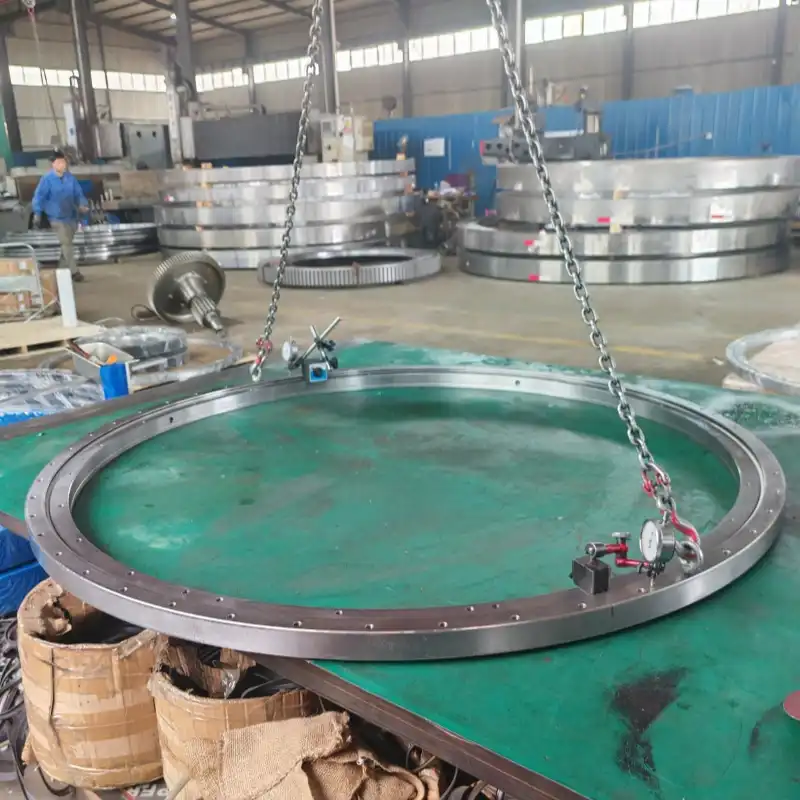
When purchasing CT Bearings for industrial machinery, buyers should evaluate whether the supplier has sufficient engineering and manufacturing capability. A reliable manufacturer should be able to control the entire production process, from raw material inspection to final performance testing.
Important manufacturing processes may include:
- Precision CNC machining of rings and mounting surfaces
- Raceway grinding for improved contact accuracy
- Heat treatment for mechanical strength
- Assembly and preload adjustment
- Final dimensional inspection
Quality control documentation is also important for industrial buyers. Depending on the application, suppliers may provide the following:
- Material certificates
- Dimensional inspection reports
- Accuracy test reports
- Load test results
- Product drawings and technical specifications
These documents help engineers verify whether the CT Bearings meet project requirements before installation.
How to Compare CT Bearings With Other Bearing Solutions?
CT Bearings vs. Traditional Ball and Roller Bearings
Different bearing designs have different advantages. Understanding these differences helps engineers select the most suitable solution.
Traditional deep groove ball bearings are widely used because of their simple structure and cost efficiency. However, they are generally not designed for applications involving large tilting moments or complex combined loads.
Angular contact bearings can support higher axial loads and provide good precision, but many applications require multiple bearings arranged together, increasing installation complexity.
Tapered roller bearings offer strong load capacity, especially under heavy-duty conditions. However, they may require more complicated adjustment procedures and additional installation space.
CT bearings provide a balanced approach by combining compact structure, multi-directional load capability, and accurate rotational support. This makes them suitable for equipment where space, precision, and reliability must be considered together.
Consider Application Conditions Instead of Choosing by Price Alone
One common mistake in bearing selection is focusing only on purchase price. A lower-cost bearing may appear attractive initially, but premature wear, frequent replacement, or unexpected downtime can create much higher total costs.
Industrial users should consider:
- Expected operating hours
- Maintenance accessibility
- Replacement difficulty
- Equipment downtime cost
- Required accuracy level
For critical equipment, investing in a properly selected CT Bearings solution can reduce long-term operational risks.
Check Engineering Support and Customization Ability
For standard applications, choosing an existing bearing model may be sufficient. However, many industrial machines have unique requirements related to dimensions, load conditions, or installation methods.
A capable supplier should be able to support the following:
- Bearing selection recommendations
- Custom dimensions
- Drawing confirmation
- Technical consultation
- Application analysis
Engineering support is particularly valuable during the early design stage because incorrect bearing selection can affect the entire machine structure.
Verify Production Standards and Quality Management
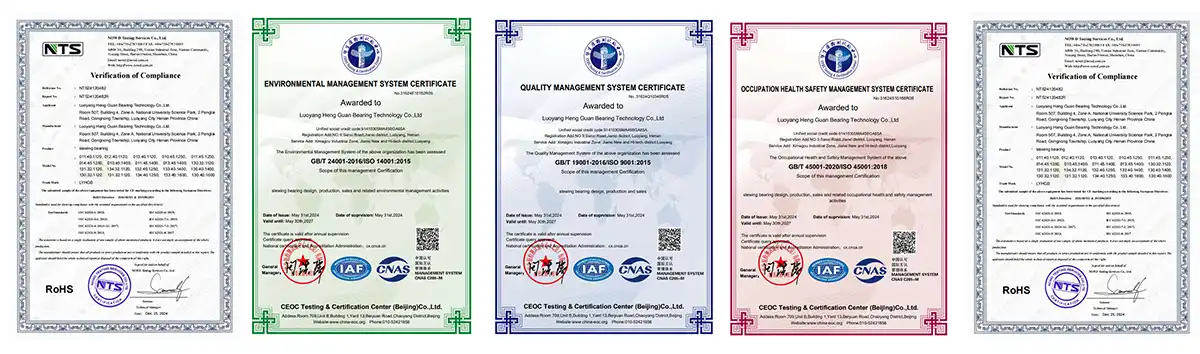
A professional CT bearings supplier should have a structured quality management system. Buyers should review whether the manufacturer follows consistent production procedures and inspection standards.
Important evaluation points include:
- Quality management certification
- Manufacturing experience
- Testing equipment
- Production capacity
- Customer support capability
For OEM equipment manufacturers, supplier stability is especially important because bearing quality directly affects the reputation and reliability of the final machine.
Practical Selection Recommendations for Different Industries
Choosing CT Bearings for Medical and Precision Equipment
For medical imaging and laboratory equipment, rotational accuracy and smooth operation are usually the highest priorities. Engineers should focus on:
- High precision grades
- Low friction characteristics
- Stable torque performance
- Clean manufacturing conditions
The selected bearing should support consistent operation throughout the equipment's service life.
Choosing CT Bearings for Automation Systems
Automation equipment requires repeatable movement and reliable operation. The ideal CT bearings solution should balance the following:
- Positioning accuracy
- Operating speed
- Load requirements
- Maintenance intervals
In these applications, supplier engineering support can help optimize bearing selection based on actual machine cycles.
Choosing CT Bearings for Heavy Industrial Equipment
Heavy-duty machinery places greater emphasis on strength and durability. Applications such as industrial handling systems, inspection platforms, and large rotating structures often require the following:
- Higher load capacity
- Strong material performance
- Resistance to vibration and impact loads
In these cases, durability may be more important than achieving the highest possible precision grade.
How to Make a Reliable CT Bearing Purchasing Decision?
Review Technical Documents Before Placing an Order
Before purchasing CT Bearings, industrial buyers should collect and review the necessary technical information instead of selecting a model only based on external dimensions or price.
Important documents and information may include:
- Product drawings and dimensional specifications
- Load capacity data
- Precision grade information
- Material details
- Operating temperature range
- Lubrication recommendations
- Inspection reports
These documents allow engineers to confirm whether the bearing matches the equipment design and operating environment. For customized machinery, early communication with the supplier can prevent problems caused by incorrect dimensions or unsuitable performance requirements.
A professional manufacturer should be able to explain how the bearing design meets the application requirements rather than simply providing a product catalog.
Balance Performance Requirements and Total Cost
The lowest purchase price does not always represent the lowest overall cost. For industrial equipment, the total cost of ownership includes:
- Initial bearing cost
- Installation expenses
- Maintenance frequency
- Downtime losses
- Replacement difficulty
A bearing with better material quality, accurate machining, and suitable load capability may have a higher initial price but provide better long-term value through reduced maintenance and longer operating life.
When selecting CT bearings, buyers should consider the relationship between performance requirements and actual operating conditions. For example, a precision automation system may benefit from a higher accuracy grade, while heavy industrial equipment may achieve better value by prioritizing load capacity and durability.
Common Mistakes to Avoid When Selecting CT Bearings
Choosing Bearings Only Based on Size
One of the most common mistakes is selecting a bearing only because its dimensions appear compatible. Although installation size is important, it does not determine whether the bearing can handle actual working conditions.
A complete evaluation should include:
- Load direction and magnitude
- Rotation speed
- Operating cycle
- Environmental conditions
- Required accuracy
A correctly sized bearing may still fail early if it is not suitable for the application load.
Ignoring Environmental Factors
Industrial environments can vary significantly. Dust, moisture, temperature changes, and chemical exposure can all affect bearing performance.
For harsh environments, engineers should consider:
- Suitable sealing solutions
- Appropriate lubrication methods
- Corrosion-resistant materials
- Protection against contamination
Considering environmental conditions during the selection stage helps prevent unexpected failures after installation.
Selecting Excessive Precision Without Technical Need
Higher precision does not automatically mean better machine performance. While precision grades such as P4 can provide excellent rotational accuracy, they may increase cost and may not be necessary for every application.
The correct approach is to select the precision level according to the following:
- Equipment function
- Required positioning accuracy
- Operating speed
- Production requirements
- A balanced selection improves both technical performance and economic efficiency.
Conclusion
Choosing the right rotational support components requires a comprehensive evaluation of machine requirements, operating conditions, and long-term performance expectations. CT Bearings provides an effective solution for applications that require a combination of compact design, load capability, and rotational accuracy through their four-point contact ball slewing ring structure.
The selection process should not focus on a single factor such as size or purchase price. Engineers need to consider load characteristics, precision requirements, material quality, environmental conditions, and supplier capabilities to achieve the best balance between performance and cost.
For precision industries such as medical imaging, semiconductor manufacturing, and automation systems, bearing accuracy and rotational stability directly influence equipment performance. For heavy industrial applications, durability, load capacity, and resistance to challenging environments may become the primary priorities.
A reliable CT bearings supplier should provide not only quality products but also technical support, accurate documentation, and application guidance. Manufacturers that can assist with engineering evaluation, customization, and quality control help customers reduce risks during equipment development and operation.
With the continuous growth of industrial automation and precision manufacturing, the demand for reliable rotational support solutions will continue to increase. By selecting suitable CT bearings and following proper installation and maintenance practices, companies can improve equipment reliability, reduce downtime, and achieve better long-term operating value.
|
|
FAQ
1. How can I verify genuine CT bearing components from suppliers?
Genuine parts come with all the paperwork you need, like material certificates that prove the grade of the steel, dimensional inspection records, and hardness test results. Recognized providers keep their ISO9001 certification up to date and provide records of production that can be tracked. Ask for full product details, such as error ranges, measures for the surface finish, and proof of heat treatment. Markings from the manufacturer, surface quality, and uniformity in packing should all be checked physically. Established suppliers like Heng Guan offer full expert help and clear quality paperwork, which makes real goods stand out from fake ones. Direct relationships with manufacturers or networks of authorized distributors give you more confidence because the supply chain is already controlled, and you can get warranty support.
2. What are typical lead times for bulk bearing orders?
Standard designs from well-known makers usually take 4 to 8 weeks from the time an order is placed until it is delivered. This time includes planning production, making the product, inspecting it for quality, and shipping it. Custom specifications or measurements that aren't standard may make the lead time 10 to 14 weeks longer, based on how complicated the design is and how quickly the materials can be sourced. Sometimes, longer production processes are needed because of things like large diameter bearings or specific material needs. This can take an extra one to three weeks, based on where the package is going and how it is being shipped. For pressing needs, there are choices for faster production, but they cost more. Planning preventive maintenance plans with enough lead time ensures that parts are available without raising costs or increasing the risk of machine failure.
3. Are these bearings suitable for both high-speed and heavy-load applications?
Four-point contact slewing bearings work best when there are multiple loads, but each application needs its own review. Distributed contact patterns lower stress on individual rolling elements, which makes them strong enough to handle heavy loads. They can be used in building equipment, material handling equipment, and industrial automation. Limits on speed rely on the size, type of lube, and precision grade. Moderate speeds don't cause any problems, but ultra-high-speed uses might need a different design. Consultation with an application engineer ensures that it works with certain working conditions. Many setups work well when there is a combination of high load and modest speed, which is when these bearings work at their best. The right specification, which matches operating needs to bearing powers, guarantees long-lasting reliability in a wide range of industrial settings.
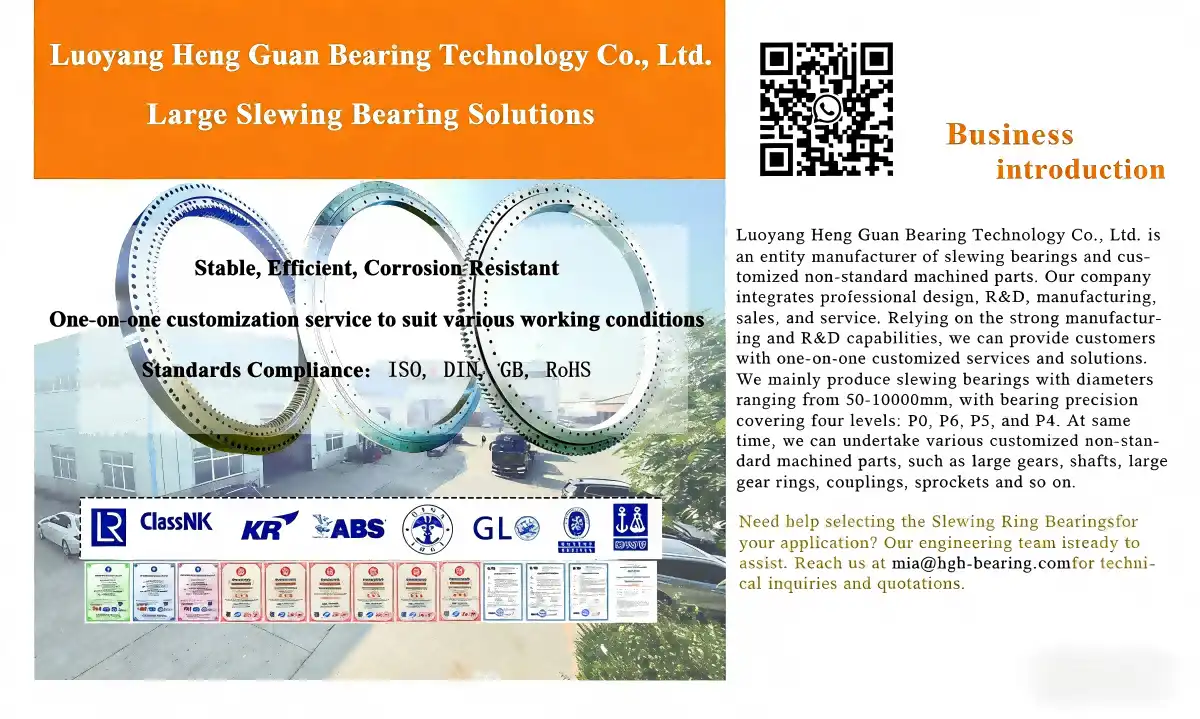
Partner with Heng Guan for Precision Bearing Solutions
In industrial settings, rotating parts need to be stable and work consistently under tough conditions. Heng Guan has been making precision slewing bearings for over twenty years and has worked with users in the medical imaging, semiconductor equipment, wind energy, and advanced robotics sectors. Our ISO9001-certified factory in Luoyang, China—the country's hub for making bearings—uses modern CNC cutting, precise grinding, and thorough quality testing to make parts that meet international standards.
We make slewing bearings with outer diameters ranging from 350mm to 2000mm, and we offer precision grades ranging from normal P0 to ultra-precision P4. Our engineering team offers application consultation to help you match the specifications of a bearing to its operational needs. We offer reasonable pricing and reliable technical help throughout the entire purchase and implementation process, whether you need large amounts of a product or solutions that are specially made for your needs.
Email our team at mia@hgb-bearing.com to talk to experienced bearing experts about your particular needs. OEM makers, engineering firms, and companies that take care of tools that need to be maintained are welcome to Contact Us if they need a reliable CT Bearings source that cares about quality, performance, and customer success.
References
1. Harris, T.A. and Kotzalas, M.N., "Advanced Concepts of Bearing Technology: Rolling Bearing Analysis," CRC Press, 2006.
2. Eschmann, P., Hasbargen, L., and Weigand, K., "Ball and Roller Bearings: Theory, Design and Application," John Wiley & Sons, 1985.
3. ISO 199:2014, "Rolling bearings - Thrust bearings - Geometrical product specifications (GPS) and tolerance values," International Organization for Standardization.
4. Witte, D.C., "Operating Torque of Tapered Roller Bearings," ASLE Transactions, Vol. 16, Issue 1, 1973.
5. Zhou, R.S. and Hoeprich, M.R., "Torque of Tapered Roller Bearings," Journal of Tribology, Vol. 113, 1991.
6. Palmgren, A., "Ball and Roller Bearing Engineering," SKF Industries Inc., Philadelphia, 1959.

WHAT OUR CUSTOMERS SAY
Here is the customer's evaluation of us