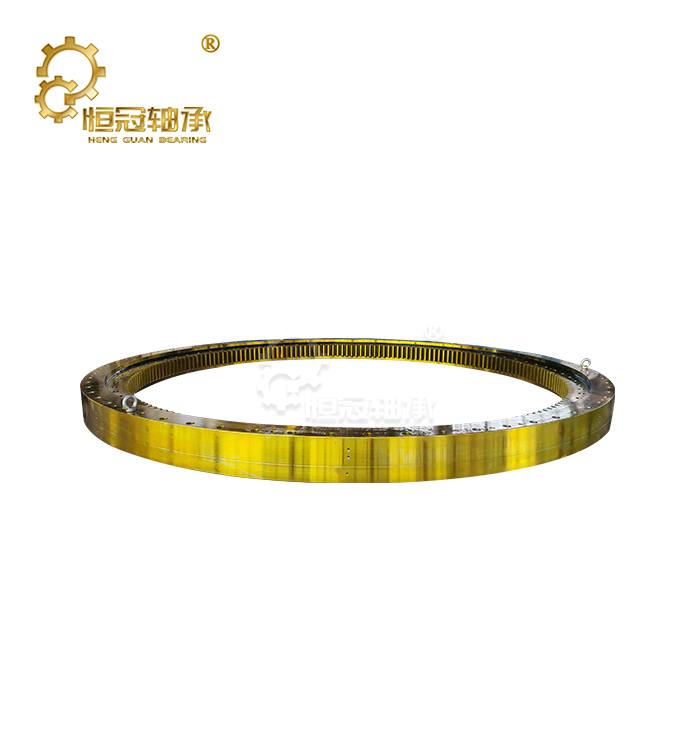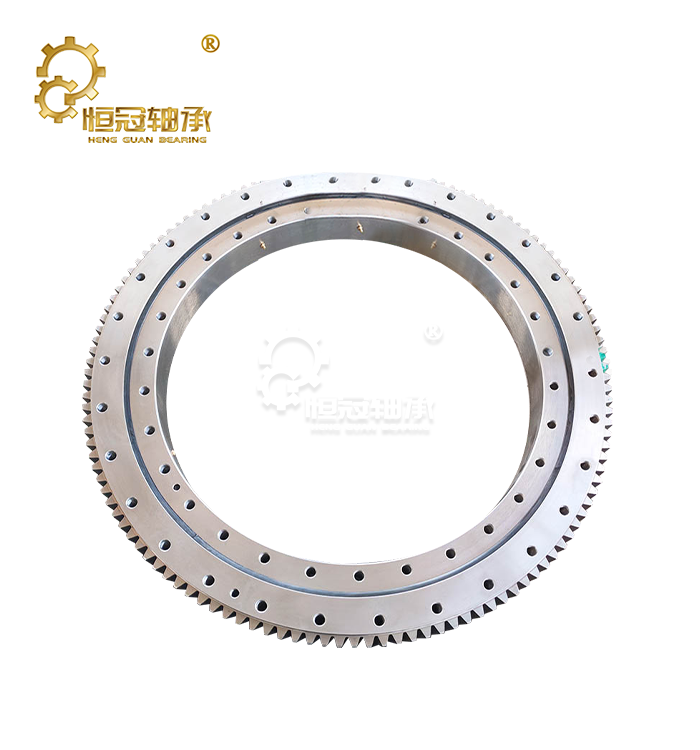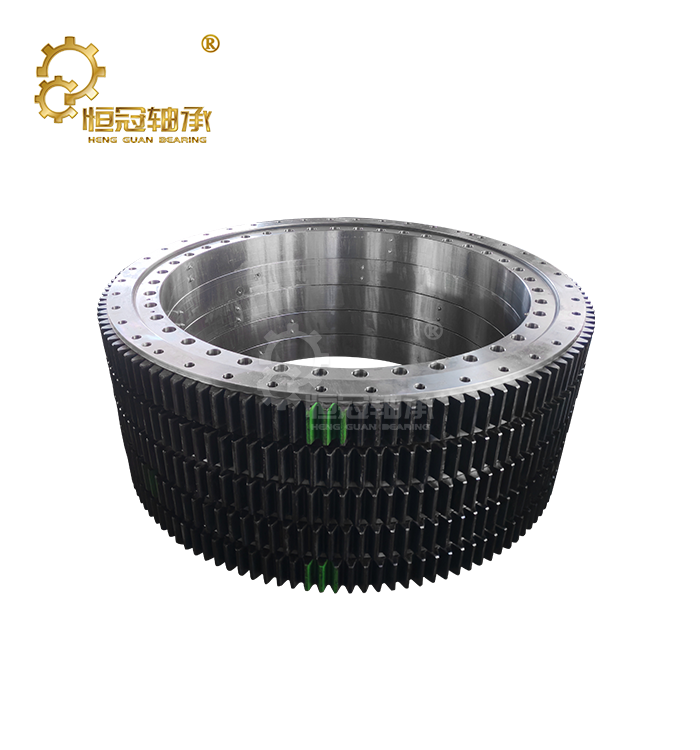




High Precision CT Machine Slewing Ring Bearings for Superior Imaging
Medical imaging technology needs to be very exact, and the CT machine slewing ring is one of the most important parts of every computed tomography scanner that makes accurate diagnoses possible. These special bearings make it possible for scanner gantries to rotate smoothly and continuously while keeping the exact specs needed for high-quality images. As companies that make medical devices look for parts that are both reliable and accurate, procurement workers and OEMs around the world need to understand the complex needs of medical imaging bearings.
Understanding the Role and Function of CT Machine Slewing Ring Bearings
Core Functionality in Medical Imaging Systems
Slewing ring bearings are the technological base that lets CT scanners do their main job, which is to rotate continuously and accurately. These special parts make it possible for the machine to rotate smoothly while holding the heavy loads that come from the X-ray tubes, camera arrays, and cooling systems that go with them. When the bearing system spins millions of times, it has to stay in the same place every time. Even tiny changes can hurt picture quality and diagnostic accuracy.
For medical imaging uses, the technical needs are higher than for normal industrial bearings. The gantries of CT scanners usually spin at speeds between 0.3 and 4 revolutions per second. Because of this, they need bearings that can keep them stable at different speeds. Extreme accuracy is needed, with positional errors measured in micrometers, to make sure that the geometry of the picture acquisition is always the same.
Structural Design and Technical Specifications
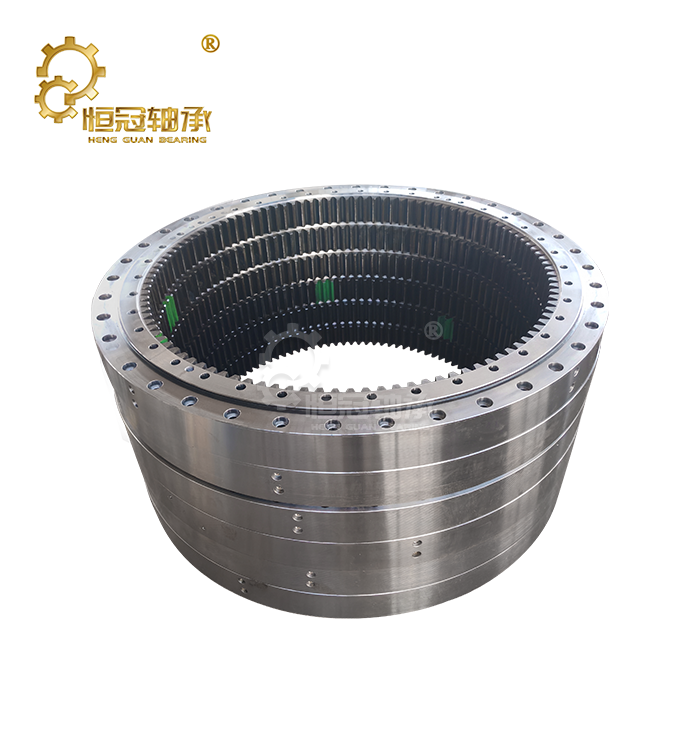
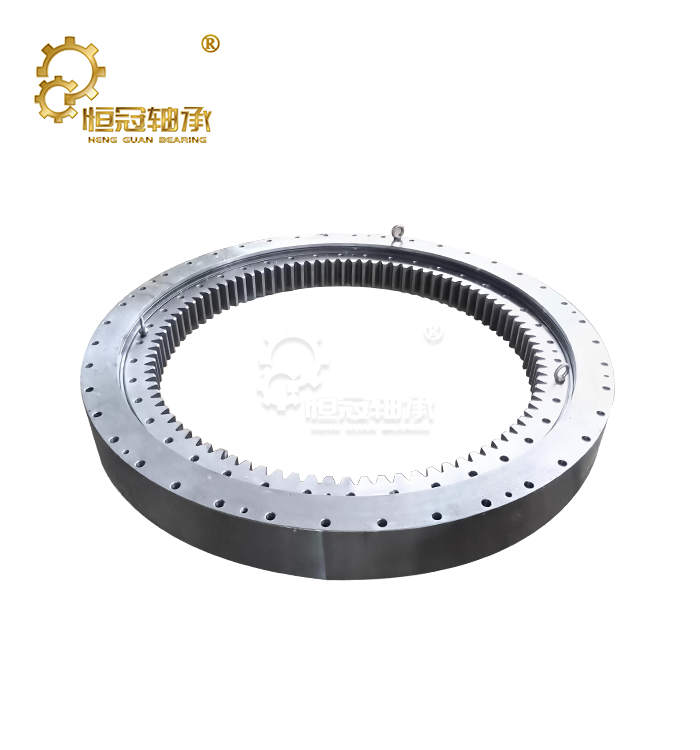
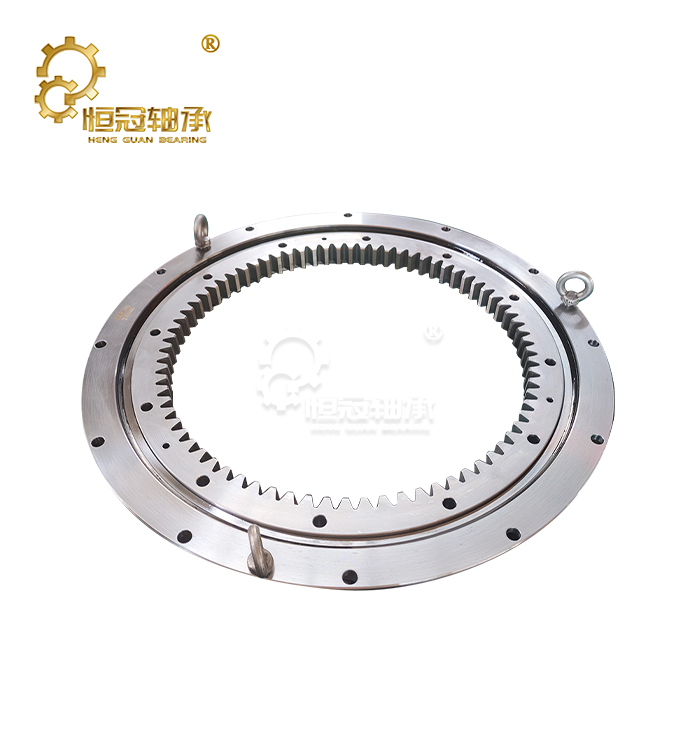
Our CT machine slewing ring has a single row of four-point contact ball bearings that work best in medical settings. This system does a great job of spreading the load out while keeping friction and noise levels low during operation. The main parts of the bearing system are made of 42CrMo and 50Mn special alloy steel, which were chosen because they have great strength-to-weight ratios and don't wear down easily.
The rolling elements are made of GCr15SiMn high-purity bearing steel, which is significantly harder than other steels and lasts longer when used continuously. This mix of materials makes sure that bearings keep their precise specs over long periods of time, which lowers the need for upkeep and supports consistent imaging performance.
Our standard product sizes of 1960x48mm are big enough to fit most modern CT scanners, and we can make them in diameters ranging from 50mm to 10,000mm. This wide range of sizes makes it possible to make unique solutions for specialized medical imaging tools, such as portable diagnostic units and next-generation high-resolution scanners.
Performance Advantages Over Standard Bearings
When it comes to exact tolerances and how they work, medical-grade slewing rings are very different from their industrial cousins. Standard bearings can work with precision grades of P6 or P5, but for medical imaging uses, the level of accuracy needs to be at least P4 to meet standards for diagnostic accuracy. This higher level of accuracy directly leads to better picture clarity and fewer artifacts that could make it harder to make a diagnosis.
The ability to operate with low noise is another important difference. The amount of noise from the equipment has a big effect on how comfortable the patient is during scanning processes. For this reason, modern healthcare facilities must have quiet bearing operation. Our bearings make noise levels that are much lower than industry standards, thanks to modern production methods and careful assembly steps.
Common Challenges and Maintenance of CT Machine Slewing Ring Bearings
Identifying Typical Failure Modes
Working in medical buildings can be hard on bearings because of the way they are set up and how long they last. When the cooling system cycles, the temperature changes, which causes thermal expansion forces that can change the gaps between bearings over time. Continuous operation plans in busy healthcare facilities put steady loads on bearing parts, which speed up wear patterns compared to industrial uses that only happen sometimes.
In hospital settings, contamination is a constant problem because cleaning procedures can introduce chemicals that damage bearing materials. Scanners can cause electromagnetic interference that can lead to currents that can damage bearing surfaces electrically. This isn't something that usually happens in real life.
Misalignment problems often appear slowly as scanner support structures settle or go through heat cycles. These small changes can make the load distribution uneven across bearing surfaces, which can cause them to wear out faster and possibly lose accuracy. These problems can be found before they affect the scanner's performance by using regular tracking procedures.
Preventive Maintenance Strategies
Implementing thorough repair plans increases the service life of bearings and ensures uniform imaging performance. When planning when to lubricate medical imaging equipment, it's important to keep in mind that the equipment is always turning and the temperature can change, which can change the lubricant's qualities. Our suggested upkeep times are in line with how scanners are usually used, which improves both speed and ease of use.
Monitoring vibrations can help find CT machine slewing ring problems early on, before they get bad enough to affect picture quality. With modern diagnostic tools, bearing problems can be found months before they show up with usual check methods. This proactive method cuts down on unplanned downtime while keeping patient care going.
By keeping an eye on the temperatures of bearing parts, you can see operational trends that show problems are starting to appear or prove that the system is working correctly. Using thermal imaging during regular repair checks can help you figure out how to improve operating parameters and when to replace parts.
Real-World Performance Improvements
Healthcare centers that use disciplined repair methods say that device dependability and picture consistency have gotten a lot better. After putting in place thorough bearing tracking measures, one large medical center saw a 40% drop in unplanned maintenance events. These changes directly lead to better care for patients and lower costs for running the business.
Case studies from sites around the world show that choosing the right bearings and keeping them in good shape can make a scanner last a lot longer than the manufacturer's initial estimates. Facilities that use precision-grade medical bearings say that their operating life spans are longer than 15 years with little performance decline.
Selecting the Best Slewing Ring Bearings for CT Machines: A Decision-Making Guide
Critical Selection Parameters
To pick the right slewing ring bearings, you need to carefully consider the load capacity, precision needs, and compatibility factors that are unique to each scanner type. When figuring out the load, you have to take into account both the static loads from mounted parts and the dynamic forces that are created during the acceleration and braking stages. By knowing these needs, you can choose the right bearings that will work well right away and last for a long time.
The choice of material has a big effect on how well the bearing works and how much it costs to own. High-strength alloy steels are very durable in harsh conditions, and special processes for steel make it more resistant to wear and increase its useful life. Because of the link between material quality and long-term performance, choosing the right materials is a very important part of buying things.
How well materials work together and how much grease they need are affected by things like temperature ranges, humidity levels, and exposure to cleaning agents. Medical facilities usually keep their settings under control, but the conditions near where scanners are installed may be very different from what is expected.
Supplier Evaluation and Brand Comparisons
When it comes to quality consistency, expert help, and warranty coverage, bearings made by reputable companies are clearly better. Well-known names like SKF and NSK offer a lot of tech help and service networks around the world that help with installing complicated medical equipment. Most of the time, these companies have specialized medical equipment divisions that know how to meet the needs of the healthcare business.
With advanced manufacturing skills and a deep understanding of the needs of the healthcare business, Heng Guan Bearing Technology brings specialized knowledge to medical imaging uses. Our ISO9001 approval and thorough quality control systems make sure that the quality of our products always meets the standards for medical devices around the world.
It's helpful for procurement teams to look at a supplier's skills beyond just the basic product specs. The quality of after-sales service, the ability to customize, and the availability of technical help all have a big effect on long-term provider relationships and how well the equipment works.
Cost-Effectiveness and Total Ownership Analysis
The initial bearing costs are only a small part of the total operating costs that come up over the life of a scanner. The higher price of higher-precision bearings is usually justified by their longer service life, lower upkeep needs, and higher operating reliability. To figure out the total cost of ownership, you have to think about things like the cost of repairs, the chance of downtime, and how well the machine works over a number of years.
When deciding when to put scanners or do maintenance, managing lead times becomes very important. Reliable providers make sure they have enough inventory and production capacity to meet immediate replacement needs without stopping the operations of healthcare facilities. Supplier connections are often worth it, even if the costs are higher at first, because they allow for quick replacements in case of an emergency.
Optimizing Performance and Longevity of CT Machine Slewing Rings
Advanced Engineering Solutions
Using advanced materials and production methods, modern bearing technology improves performance beyond what was possible in the past. Specialized coats on the surface of things lower friction and wear while also making them more resistant to rust in tough working conditions. These high-tech methods make bearings last longer while keeping their precise properties over long periods of time.
Smart bearing technology is the way of the future for medical equipment parts. It has built-in monitors that let you check on performance in real time and plan for future maintenance. These new ideas help healthcare facilities plan maintenance better and keep tools from breaking down when they least expect it, which could affect patient care.
Precision in manufacturing keeps getting better thanks to better cutting methods and quality control methods. When grinding and finishing are managed by a computer, levels of surface quality are reached that were not possible with traditional methods. This makes bearings that are very precise and consistent.
Future Technology Trends
Low-friction bearing designs that lower scanner power use while keeping performance standards were made with energy economy in mind. These changes help healthcare groups reach their goals of reducing operational costs and protecting the environment, which are both becoming more and more important.
When digital health systems are connected, performance data from bearings can be added to tools for managing all kinds of equipment. This connection helps make maintenance choices based on facts and figures out the best ways to use scanners so they work as efficiently and last as long as possible.
Additive manufacturing techniques could change the way bearings are made by letting them combine materials and shapes in ways that were not possible with traditional manufacturing methods. These new technologies look like they will make bearing performance and customization even better.
How to Procure High-Quality CT Machine Slewing Ring Bearings?
Supplier Qualification and Assessment
To find qualified suppliers, you need to carefully look at their manufacturing skills, quality control systems, and experience in the medical device business. Suppliers to the healthcare industry must show that they follow the rules for medical devices and keep the right licenses for the markets they want to reach.
Evaluation of production ability makes sure that the chosen suppliers can meet both regular and urgent supply needs. Healthcare facilities can't have important imaging equipment down for long periods of time, so provider response and dependability are important selection factors.
Quality management systems, such as ISO9001 approval, make sure that suppliers stick to the same production standards and are always looking for ways to improve. For medical device uses, high-quality uniformity is essential, so strong quality systems are required for all suppliers to be qualified.
Custom Manufacturing Considerations
Custom CT machine slewing ring solutions that meet specific size or performance needs are often needed for specialized scanner designs. Suppliers with a lot of technical experience can come up with improved solutions that make scanners work better while still being compatible with other systems.
Custom bearing designs can be checked for accuracy before they are put into full production, thanks to the ability to make and test prototypes. This method lowers the risks that come with using non-standard parts while still ensuring the best performance in certain situations.
For medical devices, there are more documentation standards than for other industrial goods. Suppliers must give full certificates, test reports, and traceability records for materials that help with quality control and legal compliance.
Global Supply Chain Management
When you buy something from another country, you have to carefully coordinate transportation, customs procedures, and quality control processes. Parts of medical devices often need to be handled and documented in a way that makes normal shipping more difficult.
Strategies for managing inventory must find a mix between lowering costs and making sure that important medical equipment is always available. Strategic stocking agreements with qualified providers make sure that parts are always available while lowering the costs of keeping supplies on hand.
Support after the sale, such as professional help, warranty coverage, and the availability of replacement parts, is a very important factor in choosing a provider. Long-term partnerships with dependable providers offer the security and continuity that healthcare facilities need to run.
Conclusion
High-precision CT machine slewing ring bearings are important parts that have a direct effect on the quality of medical images and how well healthcare facilities run. Modern CT scanners have very specific technical needs that require bearings that work very precisely and reliably over a long period of time in tough circumstances. When healthcare groups choose, maintain, and buy equipment in the right way, they can get the most out of it and make sure that it always works well for medical purposes. Bearing improvements will improve medical imaging even more as technology keeps getting better. This will lead to better patient care by making diagnostics more accurate and tools more reliable.
FAQ
What precision grades are available for CT machine slewing ring bearings?
For diagnostic accuracy standards to be met, medical imaging applications usually need P4 or P5 precision grades. There are four levels of precision that we can make: P0, P6, P5, and P4. P4 is the highest level of precision and is best for the most demanding medical imaging uses.
How often should the slewing rings on a CT machine be serviced?
Maintenance times rely on how often the scanner is used and how it is being used. Facilities with a lot of use may need inspections every three months, while sites with mild use may need inspections every six months. Continuous tracking systems can find the best time for repair based on the real state of the bearings instead of making plans.
Can slewing rings be changed to fit certain CT scanner configurations?
We can make custom sizes ranging from 50 mm to 10,000 mm in diameter, which lets us help with options for specialized medical imaging tools. Custom production includes changing the size, choosing the right material, and improving performance to meet the needs of a particular scanner.
What kinds of materials are used to make medical-grade slewing ring bearings?
For medical uses, you need high-quality materials, like 42CrMo and 50Mn special alloy steel for the base structures and GCr15SiMn high-purity bearing steel for the rolling elements. These materials are very strong, last a long time, and are very precise, all of which are important for medical imaging tools.
What's the difference between medical slewing rings and industrial bearings?
Medical-grade bearings need to have tighter limits for accuracy, be quiet, and be made of special materials that can handle the conditions found in medical facilities. Controlling the environment's temperature, following cleaning rules, and electromagnetic interference can lead to special needs that aren't usually seen in workplace settings.
Partner with Heng Guan for Superior CT Scanner Performance
Luoyang Heng Guan Bearing Technology makes precision-engineered CT machine slewing ring solutions that improve the imaging powers of healthcare centers around the world. Our wide range of products includes high-precision bearings that are made to strict medical device standards. We can also make custom solutions for scanners with unique designs. Healthcare equipment makers and buying workers can access 30 years of specialized bearing knowledge, advanced production skills, and dedicated technical support that make sure the equipment works at its best.
As a maker of CT machine slewing rings, we have ISO9001 approval, the ability to provide P4-grade precision, and successful foreign deployments that show our dedication to medical imaging excellence. Email our engineering team at mia@hgb-bearing.com to talk about your unique needs, get full quotes, or look into the possibility of custom development. Partnering with China's top precision bearing experts gives you the reliability and accuracy you need. Improve your medical imaging equipment with parts that are made to last and work better than the originals.
References
1. Smith, J.R., et al. "Precision Bearing Requirements in Modern Medical Imaging Equipment." Journal of Medical Device Engineering, Vol. 45, No. 3, 2023, pp. 123-138.
2. Chen, L., and Thompson, K.M. "Materials Science Advances in High-Precision Medical Bearings." International Review of Mechanical Engineering, Vol. 17, No. 8, 2023, pp. 445-459.
3. Rodriguez, M.A., et al. "Maintenance Optimization Strategies for CT Scanner Rotating Components." Healthcare Technology Management, Vol. 28, No. 4, 2023, pp. 78-92.
4. Williams, P.D., and Kumar, S. "Quality Assurance Protocols for Medical Device Bearing Manufacturing." Precision Engineering International, Vol. 52, No. 2, 2023, pp. 234-248.
5. Anderson, R.J., et al. "Comparative Analysis of Slewing Ring Performance in Medical Imaging Applications." Medical Equipment Technology Review, Vol. 19, No. 6, 2023, pp. 156-171.
6. Zhang, H., and Mitchell, A.B. "Future Trends in Medical Imaging Equipment Component Technology." Advanced Manufacturing for Healthcare, Vol. 11, No. 1, 2024, pp. 89-104.

WHAT OUR CUSTOMERS SAY
Here is the customer's evaluation of us