



Are Swing Bearings Necessary for All Excavator Models?
While the vast majority of conventional excavators require swing bearings to enable their signature 360-degree upper frame rotation,the answer isn't universally applicable across all excavator configurations. This part is important, because without it typical excavators would not be able to do things like dig at different angles, load trucks or work efficiently in limited places.
But not all excavator-type machines employ the same rotation method. Some specialised equipment, such as fixed-boom machines or purpose-built material handling equipment, may utilise various movement designs and may not require a standard swing bearing assembly.
Knowing when swing bearings are needed can help equipment owners, maintenance teams and buyers choose the right components, decrease downtime and avoid buying the wrong replacement parts.

Why Are Swing Bearings Essential in Most Excavator Designs?
The Basic Function of Swing Bearings in Excavators
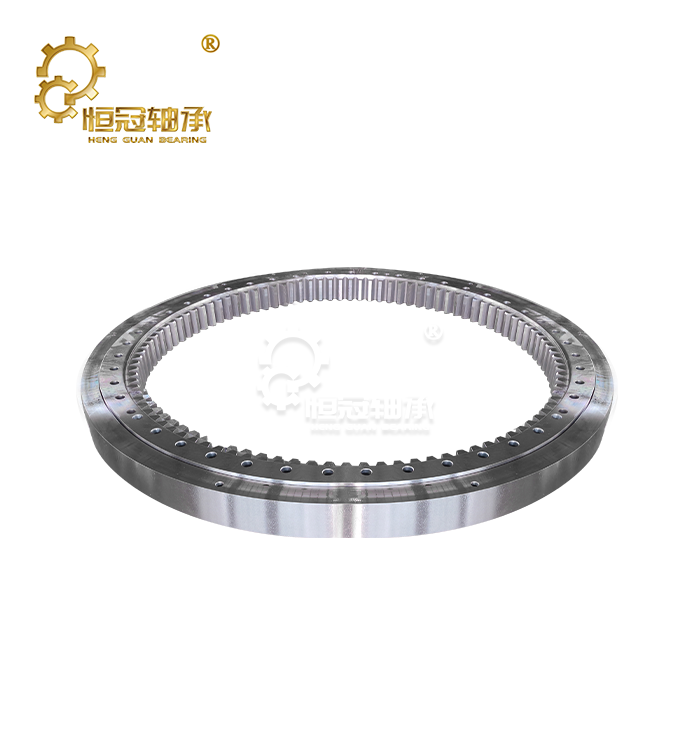
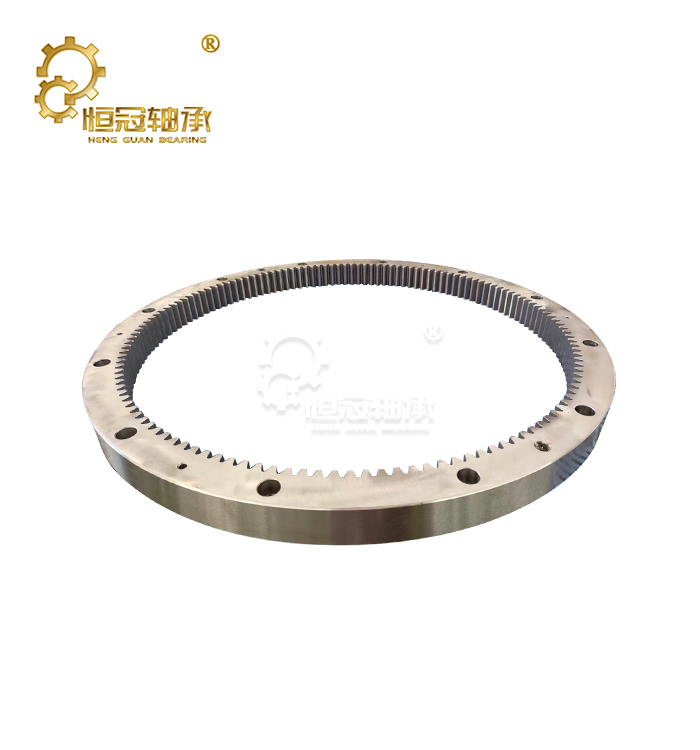
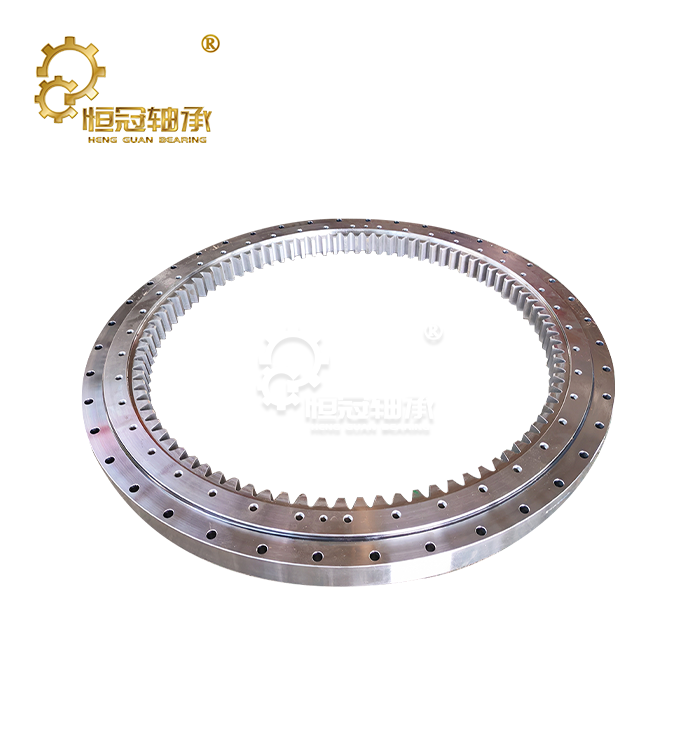
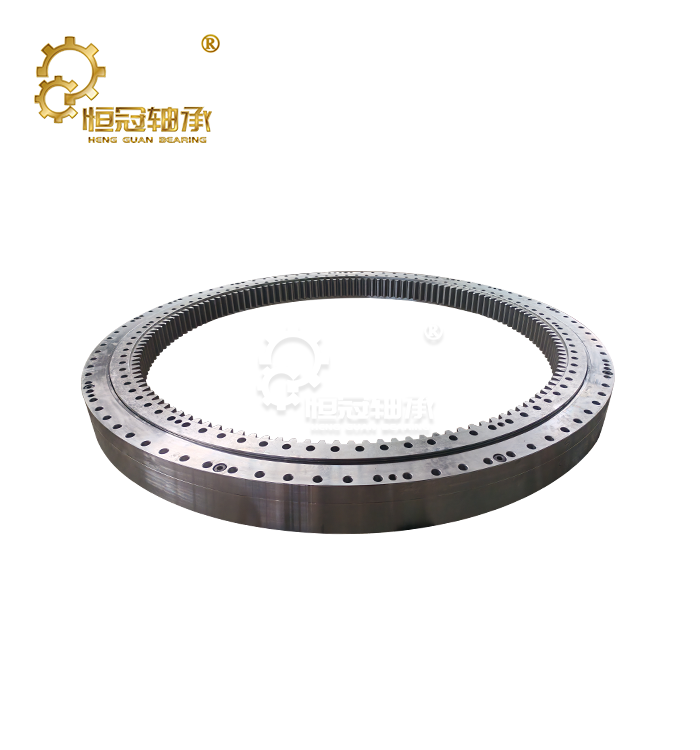
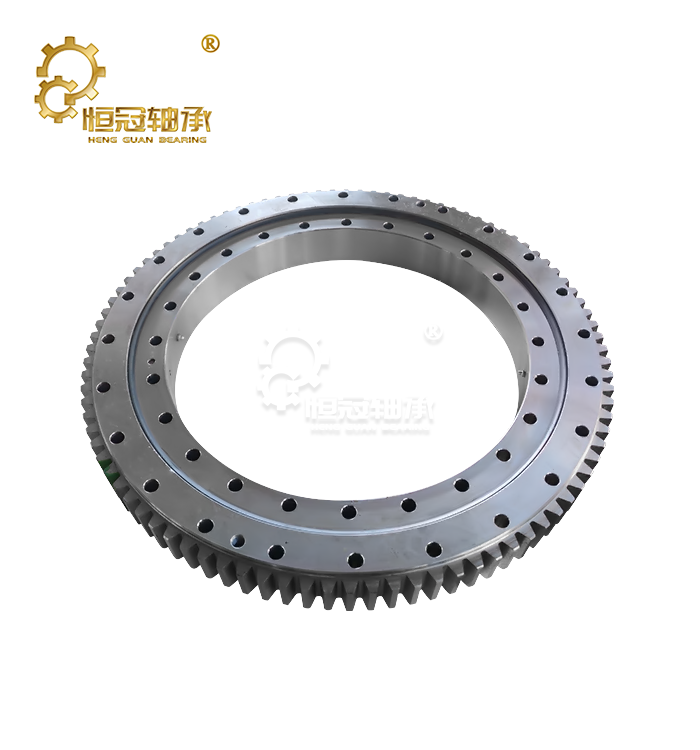
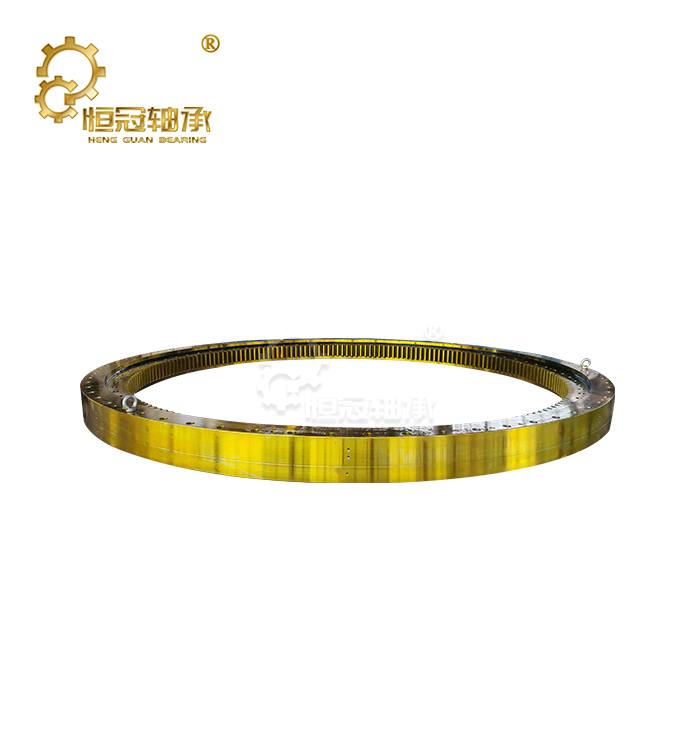
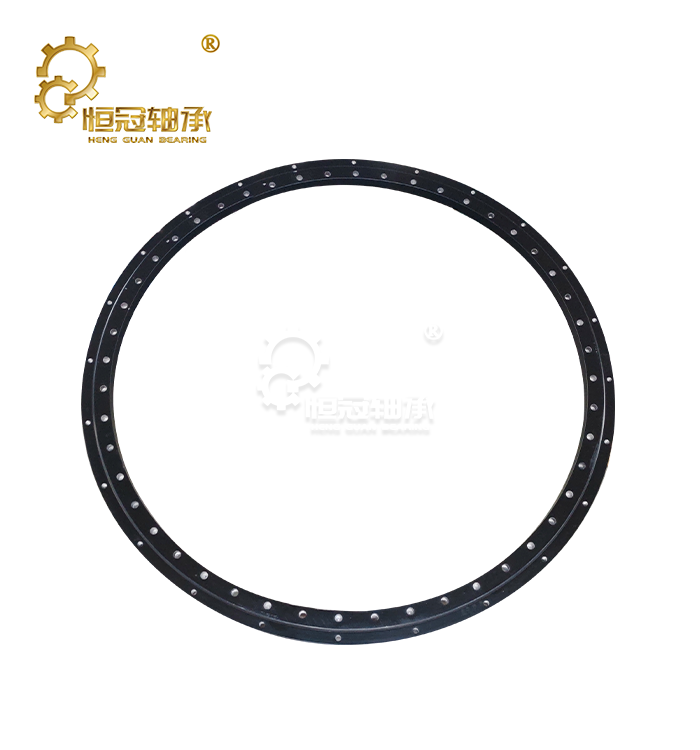
The upper framework of the excavator is connected to the lower chassis by the swing bearing, also known as the slewing bearing or turntable bearing. It allows the cab, engine compartment, boom and attachments to spin smoothly while carrying heavy operational loads.
During the excavation works, the bearing has to support numerous forces at the same time:
- Weight top frame
- Impact loads from excavating and lifting.
- Axial forces developed during rotation
- Overturning moments of long attachments
Excavator swing bearings are developed for combination loading circumstances, while ordinary industrial bearings generally sustain one type of load.
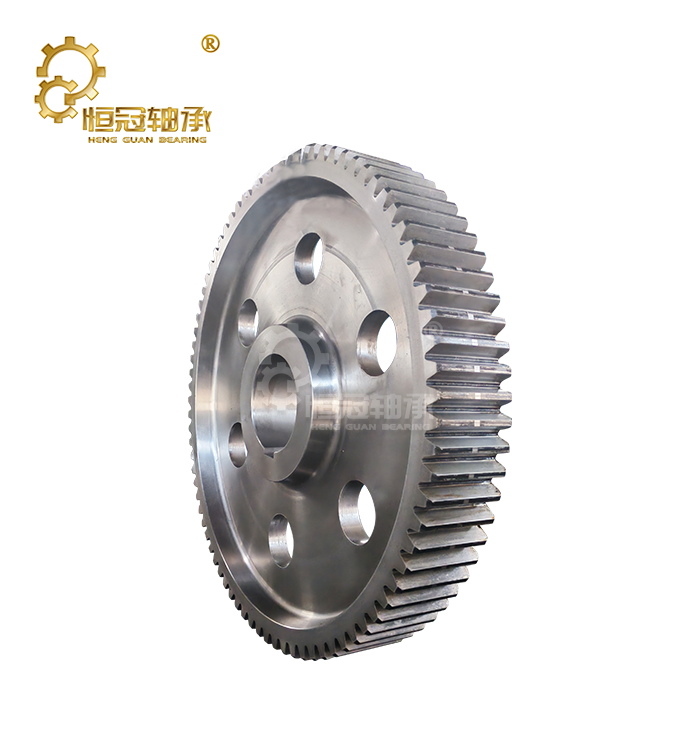
Usually the bearing comprises inner and outer rings, rolling elements, raceways, seals, and frequently an integrated gear system. The gear teeth engage to transfer torque from the hydraulic swing motor, which allows the upper structure to be rotated in a controlled manner.
How Do Swing Bearings Support 360-Degree Excavator Rotation?
The primary advantage of a swing bearing is that it may rotate continuously and can also keep the structure stable at the same time.
When the swing function is activated by the operator:
- A torque is generated by the hydraulic motor to rotate.
- This force is transmitted to the bearing gear ring via the pinion gear.
- The upper structure revolves around the core of the machine.
- The load is transmitted between raceways via rolling elements.
This design enables the excavators to rotate smoothly even when they are hauling heavy buckets, hydraulic breakers or other attachments.
For most crawlers and wheeled excavators, this rotating capability is essential to machine productivity. The operator may encounter excessive play, vibration, uneven movement or a complete loss of swing performance if the swing bearing is not functioning properly.
Which Excavator Models Typically Require Swing Bearings?
Standard Hydraulic Excavators
The swing bearing systems are mostly used in conventional hydraulic excavators.
From compact 1-ton excavators to big construction excavators, they are powered by these bearings, as the upper structure rotates while the undercarriage stays motionless, which is how they work.
Typical applications are the following:
- Excavation, Construction, Road Construction, Landscaping, Utility Construction
- Mining activities
The bearing’s size and design are dictated by parameters such as the excavator’s weight, the kind of attachment, the working environment and the intended service life.
Small excavators generally employ compact ball-type designs since they need a compromise between load capacity and limited installation area. Larger machines may require the use of heavy-duty roller designs to accommodate larger moment loads.
Mini Excavators and Compact Equipment
Mini excavators also usually use swing bearings; however, the bearing design is different from that of larger machines.
Manufacturers focus on:
- Compact excavators work in smaller spaces.
- Small size
- Rotation is fluid
- Reduced Friction
- Secure management of loads
For example, a mini excavator used for landscaping may be subject to different loads than a mini excavator utilized for demolition or trenching. Therefore, selecting a swing bearing merely on the basis of the weight of the machine may result in premature wear.
And it matters what kind of attachment. For instance, a hydraulic breaker produces a greater level of vibration and impact loading than a typical digging bucket.
Large Mining and Heavy-Duty Excavators
Swing-bearing systems are the most challenging for large mining excavators.
Mining machines may be required to operate continuously under the following conditions:
- Heavy loads of buckets
- High force impacts
- Exposure to dust
- Very hot or cold temperatures
Such applications often call for beefed-up bearing structures, enhanced sealing systems and carefully selected lubrication solutions.
When a swing bearing fails on heavy machinery, it can mean costly repairs and a lot of downtime. Inspection and condition monitoring are very important in mining operations.
Are There Excavators That Can Operate Without Traditional Swing Bearings?
Fixed-Boom Excavator Designs
Some unique configurations of excavators may not require a traditional swing bearing.
Fixed-boom machines are for select situations where full upper-frame rotation is not needed. The machines can only work in one way; they cannot freely turn.
Some examples are:
- Pipeline building equipment
- Tunnel apps
- Trenching machines, the specialised
Since the machine design does not require 360-degree rotation, engineers have the ability to utilise various mechanical configurations.
Linear Motion and Specialised Excavation Equipment
There are certain purpose-built machines that use linear movement instead of rotary action.
Machinery for automatic handling, specific subsurface operations or controlled production settings may emphasise:
- Advance
- Vertical alignment
- Short-range operation
In these instances, a standard excavator swing system may not give value.
But such machines are the exception, not the rule. Most construction and earthmoving excavators still employ swing bearing systems.
Compact Track Loaders Are Not Traditional Excavators
Because they both use hydraulic attachments and tracked undercarriages, compact track loaders are often confused with excavators.
They differ, however, in the way in which they function.
With a small track loader, generally the whole machine is moved to the work area and attachments are positioned with a lifting arm. It doesn't need to execute a full 360-degree upper-frame rotation like excavators.
So many compact track loaders don’t use standard excavator swing bearings.
Key Factors That Determine Swing Bearing Requirements
Machine Weight and Operating Loads
One of the most essential variables when choosing a swing bearing is the operational weight of the excavator.
Heavier machine:
Loading vertical:
- Rotation Torque
- Moment forces,
“Weight is not the only factor in bearing requirements. Two excavators with comparable operating weight may need different bearings depending on attachments and operating conditions.
Attachment Type and Load Distribution
Attachments directly influence swing bearing stress.
For instance:
- The usual buckets give a fairly even loading.
- Hydraulic breakers generate repeated shock loads.
- Long reach booms increase overturning moments.
- Heavy lifting attachments add axial and moment loads.
When replacing a swing bearing, buyers should examine the actual working circumstances of the machine, not just the original bearing size.
Working Environment and Maintenance Conditions
The operating conditions have a considerable influence on the service life of bearings.
Working machines in:
- Mines Ports
- Coastal zones
- Dust
moisture and pollutants can accelerate wear on demolition sites, requiring greater sealing and lubrication protection.
Proper maintenance practice, such as regular lubrication and checking of anomalous clearance, can greatly improve bearing life.

How Does Swing Bearing Selection Affect Excavator Performance?
Ball Bearings vs. Roller Bearings
Different bearing designs provide different performance advantages.
Ball-type swing bearings are commonly used in smaller excavators because they provide the following:
- Compact structure
- Smooth rotation
- Good combined load handling
Roller-type designs are preferred for larger equipment because they provide:
- Higher load capacity
- Better resistance to heavy working conditions
- Improved durability under continuous operation
The correct design depends on the excavator’s size, duty cycle, and application.
OEM and Aftermarket Swing Bearing Considerations
When replacing a swing bearing, equipment owners often choose between OEM parts and aftermarket alternatives.
OEM bearings provide the following:
- Direct compatibility
- Manufacturer specifications
- Warranty support
High-quality aftermarket bearings can also be a reliable option when they match the original dimensions, load requirements, materials, and quality standards.
Before purchasing, buyers should confirm:
- Excavator model
- Bearing dimensions
- Gear specifications
- Mounting requirements
- Operating conditions
Choosing the wrong bearing may cause premature failure or installation problems.
How to Choose a Reliable Swing Bearing Supplier?
A qualified supplier should provide more than a replacement part. Engineering support and quality control are equally important.
Before selecting a manufacturer, consider:
Manufacturing Capability
Experienced suppliers should have:
- Precision machining equipment
- Heat treatment capability
Quality inspection systems
Custom production experience
Quality Verification
Professional bearing manufacturers normally provide inspection records and technical documentation to confirm:
- Material quality
- Dimensional accuracy
- Load performance
- Manufacturing consistency
Application Support
A reliable supplier should help customers evaluate whether a bearing design matches their excavator model and working conditions.
This is especially important for customized replacement projects where standard catalog products may not be suitable.
Conclusion
Swing bearings are necessary for most conventional excavator models because they provide the rotational movement required for efficient operation. From mini excavators to large mining machines, these components support heavy loads while allowing smooth 360-degree upper-frame rotation.
However, not every specialized machine requires a traditional swing bearing system. Fixed-boom equipment, linear-motion machines, and compact track loaders may use different mechanical designs because their operating principles are different.
For equipment owners and buyers, selecting the correct swing bearing requires more than matching dimensions. Machine weight, attachment type, working environment, and operating conditions all influence the right choice. Working with an experienced manufacturer can help ensure compatibility, reliability, and long-term performance.
Heng Guan Bearing Technology provides customized swing bearing solutions for excavators and heavy machinery applications. With manufacturing experience, precision production capabilities, and engineering support, Heng Guan helps global customers select suitable bearing designs for replacement and OEM projects.
FAQ
1. Can an excavator work without a swing bearing?
Most conventional hydraulic excavators cannot operate normally without a swing bearing because the component enables upper-frame rotation. Some specialized machines may use alternative designs, but they are not common in standard construction excavators.
2. How do I know if my excavator swing bearing needs replacement?
Common warning signs include excessive upper-frame movement, abnormal noise during rotation, increased clearance, vibration, and uneven swinging performance.
3. Are aftermarket swing bearings reliable?
A quality aftermarket swing bearing can be reliable if it matches OEM requirements for dimensions, materials, load capacity, and manufacturing quality. Supplier experience and inspection standards are important factors.
4. What information is needed to order a replacement swing bearing?
Buyers should provide the excavator model, existing bearing dimensions, gear information, mounting details, and operating conditions to ensure correct selection.
Partner with Heng Guan for Premium Swing Bearing Solutions
Heng Guan Bearing Technology specializes in manufacturing high-precision swing bearings for excavator applications across all major equipment categories. Our comprehensive product line includes single-row four-point contact, three-row cylindrical roller, and custom bearing configurations manufactured to P4, P5, and P6 precision grades. With advanced production facilities in Luoyang, China's renowned "Bearing Town," we deliver exceptional quality and technical support for global B2B clients.Contact mia@hgb-bearing.com for personalized bearing specifications, competitive quotations, and expert technical consultation tailored to your specific excavator requirements. As a trusted swing bearing manufacturer, we provide comprehensive solutions from design through delivery.
References
1. Johnson, R.M., "Slewing Bearing Design and Application in Heavy Construction Equipment," Journal of Mechanical Engineering, Vol. 45, 2023.
2. Thompson, A.L. and Chen, W.K., "Load Analysis and Bearing Selection for Excavator Swing Systems," International Conference on Heavy Machinery, 2022.
3. Martinez, D.E., "Comparative Study of Bearing Configurations in Mini Excavator Applications," Construction Equipment Review, Issue 18, 2023.
4. Anderson, P.J., "Maintenance Strategies for Excavator Swing Bearings in Mining Operations," Mining Technology Quarterly, Vol. 12, No. 3, 2023.
5. Liu, S.H. and Davis, M.R., "Environmental Impact on Bearing Performance in Construction Equipment," Tribology International, Vol. 78, 2022.
6. Williams, K.T., "Alternative Rotation Mechanisms in Modern Excavator Design," Heavy Equipment Innovation Journal, Vol. 29, 2023.

WHAT OUR CUSTOMERS SAY
Here is the customer's evaluation of us