




Can KD 600 Slewing Bearing Improve Rotational Performance?
If your rotary equipment struggles with vibration, uneven torque, or premature wear, it's worth asking whether the bearing itself is the bottleneck. This is a question Heng Guan Bearing hears often from customers evaluating a KD 600 slewing bearing for turntables, rotary tables, and light-to-medium duty machinery. Below, we'll look at what actually drives rotational performance, how load, speed, and friction interact, why mounting and lubrication matter as much as the bearing itself, and how to keep performance consistent once the machine is in service.
What Factors Affect KD 600 Slewing Bearing Rotation Performance?
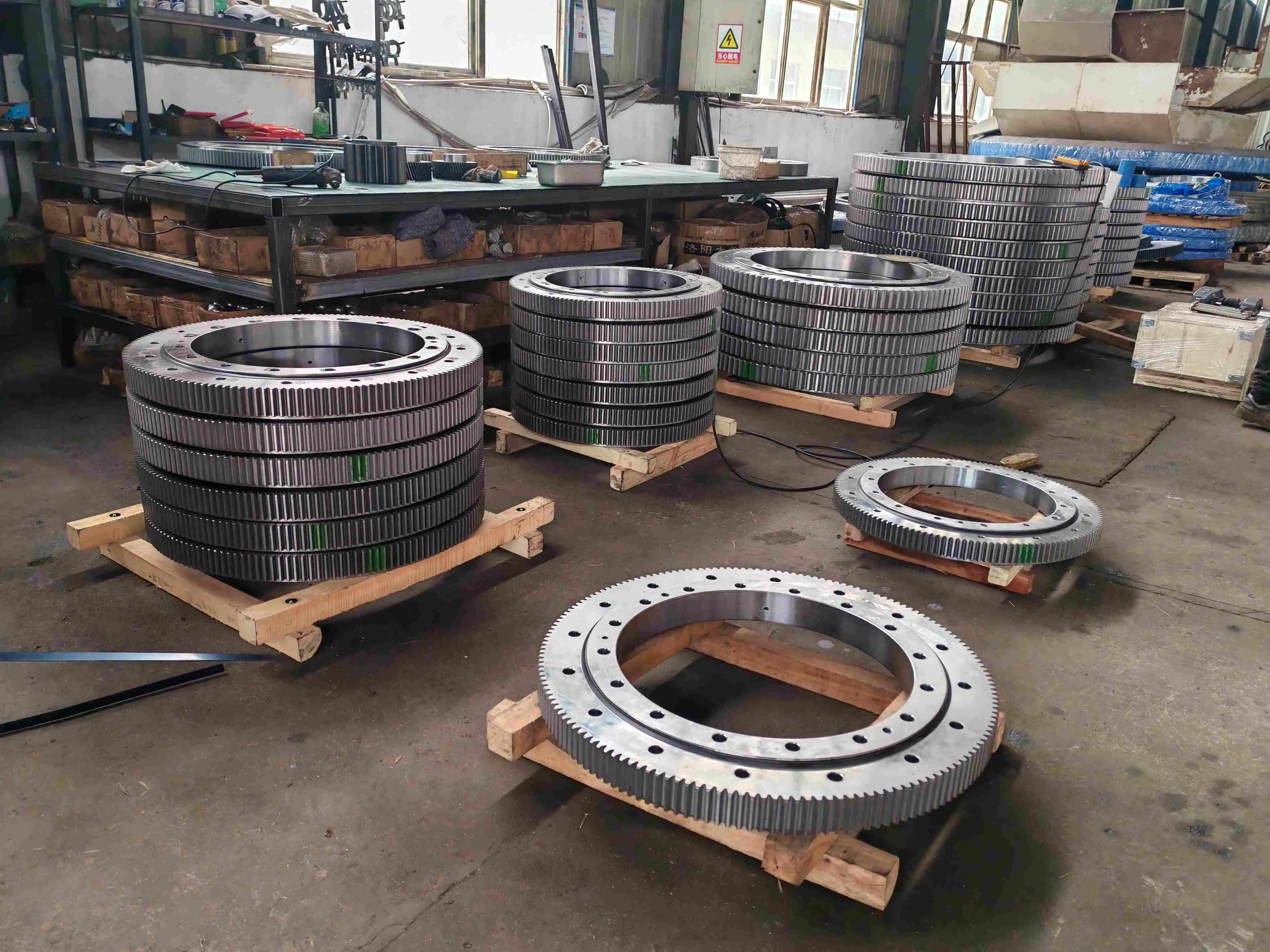
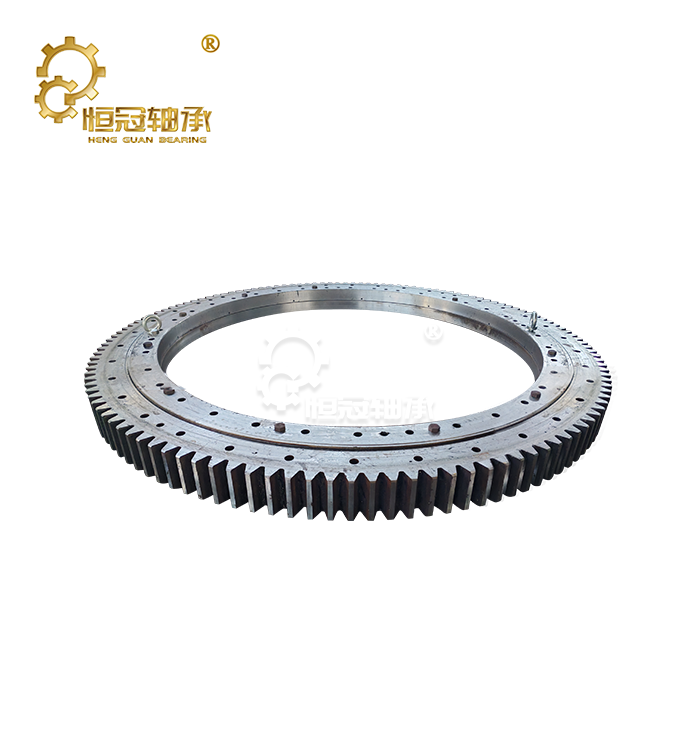
Smooth rotation is not just a matter of rated capacity but also of how uniformly the four-point contact design distributes stress along the raceway. The KD 600 slewing bearing employs a single row of steel balls in four-point contact with the raceway to carry combined axial, radial, and moment loads in a compact, low-profile structure. As this is the reinforced heavy-capacity series, larger ball diameters and better raceway sections boost load capacity 30 to 50 percent over standard bearings in the same envelope. The raceways are induction-hardened to HRC 55-62 and honed to perfection following hardening to ensure the four-point contact angle is uniform over a complete 360°. This is precisely what maintains torque even cycle after cycle. Because all tooth-mesh friction is eliminated, the bearing can rotate freely under the power of an external drive (such as a belt or chain system). This makes it an excellent choice as a packing machine turntable bearing, where consistent, low-noise rotation is more important than raw capacity. Many customers therefore choose the KD 600 without gear (the 060 series).
| Factor | Effect on Rotation Performance |
|---|---|
| Raceway hardness/finish | HRC 55–62 induction-hardened, ground for 360° contact-angle consistency |
| Gear configuration | No-gear (060) removes tooth-mesh friction entirely |
| Ball diameter grade | 20–50 mm in seven tiers — match grade to duty to avoid over-design |
| Seal quality | Keeps contamination out of the raceway |
| LC (limited clearance) variant | Reduced internal clearance for higher rotation precision |
The series spans raceway diameters (DL) from 370 to 2,645 mm across 79 configurations, and selecting the right ball grade keeps fatigue life matched to the actual duty cycle rather than over-specifying.
| Ball Diameter | DL Range (mm) | Weight (kg) | Typical Equipment |
|---|---|---|---|
| 20–22 mm | 370–710 | 29–68 | Packaging machine turntables, robot arm bases, indexing tables |
| 25–30 mm | 475–1,500 | 50–338 | Mobile cranes, mid-size excavators, wind yaw systems |
| 35–40 mm | 680–1,800 | 131–531 | Heavy industrial turntables, steel mill equipment |
| 45–50 mm | 805–2,645 | 215–1,142 | Super-heavy platforms, special heavy excavators |
KD 600 Slewing Bearing Load, Speed, and Friction Considerations
Rotational performance is a balance between load, rotational speed, and friction, and pushing any one variable too far affects the other two. The KD 600 slewing bearing should be confirmed against your actual axial, radial, and tilting-moment figures rather than assuming a single "maximum load" number applies in every direction — that is what the seven ball-diameter grades exist for, since a packaging turntable and a 130-tonne all-terrain crane clearly sit at different points of the same series. Higher rotational speeds increase heat generation at the ball-raceway contact, which is why lubrication viscosity and interval become more critical as cycle frequency rises. For continuous-duty applications like a packing machine turntable bearing running many cycles per shift, friction control directly affects both energy consumption and long-term wear. If your engineering team wants help matching load and speed data to the right configuration, our staff at mia@hgb-bearing.com can review your application before you finalize a spec sheet.
| Gear Configuration | Series Code | Drive Style |
|---|---|---|
| No gear | 060 | Belt, chain, or remote pinion drive — free rotation |
| External gear | 061 | Standard pinion drive, most common on cranes and excavators |
| Internal gear | 062 | Compact drive integrated inside the bearing bore |
KD 600 Slewing Bearing Mounting and Lubrication for Smooth Rotation
Even a highly constructed bearing KD 600 without gear will not provide good performance if it is not properly installed. Thus, the bearing specifications and the quality of installation must be given equal consideration. KD 600 slewing bearings must be mounted on a level, solid bearing support with bolts equally torqued. Uneven clamping puts load on one side of the raceway and causes wobbling or noise during rotation. For the gearless version of the KD 600, precise alignment of the driving mechanism and the spinning ring is of paramount importance, since there is no gear mesh to compensate for small misalignments. Also important: lubrication. The grease to be used should be chosen according to the predicted temperature range and should be replenished according to a predetermined schedule, as one of the most frequent causes of increasing rotational resistance in slewing rings used as turntable components is dried-out or contaminated grease. The series has industry-standard mounting dimensions; thus, similar versions will bolt in place of KD 210 units without modification. Replacement on a clean, flat surface will quickly restore the original rotation quality.
| Mounting/Lubrication Factor | Recommended Practice |
|---|---|
| Mounting surface | Flat and rigid, checked for flatness tolerance |
| Bolt torque | Even, sequential tightening pattern |
| Grease type | Matched to the operating temperature range |
| Relubrication interval | Set by duty cycle, not fixed calendar time |
| Replacement fit | Standard bolt patterns allow direct drop-in replacement |
How to Optimize KD 600 Slewing Bearing Performance in Service?
Once it’s deployed, performance continues to rely on monitoring and continuous maintenance, not a one-time setup. Regular checks for rotational torque, abnormal noise, and seal condition can identify early signs of raceway wear before a KD 600 slewing bearing needs a complete replacement — and each unit is supplied with a factory torque-verification record that gives your maintenance team a measurable baseline for comparison. Buyers operating a packing machine turntable bearing on a continuous production line should measure relubrication intervals based on real cycle counts against a predetermined calendar timetable, since higher-throughput lines wear grease off quicker. Keeping mounting bolts torqued to spec and re-checking flatness after each structural alteration further protects the smooth rotation the series is supposed to produce. Heng Guan Bearing will assist you with inspection intervals and replacement scheduling according to your duty cycle and environment. Stock configurations ship within 7 to 15 days, and bespoke versions take 4 to 6 weeks
Conclusion
A KD 600 slewing bearing can meaningfully improve rotational smoothness when load, mounting, and lubrication are matched correctly — with 30–50% higher capacity than standard bearings in the same envelope. Heng Guan Bearing supports buyers through selection and service. Reach out to optimize your rotary equipment today.
FAQ
Q1: What makes the KD 600 slewing bearing suitable for turntables?
A: Its compact four-point contact ball design gives smooth, low-torque rotation, and the ground raceway keeps the contact angle consistent through a full 360°.
Q2: When should I choose the KD 600 without the gear option?
A: Choose the 060 configuration when an external belt or chain drive turns the bearing, removing gear teeth and their friction entirely.
Q3: Does the KD 600 work well as a packing machine turntable bearing?
A: Yes — the 20–22 mm ball tier (DL 370–710 mm) is specified specifically for packaging turntables, indexing tables, and robot arm bases.
Q4: How often should a KD 600 slewing bearing be relubricated?
A: Base intervals on actual cycle counts and operating temperature rather than a fixed calendar schedule, shortening them on high-throughput lines.
Q5: Can the KD 600 replace an existing standard bearing without rework?
A: Yes — it follows industry-standard mounting dimensions, and equivalent versions bolt directly in place of KD 210 units using the same bolt pattern.
Q6: What quality documentation comes with each KD 600 bearing?
A: Each unit passes 100% CMM dimensional inspection, raceway hardness mapping, and factory rotation-torque verification, with material certificates carrying full heat-number traceability.
Improve Your Rotational Performance Today
Ready to see whether a KD 600 slewing bearing fits your equipment? Email your load, speed, and mounting details to mia@hgb-bearing.com, and Heng Guan Bearing's engineering team will help you select and optimize the right configuration.
References
1. American Bearing Manufacturers Association. (2015). ANSI/ABMA 9-2015 (R2020): Load Ratings and Fatigue Life for Ball Bearings. American Bearing Manufacturers Association.
2. Harris, T. A., & Kotzalas, M. N. (2006). Advanced Concepts of Bearing Technology: Rolling Bearing Analysis, Fifth Edition. CRC Press. ISBN 978-1-4200-0658-2.
3. International Organization for Standardization. (2006). ISO 76:2006: Rolling Bearings — Static Load Ratings (3rd ed.). ISO.
4. International Organization for Standardization. (2007). ISO 281:2007: Rolling Bearings — Dynamic Load Ratings and Rating Life (2nd ed.). ISO.
5. International Organization for Standardization. (2017). ISO 15243:2017: Rolling Bearings — Damage and Failures — Terms, Characteristics and Causes (2nd ed.). ISO.
6. Brändlein, J., Eschmann, P., Hasbargen, L., & Weigand, K. (1999). Ball and Roller Bearings: Theory, Design and Application (3rd ed.). John Wiley & Sons. ISBN 978-0-471-98452-8.

WHAT OUR CUSTOMERS SAY
Here is the customer's evaluation of us
YOU MAY LIKE
 VIEW MORERKS.204040101001 Slewing Bearings
 VIEW MORERKS.161.14.0744 Slewing Bearings
 VIEW MORE161.28.1500.890.11.1503 slewing bearing
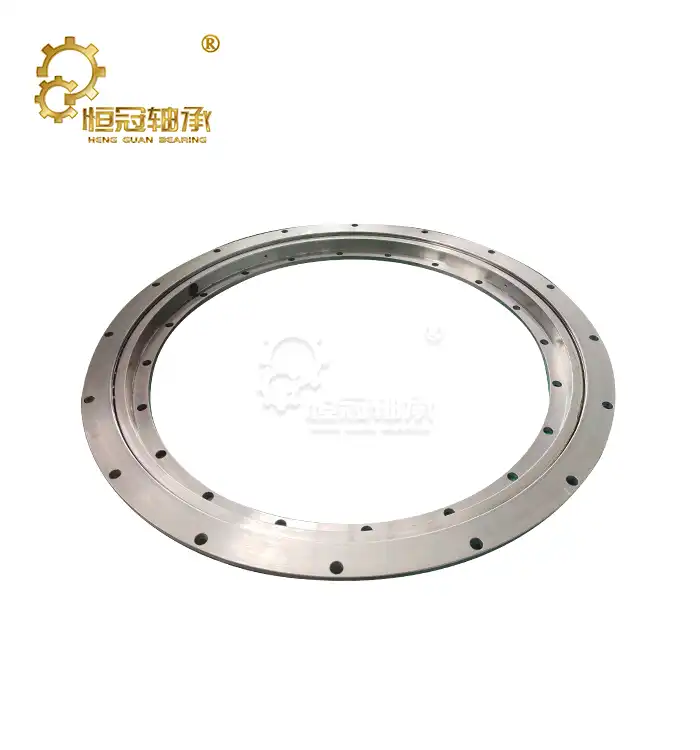 VIEW MORERKS 061.20.1094 slewing bearing
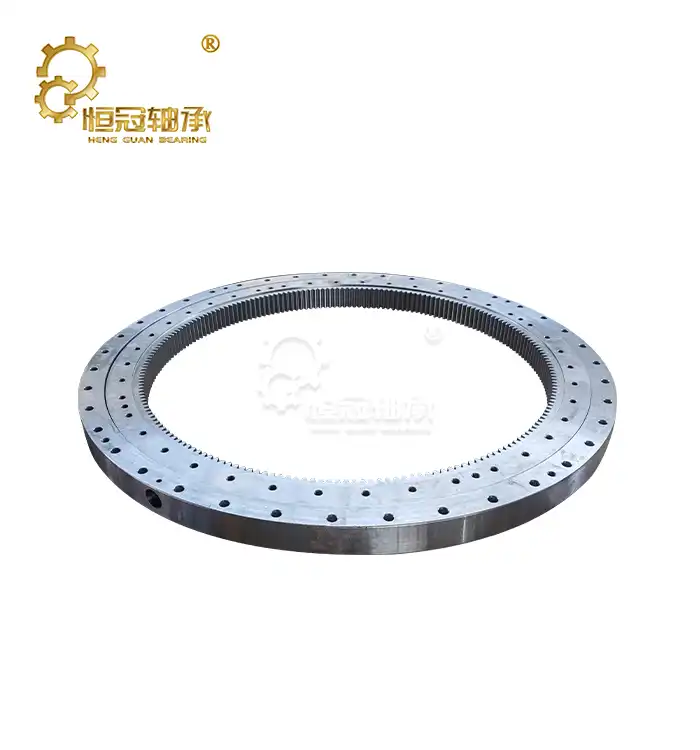 VIEW MORE131.40.1600 Slewing Bearing
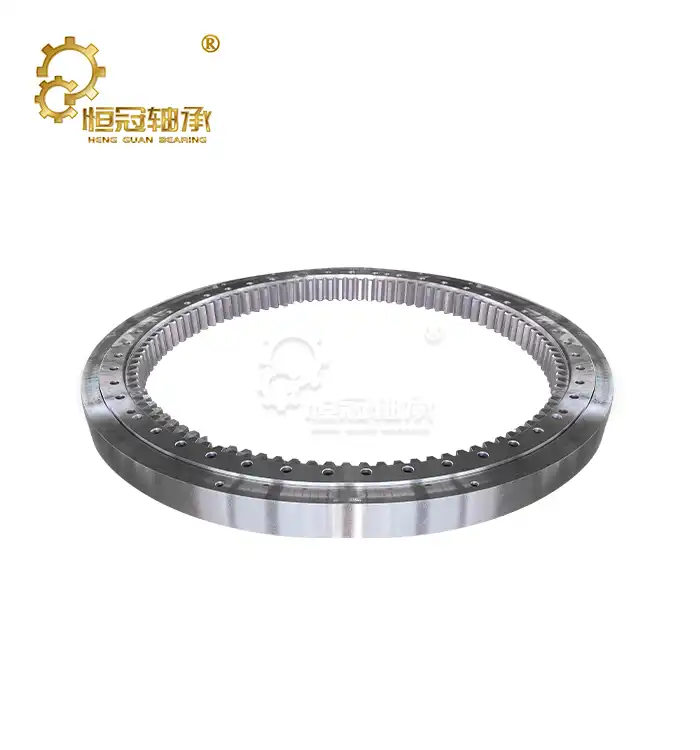 VIEW MORENew Holland Excavator slewing bearing
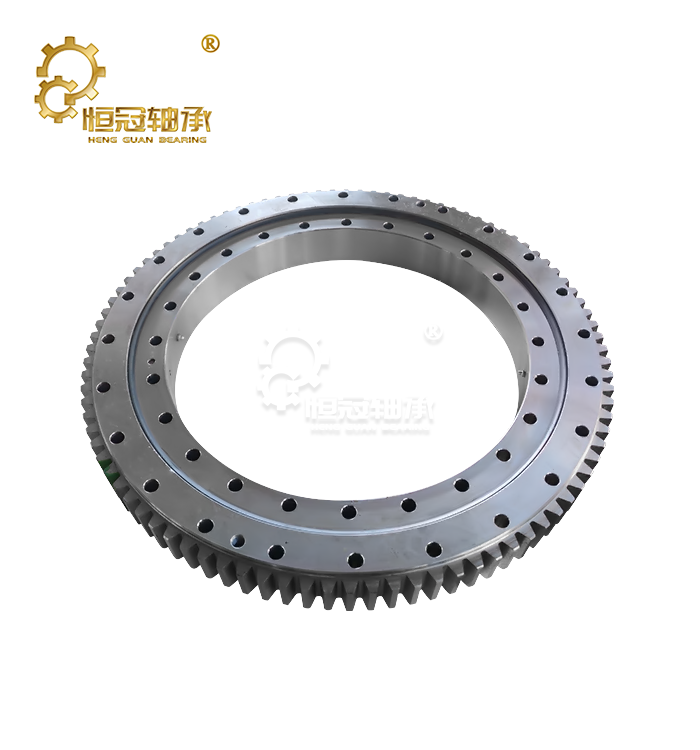 VIEW MORERotary Drilling Rig Slewing Bearing
 VIEW MOREMarine Slewing Ring Bearings