



Large Slewing Bearings for Heavy-Duty Industrial Applications
When a crane lifts a multi-ton load at the end of a long boom, or a wind turbine nacelle rotates to face changing winds, the component quietly making that motion possible is often a large slewing bearing. At Heng Guan Bearing, we design and manufacture these critical rotational components for the world's most demanding heavy-duty machinery, in sizes from 80 mm up to 10,000 mm in outside diameter. So what exactly makes large slewing bearings the go-to choice for such extreme conditions, and how should engineers go about selecting the right one? Let's walk through it together.
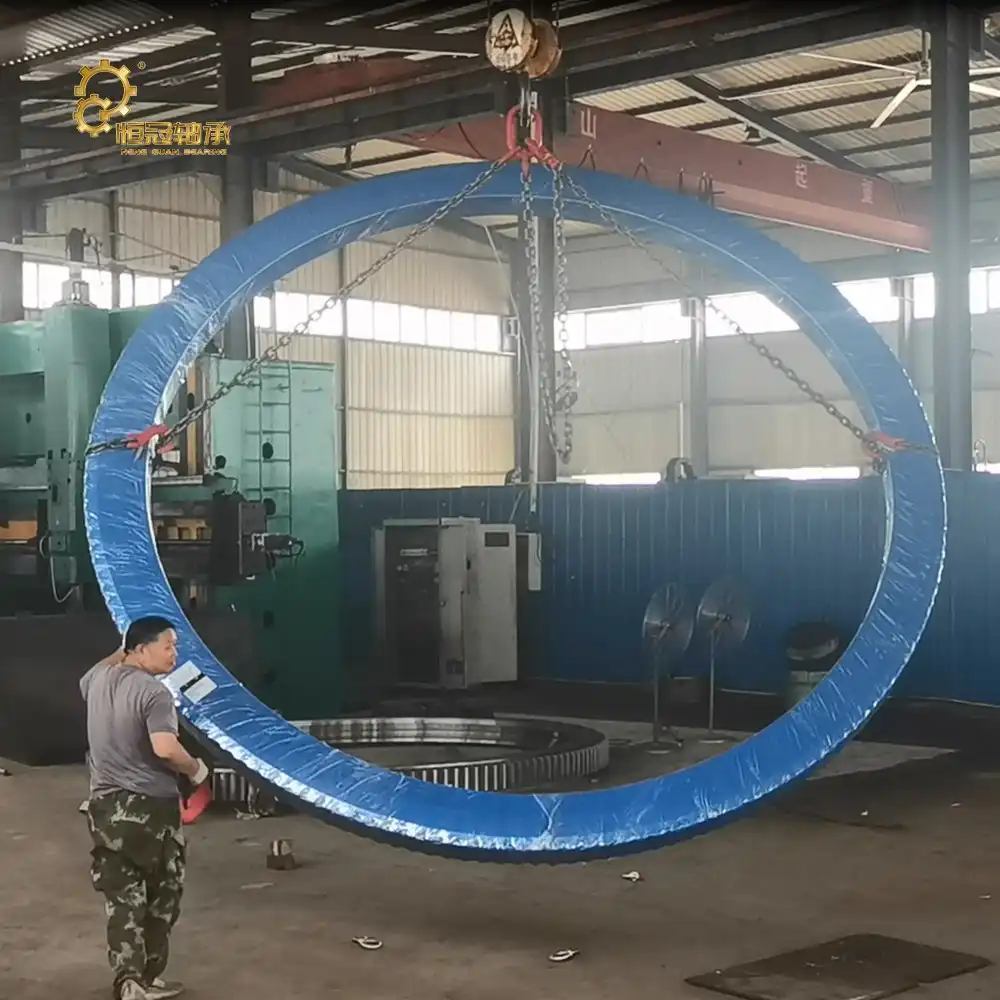
Why Are Large Slewing Bearings Ideal for Heavy-Duty Loads?
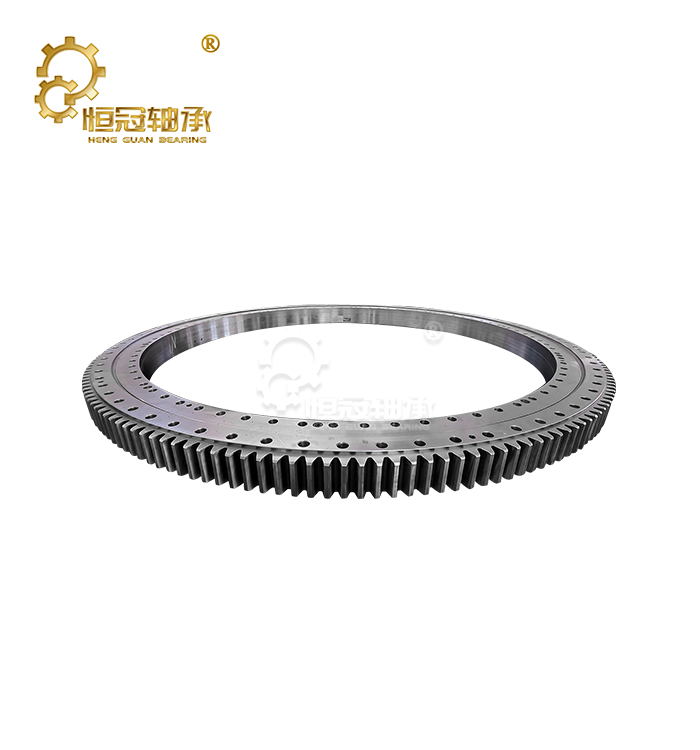
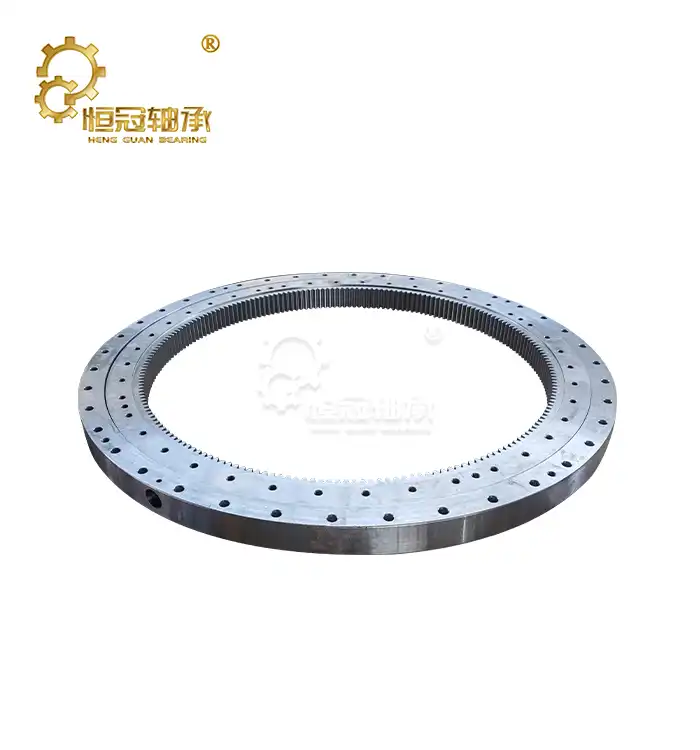
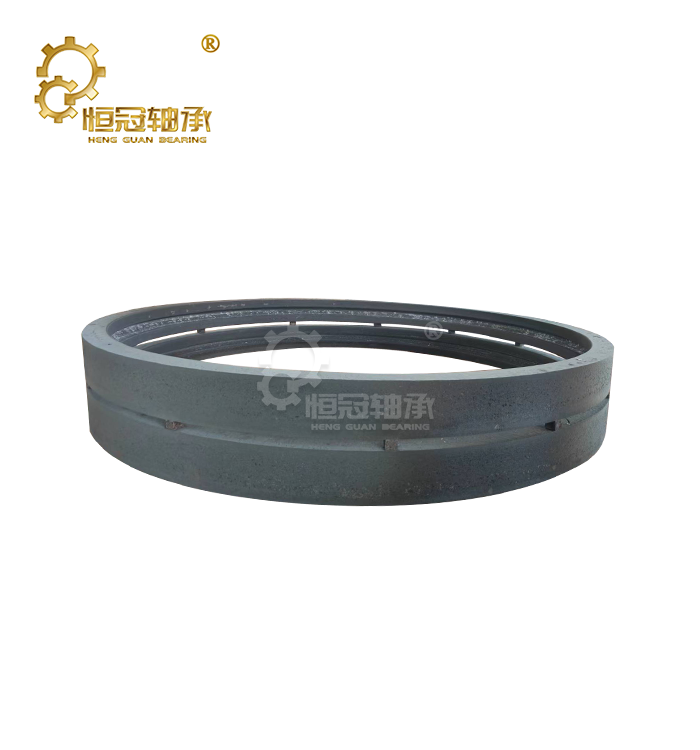
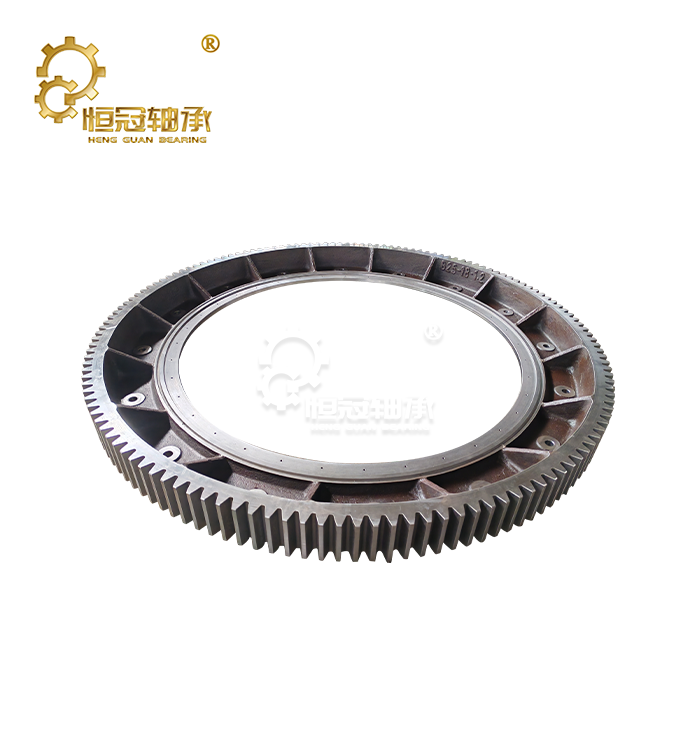
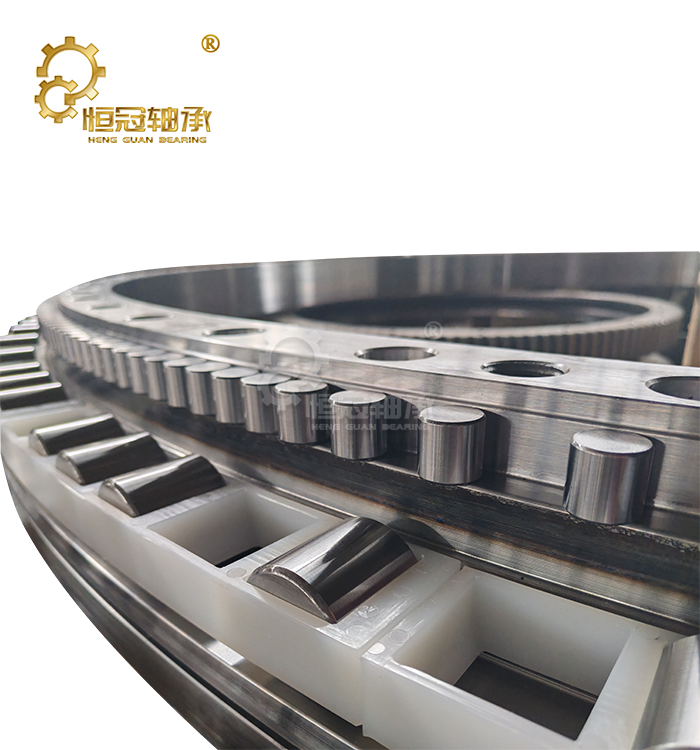
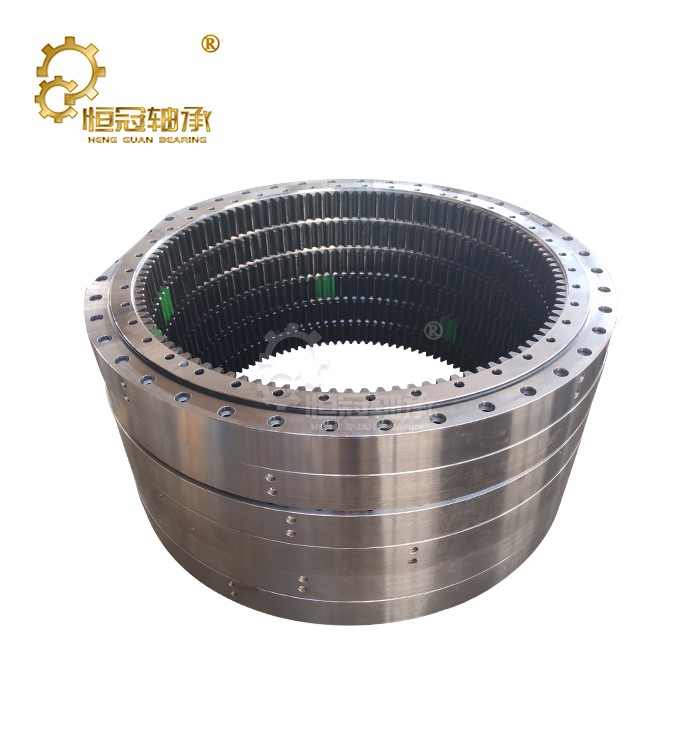
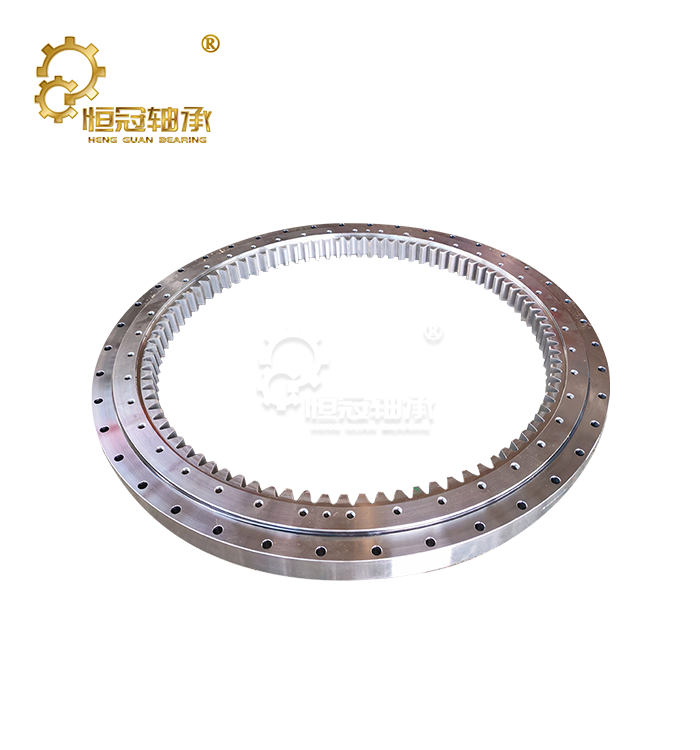
Large slewing bearings are made up of inner and outer rings with properly organized rolling elements – either balls, cylindrical rollers, or a mix of the two – which can take axial, radial, and moment loads concurrently in a single compact unit. This multi-directional capacity is exactly why heavy equipment designers turn to massive slewing bearings instead of stacking many individual bearings together. The wide diameter compared to the cross-section height provides good mechanical leverage so that the bearing can withstand tipping and overturning pressures even with a load supplied distant from the center of rotation.
Four structure types cover nearly all heavy-duty applications: single-row four-point contact ball for moderate loads at higher speeds, double-row ball for yaw and pitch moment stiffness, three-row roller for maximum capacity, and cross cylindrical roller for high-rigidity, precision-critical rotation. Have you ever wondered how a crane keeps steady while lifting at a long reach? Here’s the technical idea behind it.
| Structure Type | Best Suited For |
|---|---|
| Single-row four-point contact ball | Moderate loads, compact space, higher rotation speed |
| Double-row ball (different ball sizes) | Wind turbine yaw and pitch systems need moment stiffness |
| Three-row cylindrical roller | Mining and heavy equipment, maximum load capacity |
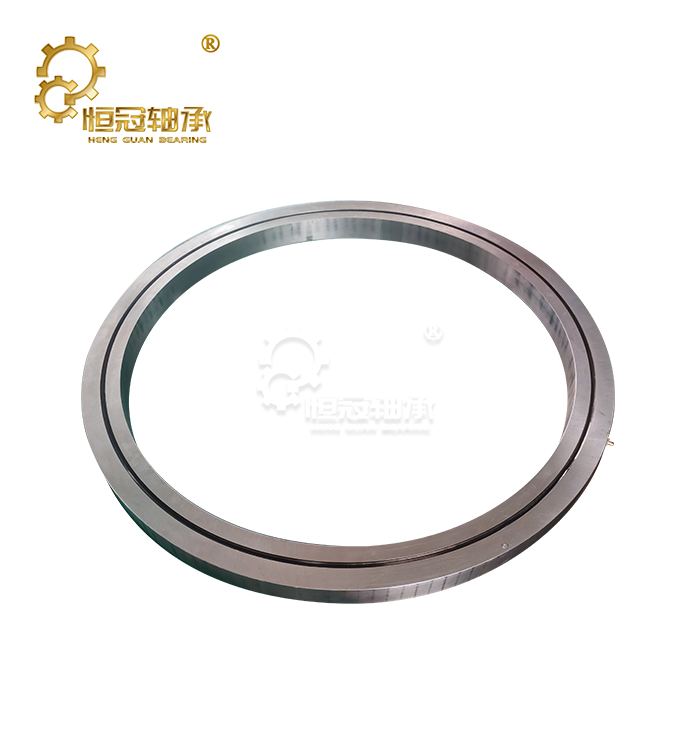
| Cross cylindrical roller | High rigidity, low deflection, precision rotation |
How to Select Large Slewing Bearings for Industrial Equipment
The first step to selecting the correct large slewing bearings is to do a complete load analysis, including the projected axial force, radial force, and overturning moment under worst-case operating circumstances. Undersizing any one of these components may affect long-term dependability. Also, engineers should examine the rotation speed, mounting space, gear design, and accuracy grade before selecting the final product. Not sure where to begin? Our engineering staff at Heng Guan Bearing would be glad to analyze your equipment specs and propose the most appropriate configuration. Please Contact Us directly at mia@hgb-bearing.com for a technical consultation.
| Selection Factor | Design Question | Typical Structure Recommended |
|---|---|---|
| Combined heavy loads | Radial, axial, and moment together? | Three-row roller structure |
| Moderate load, compact space | Need a slim, cost-efficient design? | Single-row four-point contact ball |
| High rigidity, low deflection | Precision-critical rotation? | Cross cylindrical roller structure |
| Direct drive integration | Need built-in gear engagement? | External or internal gear type |
Whatever structure you choose, the following core specifications define what a modern large slewing bearing can deliver:
| Parameter | Specification |
|---|---|
| Bore diameter | 50 – 8,000 mm |
| Outside diameter | 80 – 10,000 mm |
| Section height | 20 – 500 mm |
| Precision grade | P0, P6, P5, P4 (ISO) |
| Raceway surface hardness | HRC 55–62 |
| Operating temperature | -40°C to +80°C (standard seals) |
| Standards compliance | ISO, DIN, GB, RoHS |
Where Are Large Slewing Bearings Used in Heavy Industry?
You will find big slewing bearings anyplace massive buildings need to turn regularly under extreme conditions. They are used in yaw and pitch control systems of wind turbines for correct alignment of blades to optimally harvest energy. All of this port machinery, ship-to-shore cranes, mobile harbor cranes, and bulk handling equipment depend on their sealing efficiency to defend against salt spray and abrasive dust. Three-row roller designs are used in mining excavators and bucket wheel reclaimers since they are shock-resilient under continuous impact loading. They are used in metallurgical plants for ladle turrets, continuous casters, and furnace-tilting assemblies.
Specialized equipment also includes tunnel boring machines, drilling rigs, radar platforms, and CT scanner gantries. If your equipment incorporates rotation with large, variable, or off-centre loads, enormous slewing bearings are surely already in play.
| Industry | Typical Equipment | Common Structure Choice |
|---|---|---|
| Wind power | Yaw and pitch systems | Double-row ball |
| Port machinery | Ship-to-shore and mobile harbor cranes | Three-row roller / ball |
| Mining | Excavators, draglines, bucket-wheel reclaimers | Three-row roller |
| Metallurgy | Ladle turrets, continuous casters, furnace tilting | Three-row roller |
| Special equipment | TBM, drilling rigs, radar platforms, CT scanners | Cross roller / ball |
How Can Large Slewing Bearings Improve Equipment Reliability?
Reliability is the name of the game for heavy equipment at the end of the day, and that means even load distribution and low wear over time. This is where well-engineered massive slewing bearings really provide the most bang for the buck. Controlled heat treatment produces raceways in HRC 55-62, and precise machining ensures that each rolling element carries an equal amount of the load rather than having just a few points of contact to absorb the whole load. This minimizes fatigue and greatly increases service life. Heavy-duty duty cycles need shock and wear resistance, obtained from forged rings of 42CrMo or 50Mn special alloy steel and GCr15SiMn high-quality rolling elements.
Double-lip NBR or FKM seals prevent pollutants from entering in dusty, wet, or corrosive conditions. The bearing ring may be cut directly with gears. This eliminates the need for separate gear components and allows for a more compact and simpler-to-maintain drivetrain.
| Design Feature | Reliability Benefit |
|---|---|
| Even load distribution across hardened raceways (HRC 55–62) | Reduces fatigue, extends service life |
| 42CrMo / 50Mn forged rings with GCr15SiMn rolling elements | Improves resistance to shock and wear |
| Double-lip NBR / FKM sealing | Protects against dust, moisture, and contamination |
| Precision grade tolerance (P0–P4) | Ensures consistent, low-vibration rotation |
| Gears machined directly on the ring | Compact drivetrain, fewer separate components |
Correct installation and maintenance preserve these design advantages: mount on support surfaces flat within 0.2 mm per meter, tighten bolts in a star pattern in three stages (30% → 70% → 100% of torque), run the first 50 hours at 25% rated load, re-lubricate every 100–200 working hours, and check bolt torque every 500–1,000 hours.
Conclusion
Heng Guan Bearing delivers precision-engineered large slewing bearings built for the toughest heavy-duty applications, backed by an ISO 9001-certified quality system, dimension inspection reports, material certificates, and installation instructions with every shipment. Ready to upgrade your equipment's reliability? Let's talk.
FAQ
Q1: What loads can large slewing bearings handle at once?
They manage axial, radial, and moment loads simultaneously within one unit.
Q2: What diameter range do large slewing bearings typically cover?
Heng Guan Bearing manufactures bearings from 80 mm to 10,000 mm in outside diameter, with bores from 50 to 8,000 mm and custom sizes beyond.
Q3: Which structure offers the highest load capacity?
Three-row roller structures generally provide the greatest rigidity and load capacity for heavy-duty use, such as mining and metallurgical equipment.
Q4: Do large slewing bearings need gears?
Not necessarily — they're available in external gear, internal gear, or gearless configurations depending on your drive system, and gears can be cut directly into the ring.
Q5: How do I know which precision grade I need?
It depends on your rotational accuracy requirements; our team can help match a grade (P0–P4) to your application.
Q6: How long does production take?
Standard sizes (200–2,000 mm diameter) ship in 4–6 weeks; large custom sizes take 8–12 weeks depending on specifications.
Get a Quote for Large Slewing Bearings Today
Ready to equip your machinery with reliable large slewing bearings? Heng Guan Bearing offers custom design, precision manufacturing, and responsive technical support, with products exported to more than 50 countries. Email us at mia@hgb-bearing.com to discuss your project today.
References
1. Harris, T. A., & Kotzalas, M. N. Rolling Bearing Analysis. CRC Press.
2. Brändlein, J., Eschmann, P., Hasbargen, L., & Weigand, K. Ball and Roller Bearings: Theory, Design, and Application. John Wiley & Sons.
3. American Bearing Manufacturers Association. "Load Ratings and Fatigue Life for Ball Bearings." ANSI/ABMA Standard 9.
4. International Organization for Standardization. ISO 9001, "Quality Management Systems — Requirements."
5. International Organization for Standardization. ISO 281, "Rolling Bearings — Dynamic Load Ratings and Rating Life."
6. International Organization for Standardization. ISO 76, "Rolling Bearings — Static Load Ratings."

WHAT OUR CUSTOMERS SAY
Here is the customer's evaluation of us