




Best Crane Slewing Ring for Port, Tower, and Mobile Cranes
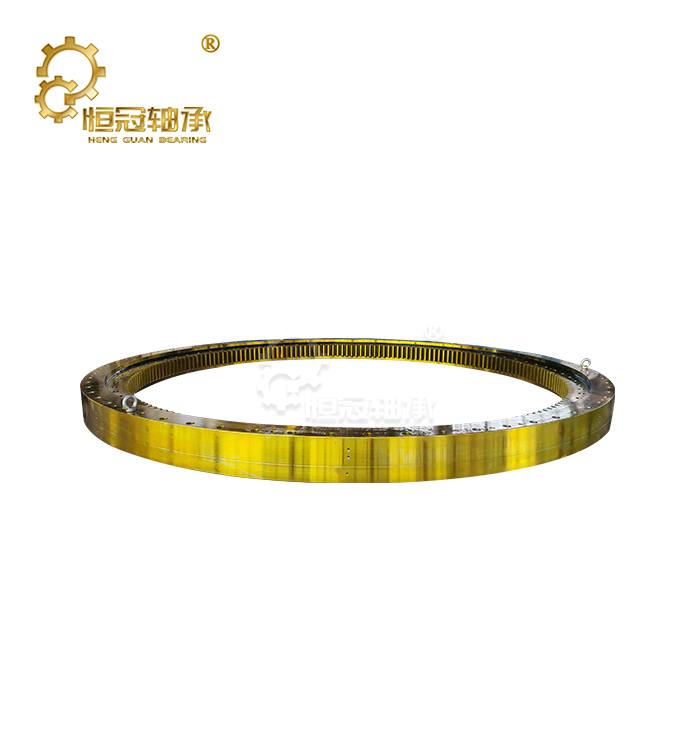
The correct selection of a Crane Slewing Ring may be the difference between safe and effective crane operation throughout the life of the crane. If you have a ship-to-shore port crane, a tower crane on a high-rise site, or a mobile crane that moves from project to project, the slewing ring is the joint that holds every tonne of load while permitting flawless 360-degree rotation. We provide rugged, precision-machined slewing rings for precisely these demanding applications at LYHGB (Luoyang Heng Guan Bearing Technology Co., Ltd.). This tutorial will take you through the process of choosing the proper bearing, the major design types available, load capacity considerations, and how needs vary between port, tower, and mobile crane platforms.

How Do You Choose the Right Crane Slewing Ring for Your Crane?
Choosing a crane slewing ring begins with the knowledge of how the crane will perform in real life: the speed of rotation, the direction and quantity of forces, and the environment in which it works. The problem is that a dockside crane in salt spray requires a different seal and coating than an inside tower crane. So let's break it down for you.
First, check the mounting interface and bolt pattern, which need to comply with the construction of your crane. Secondly, consider sealing and lubrication, especially for port or coastal cranes, which are exposed to moisture and dust. Third, consider the operating temperature range and duty cycle, as cranes that slew continually need more fatigue resistance than those used infrequently.
With no two projects being the same, many operators finally choose a customised crane slewing ring instead of a catalogue item, and have raceway hardness, gear type, and flange thickness customised to the actual load spectrum. Our technical staff regularly checks load charts and drawings to ensure the bearing fits actual world situations, not general assumptions, before suggesting a design.
| Specification Item | What to Confirm |
|---|---|
| Mounting interface & bolt pattern | Must match the crane structure exactly |
| Sealing & lubrication | Port/coastal cranes need enhanced protection |
| Temperature range & duty cycle | Continuous slewing demands higher fatigue life |
| Precision grade | P6 for most cranes; P5/P4 for precise positioning |
The physical envelope matters too. HGB manufactures customized crane slewing rings from 50 mm up to 10,000 mm in diameter, with a standard 3005 × 170 mm configuration covering many common port and tower crane designs — and every size in between is available as a made-to-order option. Because each unit is built from 42CrMo or 50Mn high-strength alloy steel with GCr15SiMn rolling elements, the ring's dimensional stability and load-carrying capacity hold up through years of harsh service.
Crane Slewing Ring Types: Ball, Roller, and Three-Row Designs
Not all slewing rings are built the same way, and picking the correct structure directly affects how well a crane slewing ring handles combined axial, radial, and moment loads. Single-row four-point contact ball designs are compact and cost-effective, making them a common choice for lighter mobile cranes and smaller tower cranes. Cross-cylindrical roller designs distribute load across a larger contact area, giving them an edge in applications with higher moment loads and slower rotation. Three-row cylindrical roller designs separate axial, radial, and tilting-moment loads into dedicated raceways, which is why they're favored for the heaviest port and harbor cranes that must lift extreme tonnage repeatedly. Let's compare these options side by side:
| Slewing Ring Type | Typical Load Focus | Best Suited For |
|---|---|---|
| Single-row ball (four-point contact) | Combined light-to-medium loads | Mobile cranes, smaller tower cranes |
| Cross cylindrical roller | Higher moment loads | Medium-to-large tower cranes |
| Three-row cylindrical roller | Very high axial, radial, moment loads | Port cranes, heavy lifting equipment |
Because port, tower, and mobile cranes each demand different load distributions, a customized crane slewing ring built around the specific structure often outperforms an off-the-shelf part in both service life and cost efficiency. Precision manufacturing is part of the equation as well — the raceways are machined and finished to deliver smooth, low-friction rotation that minimizes energy consumption and operating noise, while the four-point contact geometry spreads load evenly across each ball to reduce stress concentration over millions of rotation cycles.
What Load Capacity Does a Crane Slewing Ring Need?
Load capacity planning is arguably the most important step in specifying a crane slewing ring, since undersizing risks premature failure while oversizing adds unnecessary weight and cost. Engineers typically evaluate three combined factors: axial load (the vertical lifting force), radial load (horizontal forces from wind or side pull), and tilting moment (the overturning force created when a load is lifted away from the crane's center). Dynamic factors matter too — sudden stops, wind gusts on tall tower cranes, and vessel motion on marine-mounted equipment all add stress beyond static calculations. That's why our team at HGB works from your actual load chart data, not generic tables, before finalizing a Crane Slewing Ring design.
If you'd like our engineers to review your specifications directly, reach out at mia@hgb-bearing.com, and we'll help match the raceway hardness, gear module, and diameter to your crane's real operating envelope, whether that's a 50 mm compact ring or a 10,000 mm heavy-duty unit.
| Precision Grade | Typical Crane Use |
|---|---|
| P0 | General industrial applications |
| P6 | Most crane applications (standard recommendation) |
| P5 | High-precision positioning cranes |
| P4 | Precision equipment and specialized positioning |
Selecting the right precision grade protects accuracy without inflating cost: for most cranes, P6 delivers the right balance of rotational accuracy and economy, while P5 or P4 is specified when the crane performs high-precision positioning work that demands tighter dimensional and rotational tolerances. Gear teeth are hardened at the surface and, where coastal duty is involved, the ring carries a marine-grade protective coating so the entire assembly resists corrosion and wear in salt-laden air.
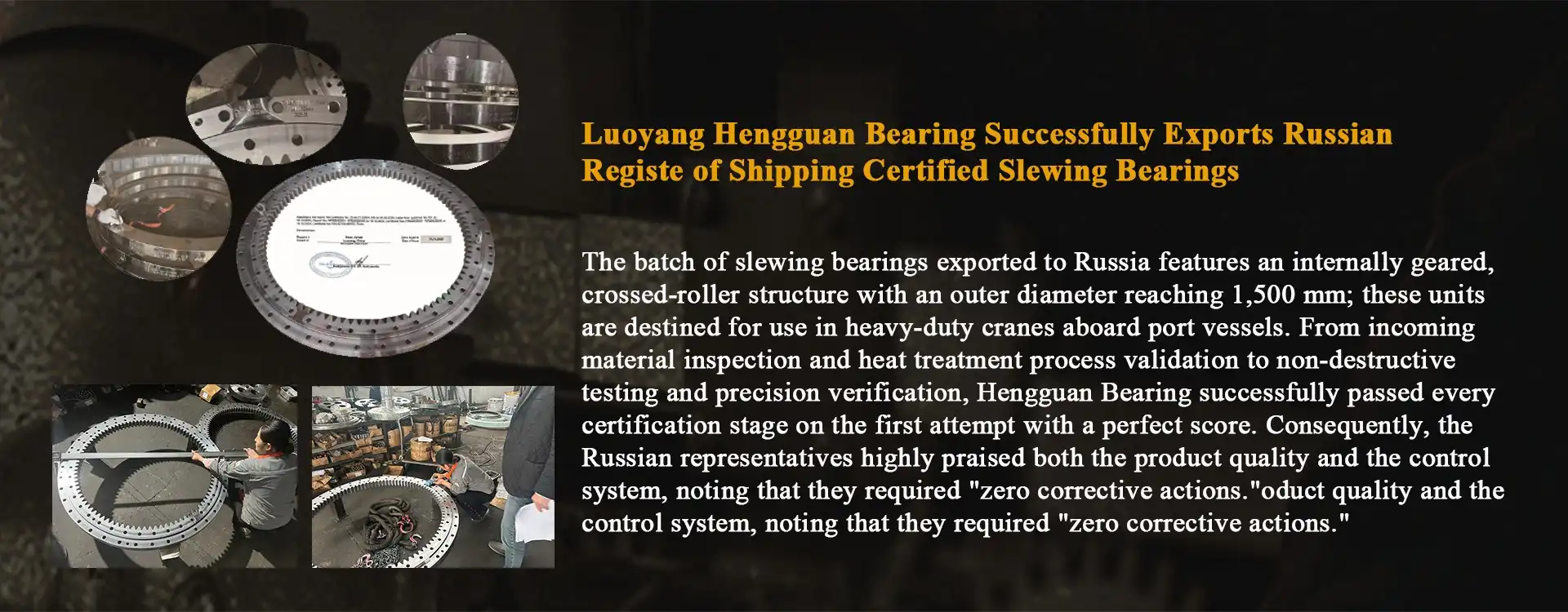
Choosing Crane Slewing Rings for Port, Tower, and Mobile Cranes
Every kind of crane sets its own special demands on the slewing ring; thus, the “best” selection truly relies on where and how the crane is utilised. Port cranes, including ship-to-shore and mobile harbour cranes, require corrosion-resistant sealing systems and strengthened raceways to stand up to salt air, dust, and near-continuous duty cycles. Tower cranes are designed for great moment-load capacity and stability at height, as wind loading on tall towers causes large tilting forces that the bearing must accommodate. Mobile and crawler cranes, in contrast, favour a mix of small size, weight efficiency, and consistent performance in regularly changing task locations and terrain conditions. Let’s do a short comparison to help you decide:
| Crane Type | Priority Requirement | Recommended Design |
|---|---|---|
| Port / Harbor Crane | Corrosion resistance, continuous duty | Three-row roller or sealed double-row ball |
| Tower Crane | High moment-load stability | Four-point contact ball or roller structure |
| Mobile / Crawler Crane | Compact size, weight efficiency | Single-row or cross roller design |
Whatever class your crane belongs to, maintenance planning is included in the specification. HGB recommends re-lubricating the slewing ring after 1,000 hours of operation (or depending on duty conditions), checking wear, contamination, and lubrication condition after 500 hours, and keeping gear and mounting areas free of debris – simple routines that protect the bearing’s working surfaces and greatly extend service life. HGB covers all three categories with in-house design and testing, so if your project doesn’t fit a conventional size, a customised crane slewing ring is the most dependable way to meet performance and price.
Conclusion
A well-matched Crane Slewing Ring protects both safety and uptime. HGB combines engineering precision with flexible customization to help port, tower, and mobile crane operators lift with confidence — partner with us for your next project.
FAQ
Q: What is the difference between a single-row and a three-row crane slewing ring?
A single-row ball design handles combined loads in one raceway, while a three-row roller design separates axial, radial, and moment loads for heavier applications like port cranes.
Q: Can HGB produce a customized crane slewing ring for non-standard cranes?
Yes, our team designs bearings from 50 mm to 10,000 mm in diameter, tailored to your crane's specific load chart and mounting requirements.
Q: How does load capacity affect slewing ring selection?
Axial load, radial load, and tilting moment must all be evaluated together; underestimating any factor can shorten bearing life significantly.
Q: Why do port cranes need special sealing on their slewing rings?
Salt spray, dust, and moisture accelerate corrosion, so port crane bearings require reinforced seals and marine-grade protective coatings for continuous duty.
Q: How often should a crane slewing ring be lubricated?
Re-lubricate every 1,000 operating hours (or per duty conditions) and inspect wear, contamination, and lubrication every 500 hours.
Q: What accuracy grades does HGB offer for crane slewing rings?
We manufacture to P0, P6, P5, and P4 precision grades, covering both standard industrial use and high-precision applications.
Get a Quote for Your Crane Slewing Ring Today
Ready to upgrade your port, tower, or mobile Crane Slewing Ring with a reliable slewing ring? Contact our engineering team at mia@hgb-bearing.com for a personalized recommendation, drawing review, or customized quote — backed by ISO 9001-certified processes, RoHS compliance, and 20+ years of export experience to over 50 countries. Let's build your project's foundation for smooth, safe rotation together.
References
1. Harris, T. A., & Kotzalas, M. N. (2006). Rolling Bearing Analysis, 5th ed. CRC Press.
2. ISO 76:2006. Rolling Bearings — Static Load Ratings. International Organization for Standardization, 2006.
3. ISO 281:2007. Rolling Bearings — Dynamic Load Ratings and Rating Life. International Organization for Standardization, 2007.
4. DIN 3967:1978-08. System of Gear Fits; Backlash, Tooth Thickness Allowances, Tooth Thickness Tolerances; Principles. Deutsches Institut für Normung, 1978.
5. ISO 1328-1:2013. Cylindrical Gears — ISO System of Flank Tolerance Classification — Part 1: Definitions and Allowable Values of Deviations Relevant to Flanks of Gear Teeth. International Organization for Standardization, 2013.
6. ISO 9001:2015. Quality Management Systems — Requirements. International Organization for Standardization, 2015.

WHAT OUR CUSTOMERS SAY
Here is the customer's evaluation of us
YOU MAY LIKE
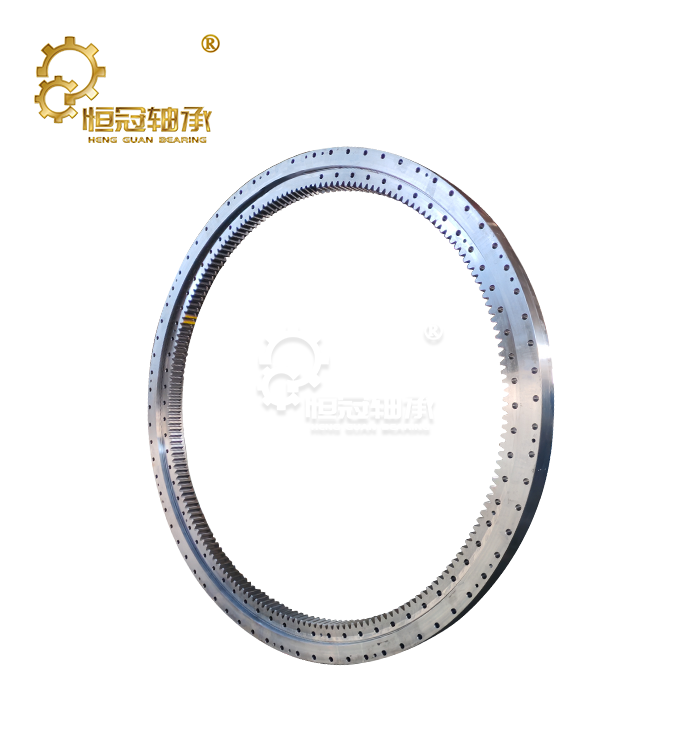 VIEW MOREPort Crane Slewing Bearing
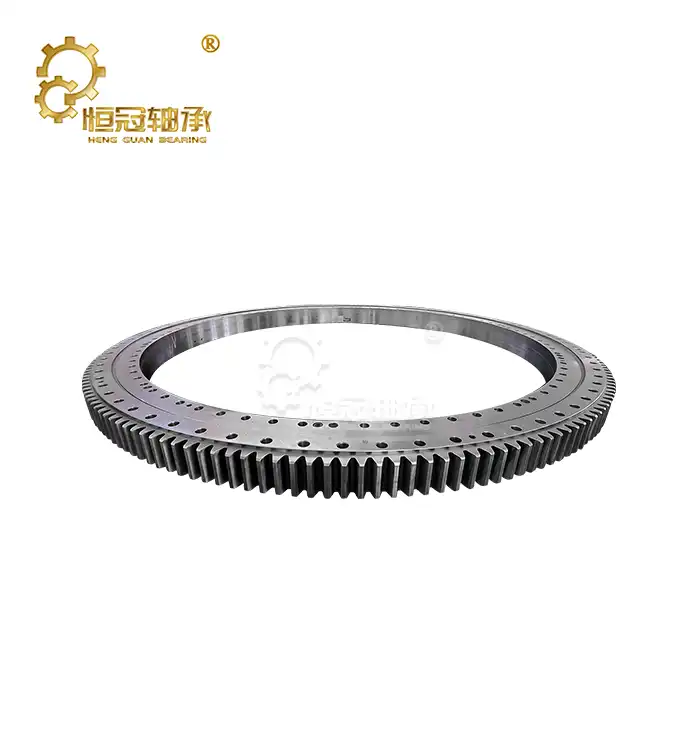 VIEW MORE011.30.630 slewing bearing
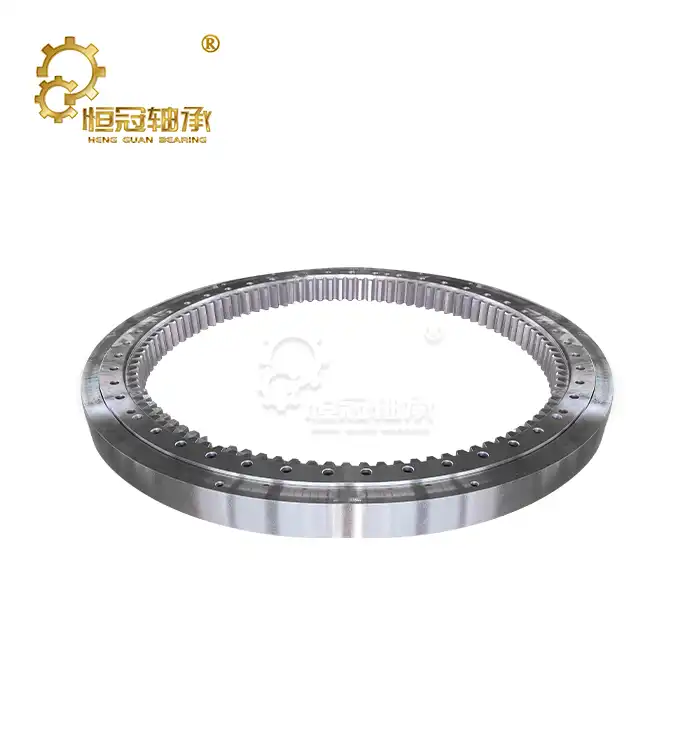 VIEW MORESingle-row ball slewing ring (HS series)
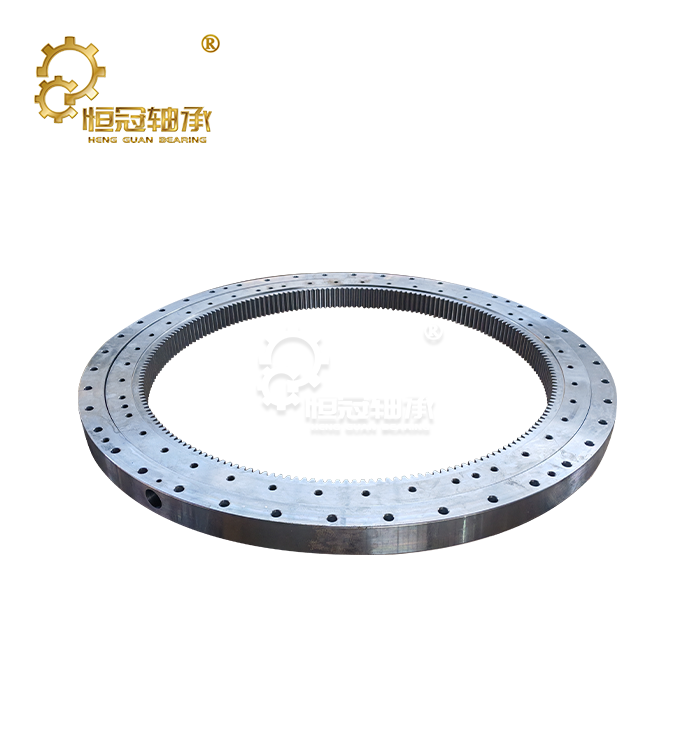 VIEW MORETakeuchi Excavator slewing bearing
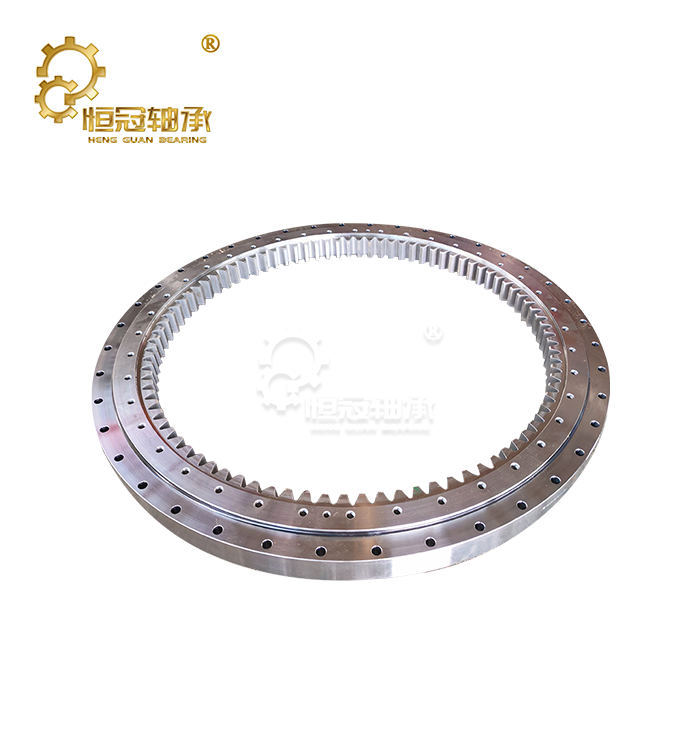 VIEW MOREHitachi Excavator slewing bearing
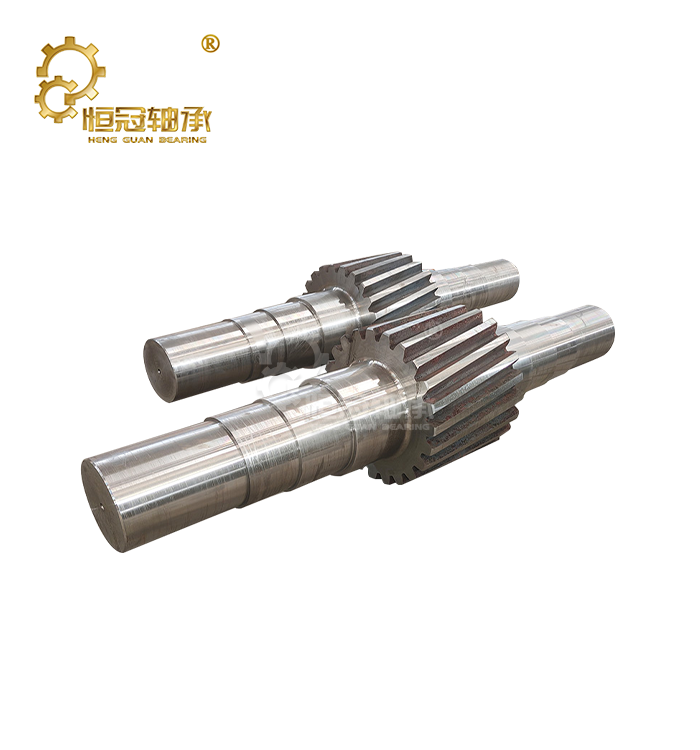 VIEW MOREShaft Gear
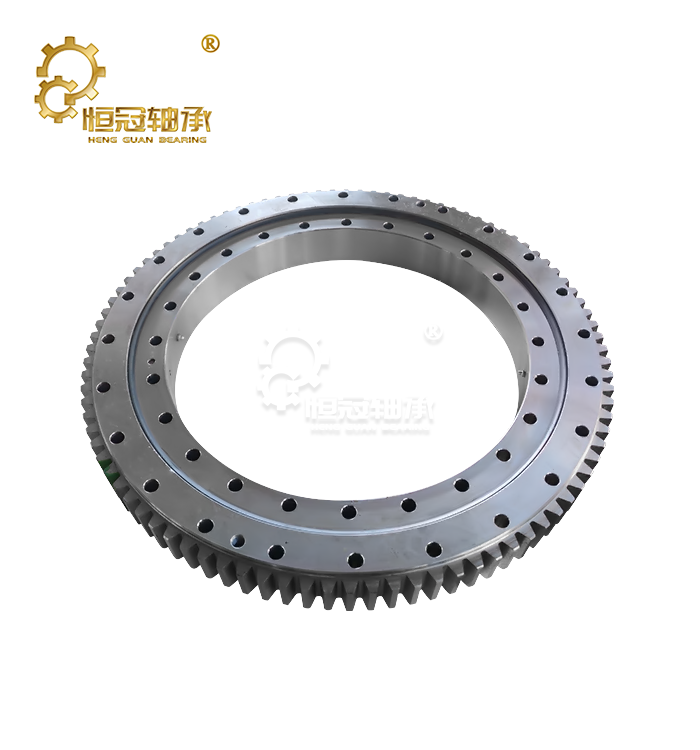 VIEW MORERotary Drilling Rig Slewing Bearing
 VIEW MORELarge Diameter Crane Slewing Bearing