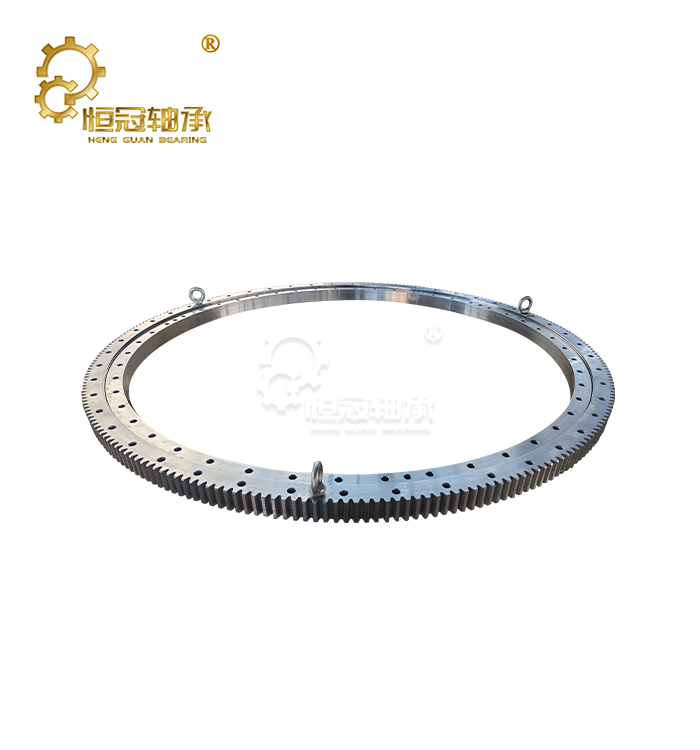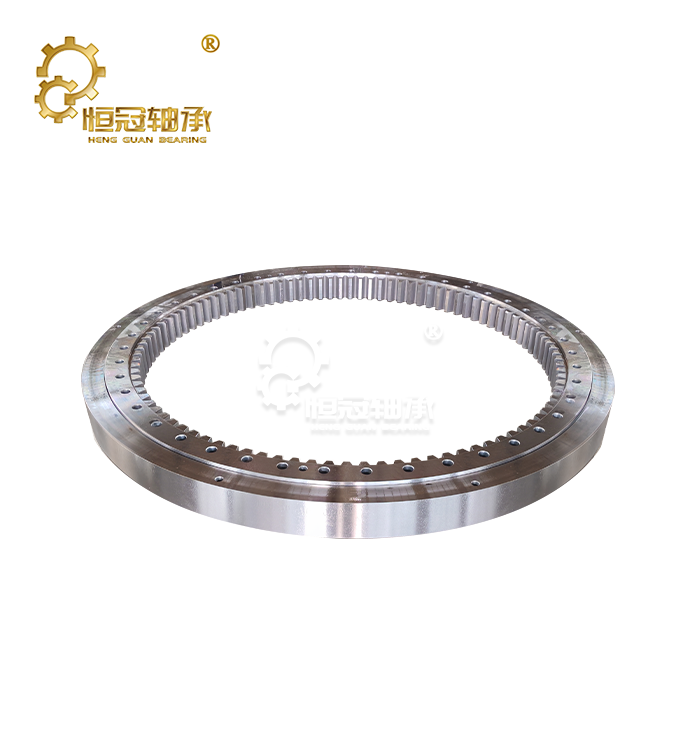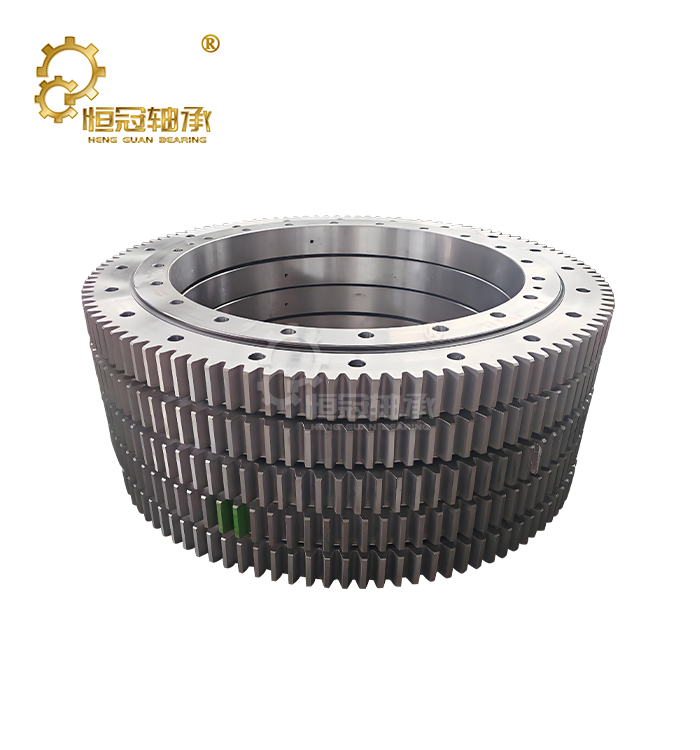




Why Choose Roller Slewing Rings for Your Machine Design?
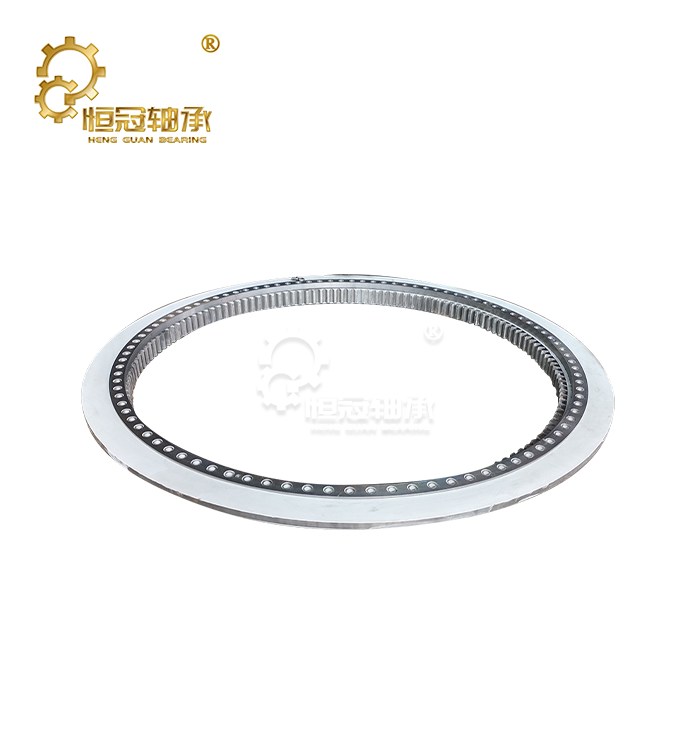
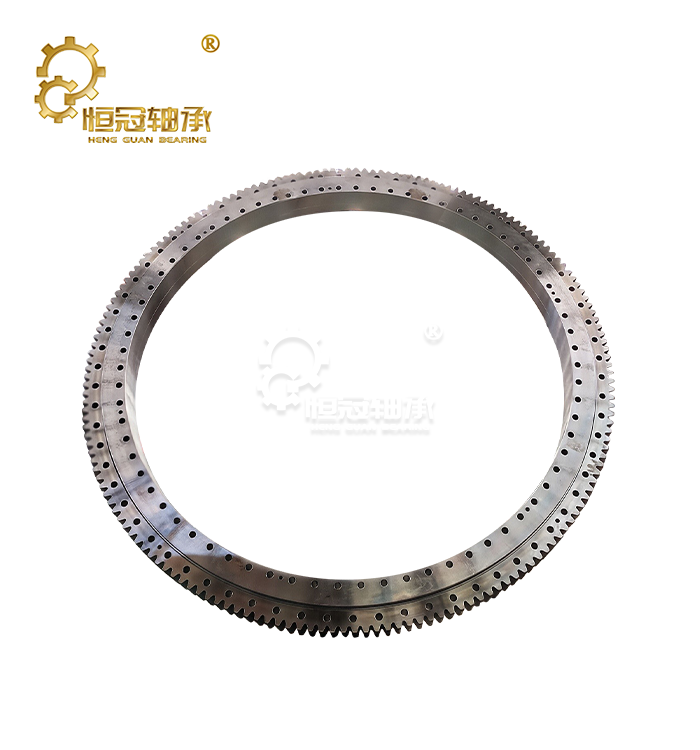
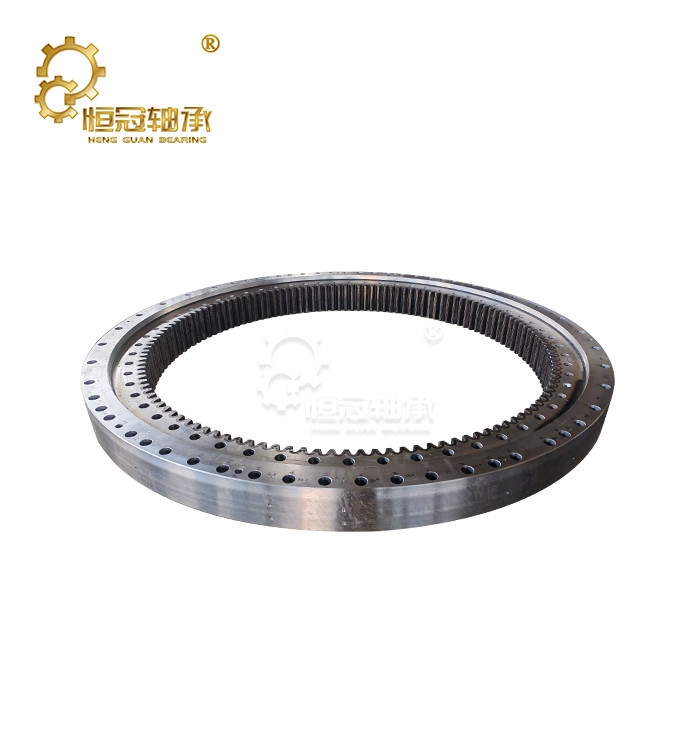
Roller slewing rings represent the pinnacle of heavy-duty rotational bearing technology, specifically engineered to handle extreme loads while maintaining precision performance in demanding industrial applications. Roller slewing rings are designed for these demanding conditions. By using cylindrical or tapered rollers as rolling elements, they create line contact with the raceway instead of the point contact found in ball-based designs. This structure allows the bearing to distribute loads across a larger contact area, improving load carrying capability, rotational stability, and service performance in challenging industrial environments.
For applications such as construction cranes, excavators, mining equipment, port machinery, wind turbines, and large industrial systems, choosing the correct slewing ring design is not only about bearing size. Engineers must consider operating loads, installation conditions, environmental exposure, maintenance requirements, and long-term reliability. Understanding the advantages and selection factors of roller slewing rings helps machine designers make better decisions for their projects.

Understanding the Engineering Design of Roller Slewing Rings
A roller slewing ring is a large bearing system consisting of inner and outer rings, rolling elements, raceways, seals, and lubrication structures. Unlike conventional bearings designed mainly for rotational speed, slewing rings are developed to support large loads while allowing controlled rotation between connected machine structures.
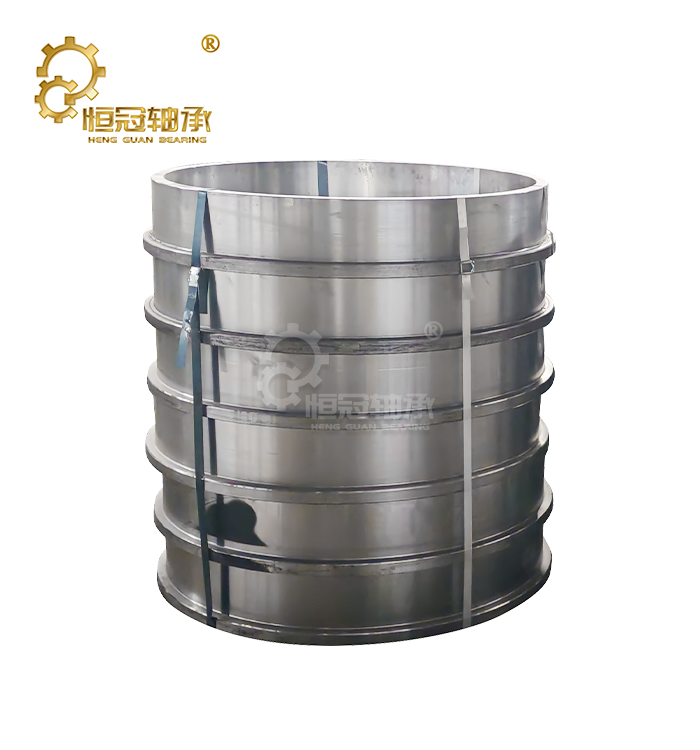
The inner and outer rings are commonly manufactured from high-strength alloy steels such as 50Mn or 42CrMo, which provide excellent mechanical strength and resistance to heavy working conditions. The rollers are typically produced from bearing steel materials such as GCr15, offering high hardness and wear resistance after heat treatment.
The main advantage of roller designs comes from their contact mechanism. Cylindrical and tapered rollers create a larger contact surface with the raceway, allowing forces to be distributed more evenly. This reduces localized stress concentration and improves the bearing’s ability to handle combined loads.
For heavy machinery manufacturers, this design provides several practical benefits:
Higher resistance against axial and radial forces
Better stability under overturning moments
Reduced raceway stress compared with point-contact designs
Longer operating life when properly lubricated and maintained
However, selecting a roller slewing ring requires more than choosing a larger bearing. The bearing must be matched with the machine structure, mounting arrangement, operating speed, and actual load conditions.
Key Structural Features That Improve Roller Slewing Ring Performance
Modern roller slewing rings include several design features that improve reliability and simplify installation. These features are especially important for equipment operating in outdoor, industrial, or high-load environments.
High-Strength Materials and Precision Manufacturing
The performance of a slewing ring begins with material selection and manufacturing control. High-quality alloy steel provides the necessary strength for handling repeated loading cycles, while heat treatment improves hardness and fatigue resistance.
During production, critical processes include:
Forging or ring rolling for improved material structure
CNC machining for dimensional accuracy
Raceway grinding for smooth rolling performance
Induction hardening to improve surface durability
Final dimensional inspection before assembly
Precision control of the raceway profile is particularly important because even small deviations can increase vibration, friction, and uneven load distribution during operation.
Sealing and Lubrication Systems for Harsh Environments
Heavy equipment often operates in conditions involving dust, moisture, mud, salt spray, or industrial contaminants. Effective sealing systems prevent external particles from entering the bearing while retaining internal lubricant.
Common sealing solutions include oil-resistant rubber seals such as NBR designs, which help protect internal components during outdoor operation. Proper lubrication is equally important because it reduces friction between rollers and raceways while preventing premature wear.
For equipment used in mining, marine construction, and port applications, reliable sealing and lubrication systems can significantly reduce maintenance frequency and unexpected downtime.
Custom Mounting Options for Different Machines
Because roller slewing rings are used across many industries, manufacturers often provide customized solutions based on specific machine requirements.
Customization options may include:
Different mounting hole patterns
Special flange dimensions
Modified sealing structures
Customized lubrication channels
Corrosion-resistant surface treatments
This flexibility allows engineers to integrate the bearing into new machine designs without unnecessary structural modifications.
Why Are Roller Slewing Rings Preferred for Heavy-Duty Equipment?
The main reason engineers choose roller-based slewing bearings is their ability to handle demanding loads while maintaining reliable rotation performance.
Compared with ball slewing bearings, roller designs provide a larger contact area between the rolling element and raceway. This difference allows them to perform better in applications where machines experience continuous heavy loading or frequent shock forces.
Higher Load Capacity for Challenging Applications
Heavy machinery often experiences multiple forces at the same time. For example, a crane slewing system may need to withstand vertical loads, horizontal forces, and overturning moments during lifting operations.
A properly selected roller slewing ring can provide the following:
Strong axial load support
Improved radial load resistance
Better moment load performance
Increased structural stiffness
This makes roller designs suitable for applications where safety and reliability are critical.
Typical applications include the following:
Tower cranes
Excavators
Mining machinery
Offshore equipment
Wind turbine systems
Port handling machines
In these industries, bearing failure can result in significant production losses, safety risks, and expensive repairs. Therefore, selecting a bearing with suitable load capacity is a key engineering decision.
Improved Durability and Lower Long-Term Operating Costs
The value of a slewing ring is not determined only by its initial purchase price. For industrial equipment manufacturers and operators, total ownership cost is often more important.
A durable roller slewing ring can reduce costs by the following:
Extending replacement intervals
Reducing unexpected equipment shutdowns
Minimizing maintenance requirements
Improving machine availability
Proper maintenance practices, including regular lubrication, bolt inspection, and condition monitoring, help maximize service life.
In environments such as coastal areas or chemical processing facilities, additional protection measures for roller slewing rings may be required. Corrosion-resistant coatings, improved sealing systems, and suitable lubricant selection can help maintain reliable performance under aggressive operating conditions.
How to Select the Right Roller Slew Ring for Your Machine Design?
Choosing the correct roller slewing rings requires a detailed understanding of both machine requirements and operating conditions. A bearing that is suitable for one application may not perform effectively in another because different machines create different combinations of loads, speeds, and environmental challenges.
Engineers should evaluate several key factors before selecting a roller slewing ring:
Maximum axial load
Radial load requirements
Overturning moment capacity
Rotation speed
Operating temperature
Installation space limitations
Maintenance accessibility
Expected service life
A correct selection process helps prevent problems such as excessive wear, uneven loading, increased vibration, and premature bearing failure.
Load Analysis and Operating Conditions
Load calculation is one of the most important steps in slewing ring selection. Industrial equipment rarely operates under a single type of force. Instead, bearings usually experience combined loading conditions that change during operation.
For example, construction cranes may experience different loads depending on lifting weight, boom position, and working angle. Mining equipment may face continuous vibration and impact forces caused by uneven terrain. Wind turbines must withstand constantly changing wind forces over many years of operation.
When evaluating load requirements, engineers should consider:
Axial Loads
Axial loads act vertically through the bearing axis and are common in lifting equipment and rotating platforms. The bearing must provide sufficient capacity to support the weight transferred through the structure.
Radial Loads
Radial forces occur perpendicular to the bearing axis. These forces can result from machine movement, external impacts, or operational conditions.
Moment Loads
Overturning moments are often the most critical factor for large machinery. These forces create uneven pressure distribution across the raceway, making bearing stiffness and internal design extremely important.
Selecting a roller slewing ring based only on static load ratings may lead to insufficient performance. Dynamic conditions, shock loading, and safety factors should also be considered during engineering evaluation.
Comparing Roller Slewing Rings with Other Bearing Solutions
Different bearing designs have different advantages depending on application requirements. Understanding the differences between roller and ball-based slewing bearings helps engineers select the most appropriate solution.
Roller Design Advantages Over Ball Slewing Bearings
Ball slewing bearings use spherical rolling elements that create point contact with the raceway. This design offers smooth rotation and is suitable for many standard applications.
However, when machines require higher load capacity and greater stiffness, roller designs often provide advantages because rollers create line contact with the raceway.
Key differences include the following:
Load Distribution
Rollers distribute forces over a wider contact area, reducing stress concentration. This makes them better suited for heavy-duty equipment that operates under continuous loading.
Structural Stability
The larger contact surface improves resistance against deformation when the bearing experiences high moment loads.
Heavy-Duty Application Capability
Roller slewing rings are commonly selected for large industrial systems where reliability and load performance are more important than extremely high rotational speed.
The best choice depends on the machine design. Engineers should consider operating requirements rather than selecting a bearing only based on size or purchase price.
Customization Options for Specific Machine Requirements
Many industrial applications require customized bearing solutions because standard models may not perfectly match the machine structure.
Experienced manufacturers can provide engineering support to optimize the bearing according to:
Equipment dimensions
Load requirements
Mounting conditions
Environmental exposure
Maintenance expectations
Customized Design and Manufacturing Support
Customization may involve changes to:
Ring diameter
Mounting hole arrangement
Gear configuration
Internal clearance
Lubrication system
Sealing structure
For example, equipment operating in marine environments may require additional corrosion protection, while automated machinery using roller slewing rings may require higher rotation accuracy.
A professional supplier should not only provide a product catalog but also support technical evaluation during the design stage. This reduces the risk of incorrect selection and helps ensure long-term machine performance.
What to Consider When Purchasing Roller Slewing Rings?
Selecting the right supplier is an important part of achieving reliable equipment performance. A high-quality bearing depends not only on the final product but also on manufacturing processes, quality control systems, and technical support.
Evaluating Manufacturer Capability and Quality Control
Before purchasing, buyers should review several supplier factors:
Manufacturing Experience
Manufacturers with experience producing large bearings usually have better control over critical processes such as heat treatment, machining accuracy, and raceway processing.
Quality Inspection Procedures
Reliable suppliers should provide inspection documentation covering:
Material verification
Dimensional accuracy checks
Hardness testing
Raceway inspection
Load testing when required
These quality records help buyers confirm that the bearing meets engineering requirements.
International Standards and Technical Documentation
Compliance with recognized quality systems such as ISO 9001 demonstrates that a manufacturer follows structured production and quality management procedures.
Depending on application requirements, customers may also request the following:
Material certificates
Inspection reports
Technical drawings
Product specifications
Maintenance recommendations
Clear technical documentation improves communication between suppliers, engineers, and equipment manufacturers.
Cost Evaluation and Total Ownership Considerations
The lowest purchase price does not always represent the most economical solution. For industrial equipment, the real cost includes installation, maintenance, downtime, and replacement expenses.
A higher-quality roller slewing ring solution may provide better value by offering the following:
Longer operating intervals
More stable performance
Reduced maintenance requirements
Lower risk of unexpected failure
When comparing suppliers, buyers should evaluate the complete lifecycle cost instead of focusing only on the initial quotation.
Factors that influence total ownership cost include:
Bearing quality
Delivery reliability
Technical support
Spare part availability
Maintenance requirements
A supplier that provides engineering assistance before and after purchase can help customers achieve better long-term results.
Maintenance Practices to Extend Roller Slewing Ring Service Life
Proper maintenance plays an essential role in maximizing bearing performance. Even a high-quality slewing ring can experience premature wear if lubrication, inspection, and operating conditions are not properly managed.
Regular maintenance procedures should include:
Checking lubrication levels
Inspecting seals for damage
Monitoring unusual noise or vibration
Checking mounting bolt conditions
Observing changes in rotational resistance
Early detection of problems allows operators to perform corrective actions before serious failures occur.
Condition Monitoring and Preventive Maintenance
Modern industrial operations increasingly use condition monitoring systems to improve equipment reliability.
Monitoring methods may include:
Vibration Analysis
Changes in vibration patterns can indicate problems such as raceway damage, uneven loading, or insufficient lubrication.
Temperature Monitoring
Unexpected temperature increases may suggest friction problems or lubrication issues.
Lubricant Inspection
Analyzing grease conditions can provide information about contamination, wear particles, and internal bearing conditions.
By combining regular inspections with predictive maintenance strategies, companies can reduce downtime and improve equipment availability.
For industries such as mining, offshore construction, and wind energy, where equipment repair can be difficult and expensive, preventive maintenance is especially valuable.
Conclusion
For heavy-duty spinning applications requiring high load capacity, long service life, and reliable precision, roller slewing rings provide an effective bearing solution. Their roller-based design allows better load distribution, improved structural stability, and dependable performance in demanding industrial environments.
Compared with traditional ball-type designs, roller configurations offer advantages when machines must handle large axial loads, radial forces, and overturning moments. Their combination of strong materials, precision manufacturing, customized options, and proper maintenance support makes them suitable for a wide range of heavy machinery applications.
However, choosing the right bearing requires careful evaluation of machine requirements, operating conditions, and supplier capabilities. Working with an experienced manufacturer can help ensure correct selection, reliable integration, and long-term performance.
For engineers and equipment manufacturers developing cranes, mining systems, wind turbines, and other large-scale machinery, investing in the right roller slewing ring solution can improve operational reliability, reduce maintenance costs, and support more efficient machine design.
|
|
FAQ
1. What load capacities can roller slewing rings handle compared to ball bearings?
Compared to ball slewing rings of the same size, roller slewing rings usually have a 40% higher load capacity. The cylinder-shaped or tapered rolling elements make a line contact design that spreads loads more evenly across the raceway surfaces. This makes it possible for better performance when heavy axial, radial, and moment loads are applied at the same time.
2. How do customization options enhance machine integration?
Customization choices that aren't standard include different mounting hole patterns, different sealing arrangements, different internal or exterior gear configurations, and specific size needs. These changes make sure that the parts work best with specific machine designs and meet working needs without lowering performance or dependability.
3. What maintenance schedules maximize service life?
Regular lubrication with manufacturer-recommended greases every 500 to 1000 hours of use, along with visual checks every three months and full condition reports once a year, extends the service life. The internal lubrication ducts help with life maintenance, which cuts down on downtime and makes sure the best conditions for operation.
Partner with Heng Guan for Premium Roller Slewing Ring Solutions
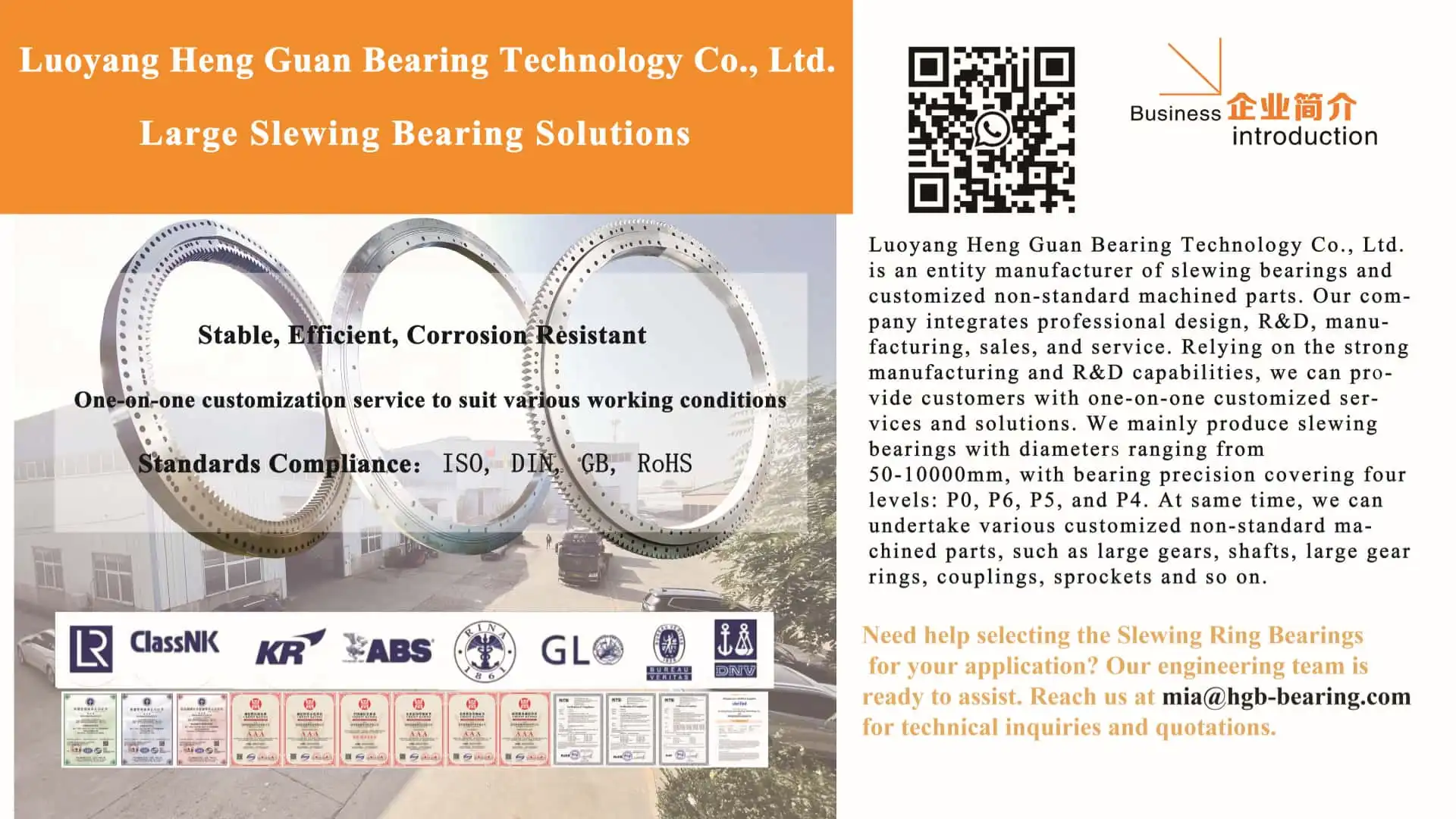
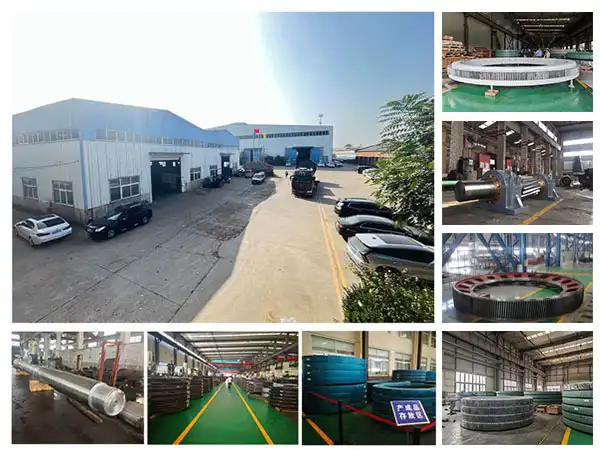
Advanced engineering teams at Heng Guan deliver customized roller slewing rings manufactured to exacting specifications using premium materials and precision manufacturing processes. Our comprehensive product portfolio spans diameters from 500mm to 10,000mm with accuracy grades from P0 to P4, ensuring optimal solutions for your specific application requirements. Located in Luoyang, China's bearing manufacturing hub, we combine over 20 years of engineering expertise with roller slewing rings and advanced CNC machining capabilities to deliver reliable roller slewing rings that exceed performance expectations.Contact our technical specialists at mia@hgb-bearing.com to discuss your requirements and receive detailed proposals from a trusted roller slewing rings manufacturer committed to your operational success.
References
1. Industrial Bearing Technology and Applications in Heavy Machinery Design, Society of Tribologists and Lubrication Engineers, 2023.
2. Comparative Analysis of Slewing Ring Bearing Technologies for Wind Turbine Applications, International Journal of Mechanical Engineering, 2023.
3. Load Distribution Characteristics in Roller Versus Ball Slewing Bearings, Journal of Tribology and Mechanical Systems, 2022.
4. Maintenance Strategies for Large-Diameter Rotating Bearings in Industrial Equipment, Industrial Maintenance and Plant Operation Magazine, 2023.
5. Material Science Advances in High-Strength Bearing Steel Applications, Materials Engineering Quarterly, 2023.
6. Economic Analysis of Bearing Selection in Heavy Construction Equipment Design, Construction Equipment Engineering Review, 2022.

WHAT OUR CUSTOMERS SAY
Here is the customer's evaluation of us