



What Causes Aerial Work Platform Slewing Bearing Failure?
The danger grows rapidly if an Aerial Work Platform Slewing Bearing breaks while it is in the middle of a lift – a boom stuck at 60 feet with an operator in the basket transforms a normal maintenance task into an emergency rescue. Heng Guan Bearing is a Luoyang bearing industry center precision slewing ring producer, with over 30 years of experience in developing rotary components for people-lifting equipment. This paper reviews the technical, installation, and maintenance reasons for premature failure, the warning indicators every fleet manager should know, and the mitigation measures that keep platforms spinning safely over thousands of work cycles.
Understanding the Critical Role of an Aerial Work Platform Slewing Bearing in Safe Operation
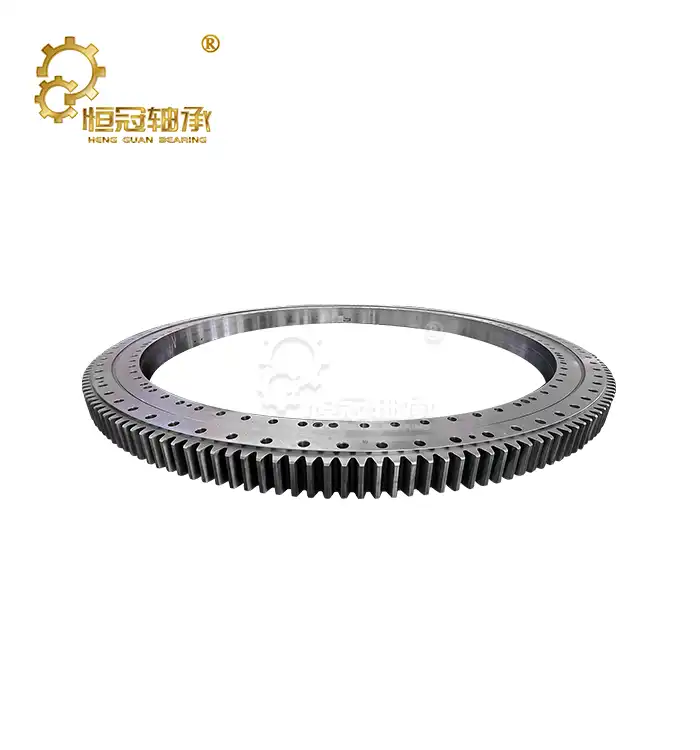
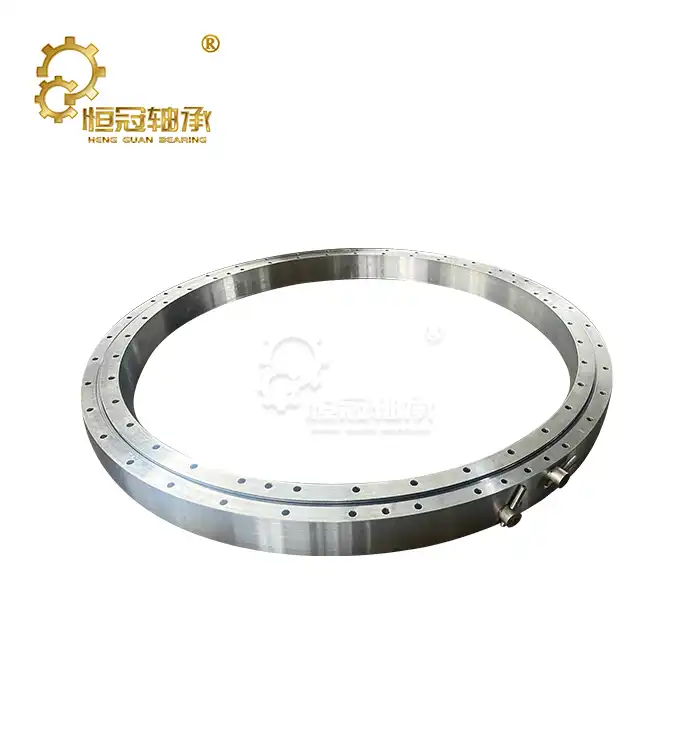
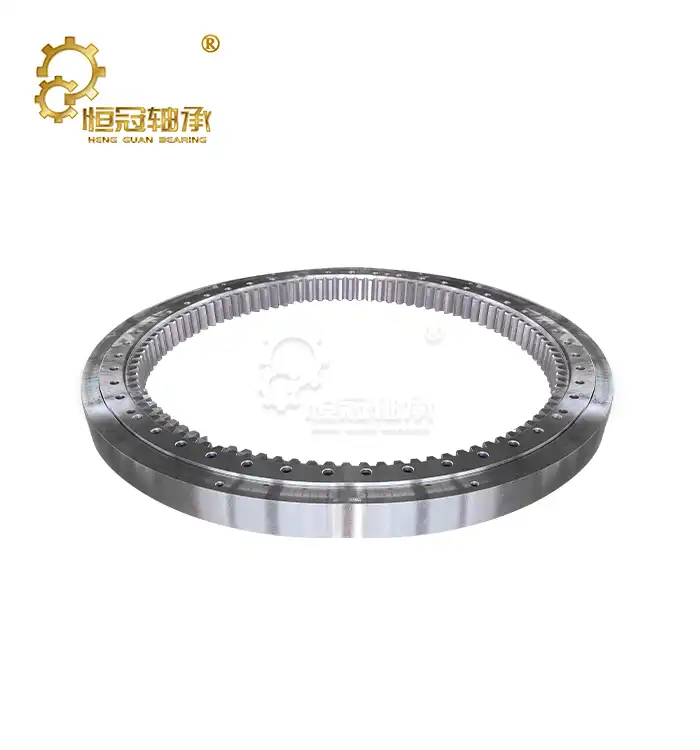
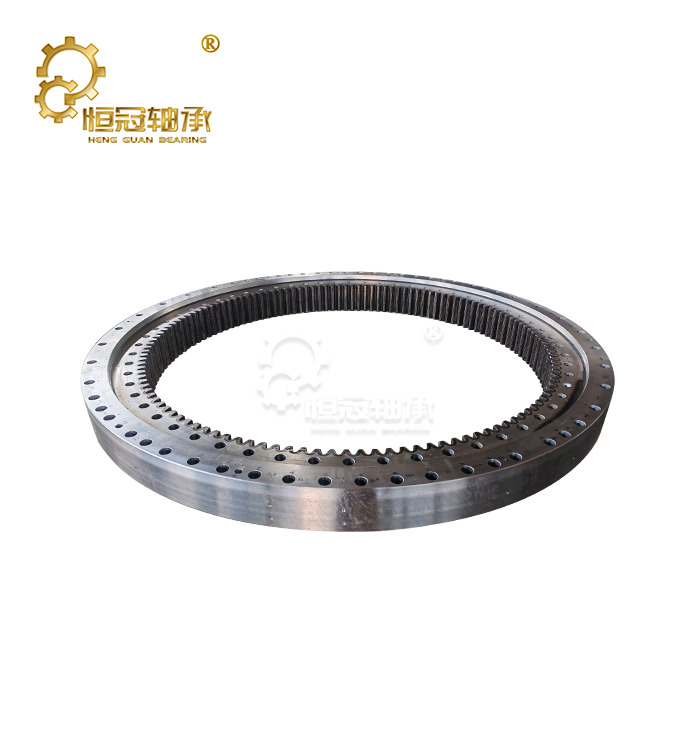
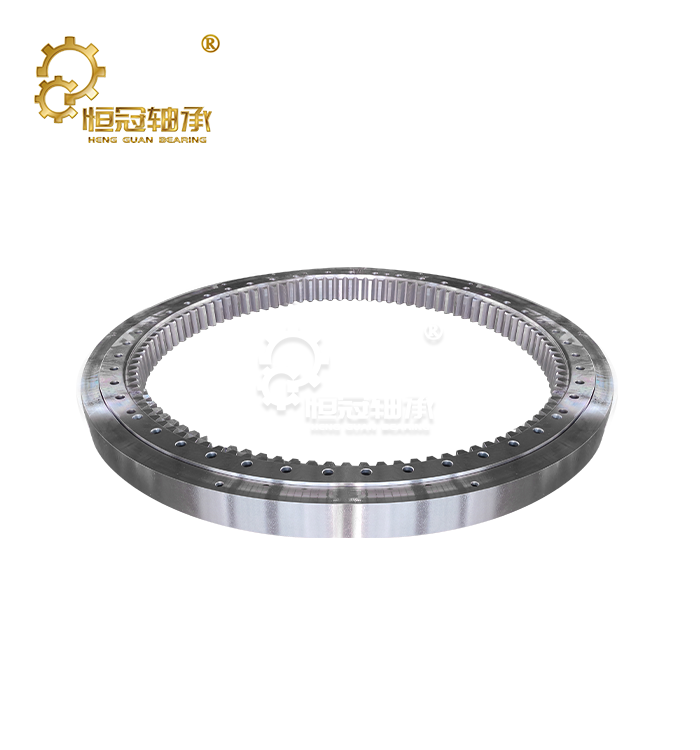
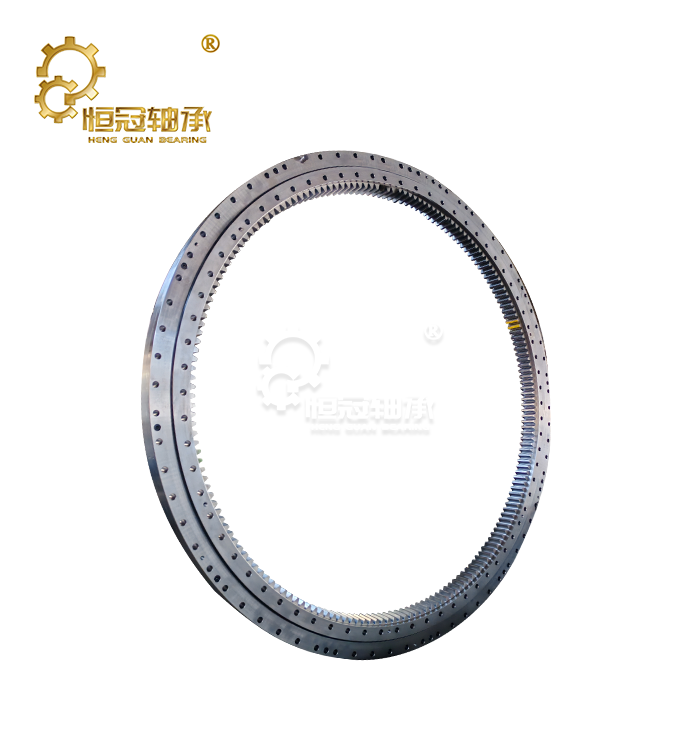
The slewing bearing of an Aerial Work Platform is located at the pivot point between the chassis and the rotating turret and carries the axial stress from the weight of the platform, the radial load from side movement, and tilting moments from the wind or off-center payloads. This part is also known as a Manlift Turntable Bearing and enables a boom lift or scissor lift to spin 360 degrees while maintaining the operator’s stability at height. This item is a single-row four-point contact ball design with a 45° contact angle, engineered by Heng Guan Bearing, which can handle axial, radial, and moment loads simultaneously in a small space. Since bearing integrity is a direct determinant of people's safety, Heng Guan adds a 1.5× safety factor above typical industrial ratings – confirmed by finite element analysis – meaning the bearing can withstand 120% of its specified axial load without permanent deformation. To learn why failure occurs and how to avoid it, the first step is to understand these load routes and safety margins.
| Load Type | Source | Bearing Response |
|---|---|---|
| Axial load | Platform weight, boom self-weight | Four-point ball contact at 45° distributes force evenly |
| Radial load | Side wind, horizontal push-back | Raceway geometry resists lateral displacement |
| Overturning moment | Off-center payload, boom extension | Opposing ball pairs create a reactive couple |
| Shock load | Sudden stop, road transit bumps | Core toughness (28–35 HRC) absorbs impact without raceway damage |
Top Mechanical Factors That Lead to Aerial Work Platform Slewing Bearing Failure
The most predominant mechanical reason for the failure of Aerial Work Platform Slewing Bearings is fatigue cracking of the raceway, which is usually caused when the cyclic loads exceed the intended capability of the bearing. The bearing’s product site states that the raceways are induction-hardened to 55–62 HRC with a hardened depth of 3–5 mm in 42CrMo or 50Mn alloy steel. If a cheaper equivalent has shallower hardening or a lower grade of material, pitting starts much sooner. Contamination is another key problem, since dust and moisture bypassing damaged seals cause abrasive wear of the rolling elements. To this, Heng Guan brings a triple-seal design that couples a labyrinth groove with NBR or FKM multi-lip seals that have been shown to survive construction-site dust and salt-spray situations for 2,000+ hours per ASTM B117.
| Mechanical Cause | Root Mechanism | Heng Guan Countermeasure |
|---|---|---|
| Raceway fatigue cracking | Cyclic stress exceeds endurance limit | 42CrMo raceway, HRC 55–62, depth 3–5 mm |
| Seal contamination ingress | Dust/moisture bypass worn seals | Triple seal: labyrinth + NBR/FKM multi-lip |
| Undersized bearing selection | Moment load exceeds rated capacity | 1.5× safety factor, FEA-verified load margin |
| Inadequate lubrication | Metal-to-metal contact, heat buildup | NLGI Grade 2 lithium grease, 250-hour intervals |
| Gear tooth pitting | Surface fatigue from high pinion force | Tooth surface hardening, DIN 3962 profile inspection |
| Corrosion at mounting surface | Coating breakdown, moisture ingress | Optional zinc-nickel coating, 2,000+ hr salt-spray rating |
A poorly matched Manlift Turntable Bearing, selected without accounting for actual moment loads or shock loading during road transit, wears out far faster than a correctly specified part — which is why Heng Guan engineers review each customer's load profile before recommending a configuration.
How Improper Installation and Maintenance Shorten Your Aerial Work Platform Slewing Bearing Lifespan
Even a well-manufactured Aerial Work Platform Slewing Bearing can fail early if installed incorrectly. Uneven bolt torque, misaligned mounting surfaces, or skipped flatness checks all introduce stress concentrations that fatigue the raceway sooner than expected. The bearing's coaxiality tolerance of ≤0.05 mm means that a mounting flange deviating by even a fraction of a millimeter can transfer an uneven load to specific ball contact points, accelerating localized wear. Maintenance gaps compound the problem, particularly missed lubrication intervals that allow metal-to-metal contact within a Manlift Turntable Bearing — most fleets lubricate at roughly 250 operating hours, but harsh environments may require shorter intervals. Heng Guan Bearing recommends following the torque sequence and lubrication schedule provided with every bearing, and our technical team can review your installation procedure directly. For questions on mounting tolerances or maintenance intervals, reach out to mia@hgb-bearing.com before your next service cycle, and our engineers will respond with model-specific guidance within 24 hours.
| Installation/Maintenance Error | Consequence | Correct Practice |
|---|---|---|
| Uneven bolt torque | Warped raceway, localized overload | Star-pattern sequence, calibrated wrench |
| Mounting surface not flat (>0.02 mm/m) | Edge loading, accelerated fatigue | Grind or shim to ≤0.02 mm/m flatness |
| Skipped seal inspection | Contamination ingress, corrosion | Monthly visual seal check, replace at first crack |
| Missed grease intervals | Dry friction, heat, pitting | NLGI Grade 2 lithium, every 250 hours |
| Wrong grease grade | Poor water resistance, thin film | Use manufacturer-specified NLGI consistency |
| No post-install rotation test | Hidden binding goes undetected | Rotate 360° under light load before full service |
Early Warning Signs of Aerial Work Platform Slewing Bearing Failure You Should Never Ignore
Unusual noise during rotation, such as grinding or clicking, is often the earliest indicator of trouble developing inside an Aerial Work Platform Slewing Bearing. Increased rotational resistance, visible play between the turret and chassis, or grease leaking past the seals are additional signs that warrant immediate inspection. Under ANSI/SAIA A92.20 safety requirements for mobile elevating work platforms, any bearing exhibiting these symptoms should be locked out of service until a qualified technician determines the root cause. A Manlift Turntable Bearing showing axial play exceeding 0.30 mm — the clearance threshold documented for comparable four-point contact bearings — has likely already suffered raceway damage and should not be returned to load-bearing service without inspection. Catching these signs early through routine daily and monthly inspections gives fleet managers the chance to schedule planned replacement before an unplanned breakdown strands a crew at height.
| Warning Sign | Likely Root Cause | Recommended Action |
|---|---|---|
| Grinding or clicking noise | Raceway pitting, broken ball | Lock out, inspect raceway and rolling elements |
| Visible turret play (>0.30 mm) | Bolt loosening or raceway wear | Check bolt torque, measure axial clearance |
| Grease leakage at seals | Seal hardening, crack, or groove wear | Replace seals, inspect lubrication system |
| Uneven rotation resistance | Localized raceway damage, debris | Schedule full bearing inspection immediately |
| Abnormal motor current draw | Bearing drag, gear mesh interference | Check gear backlash (0.3–0.6 mm range) |
| Discolored or burnt-smelling grease | Overheating from inadequate lubrication | Flush system, re-grease, investigate root cause |
Proven Strategies to Prevent Aerial Work Platform Slewing Bearing Failure and Maximize Service Life
Preventing Aerial Work Platform Slewing Bearing failure starts with selecting a bearing engineered for your platform's actual load profile rather than a generic replacement part. Heng Guan Bearing maintains verified 1:1 dimensional equivalence with major OEM brands including JLG (450AJ, 600S, 800AJ, 1350SJP), Genie (S-45, S-65, S-85, Z-45, Z-60), Haulotte (HA16–HA32), and Skyjack (SJ63–SJ1000), meaning bolt-hole patterns, gear module, and mounting flanges align without modification. Scheduled lubrication with NLGI Grade 2 lithium grease every 250 operating hours, bolt torque verification at each service interval, and seal inspections during monthly PM cycles extend service life significantly — Heng Guan's test data confirms 8,000+ operating hours under normal conditions when maintenance protocols are followed. For older or modified platforms where original drawings are unavailable, the company offers field measurement and reverse engineering services: engineers visit the site with portable CMM equipment, create a compensated CAD model, and manufacture a replacement Manlift Turntable Bearing with upgraded materials and sealing, typically saving 30–50% versus OEM import pricing while shortening delivery time. Correct specification paired with disciplined maintenance remains the most reliable way to keep your platform rotating safely for years, not months.
| Prevention Strategy | Implementation | Service Life Impact |
|---|---|---|
| Correct bearing specification | Match load profile, 1.5× safety factor | Baseline 8,000+ hours |
| Scheduled lubrication | NLGI Grade 2, every 250 hours | +30–40% over missed intervals |
| Bolt torque verification | Star pattern, each service cycle | Prevents raceway warping |
| Seal inspection and replacement | Monthly visual, replace at first crack | Blocks contamination ingress |
| OEM-equivalent replacement | 1:1 dimensional match, verified drawings | Eliminates fitment rework |
| Reverse engineering service | Field CMM measurement, CAD modeling | Enables replacement without original drawings |
| Anti-corrosion upgrade | Zinc-nickel coating, salt-spray grease | 2,000+ hours corrosion protection |
Conclusion
Aerial Work Platform Slewing Bearing failure usually stems from raceway fatigue, seal contamination, improper installation, or missed maintenance — all of which are preventable with the right specification and disciplined upkeep. Heng Guan Bearing helps fleets prevent failure through precision manufacturing, OEM-equivalent replacements, and responsive engineering support.
FAQ
Q: What is the most common cause of slewing bearing failure in aerial lifts?
A: Raceway fatigue cracking and seal contamination are the most frequent causes. Both stem from cyclic loading beyond the bearing's rated capacity or from dust and moisture bypassing degraded seals.
Q: How often should a Manlift Turntable Bearing be lubricated?
A: Most fleets apply NLGI Grade 2 lithium grease every 250 operating hours. In high-dust, coastal, or marine environments, shorten the interval to 100–150 hours to maintain adequate film thickness.
Q: What noise indicates a failing slewing bearing?
A: Grinding, clicking, or popping sounds during rotation typically signal internal raceway pitting, broken rolling elements, or gear tooth damage. Any such noise warrants immediate lockout and inspection.
Q: Can improper installation cause early bearing failure?
A: Yes. Uneven bolt torque, mounting surfaces exceeding 0.02 mm/m flatness deviation, or skipped alignment checks create stress concentrations that can fatigue a raceway within months rather than years.
Q: Can Heng Guan produce replacement bearings for older JLG or Genie platforms?
A: Yes. The company maintains verified 1:1 dimensional equivalence with JLG (450AJ, 600S, 800AJ, 1350SJP), Genie (S-45 through Z-60), Haulotte, and Skyjack models, and offers reverse engineering from physical samples when original drawings are unavailable.
Get Your Aerial Work Platform Slewing Bearing Quote Within 24 Hours
Don't wait for an Aerial Work Platform Slewing Bearing failure to ground your fleet. Email mia@hgbearing.com today with your platform model and bearing specifications — our engineers will confirm OEM compatibility, review your load requirements, and provide a competitive quotation within 24 hours.
References
1. Harris, T. A., & Kotzalas, M. N. — Rolling Bearing Analysis, 5th ed., CRC Press / Taylor & Francis Group.
2. Glaeser, W. A., & Shaffer, S. J. — Rolling Bearing Damage, ASM Handbook, Volume 19: Fatigue and Fracture.
3. ISO 76:2006 — Rolling Bearings — Static Load Ratings, International Organization for Standardization.
4. ANSI/SAIA A92.20 — Safety Requirements for Mobile Elevating Work Platforms, Scaffold & Access Industry Association.
5. Brändlein, J., Eschmann, P., Hasbargen, L., & Weigand, K. — Ball and Roller Bearings: Theory, Design and Application, John Wiley & Sons.
6. Tallian, T. E. — Failure Atlas for Hertz Contact Machine Elements, ASME Press.

WHAT OUR CUSTOMERS SAY
Here is the customer's evaluation of us