



Types of Bearings and Bearing Applications
Bearings are very important mechanical components that are employed in practically all industrial systems where rotation or movement is involved. They decrease friction between moving parts, support different sorts of loads and help in the smooth and precise functioning of equipment. Whether it’s manufacturing machinery, wind turbines or medical imaging systems, the choice of the correct bearing type directly influences equipment performance, maintenance requirements and service life.
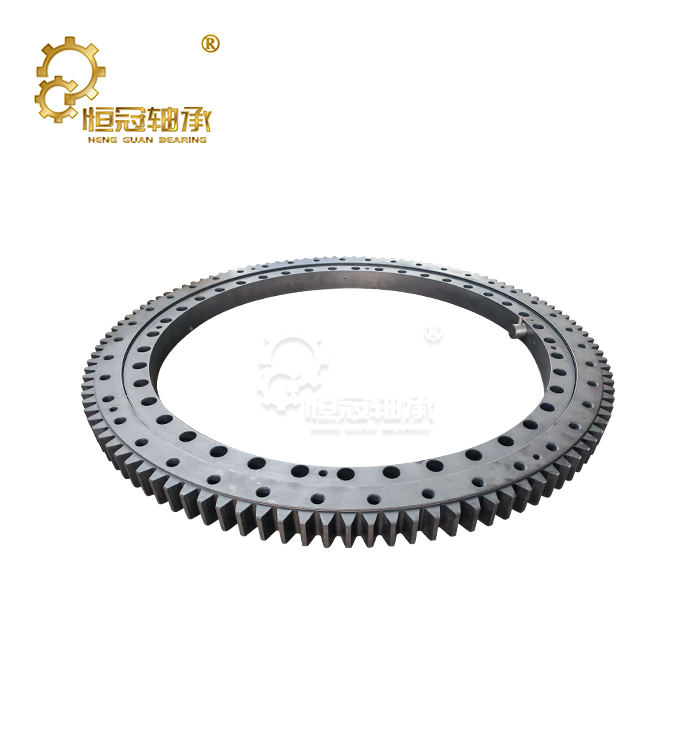
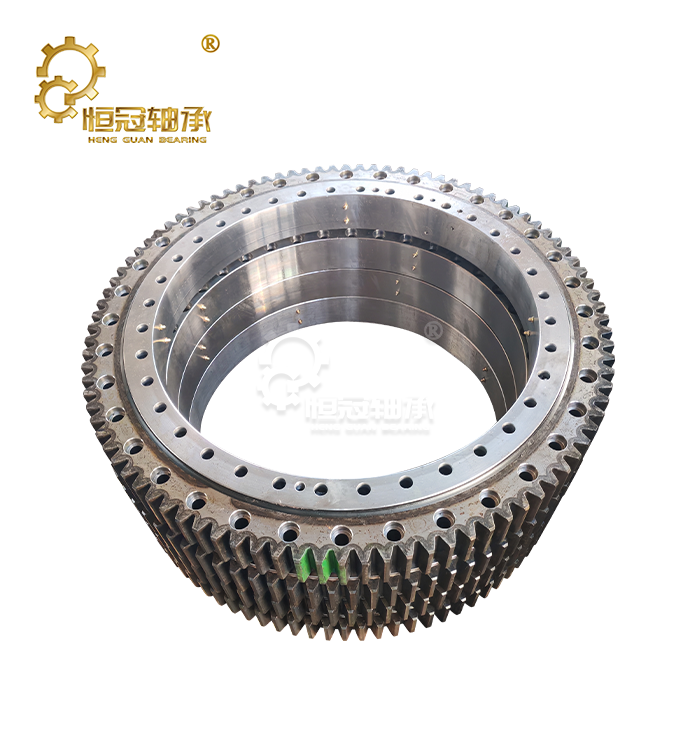
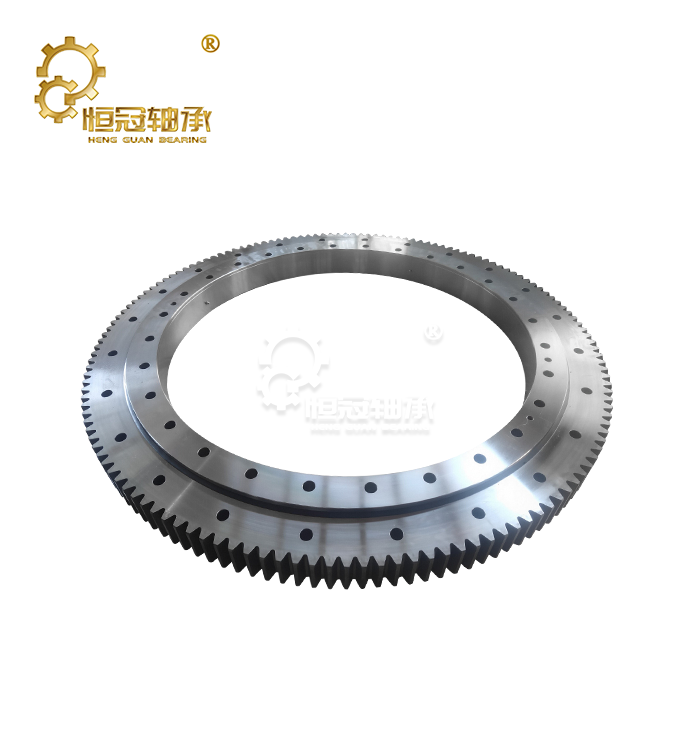
Different uses demand different bearing designs. High-speed rotation is frequently achieved with ball bearings, while roller bearings are recommended for large loads. We also build special designs for equipment with accurate movement, compact structure and reliable long-term operation, such as slewing bearings and CT Bearings.
Understanding bearing categories and their applications enables engineers, OEM manufacturers and procurement teams to make better choices based on operating circumstances rather than just pricing.
CT Bearings, especially four-point contact ball slewing bearings used in medical imaging systems, are very specific and need to be very accurate and reliable. These precise parts are used in high-stakes situations in wind turbines, building tools, aerospace systems, and advanced medical equipment. Faulty performance is not an option.
Understanding Different Bearing Types and Their Functions
Bearings are produced in accordance with the type of movement, direction of loading, speed required and operating environment. The most popular types are ball bearings, roller bearings, thrust bearings and slewing bearings.
Ball Bearings for High-Speed Rotating Equipment
Ball bearings reduce friction during rotation by using spherical rolling elements between inner and outer races. They are often utilised in applications requiring fast and smooth functioning.
Typical applications are:
Electric motors.
Industrial automation gear
Pumps.
Precision instruments
Advantages are reduced friction, silent operation and good rotation accuracy. Very large loads or applications involving high impact forces, however, may not be suitable for conventional ball bearings.
Roller Bearings for Heavy Load Applications
Roller bearings use cylindrical, tapered, or spherical rollers to spread the loads over a greater area of contact. They normally have a greater load-carrying capacity than ball bearings.
They are largely utilised in:
Mining machinery
Construction equipment
Transmission
Transport networks
With a greater contact surface, roller bearings can support higher radial loads. They are a good choice for tough industrial settings where longevity is a key concern.
Thrust and Slewing Bearings for Specialised Requirements
Thrust bearings are used to take up axial loads in the direction of the Shaft. They are typically employed in systems that have parts that are pushed or pulled.
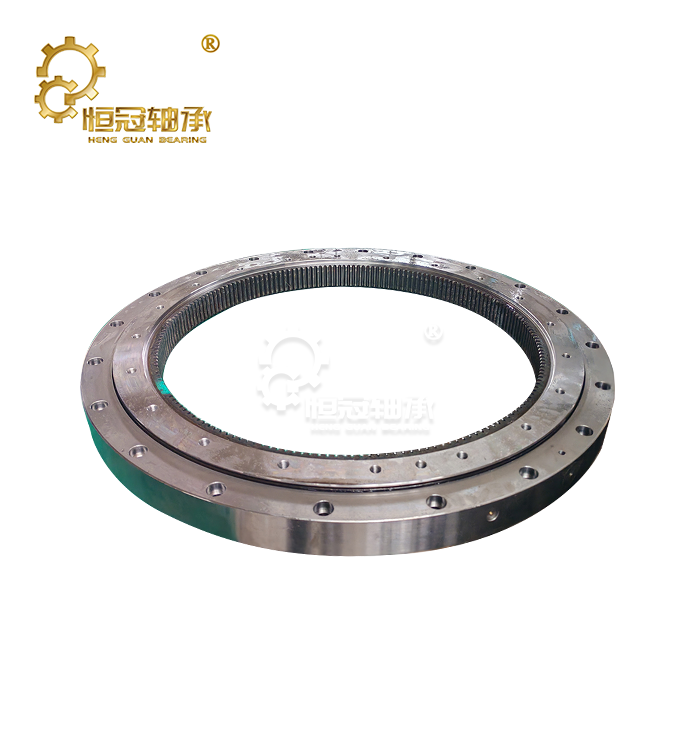
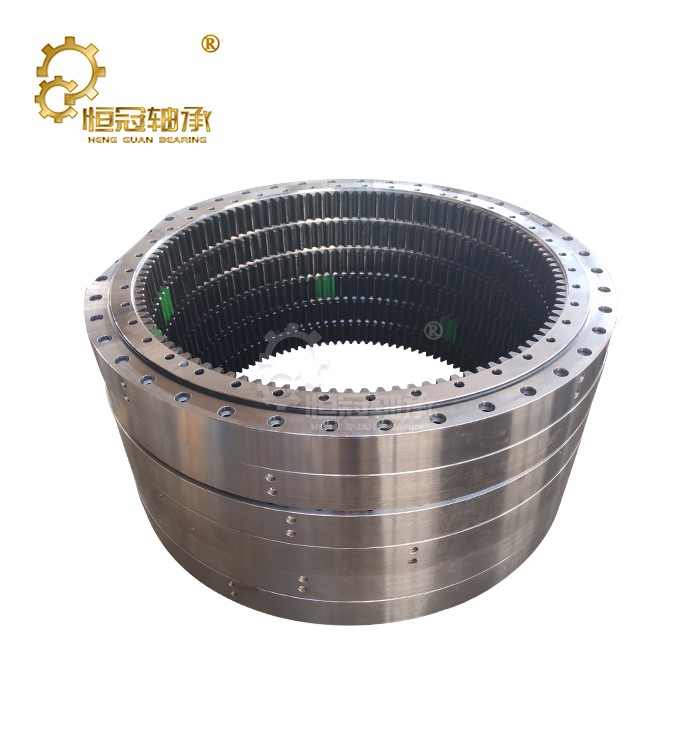
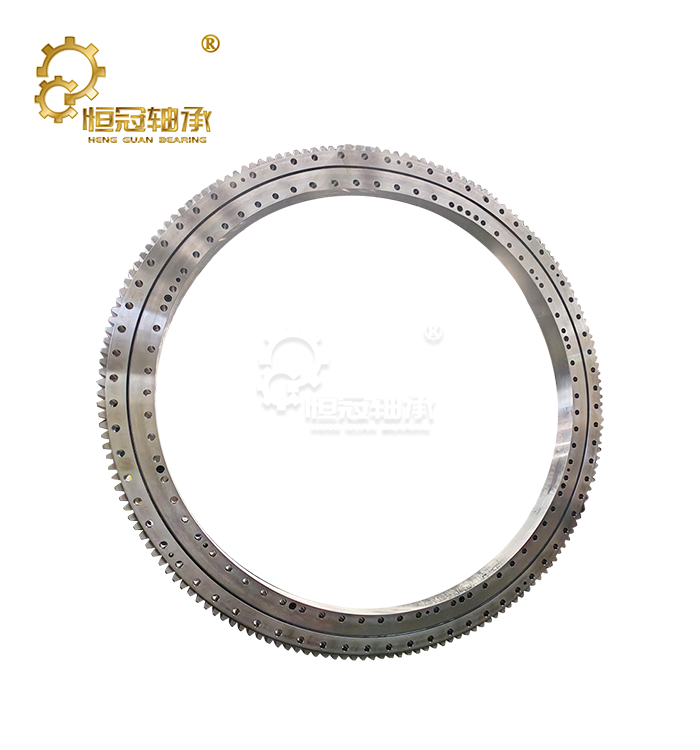
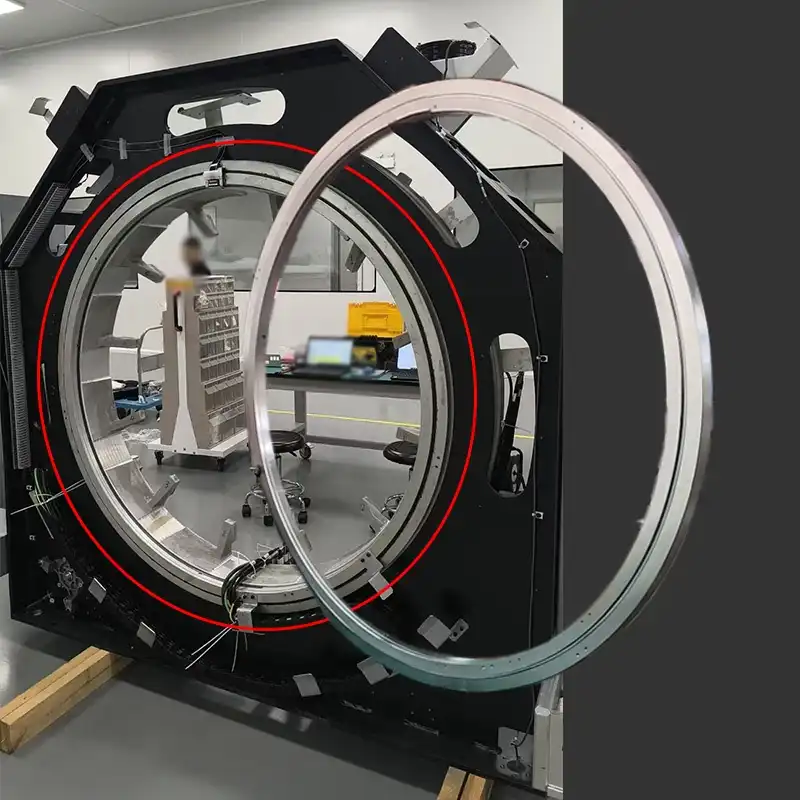
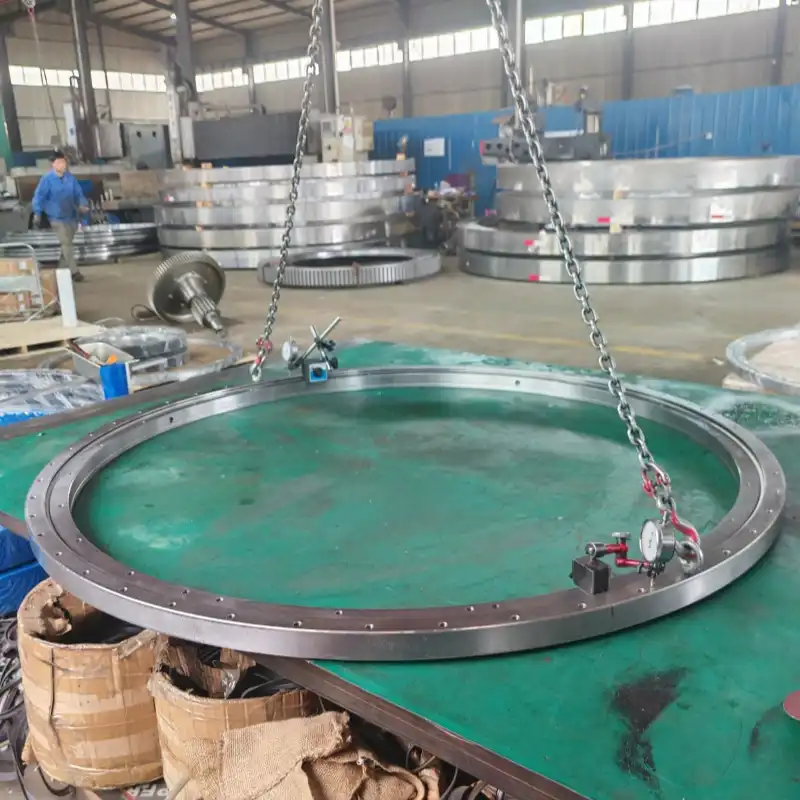
Slewing bearings are different from traditional bearings, as they have a large-diameter ring structure that can sustain combined loads, including radial, axial and moment loads. They are often found in:
Cranes
Wind turbines
Robotics systems
Imaging equipment in medicine
They can supply regulated rotation for supporting heavy loads, making them suited for applications that require strength and precision.
|
|
How Bearing Applications Influence Selection
It is more than just picking a bearing and looking at load ratings. Engineers have to consider operating speed, temperature, likelihood of contamination, conditions of maintenance, and estimated service life.
Bearing Requirements in Heavy Industrial Equipment
Mining, construction and materials-handling equipment commonly work in tough environments. In these environments bearings need to be resistant to the following:
Impact loads
Dust and particles
Exposure to moisture
Changes in temperature
The choice of bearings for large machinery should take into account strong sealing systems, appropriate lubrication methods and durable materials.
For example, a bearing used in outside construction equipment may need more safeguards against contamination compared to one used in a controlled industrial environment.
Precision Requirements in Medical Equipment
Medical imaging equipment takes a different approach. Rotational precision is important for systems like CT scanners, where slight positioning mistakes might influence the image performance.
CT Bearings are specifically suited for this kind of application. Bearings support the rotating gantry assemblies that house components such as x-ray tubes and detectors. They must rotate smoothly, with little vibration, and keep their position over repeated scans.
Medical imaging bearings are generally more demanding than conventional industrial bearings in the following ways:
Rotational precision
Noise reduction
Long-term reliability
Clean service conditions
CT Bearings for Medical Imaging Systems
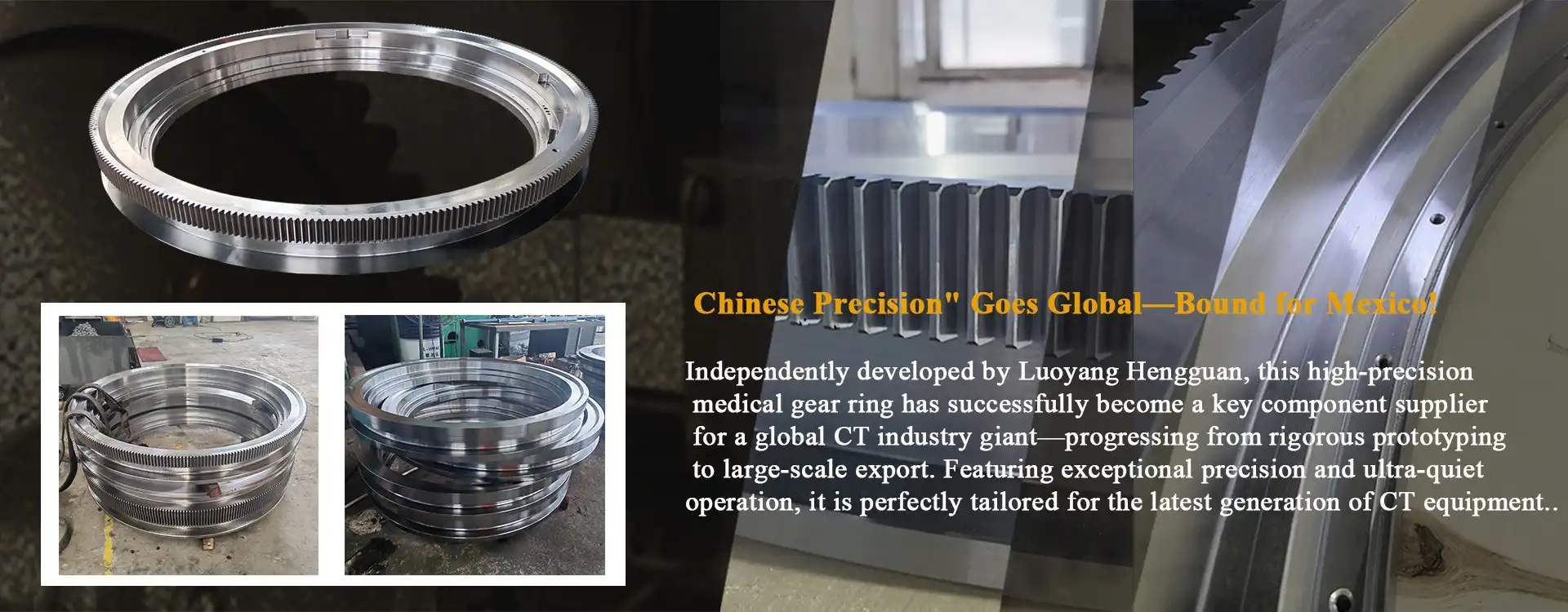
The CT scanner systems depend on precise mechanical parts that can reliably function over millions of rotation cycles. CT Bearings are primarily designed with four-point contact ball slewing bearing technology, which provides a good compromise between load capacity, compact design and rotational precision.
Design Features of CT Bearings
Four-point contact ball slewing bearings are equipped with specifically engineered raceways that allow each rolling element to contact the racetrack at four spots. This construction allows the bearing to take the combined loads in a tight space for installation.
The main design benefits are the following:
Radial, axial and moment load carrying
Structural rigidity is high
Smooth spinning, less resistance
Compact cross-section design
Manufacturers frequently employ high-strength alloy steels such as 50Mn or 42CrMo for bearing rings, as these materials provide good strength and deformation resistance under continuous load.
The rolling elements are usually made of precision steel balls such as GCr15 bearing steel balls for their hardness, wear resistance and stability of dimension after heat treatment.
Good sealing is vital also. NBR seals are often utilized as they aid to protect internal components from moisture, dust and grease contamination during prolonged running periods.
Performance Advantages in CT Scanner Applications
The fundamental benefit of CT Bearings is their capability of handling complicated loads while maintaining correct rotation.
During scanning, the spinning gantry generates several forces:
Radial loads from spinning parts
Axial pressures resulting from structural movement
Unevenly distributed weight leads to moment loads
A bearing must be suitably built to withstand these forces without undue distortion.
Benefits include:
Improved image stability
Precision rotation reduces mechanical vibration and helps ensure consistent image quality.
Lower Maintenance Requirements
Quality materials and precision manufacture lead to longer service intervals.
Reduced operational noise
Smooth rolling performance improves the experience for patients and promotes a better working environment for medical staff.
Space efficiency
A single slewing bearing can replace numerous traditional bearing systems, which simplifies equipment design.
Comparing Bearing Options for Different Applications
The varied bearing technology has different advantages. The ideal option will rely on the exact needs of the equipment.
Steel Bearings vs. Ceramic Bearing Alternatives
Steel bearings remain the most prevalent choice for industrial and medical equipment because they provide a good blend of performance, durability and affordability.
Ceramic bearings may provide advantages under particular settings (e.g., electrical insulation needs and extreme temperature environments). But they are usually more costly and more sensitive to impact loads.
In the majority of the CT scanner applications the precision steel bearings are able to operate satisfactorily, keeping the production and maintenance costs quite low.
Four-Point Contact Bearings vs. Other Precision Designs
Crossed roller bearings offer great rigidity in a compact design but may have increased friction and complex maintenance needs.
CT systems generally use four-point contact ball bearings because they combine the following:
High load capacity
Smooth turning
Compact structure
Reliability throughout the long term
The proper selection will rely on the equipment design, the load conditions and the accuracy required.
How to Select a Reliable Bearing Supplier?
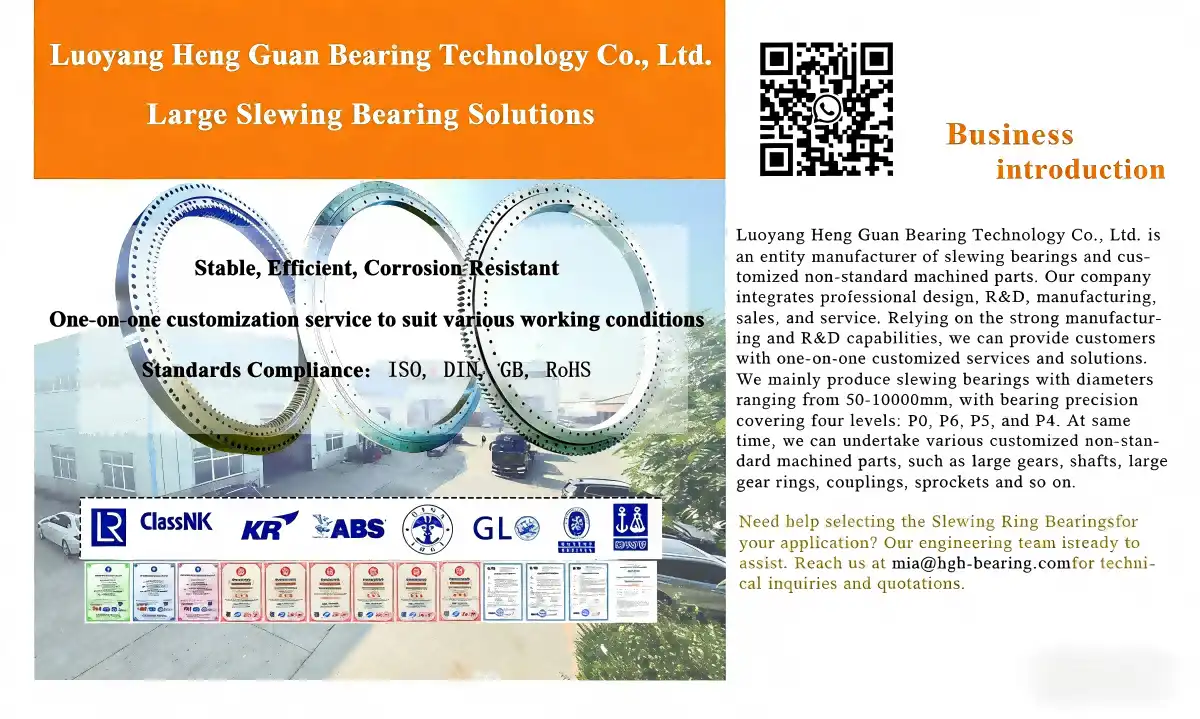
The appropriate bearing type is as crucial as the right provider. Technical assistance, consistent quality control and dependable documentation should be provided by a certified manufacturer.
Production Capacity and Quality Control
Things to review before buying precise bearings Buyers need to:
Material certifications.
Dimensional inspection report
Test Results of Accuracy
Production traceability records
Certifications in Quality Management
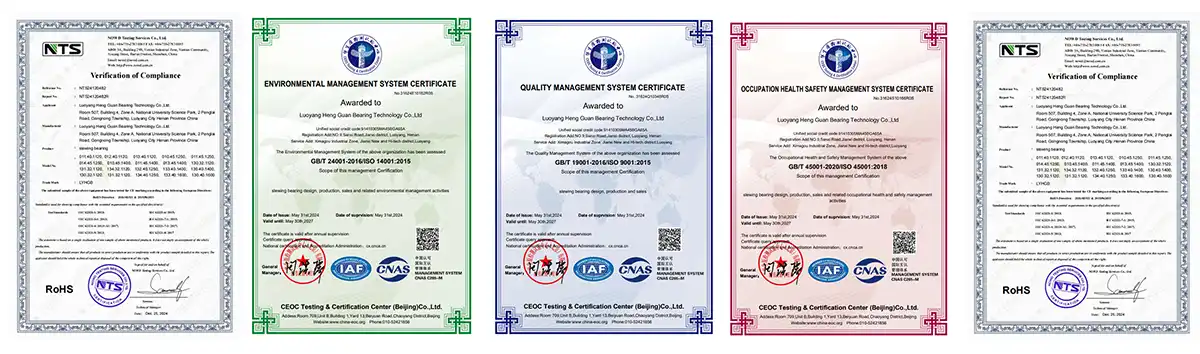
A controlled production process and ISO9001-certified manufacturing method from a supplier mean improved consistency.
In medical applications, traceability is extremely crucial because the performance of CT Bearings directly influences the reliability of the device.
Customization and Technical Support
Many OEM applications require unique bearing solutions instead of typical catalog products. Suppliers should be able to help with:
Load evaluation
Bearing size selection
Recommendations for materials
Selection of precision classes
Prototype validation
A good engineering team can assist you in risk reduction in equipment development and in making the integration more efficient.
Also, buyers should think about:
Capacity to produce
Lead time control
Packaging specifications
After-sales service
They affect the overall cost of ownership in areas other than the purchase price.
Procurement Considerations for CT Bearings
When selecting CT Bearings, procurement teams should consider not just technical parameters but also supplier reliability.
Key considerations include the following:
Dimensions of bearing
The inner diameter, outside diameter and height should be in line with the design of equipment.
Requirements of the load
The provider shall verify the bearing capacity to support the radial, axial and moment loads.
Accuracy grade
Higher precision requirements may call for tighter production tolerances.
Inspection papers
Complete quality records ensure product uniformity.
Supplier experience
Performance criteria are frequently better known to manufacturers that are used to medical and precision applications.
Working with an experienced bearing manufacturer can help reduce the risks of replacement and increase equipment reliability throughout the product life cycle.
Conclusion
Selecting the appropriate bearings for industrial machinery and medical imaging systems necessitates a comprehensive assessment of load situations, operational environments, precision requirements and supplier capabilities. Engineers and procurement teams can then select the appropriate bearing for their application based on the knowledge of the numerous types of bearings.
CT Bearings are specialized in medical imaging equipment, with precise rotation, high load capacity and compact structural design. Proper supplier evaluation, quality verification and application-focused engineering support can help bearings achieve reliable performance and longer service life.
|
|
FAQ
1. What factors should be considered when selecting bearings for industrial equipment?
The main factors include load capacity, operating speed, temperature conditions, contamination risks, lubrication requirements, and expected service life. Heavy machinery usually requires stronger protection against shock loads and environmental exposure, while precision equipment focuses more on accuracy and vibration control.
2. Why are CT Bearings important for medical imaging equipment?
CT Bearings support the rotating gantry structure inside CT scanners. Their high rotational accuracy and ability to handle combined loads help maintain stable movement during scanning operations.
3. How can buyers verify bearing quality before purchase?
Buyers should request material certificates, inspection reports, dimensional records, and information about the manufacturer's quality management system. These documents help confirm product reliability and manufacturing consistency.
Partner with Heng Guan for Your Precision Bearing Solutions
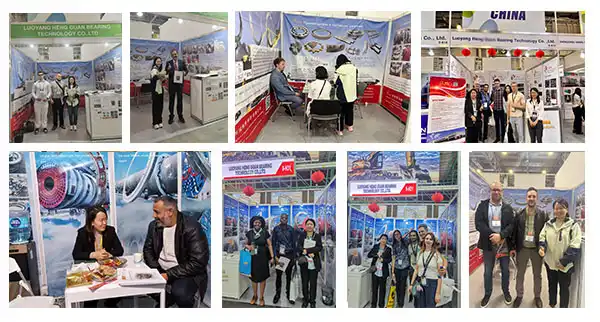
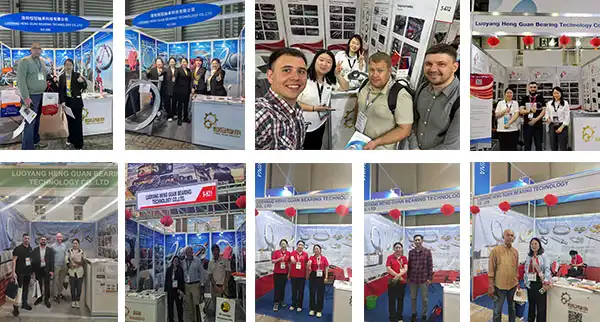
Luoyang Heng Guan Bearing Technology Co., Ltd. specializes in high-precision slewing bearings for industrial equipment, medical imaging systems, wind power applications, and other demanding industries.
With ISO9001-certified manufacturing processes, advanced machining equipment, and engineering experience, Heng Guan provides standard and customized bearing solutions based on different application requirements.
From bearing selection and design support to production and quality verification, professional technical assistance helps customers achieve reliable performance and long-term equipment stability.Get in touch with our expert team at mia@hgb-bearing.com to talk about your needs with a seasoned CT Bearings seller dedicated to giving you the best value through high-quality goods and quick technical support.
References
1. Harris, T.A. & Kotzalas, M.N. (2006). Essential Concepts of Bearing Technology: Rolling Bearing Analysis, Fifth Edition. CRC Press, Taylor & Francis Group.
2. Xu, H. & Zhang, Y. (2018). Advanced Manufacturing Technologies for Precision Slewing Bearings in Medical Equipment Applications. Journal of Mechanical Engineering Science, 232(14), 2567-2581.
3. American Bearing Manufacturers Association. (2019). Load Ratings and Fatigue Life for Ball Bearings: ANSI/ABMA Standard 9-1990 (R2019). ABMA Publications.
4. Schaeffler Technologies AG & Co. (2017). Large-Size Rolling Bearings: Design and Application Guidelines for Slewing Bearings. Technical Documentation Series, Industrial Applications Division.
5. International Organization for Standardization. (2014). Rolling Bearings - Dynamic Load Ratings and Rating Life: ISO 281:2007/Amd 2:2014. ISO Technical Standards.
6. Chen, W., Liu, J., & Wang, S. (2020). Reliability Analysis of Precision Bearings in Medical CT Scanner Systems Under Continuous Operation Conditions. Proceedings of the Institution of Mechanical Engineers, Part H: Journal of Engineering in Medicine, 234(8), 834-845.

WHAT OUR CUSTOMERS SAY
Here is the customer's evaluation of us