



PC450-6 Excavator Slewing Bearing Replacement: What to Check?
If your Komatsu PC450-6 is rotating slowly, grinding, or wobbling on its base, the slewing bearing is generally the first place to investigate. A 45-ton class excavator with a worn swing ring doesn’t just need a new bearing; it’s also down, costing thousands of dollars a day in billed revenue. The replacement cycle, from teardown to recommissioning, can take a week or more when the wrong unit is ordered or the mounting surface isn’t properly prepared. Heng Guan Bearing talks to fleet owners and service shops every week who are attempting to figure out whether a bearing replacement is actually needed or if simpler maintenance would suffice. This guide walks you through the warning signs, what a proper inspection looks like, and what to check before and after a PC450-6 Excavator Slewing Bearing replacement, so you can make the call with confidence instead of guessing — using the same diagnostic discipline that keeps port cranes running through continuous heavy-cycle shifts.
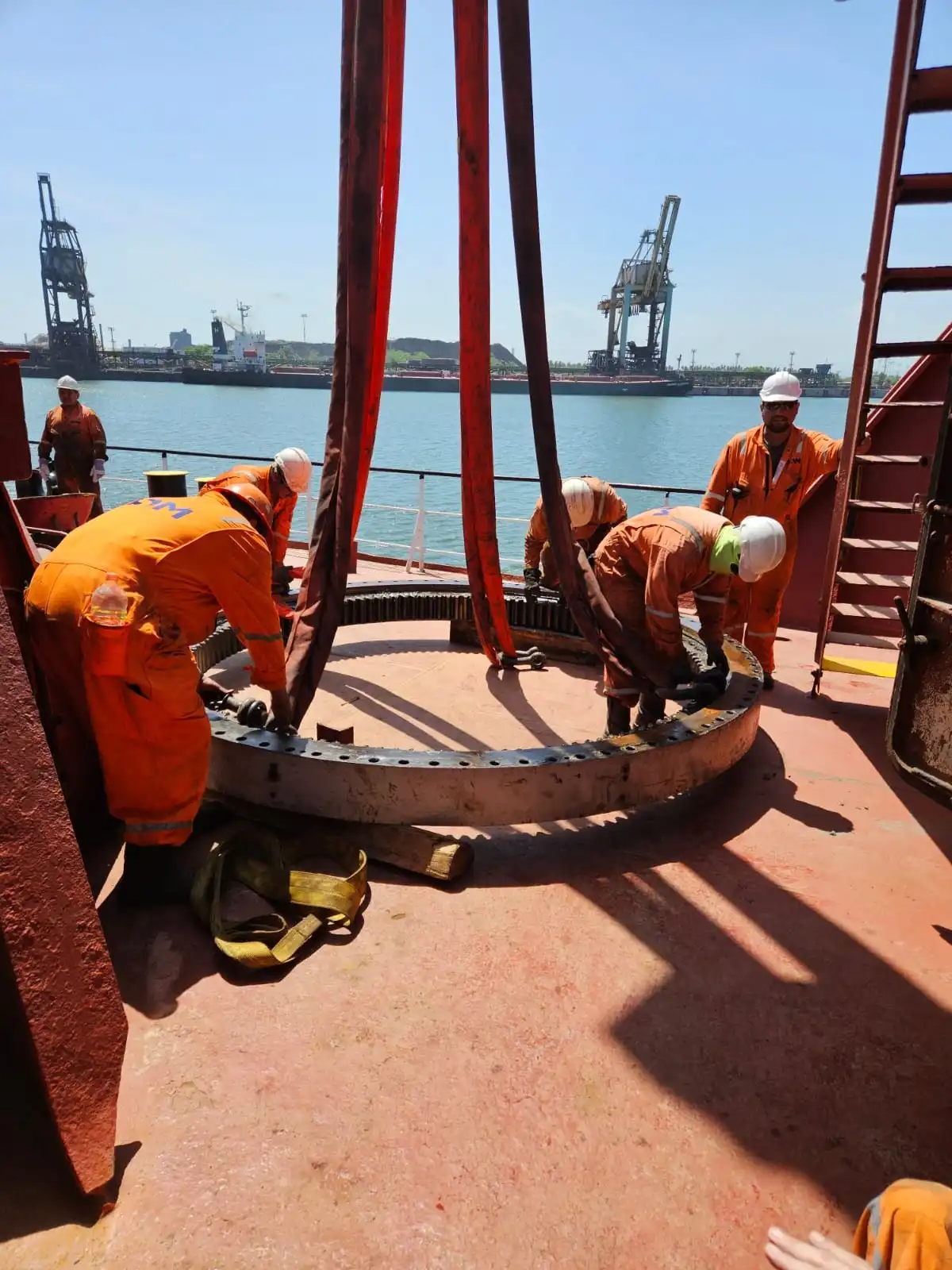
How Do You Know the PC450-6 Excavator Slewing Bearing Needs Replacement?
Usually, the most obvious signal is noise. A healthy slewing bearing runs easily and silently. As raceway wear begins to develop, operators may often describe grinding, banging, or rhythmic clunking as the bearing rotates, particularly while under load. The second indication is play in the top structure. If you can feel the cab shake or move relative to the undercarriage when the boom swings, the clearance within the bearing has probably risen beyond acceptable limits. Other frequent concerns include reduced swing speed, inconsistent rotation, or the machine having trouble maintaining position when lifting.
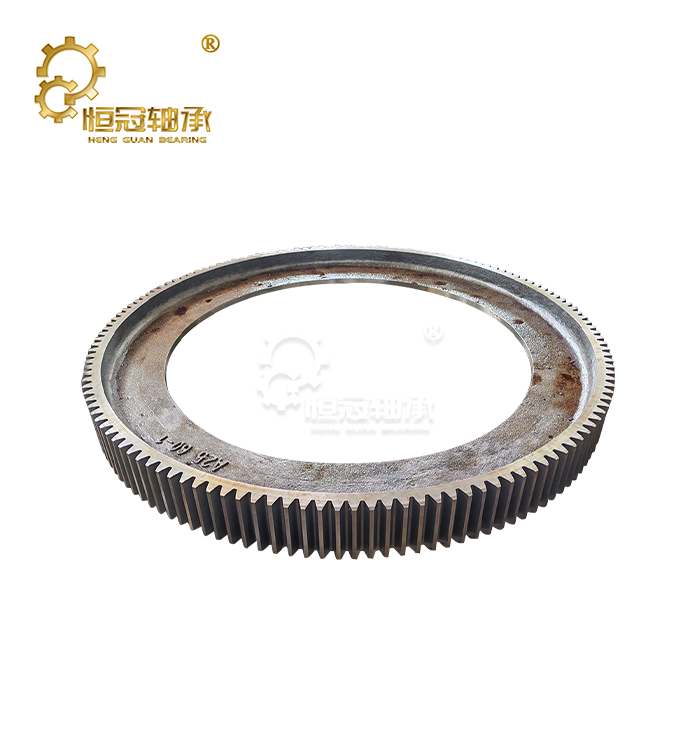
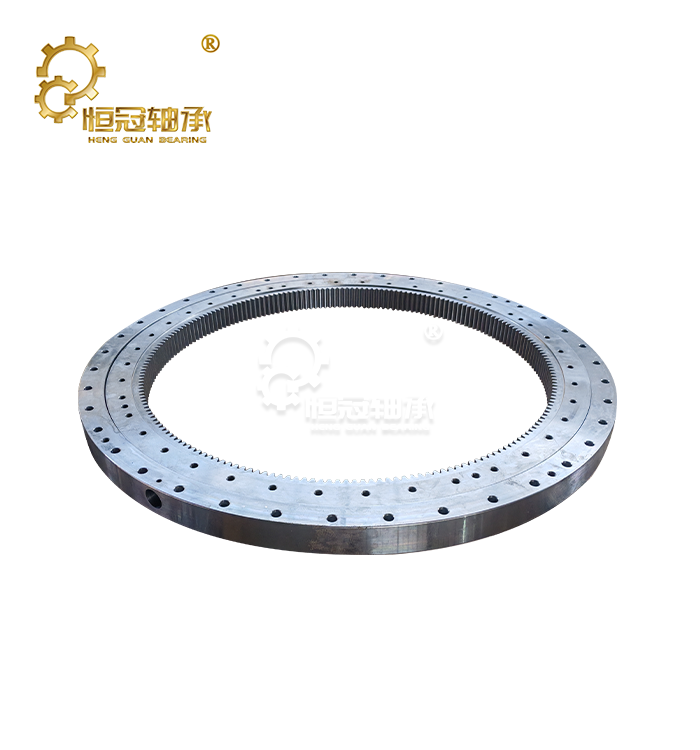
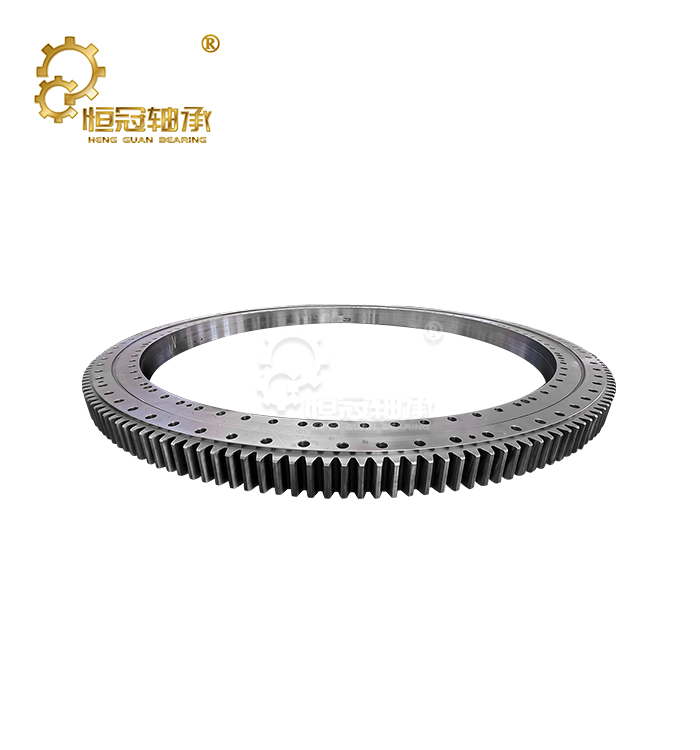
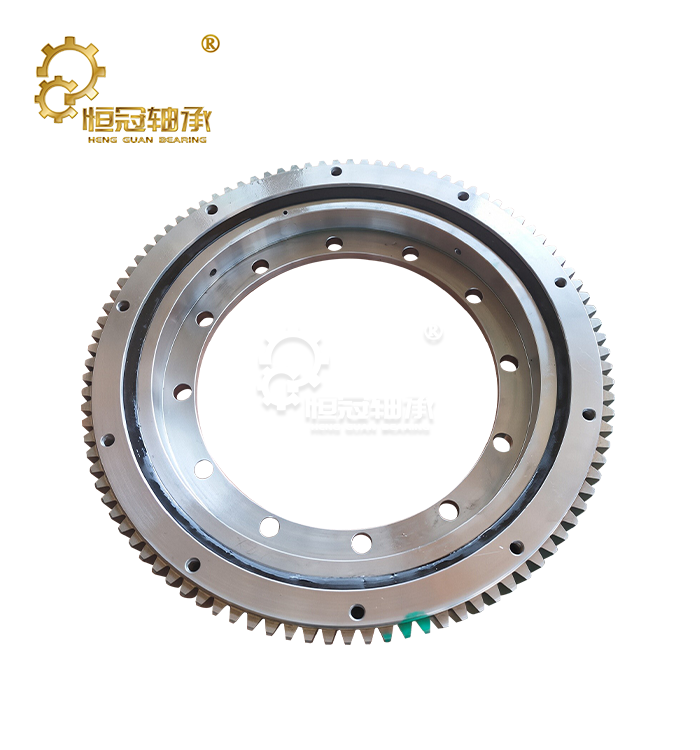
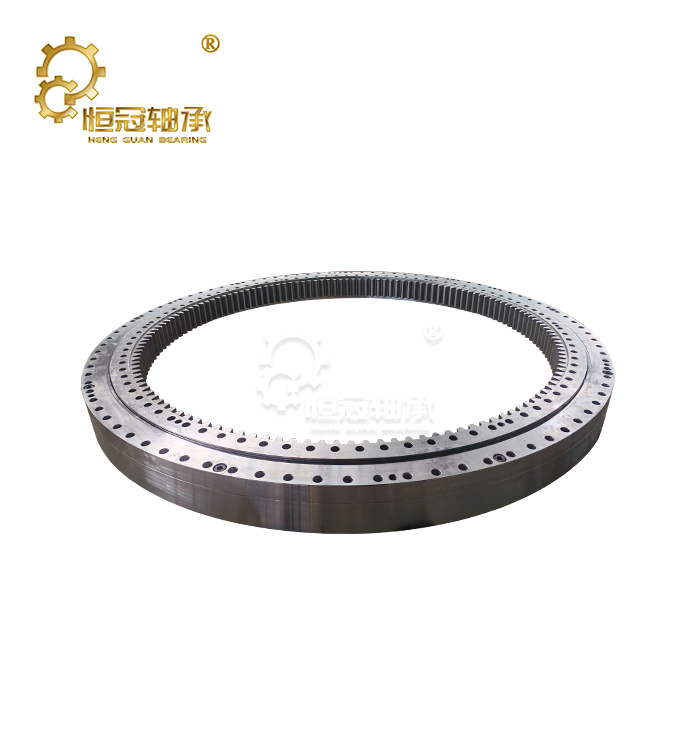
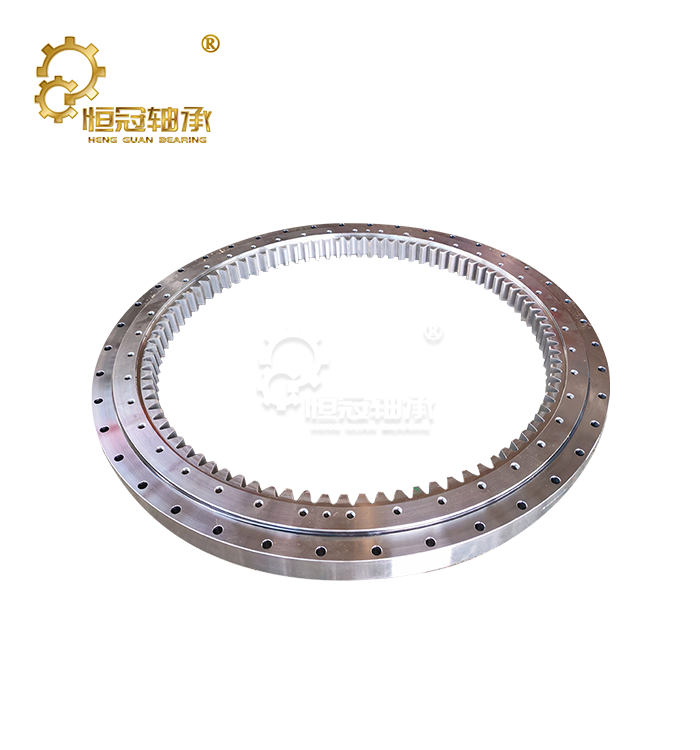
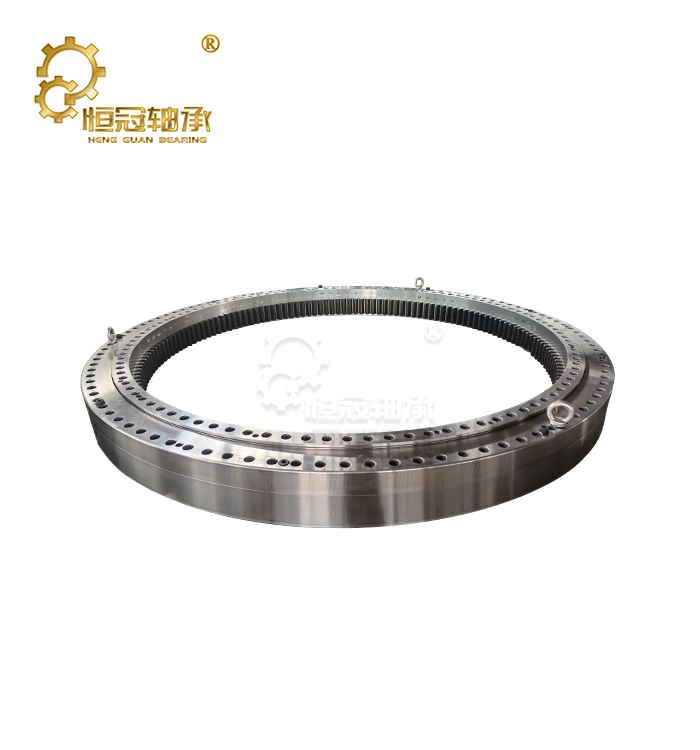
Many of these symptoms are also reported by the operators of a Port crane slewing bearing after years of heavy-cycle operation, since both components experience comparable radial, axial, and tilting stresses maintained over extended duty cycles. The PC450-6 bearing is a single-row four-point contact ball design with an outside diameter of approximately 1,563 mm (61.5 in.) and a cross-section of 152 mm (6 in.). It is designed to support axial, radial, and overturning loads by means of four-point contact between balls and raceways. This design distributes stress over multiple contact points, but quickly loses its edge when raceway pitting or contamination occurs.
If you see any of these indicators appearing at the same time, rather than singly, then it is essential to arrange a thorough check before the wear makes its way to the gear teeth or the mounting bolts.
| Symptom | Likely Cause | Urgency |
|---|---|---|
| Grinding noise while slewing | Raceway pitting or lubrication failure | High |
| Visible play/wobble in upper structure | Excess internal clearance beyond tolerance | High |
| Slower or jerky rotation | Gear or roller wear, pinion mesh drift | Medium |
| Grease leaking with metal particles | Seal failure, contamination ingress | Medium |
| Loose or sheared mounting bolts | Fatigue, insufficient torque, settling | High |
| Swing motor overheating | Increased friction from raceway damage | Medium |
PC450-6 Excavator Slewing Bearing Wear Signs and Inspection Points
A thorough inspection goes beyond listening for noise. Start by checking axial and radial clearance with a dial gauge against the manufacturer's tolerance chart — most excavator slewing rings, including the PC450-6, allow only a small range before replacement becomes necessary. Next, inspect the gear teeth for pitting, chipping, or uneven wear patterns, which often point to misalignment or long-term under-lubrication; on this bearing, the gear is finished to ISO class 10 precision, so any deviation from smooth, evenly seated tooth contact is a warning sign.
Pull a grease sample and look for metal flecks or discoloration, since contaminated grease accelerates raceway damage across the induction-hardened surface (HRC 55 – 62, hardened depth 3 – 5 mm). Bolt torque should also be checked and logged, as loosened bolts allow micro-movement that speeds up wear. Teams servicing a PC450-6 Excavator Slewing Bearing should document these readings over time rather than relying on a single snapshot, because trend data makes it much easier to predict failure before it becomes a safety issue on site.
| Inspection Point | Method | Pass / Fail Criterion |
|---|---|---|
| Axial & radial clearance | Dial gauge, boom extended | Within the OEM tolerance band, a rising trend flags wear |
| Gear tooth condition | Visual + feeler, all teeth | No pitting, chipping, or uneven contact pattern |
| Raceway hardness (spot) | Portable hardness tester | HRC 55 – 62 maintained; soft spots signal case loss |
| Grease sample | Visual + magnet test | No metallic flecks, no water, no darkening |
| Bolt torque | Calibrated wrench, star pattern | All bolts at spec; none loosened since last check |
| Seal integrity | Visual around the full circumference | No cracks, no hardening, no grease tracks |
What Should You Check Before Replacing the Slewing Bearing?
Before ordering a replacement, confirm the exact model and bolt pattern against your machine's serial number, since PC450-6 units can carry slight variations depending on the production batch. Inspect the mounting surface on the upper and lower frames for flatness and corrosion — an uneven surface will shorten the life of even a brand-new bearing, which is why installation practice calls for a clean, burr-free mating face verified as flat before the ring goes on. Check that the swing motor pinion and gear mesh clearance matches the specification for the replacement part, and verify that the seal type suits your operating environment, whether that's mining dust, coastal humidity, or the constant exposure seen on a Port crane slewing bearing installation.
The PC450-6 bearing uses grade 10.9 or 12.9 high-tensile mounting bolts tightened in a star-pattern sequence at 30 %, 70 %, then 100 % of final torque, with at least four temporary locating bolts holding position during setup — details that separate a one-shot install from a recurring teardown. Our team, reachable at mia@hgb-bearing.com, regularly helps customers cross-check drawings and load data before shipment so the replacement bolts go straight on without rework. Getting these details right the first time avoids costly downtime and repeat disassembly.
| Pre-Replacement Check | Specification | Why It Matters |
|---|---|---|
| Model & bolt pattern match | Cross-reference serial number | Prevents mounting errors and rework |
| Frame flatness & corrosion | Clean, burr-free, flat mating face | Uneven surface shortens new bearing life |
| Bolt grade | 10.9 or 12.9 high-tensile | Withstands clamp load without yielding |
| Tightening sequence | Star pattern: 30 % → 70 % → 100 % | Draws ring down evenly, prevents distortion |
| Pinion/gear mesh clearance | Match replacement part spec | Ensures smooth rotation, avoids tooth loading |
| Seal type vs. environment | NBR standard; marine-grade coating option | Reduces contamination risk in dust/coastal use |
How Can You Prevent Premature Slewing Bearing Failure After Replacement?
Once the new bearing is installed, prevention becomes a matter of routine discipline. Follow the recommended grease interval closely — high-pressure lithium-based grease every 100 operating hours in normal conditions, and daily in dusty or wet environments — and use the grease type specified for heavy-duty excavator applications rather than a generic substitute. Re-check bolt torque after the first operating cycles and again at the 500-hour mark, since new assemblies often settle slightly and need a follow-up tightening pass.
Keep an eye on operating patterns too — repeated full-swing stops under maximum load put unnecessary stress on any slewing ring, whether it's fitted to an excavator or a Port crane slewing bearing working continuous shifts at a terminal. Periodic clearance checks, ideally logged every few hundred hours, let you catch early wear before it turns into another full replacement. A well-maintained PC450-6 Excavator Slewing Bearing can run for 8,000 – 12,000 operating hours — sometimes years longer — simply because someone stuck to a lubrication and inspection schedule instead of waiting for noise to reappear.
| Maintenance Task | Interval (PC450-6) | What to Look For |
|---|---|---|
| Re-lubrication (normal) | Every 100 operating hours | Consistent grease purge at seals; no grit |
| Re-lubrication (dusty/wet) | Daily | Fresh grease displaces contaminated charge |
| Bolt torque re-check | 500 hours | All bolts at spec; mark after torquing |
| Seal inspection | Each service | Cracks, hardening, displacement, grease tracks |
| Gear tooth inspection | Each service | Pitting, chipping, uneven wear pattern |
| Clearance measurement | Every few hundred hours | Compare against baseline; rising trend flags wear |
| Full bearing assessment | At the 8,000 h service-life milestone | Decide on continued service vs. planned replacement |
Conclusion
A timely PC450-6 Excavator Slewing Bearing check protects your PC450-6 from costly downtime. Watching wear signs, verifying fitment against the 1,563 mm × 152 mm single-row four-point contact ball envelope, and maintaining lubrication afterward keep rotation smooth. Heng Guan Bearing is ready to help you choose, verify, and install the right replacement part — forged alloy steel rings, induction-hardened raceways, and precision gearing in OEM dimensions, manufactured under ISO 9001 and JB/T 2300 compliance.
FAQ
Q1: How long does a PC450-6 slewing bearing typically last?
A: With proper lubrication and load management, a PC450-6 slewing bearing typically runs 8,000 – 12,000 operating hours before replacement is needed. Harsh dust or coastal environments, missed grease intervals, or repeated overload can shorten this significantly.
Q2: Can I replace the bearing without removing the upper structure?
A: No, the upper structure must be lifted off to access and unbolt the slewing ring safely. A proper lifting and rigging plan is part of the pre-replacement checklist precisely because the upper structure weighs several tons and must be supported clear of the bearing during the swap.
Q3: What grease should I use after replacement?
A: Use a high-pressure lithium-based extreme-pressure grease rated for heavy-duty construction machinery, applied every 100 operating hours in normal conditions and daily in dusty or wet environments. Avoid generic substitutes that don't carry the EP rating.
Q4: Is a Port crane slewing bearing compatible with excavator applications?
A: Port crane and excavator bearings share similar four-point contact or roller structures, but exact fitment always depends on bolt pattern, diameter, load rating, and gear specification. Never assume cross-fitment without checking the dimensional drawing and load chart — the PC450-6's 1,563 mm envelope won't match a port crane unit designed for a different machine.
Q5: How do I know if it's a bearing issue or a swing motor issue?
A: Play or wobble in the upper structure points to the bearing; loss of swing power or speed usually points to the motor or hydraulics. A grease sample with metal flecks combined with grinding noise under rotation strongly points to the bearing as the culprit.
Q6: What bolt grade and tightening sequence should I use on the PC450-6 bearing?
A: Use grade 10.9 or 12.9 high-tensile mounting bolts and tighten in a star-pattern sequence at 30 %, 70 %, then 100 % of final torque, with at least four temporary locating bolts holding position during setup. Re-check torque after the first operating cycles and again at 500 hours.
Ready to Replace Your Slewing Bearing?
Not sure which PC450-6 Excavator Slewing Bearing fits your PC450-6, or need a quick quote? Send your machine details to mia@hgb-bearing.com, and our engineers at Heng Guan Bearing will confirm specifications, lead time, and pricing so your excavator gets back to work fast.
References
1. Harris, T. A., & Kotzalas, M. N. (2006). Rolling Bearing Analysis (5th ed., 2 vols.). CRC Press.
2. International Organization for Standardization. (2006). ISO 76:2006: Rolling bearings — Static load ratings. ISO.
3. International Organization for Standardization. (2023). ISO 683-17:2023: Heat-treatable steels, alloy steels and free-cutting steels — Part 17: Ball and roller bearing steels. ISO.
4. Ministry of Industry and Information Technology of the People’s Republic of China. (2018). JB/T 2300-2018: Slewing Bearings. China Machinery Industry Standard.
5. International Organization for Standardization. (2017). ISO 492:2014/Amd 1:2017: Rolling bearings — Radial bearings — Geometrical product specifications (GPS) and tolerance values. ISO.
6. International Organization for Standardization. (2018). ISO 199:2014/Amd 1:2018: Rolling bearings — Thrust bearings — Geometrical product specifications (GPS) and tolerance values. ISO.

WHAT OUR CUSTOMERS SAY
Here is the customer's evaluation of us