




How to Select Crossed Roller Bearings for High Rigidity?
Rigidity is frequently the difference between a machine tool that retains tolerance and a robot arm that wanders off its route. Crossed roller bearings are stiff. They do this by aligning cylindrical rollers at 90° to each other in a single raceway, such that one bearing simultaneously takes on radial, axial, and moment stresses. In this article, Luoyang Heng Guan Bearing Technology Co., Ltd. (LYHGB) reveals the criteria, load logic, and matching methods that engineers utilize when helping customers pick – read on before your next design freeze.
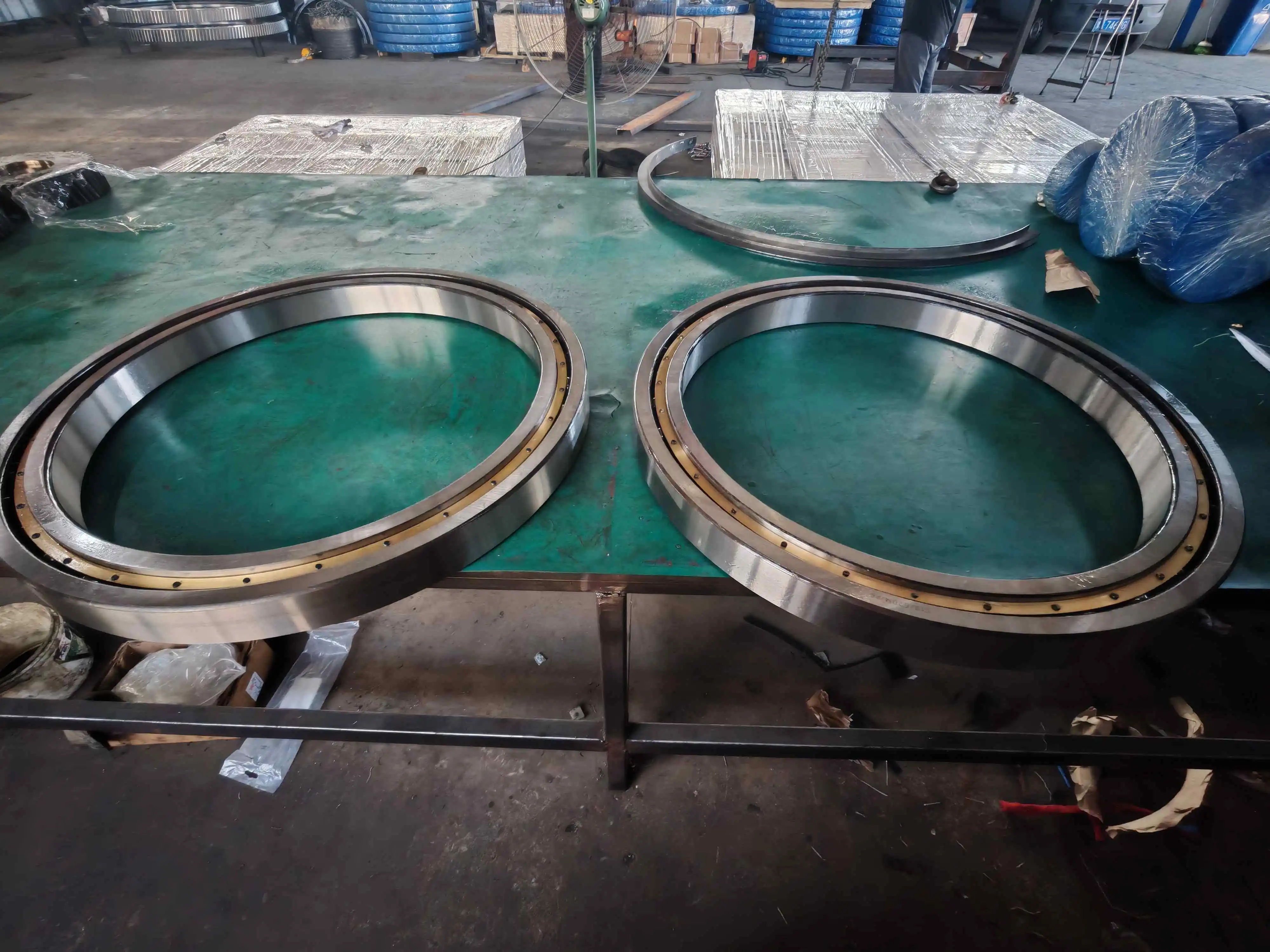
What Factors Affect Crossed Roller Bearings' Rigidity?
Geometry is the start of rigidity; process control is the finish. The crossed 90° rollers have a wide effective contact area, which reduces elastic deformation under load — the definition of high stiffness. Three elements prevail, besides layout. Material Quality Matters: precision crossed roller bearings manufactured from GCr15 bearing steel with sophisticated heat treatment make raceways strong and stable during years of cycling. And the choice of clearance is just as important.
Choosing preload over ordinary clearance reduces the internal play and massively increases the stiffness, at the expense of a little more friction. And raceway precision, available in P0, P6, P5, and P4 grades, establishes uniformity of stiffness distribution across the ring.
| Rigidity Factor | What to Specify |
|---|---|
| Roller arrangement | 90° crossed layout, single raceway |
| Material & heat treatment | GCr15 bearing steel, hardened |
| Internal clearance | Preloaded or small clearance option |
| Accuracy grade | P0 / P6 / P5 / P4 (P4 highest) |
| Section design | Uniform-section, compact ring |
How Do Load Capacity and Moment Loads Impact Bearing Selection?
Selection starts with a real load photo. Crossed roller bearings are capable of carrying radial load, axial load, and overturning moment at the same time; therefore, one unit may replace a pair of angular contact bearings – simplifying housings and shortening assemblies. Size it by comparing the static rating to peak moment loads (a robot arm fully extended, a rotary table clamped mid-cut) and then the dynamic rating to continuous duty.
Too little and you have fussing and loss of precision; too large and you squander envelope and money. LYHGB produces precision crossing roller bearings of 50 mm to 10,000 mm diameter to ISO, DIN, and GB standards. Standard series are available off-the-shelf, and unique designs are manufactured in 2-4 weeks.
| Parameter | Available Range |
|---|---|
| Diameter range | 50 mm – 10,000 mm |
| Standard series | RA, RB, RE, RU, CRB, CRBH, SX |
| Load capability | Radial + axial + moment loads in one unit |
| Clearance options | Standard clearance, small clearance, preload |
| Temperature range | -20°C to +120°C |
| Lubrication | Grease or oil |
| Lead time | Standard in stock; custom 2–4 weeks |
For a quick load review, send your duty cycle to mia@hgb-bearing.com and the 50-strong engineering team will respond with a sizing recommendation.
Crossed Roller Bearings for High-Precision and Rigid Applications
Where are these bearings really better than traditional designs? Anywhere rotation must still apply. The precision crossed roller bearings in CNC machining centers and industrial robots reduce runout to near-zero, allowing axes to keep micron-level placement during severe cuts. Their little deflection preserves scan quality and wafer alignment in medical imaging, such as CT scanners, and semiconductor devices.
Optical equipment and telescopes need the same smooth, backlash-free rotation for steady seeing. Aerospace test rigs and precise measurement devices round out the image – anywhere a bent bearing might distort the outcome. That’s because so many industries are built around one fundamental principle, and those components now comprise the rotating joints of most current automation systems.
| Application | Rigidity Benefit |
|---|---|
| CNC machine tools | Micron-level runout during heavy cuts |
| Industrial robots | Joint stiffness for repeatability |
| Medical imaging | Stable, deflection-free rotation |
| Semiconductor equipment | Precise wafer-stage alignment |
| Optical instruments | Backlash-free smooth slewing |
How to Match Crossed Roller Bearings With Your Rigidity Needs?
Matching crossed roller bearings to your rigidity needs is a short, disciplined sequence. Define your stiffness target — allowable angular deflection or runout under worst-case load — and translate it into an accuracy grade, with P5 or P4 for the tightest cases. Fix the envelope early, since the uniform-section ring saves axial space compared with paired tapered sets.
Choose clearance: preload for maximum rigidity, small clearance when friction or thermal growth is a concern. Confirm lubrication (grease or oil) and the -20°C to +120°C temperature window against your environment. Finally, install with care: clean mating faces, precise axial and radial alignment, even pressing force, and a hand-rotation check before startup all protect the precision you paid for.
| Matching Step | What to Decide |
|---|---|
| Stiffness target | Allowable deflection / runout under worst-case load |
| Accuracy grade | P5 or P4 for the tightest cases |
| Envelope | Uniform-section ring saves axial space |
| Clearance | Preload for rigidity; small clearance for friction/thermal concerns |
| Environment | Grease or oil lubrication; -20°C to +120°C window |
| Installation | Clean faces, aligned pressing, hand-rotation check |
Heng Guan Bearing, an ISO 9001-certified factory in Luoyang with 20+ years of experience, exports to more than 50 countries — Germany, the USA, and Australia among them — and applies strict quality control at every production stage. That traceability is your assurance that the rigidity on the drawing survives the machine floor.
Conclusion
Selecting crossed roller bearings for high rigidity means minding roller geometry, preload, accuracy grade, and honest load data. LYHGB supports every step, from 50 mm to 10,000 mm, with certified quality and fast custom delivery. Choose rigidity you can verify — contact LYHGB today.
FAQ
Q1: Why are crossed roller bearings so rigid?
A: Rollers crossed at 90° form a large contact area, minimizing deformation under load.
Q2: What accuracy grades are offered?
A: P0, P6, P5, and P4, with P4 delivering the highest precision.
Q3: What sizes are available?
A: 50 mm to 10,000 mm; standard series ships from stock, and custom sizes in 2–4 weeks.
Q4: When should I specify preload?
A: When maximum rigidity matters more than slightly higher friction torque.
Q5: Can one bearing replace paired bearings?
A: Yes — it handles radial, axial, and moment loads in one unit.
Q6: Which standard series does LYHGB supply?
A: RA, RB, RE, RU, CRB, CRBH, and SX series, plus fully custom designs built to your drawing.
Request a Rigidity Consultation From LYHGB
Ready to specify precision crossed roller bearings with confidence? Send your drawings, loads, and stiffness targets to mia@hgb-bearing.com. Heng Guan Bearing's engineers will confirm grades, preload, and sizes — and return a tailored quotation for your application.
References
1. International Organization for Standardization (2007). ISO 281: Rolling Bearings — Dynamic Load Ratings and Rating Life. Geneva: ISO.
2. International Organization for Standardization (2006). ISO 76: Rolling Bearings — Static Load Ratings. Geneva: ISO.
3. International Organization for Standardization (2014). ISO 492: Rolling Bearings — Radial Bearings — Geometrical Product Specifications and Tolerance Values. Geneva: ISO.
4. Harris, T. A., & Kotzalas, M. N. (2007). Rolling Bearing Analysis: Essential Concepts of Bearing Technology (5th ed.). Boca Raton: CRC Press.
5. Brändlein, J., Eschmann, P., Hasbargen, L., & Weigand, K. (1999). Ball and Roller Bearings: Theory, Design, and Application (3rd ed.). Chichester: Wiley.
6. International Organization for Standardization (1998). ISO 9283: Manipulating Industrial Robots — Performance Criteria and Related Test Methods. Geneva: ISO.

WHAT OUR CUSTOMERS SAY
Here is the customer's evaluation of us
YOU MAY LIKE
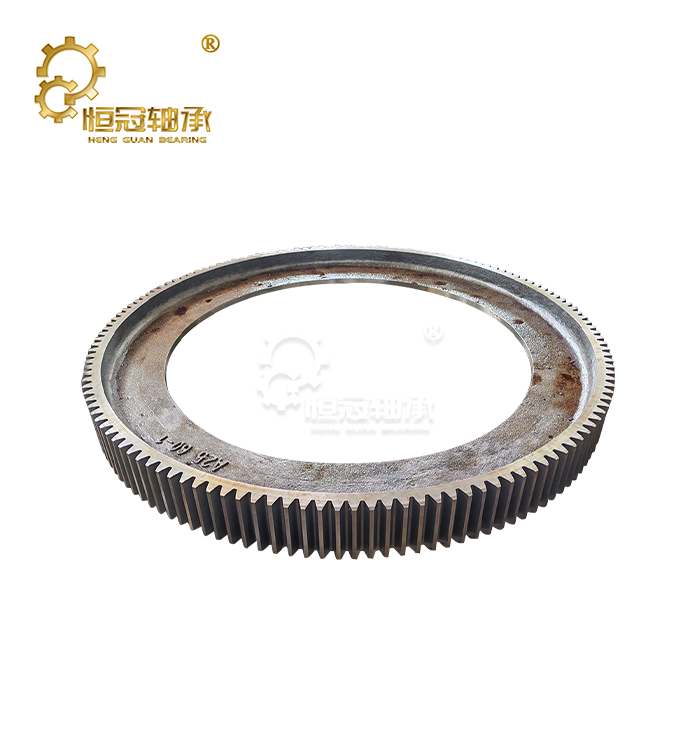 VIEW MORECustom Gear Ring
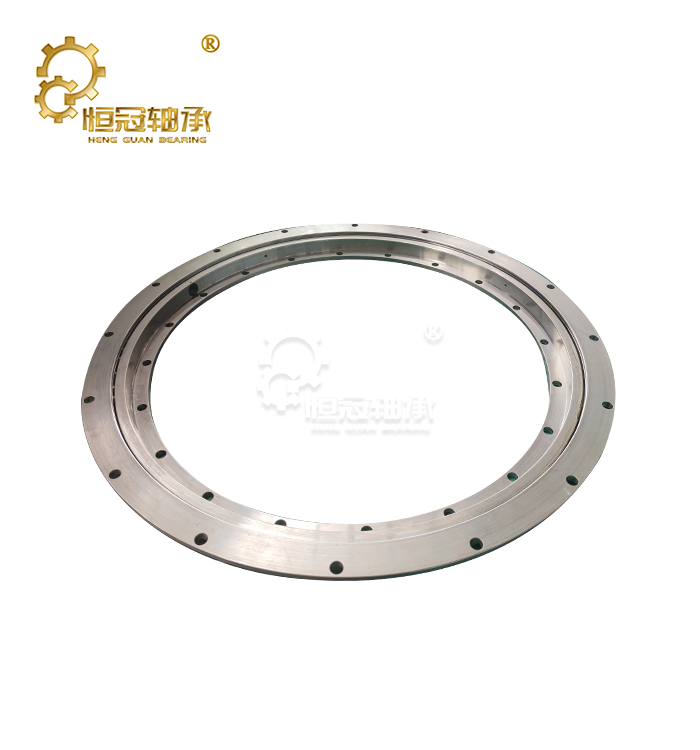 VIEW MORERKS.324012324001 Slewing Bearings
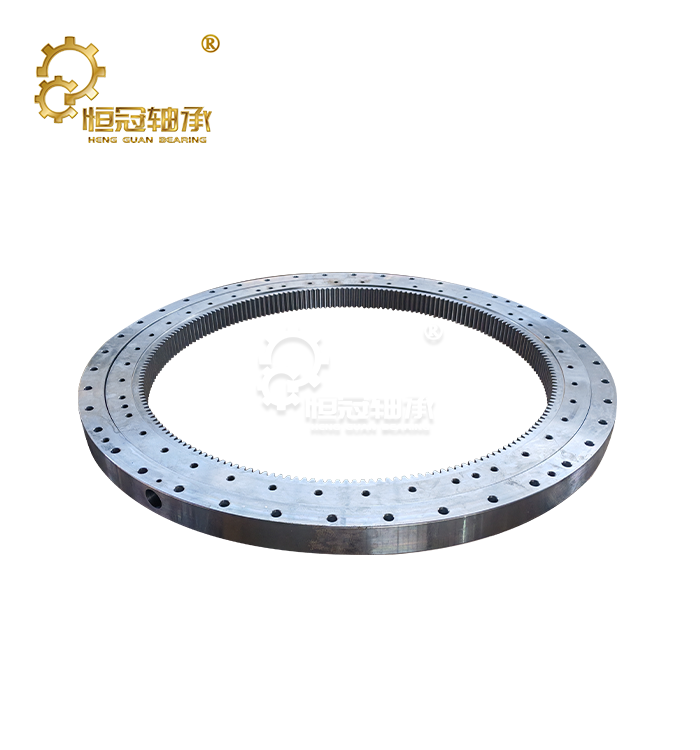 VIEW MORERKS.160.14.0414 Slewing Bearings
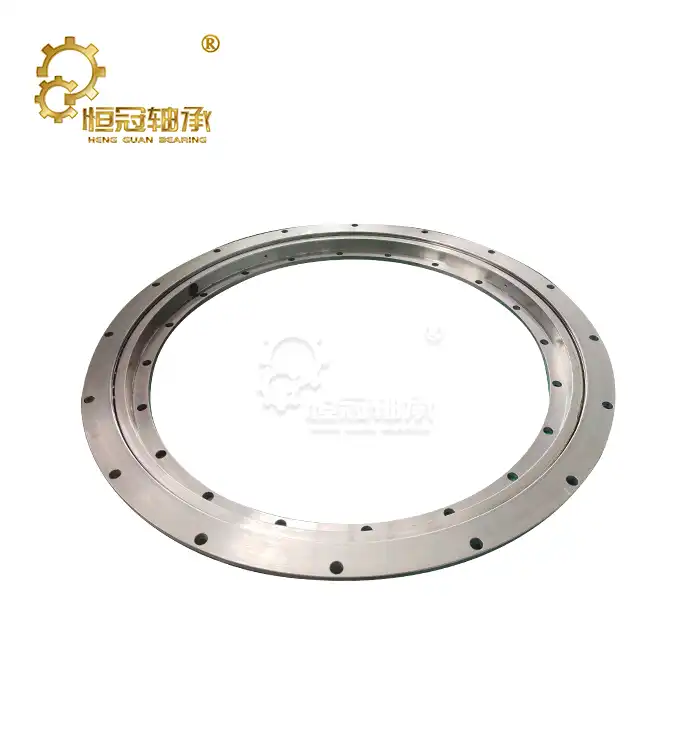 VIEW MORE020.30.900 Slewing Bearing
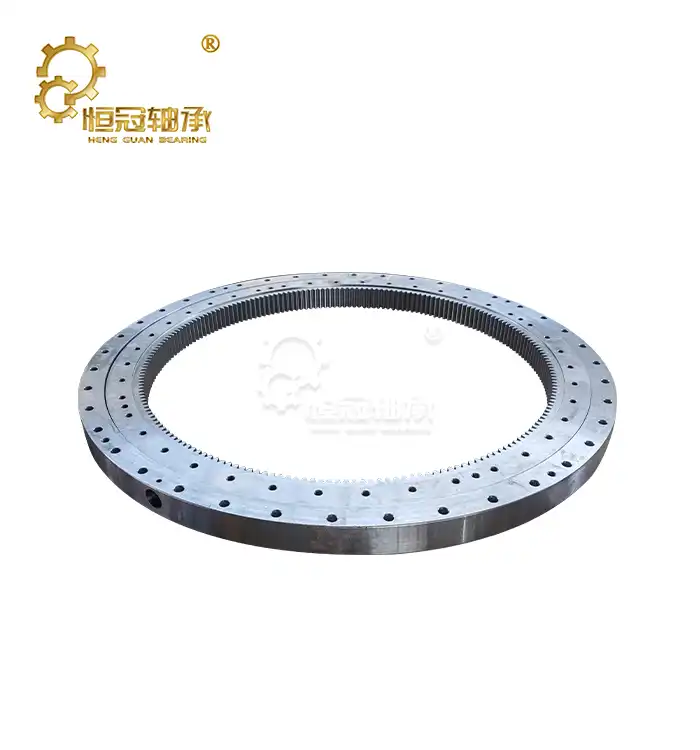 VIEW MORESingle row four point contact ball slewing bearing (Q series)
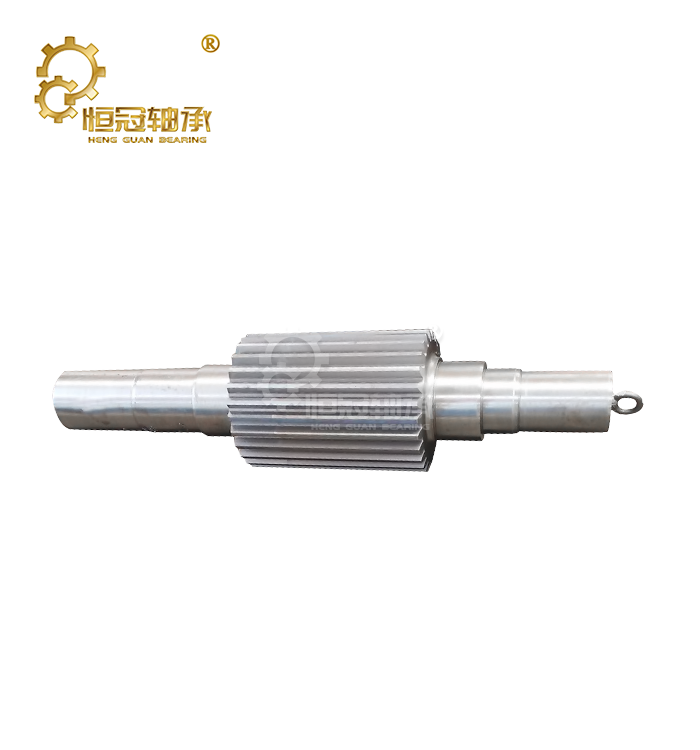 VIEW MORECrusher Gear Shaft
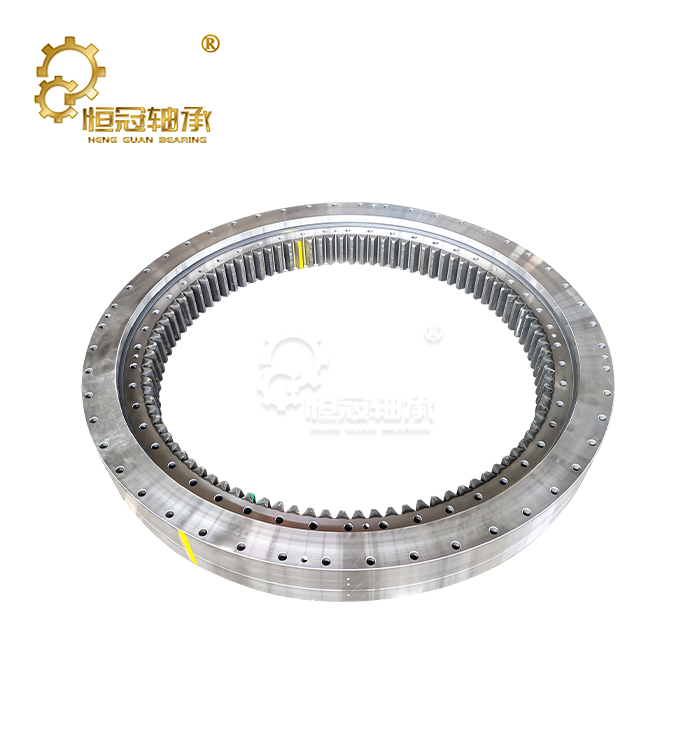 VIEW MOREPC1250 Excavator Bearings
 VIEW MORElarge gear rings for mining