



How Heavy-Duty Slewing Bearings Improve Load Handling and Efficiency
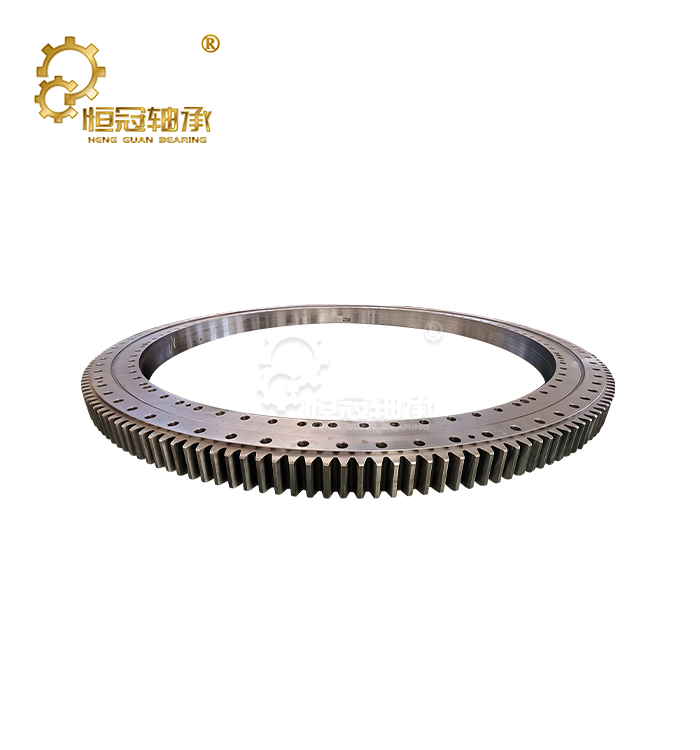
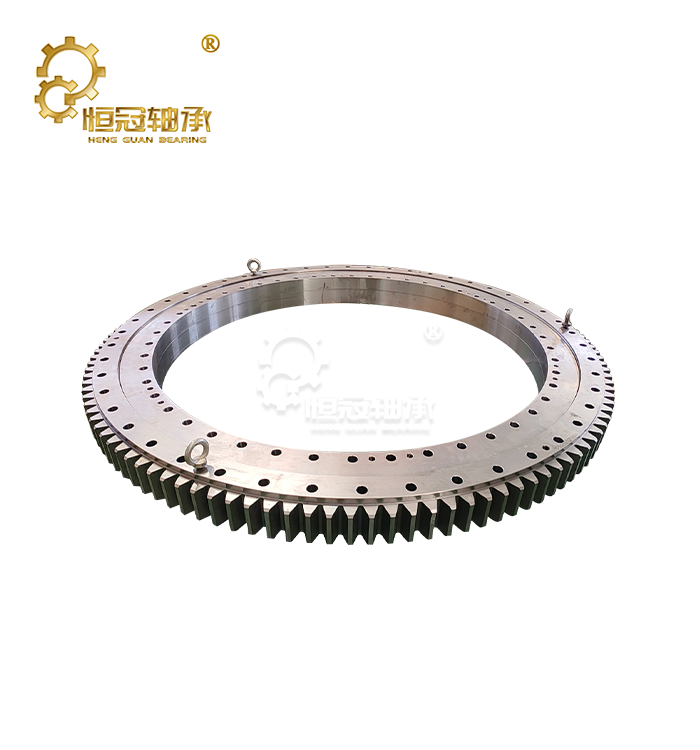
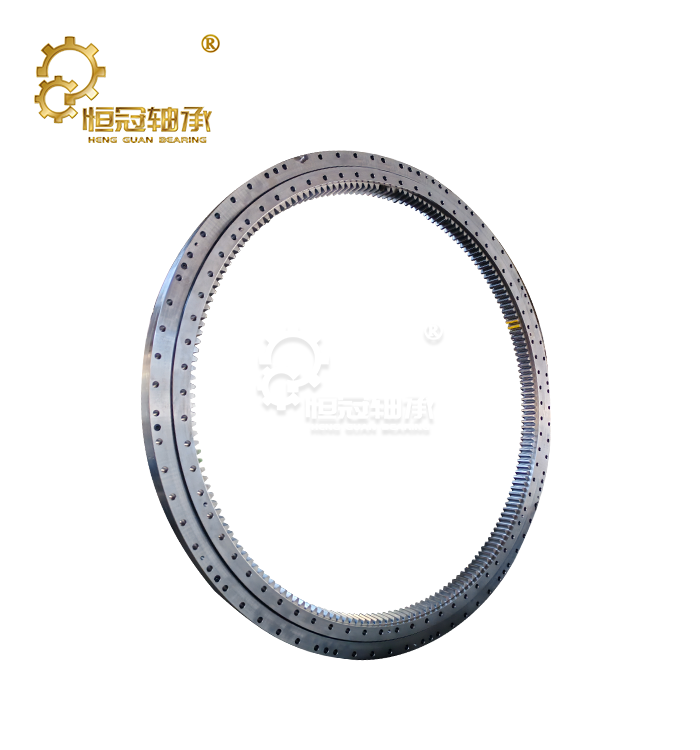
The way Heavy-Duty Slewing Bearings handle loads is completely different because they spread complicated forces like axial, radial, and tilting moments across many rows of precision-engineered rolling elements that are all part of one unit. Some traditional bearing arrangements use more than one component to support multiple directions of force. Heavy-duty slewing bearings integrate the functions of load support and rotation in a single, compact unit. They help equipment manufacturers increase load capacity, save maintenance, and extend service life using ideal raceway geometry, high-strength alloy materials, precision machining procedures, and novel sealing systems.
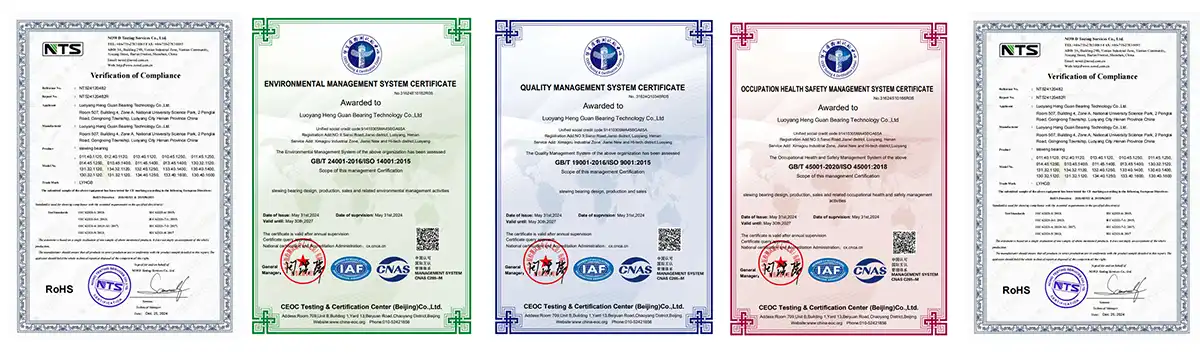
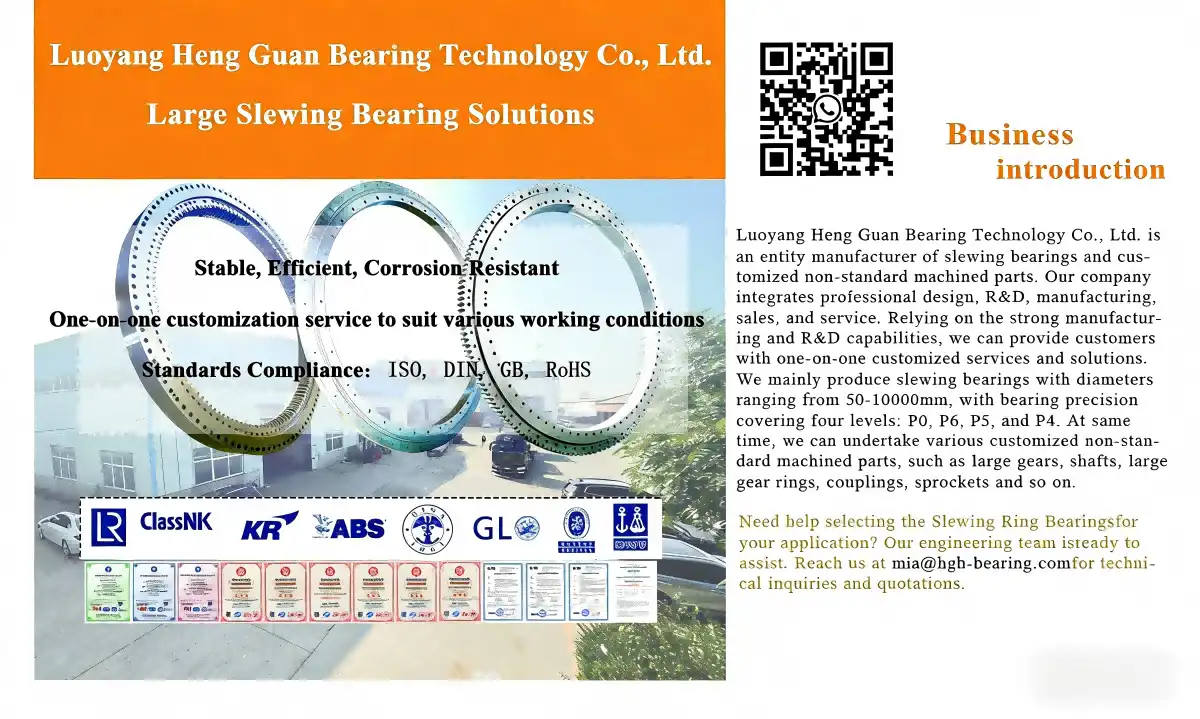
Luoyang Heng Guan Bearing Technology specializes in manufacturing slewing bearing solutions for demanding industrial applications such as construction machinery, mining equipment, and renewable energy systems. The selection of materials, accuracy of construction, and quality inspection protocols enable manufacturers to ensure that each bearing will perform reliably throughout long durations of operation.
How Heavy-Duty Slewing Bearings Are Designed for Extreme Loads?
The performance of a heavy-duty slewing bearing is influenced by many engineering parameters such as structural design, material selection, raceway configuration, lubrication, and manufacturing precision. Each of the elements directly affects the proper management of heavy loads and repeated operating stress of the bearing.
High-Strength Materials for Long-Term Load Resistance
Material selection impacts the bearing’s capacity to sustain shock load, fatigue stress, and continuous operation. For heavy-duty applications, steel grades combining strength, hardness, and wear resistance are required.
For example, Luoyang Heng Guan Bearing Technology uses bearing rings of high-performance alloy steel, such as 42CrMo and 50Mn. These materials have good mechanical characteristics and retain structural stability in harsh operating situations. Typically, the rolling elements are made of GCr15SiMn bearing steel, which possesses good hardness and fatigue resistance after appropriate heat treatment.
For instance, crucial components can be carburized, quenched, and precision heat treated to increase the surface hardness and still have enough internal toughness. This equilibrium permits heavy-duty slewing bearings to maintain their shape and rotate accurately when heavy gear is placed on them.
Choosing the right material specification for equipment used in mining, building, or offshore operations is crucial, as the failure of bearings can result in considerable downtime and costly repairs.
Multi-Row Raceway Structures for Better Load Distribution
One of the key advantages of heavy-duty slewing bearings is that they disperse different sorts of loads through optimal raceway designs.
Single-row four-point contact ball bearings are designed for use in applications with moderate combined loads, for example, smaller cranes and general industrial equipment. However, more sophisticated equipment in terms of operation generally requires multi-row rolling setups.
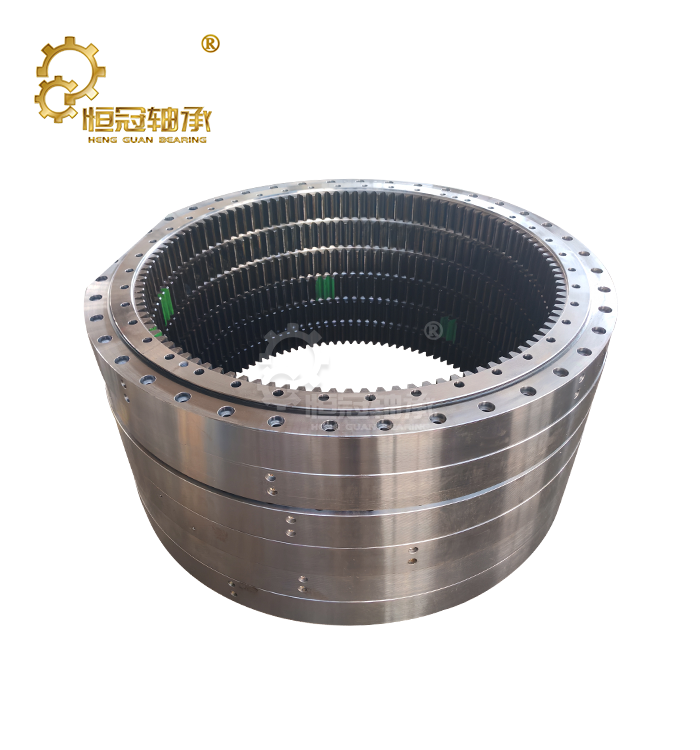
Three-row roller slewing bearings are often utilized in heavy-duty applications because of their separation of axial, radial, and moment load-carrying systems by using separate raceway systems. The design provides the best action for certain directions of the forces for each row of rolling elements.
Multi-row designs spread the stress more uniformly, and this reduces the localized pressure on the raceways and limits the potential for premature wear, cracking, or fatigue damage. That makes them ideal for huge excavators, bucket-wheel machines, and other equipment that works continually under heavy load conditions.
Precision Manufacturing and Sealing Technology
Large slewing bearings demand correct machining since slight dimensional errors might affect rotation performance, load distribution, and service life.
During manufacture, CNC machining equipment is employed to maintain raceway accuracy and consistent component dimensions. Precision grinding enhances surface finish, lowers friction, and enables smoother running.
Another crucial aspect in protecting bearing performance is sealing systems. Much of the equipment that is used in heavy-duty situations is exposed to dust, moisture, mud, or other corrosive elements. Without appropriate shielding, pollutants can penetrate the raceway region, resulting in increased wear.
Today’s heavy-duty slewing bearings use unique sealing solutions, including nitrile rubber and fluororubber choices based on temperature requirements and environmental exposure. “Good sealing helps to hold lubricant in and keep external contaminants out to protect internal components.”
Where Do Heavy-Duty Slewing Bearings Provide the Greatest Industrial Value?
The range of applications for heavy-duty slewing bearings is growing further as industries need bigger, more efficient, and more durable equipment. Because they can lift big structures and rotate smoothly, they are an important component in many industries.
Construction Equipment and Heavy Lifting Applications
Construction machinery is one of the most prominent application areas of heavy-duty slewing bearings. Slewing systems are used in mobile cranes, crawler cranes, and excavators for rotating upper structures with heavy loads.
The bearing of a crane has to support the weight of the boom, the materials being hoisted, and the overturning moments due to movement and uneven ground. Properly constructed slewing bearings will transfer these loads to the raceways, thereby decreasing the concentrated stresses.
Excavators face repeated digging cycles, which result in frequent impact loads. Robust rolling parts, resilient cages, and improved raceway designs contribute to stability even under continuous operation.
Heavy-duty slewing bearings improve rotational reliability, helping construction equipment achieve increased output with fewer unplanned maintenance interruptions.
Mining and Material Processing Equipment
The harshest criteria for mechanical parts are in the mining industry. Large excavators, stacker-reclaimers and bucket-wheel excavators are often in operation for lengthy periods of time with heavy loads, dust and changing environmental conditions.
Bearings for these applications might be several meters in diameter and require advanced production facilities and tight quality control. The bearing must withstand large structural stresses and maintain correct motion for millions of operational cycles.
In mining conditions, the effective sealing and lubrication systems are particularly crucial because abrasive particles may increase the internal wear. Proper maintenance practices and regular inspection can prolong bearing service life and save costly machine shutdowns.
Renewable Energy Systems
Large slewing bearings are also used for critical rotating operations in wind turbines. Yaw systems rotate the nacelle toward changes in wind direction via slew bearings. Pitch systems change the angle of the blades to improve energy production.
Wind turbine bearings may not undergo the same force of impact stresses as mining equipment, but they nevertheless require high reliability because maintenance is costly and complex at those heights.
Key performance factors are low friction, corrosion resistance, and accurate alignment. Heavy-duty slewing bearings for renewable energy applications can improve the efficiency of the system and help it operate over the long term.
Key Benefits That Influence Heavy Equipment Procurement Decisions
In terms of acquiring industrial parts, buyers are more focused on the total operating value, not only the purchase price. There are many benefits to using heavy-duty slewing bearings that directly affect equipment performance and life-cycle costs.
Improved Load Capacity and Operational Reliability
A well-designed heavy-duty bearing has a stronger resistance to load than typical options. The added capacity gives larger safety margins when equipment is subjected to unexpected loads or difficult working conditions.
The profitability of sectors where production plans are affected by downtime is dependent on the reliability of the bearings. If a crane, a mining machine, or a huge processing system breaks down, it can require significant repairs and replacements.
Choosing the right bearing design can help decrease these hazards and result in more predictable behavior.
Reduced Maintenance Requirements
Owners of industrial equipment are concerned with maintenance accessibility. Optimized lubrication channels, reliable sealing structures, and adequate material choices lead to fewer service interventions.
Easily accessible grease fittings allow maintenance crews to lubricate efficiently, and condition monitoring techniques assist in discovering possible problems before they lead to significant failures.
This proactive strategy cuts down on unnecessary maintenance and boosts equipment availability.
Lower Total Cost of Ownership
While quality heavy-duty slewing bearings might cost more upfront, their long-term worth generally surpasses that of cheaper counterparts.
Lower overall operating costs due to longer service life, less downtime, increased energy efficiency, and fewer replacements.
Hence, choosing the correct bearing supplier for major industrial projects is a strategic decision and not just a component buy.
How to Select the Right Heavy-Duty Slew Ring Bearing Supplier?
The selection of the right supplier is as crucial as the bearing design itself. Since heavy-duty slewing bearings are frequently mounted in essential equipment, buyers need to consider not only product specifications but also manufacturing capability, quality control systems, engineering support, and long-term service ability.
Manufacturing Capability and Custom Engineering Support
Standard bearing solutions don’t always fit the unique needs of industrial equipment. Large machines typically require particular dimensions, special mounting holes, internal constructions, gear arrangements, or loading capacities.
A good manufacturer should have experience in producing tailor-made solutions for real working situations. Important points to consider are:
Production range available Machining capability of big-diameter parts;
Experience in material processing and technology of heat treatment;
Quality inspection process; ability to communicate in engineering
Luoyang Heng Guan Bearing Technology produces customized heavy-duty slewing bearings for numerous industrial applications, ranging from standard to sophisticated non-standard designs. Thanks to extensive experience in manufacturing large bearings, the company's experts may optimize bearing structures according to equipment loads, installation requirements, and the projected service environments.
Quality Inspection and Technical Documentation
Industrial bearing applications require consistency of quality, as slight production variances might impair performance.
Professional providers should verify the following important aspects before delivery:
Dimensional precision;
Race condition;
Testing for hardness;
Clearance check;
Gear accuracy (if applicable); inspection of surface condition.
Technical documents, including inspection reports, material certificates, and product specifications, are also supplied to help customers verify product quality and meet project documentation needs.
Good technical communication and thorough documentation minimize the risks for international buyers during installation and commissioning.
Maintenance Strategies to Extend Heavy-Duty Slewing Bearing Service Life
Even the highest-quality bearing requires proper maintenance to achieve its expected performance. Because heavy-duty slewing bearings operate under combined loads and harsh environments, preventive maintenance is essential.
Proper Lubrication Management
Lubrication is one of the most important factors affecting bearing durability. Insufficient lubrication can increase friction, accelerate wear, and create excessive heat inside the raceway system.
For heavy-duty applications, selecting the correct grease type according to operating temperature, load conditions, and environmental exposure is essential. Extreme-pressure lubricants are commonly used because they can maintain protective lubrication films under high contact stress.
Maintenance teams should establish lubrication schedules based on the following:
Operating hours;
Load intensity;
Environmental conditions;
Manufacturer recommendations.
Over-lubrication should also be avoided because excessive grease can increase internal resistance and create additional heat.
Regular lubrication inspection ensures that grease remains effective and that contaminants are removed before they damage internal components.
Monitoring Bolt Connections and Installation Conditions
The mounting connection between the bearing and equipment structure directly influences performance.
Improper bolt tightening can create uneven load distribution, deformation of bearing rings, and accelerated wear. During installation, bolts should be tightened according to recommended torque values and tightening sequences.
A star-pattern tightening method is commonly used to achieve more uniform clamping force.
After initial operation, bolt torque should be checked because vibration, thermal changes, and load cycling may cause minor relaxation.
Regular inspection helps prevent problems such as the following:
Loose mounting bolts;
Uneven contact surfaces;
Abnormal movement between components.
Correct installation practices are especially important for large equipment where bearing replacement requires significant time and resources.
Predictive Monitoring for Early Problem Detection
Modern maintenance programs increasingly use condition monitoring technologies to evaluate bearing health.
Common monitoring methods include:
Vibration Analysis
Changes in vibration patterns may indicate early signs of:
Raceway damage;
Rolling element defects;
Cage problems;
Abnormal loading.
Detecting these issues early allows maintenance teams to schedule repairs before unexpected failures occur.
Temperature Monitoring
Abnormal temperature increases can indicate:
Poor lubrication;
Excessive friction;
Contamination;
Overloading.
Infrared inspection tools and temperature sensors help identify potential problems during operation.
By combining monitoring data with regular inspections, companies can move from reactive repairs to predictive maintenance strategies.
Procurement Considerations for Heavy-Duty Slewing Bearings
Purchasing large industrial bearings involves more than selecting a suitable model. Buyers must also consider cost factors, production schedules, transportation requirements, and after-sales support.
Understanding Pricing Factors
The price of heavy-duty slewing bearings depends on multiple elements, including:
Bearing diameter;
Material grade;
Raceway design;
Precision requirements;
Heat treatment process;
Custom features.
Large-diameter bearings require more raw materials, advanced machining processes, and additional inspection procedures. Customized designs involving special gears, mounting structures, or unusual dimensions may require additional engineering and production time.
A detailed quotation from the supplier should clearly explain the factors affecting cost. This allows buyers to compare suppliers more effectively and identify the best balance between price and performance.
Lead Time and Production Planning
Delivery time is another important factor for industrial projects. Standard bearing models may be available more quickly, while customized heavy-duty slewing bearings require additional manufacturing steps.
The production process may include:
Engineering confirmation;
Material preparation;
Machining;
Heat treatment;
Assembly;
Inspection;
Packaging and shipment.
Early communication with suppliers helps avoid project delays, especially when equipment installation schedules are fixed.
Manufacturers with flexible production planning and strong supply chain management can provide more reliable delivery support for urgent projects.
Transportation and Export Support
Large slewing bearings require careful transportation planning due to their weight and dimensions.
Professional suppliers should assist customers with:
Export documentation;
Packaging solutions;
Shipping coordination;
Quality certificates;
Customs-related paperwork.
Proper packaging protection is especially important because transportation damage can create unexpected delays and additional costs.
For overseas customers, suppliers with export experience can simplify the purchasing process and improve delivery reliability.
Warranty and After-Sales Service
After-sales support is an important part of industrial procurement. Even well-designed bearings require technical assistance during installation, commissioning, or long-term operation.
A dependable supplier should provide support related to:
Installation guidance;
Lubrication recommendations;
Operating condition analysis;
Technical troubleshooting;
Replacement procedures.
Warranty policies also demonstrate supplier confidence in product quality. Clear warranty terms help customers understand responsibilities and reduce uncertainty after purchase.
Conclusion
In conclusion, heavy-duty slewing bearings have become essential components for modern heavy machinery by improving load handling capability, rotational accuracy, and operational efficiency. Their advanced raceway structures, high-strength materials, precision manufacturing processes, and reliable sealing systems allow equipment such as cranes, excavators, mining machines, and wind turbines to operate under demanding conditions.
Selecting the right heavy-duty slewing bearings requires more than comparing specifications or purchase prices. Buyers should evaluate manufacturing expertise, customization capability, quality control procedures, delivery reliability, and long-term technical support.
With proper lubrication, installation management, and predictive maintenance, these bearings can achieve longer service life and reduce the risk of unexpected downtime. For industries where equipment reliability directly affects productivity and operating costs, investing in high-quality slewing bearing solutions is a practical strategy for improving efficiency and maintaining stable performance.
As industrial equipment continues to grow in size and complexity, heavy-duty slewing bearings will remain a key mechanical solution for supporting safer, more efficient, and more reliable operations.
|
|
FAQ
1. What size range does Heng Guan manufacture for slewing rings?
We can make tiny precision bearings with a diameter of 50 mm all the way up to huge 10,000 mm heavy-duty slewing bearings that can be used in the biggest mining and construction machines. The heavy-duty product line includes sizes ranging from 100 mm to 500 mm in height, from 1000 mm to 9,500 mm in diameter, and from 1,200 mm to 10,000 mm in diameter. In cases where specific requirements are needed, we can also accommodate custom designs that are too big or too small and go beyond these standard ranges.
2. How do three-row roller bearings differ from four-point contact designs?
Single-row four-point contact ball bearings can handle combined loads with a single row of balls contacting raceways four times. They have a small design that makes them good for moderately heavy-duty slewing bearing applications. Three-row roller configurations spread axial, radial, and moment loads across three separate rows of cylindrical rollers. This makes it possible for heavy-duty equipment to handle a lot more weight. The choice depends on the size of the load, the amount of space you have, and how long the system needs to last.
3. What precision grade should I specify for my application?
Standard industrial equipment usually uses P0 or P6 precision grades, which work well and don't cost a lot. P5 grade is good for things that need to be more accurate when rotating, like wind turbine pitch systems or automated positioning equipment. The P4 specification is needed for aerospace, medical devices, and very precise machinery. Our engineering team can look at your heavy-duty slewing bearing application needs and suggest the right level of precision, taking into account both performance needs and budget limits.
Partner with Heng Guan for Your Slewing Bearing Requirements
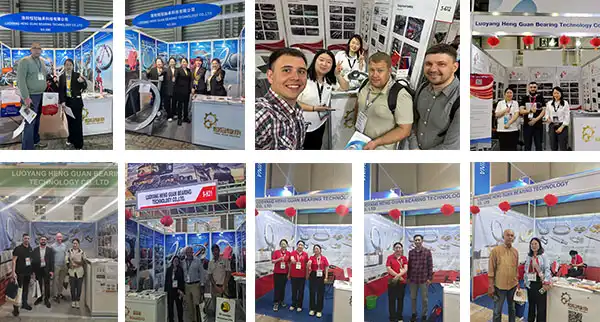
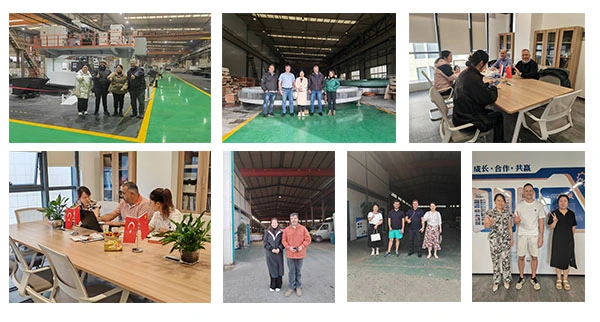
If you don't choose the right heavy-duty slewing bearings manufacturer, your equipment might not work as well as it could or have problems that could have been avoided. Luoyang Heng Guan Bearing Technology has been making specialized products for more than 20 years and has the technical flexibility to meet your specific application needs. Our engineering team of more than 50 experts offers personalized optimization design services that make sure you choose the right bearings, whether you need standard configurations or custom solutions for installations that aren't standard. We are an ISO 9001-certified company with state-of-the-art CNC machining centers and a wide range of testing tools. We offer precision grades from P0 to P4 for diameters from 50mm to 10,000mm. Our customers come from more than 50 countries, including the US, Germany, Australia, and more. This shows that we are committed to delivering on time and making sure that the quality of our products meets international standards.If you need a reliable Heavy-Duty Slewing Bearing supplier that can help your engineering team through the procurement, installation, and operational phases, email our technical specialists at mia@hgb-bearing.com to talk about how our solutions can improve the load-carrying efficiency and operational uptime of your equipment.
References
1. Bearing Design & Application Reference Guide, Third Edition, published by the American Bearing Manufacturers Association Technical Committee, 2019.
2. Chen, W., & Liu, Y. (2021). Load Distribution Analysis of Large-Diameter Slewing Bearings in Heavy Machinery Applications. Journal of Mechanical Engineering Science, Volume 235, Issue 18.
3. Industrial Bearing Maintenance and Reliability Best Practices, Society of Tribologists and Lubrication Engineers Educational Series, 2020.
4. Kragelsky, I.V., & Alisin, V.V. (2018). Tribology of Rolling Bearings: Friction, Wear, and Lubrication Mechanisms. Cambridge University Press.
5. Slewing Bearing Design Standards and Testing Protocols, International Organization for Standardization Technical Report ISO/TR 16281:2022.
6. Zhou, H., & Wang, J. (2020). Fatigue Life Prediction Models for Large-Scale Slewing Ring Bearings Under Complex Loading Conditions. Engineering Failure Analysis, Volume 118, Article 104892.

WHAT OUR CUSTOMERS SAY
Here is the customer's evaluation of us