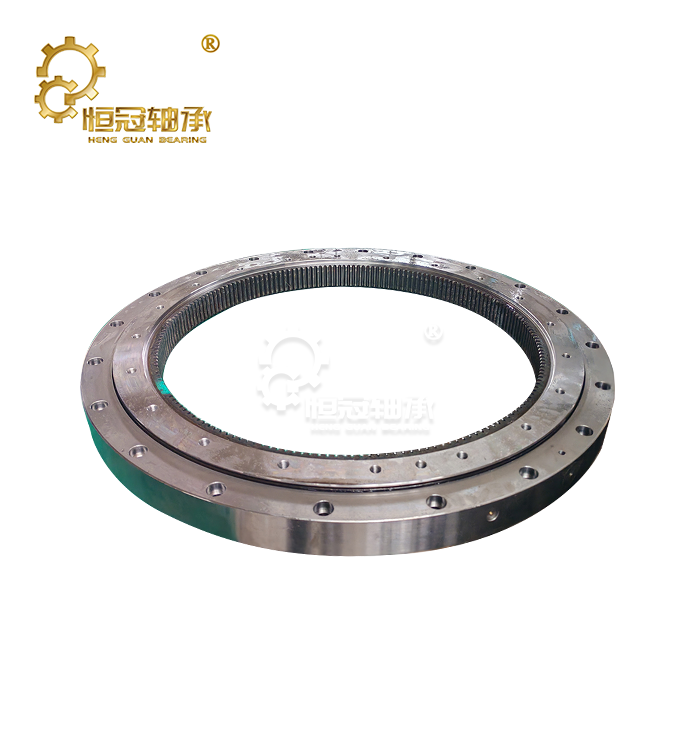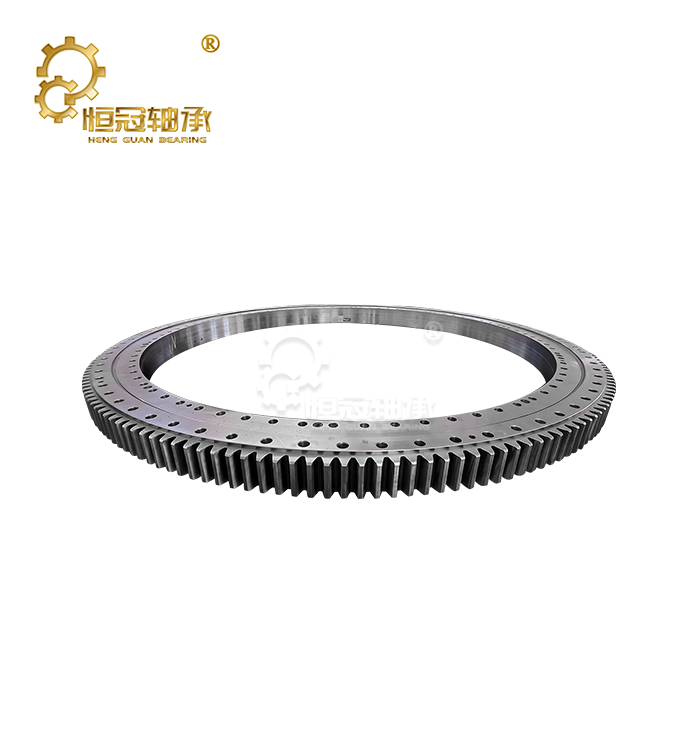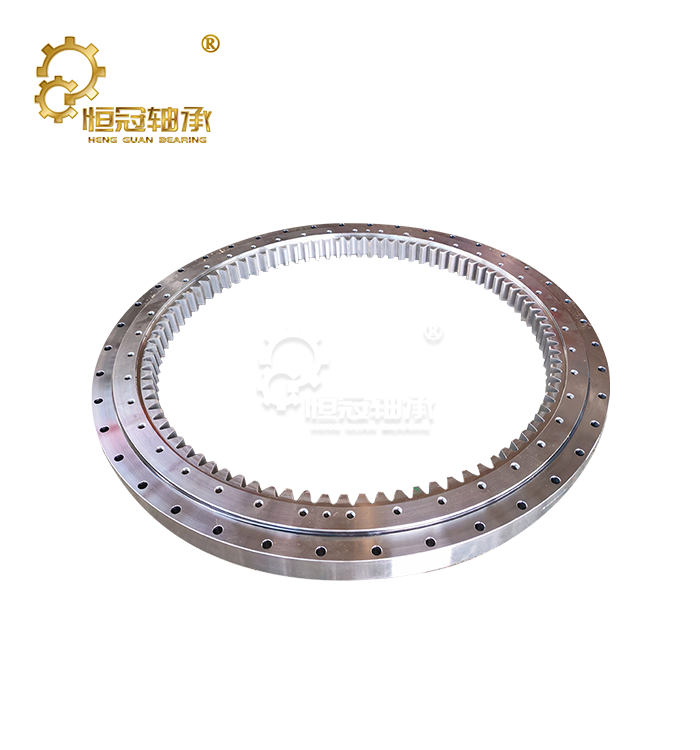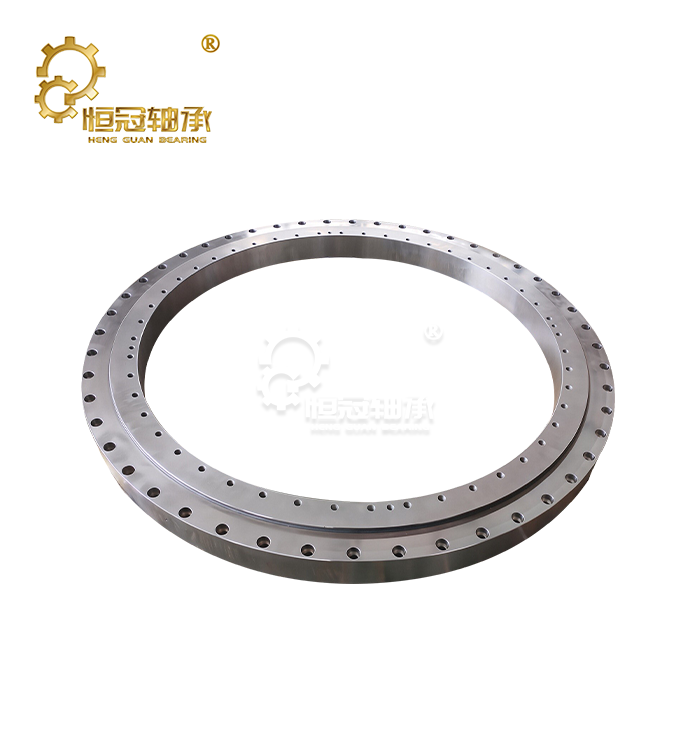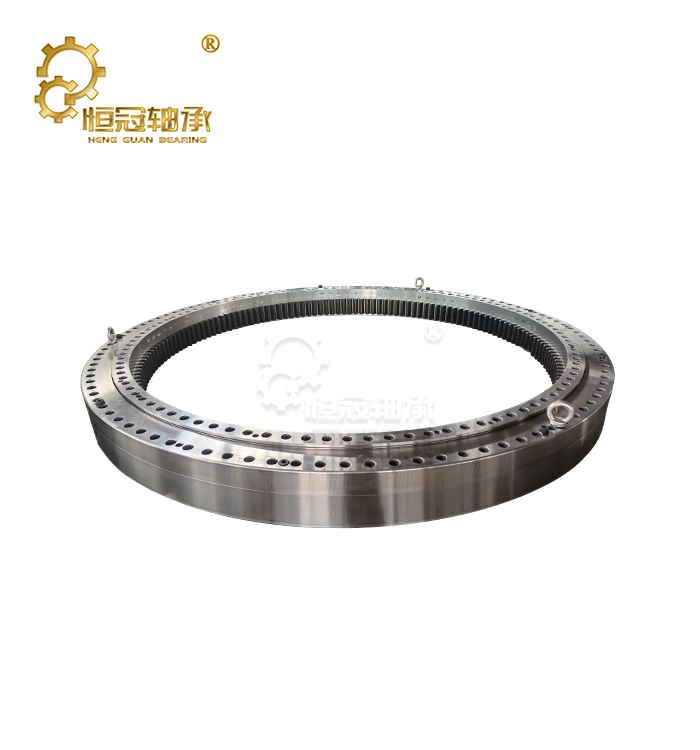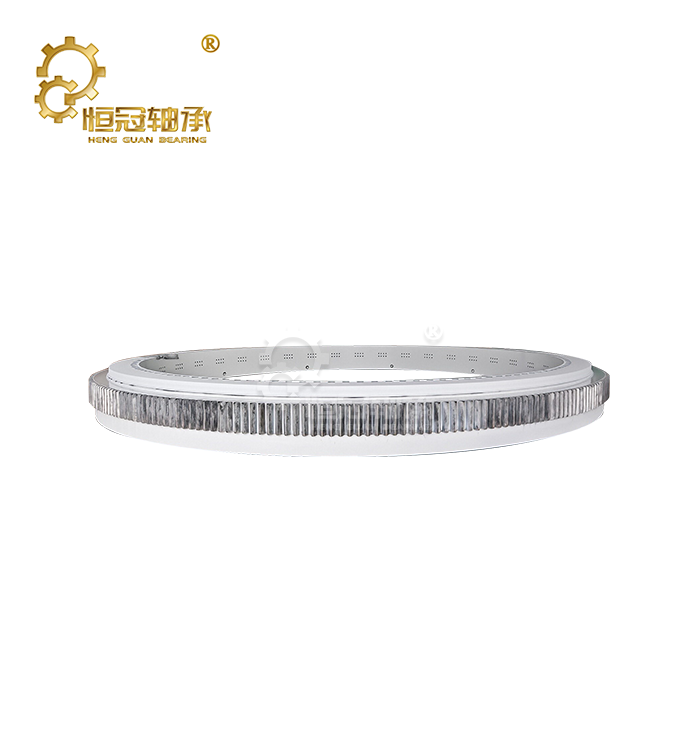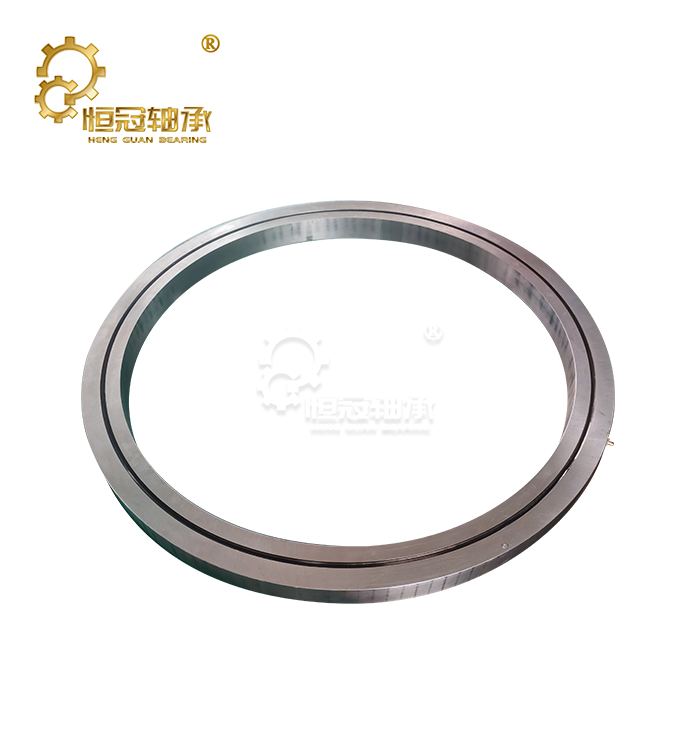




High Precision Conveying System Slewing Bearing Manufacturer
When your industrial processes need to rotate perfectly under heavy loads, choosing the right bearing technology is very important. Luoyang Heng Guan Bearing Technology Co., Ltd. is an expert in making precision-engineered Conveying System Slewing Bearing products that work perfectly in the toughest material handling settings in the world. Our modern three-row roller bearings have great load distribution and last a very long time. This means they can be used continuously in mining, building, and heavy industry settings where dependability is key.

Understanding Conveying System Slewing Bearings
During material handling activities, special bearings are needed that can handle a variety of loads and keep the rolling movement smooth. Slewing bearings are an important technological improvement in industrial conveyor systems because they allow for integrated solutions for tasks that need to handle axial, radial, and moment loads at the same time.
Fundamental Design Principles and Operational Excellence
It uses advanced engineering ideas that are made to handle big loads when moving materials. This is called Conveying System Slewing Bearing technology. These bearings link the fixed mounting structures to the rotating conveyor units at a pivotal point. This allows for precise movement control even when working in tough conditions. The engineering method focuses on spreading different types of loads across the best roller arrangements. This keeps stress from building up, which is what usually leads to bearings breaking down too soon in traditional designs. Modern slewing ring technology uses precisely ground raceways made from high-strength alloy steels, such as 50Mn and 42CrMo, which have very high tensile strength and core toughness. GCr15SiMn bearing steel is used for the rolling elements because it has better resistance to rolling contact wear, which is important for continued operation cycles. This mix of materials guarantees the best performance across the wide range of temperatures that are typical in industrial settings.
Structural Configurations and Load Distribution Technologies
There are different types of bearing configurations that can be used in industrial conveying applications to meet different working needs. Single-row four-point contact designs work best in mild load situations where installation space is limited. Double-row designs offer higher radial load capacities, making them useful for moving big materials. Three-row roller structures can carry more weight because they separate axial, radial, and moment loads onto separate rows of rollers. This keeps loads from interfering with each other and increases the structure's useful life. Cross-roller bearings are very rigid and accurate, which makes them perfect for uses that need to be very precise with their placement. These systems spread loads evenly across cylinder-shaped wheels that are set at right angles to each other. They offer better resistance to moment loads than standard ball bearing setups. Because the geometric benefits are clear, they lead to more stable systems that need less upkeep over longer periods of time.
Advantages and Performance Optimization of High-Precision Conveying System Slewing Bearings
High-precision bearing technology makes practical changes that can be measured and have a direct effect on how much industrial material handling systems produce and how much they cost to maintain. When procurement workers know about these benefits, they can make choices that will improve long-term business efficiency.
Superior Load Management and Operational Durability
Here are the main performance benefits that make precision slewing bearing technology stand out:
• Enhanced Load Capacity: Three-row roller setups spread loads out over multiple different paths, which means they can handle forces of more than 2,000 tons while keeping a smooth rotation during continuous operation cycles.
• Extended Service Life: Thanks to precise manufacturing tolerances and modern metallurgy, operating lifespans can be over 100,000 hours under normal industrial conditions. This means that parts don't need to be replaced as often, which saves money on downtime costs.
• Improved Corrosion Resistance: special surface treatments and high-tech sealing systems keep the inside parts safe from severe weather conditions like dust, water, and chemicals that are common in mining and building work.
• Operational Precision: Bearings made with precision meet the standards for P4, P5, and P6. This means they always work at the same speed, which is important for automatic systems that need to control placement precisely.
These performance traits successfully deal with common problems in the industrial sector, such as bearings breaking down too soon, needing too much upkeep, and operating inconsistencies that affect production schedules and cost management goals.
Maintenance Optimization and Performance Enhancement Strategies
Choosing and installing the right bearings has a big effect on how well they work and how much they cost to maintain. The Conveying System Slewing Bearing technology has design features that make upkeep easier and service times longer. Integral lubrication systems make sure that the right amount of grease is spread evenly across all of the rolling parts. This cuts down on the need for manual lubrication and stops breakdowns caused by contamination. Advanced sealing technologies meet IP65+ security standards, which stop abrasive particles and wetness from getting in. These things usually speed up wear in traditional bearing systems. Multi-lip rubber seals made from NBR or Viton materials are better at resisting chemicals and staying stable at high temperatures. They also keep closing well for longer periods of time without needing to be replaced often.
How to Choose the Best Conveying System Slewing Bearing for Your Business
Successful bearing selection requires a comprehensive analysis of operational requirements, environmental conditions, and performance expectations specific to each industrial application. Understanding critical selection criteria is important for getting the best bearing performance and the best deals on purchases.
Critical Selection Criteria and Performance Requirements
When making decisions about what to buy, load capacity needs should be put first based on how things actually work, not on ideal maximums. When you calculate axial, radial, and moment loads, you have to take into account dynamic loading conditions. These include changes in material flow, tools speeding up and slowing down, and environmental factors that affect how loads are distributed. Material standards have a big effect on how well bearings work and how long they last. Heavy-duty applications need rings made of high-strength alloy steel because they are more resistant to fatigue, and special heat treatment methods make them harder, which is needed for longer operating durability. The material of the rolling element must meet the needs of the application. For example, ceramic elements can be used in high-temperature or corrosive settings where steel parts might break down more quickly. Some environmental factors to think about are temperature ranges, amounts of pollution exposure, and chemical compatibility needs. When designing bearings, engineers have to take into account changes in working temperatures while keeping the bearings' cleaning effective and their sizes stable. Sealing systems need to be looked at based on the types of pollution and amounts of exposure that are unique to each installation site.
Custom Engineering Solutions and OEM Integration
Many industry uses can be met by standard bearing configurations, but more specialized tasks often require custom engineering solutions that are made to fit their needs. Custom bearing development lets you get the best physical parameters, load capacity, and connectivity features that improve the overall performance of the system while making installation easier. Customizing a Conveying System Slewing Bearing includes changing its size, mounting it in a certain way, and adding combined gear systems that get rid of the need for different transmission parts. When making custom solutions, you have to think about things like minimum order amounts, engineering development timelines, and certification needs that are specific to regulated industries, like making medical equipment and aircraft parts.
Leading Conveying System Slewing Bearing Manufacturers and Suppliers
There are many companies in the global bearing business, and their quality levels, technical skills, and service standards are all different. In order to find suppliers who can meet the strict needs of an industry, more than just price needs to be taken into account.
Quality Certifications and Manufacturing Capabilities
Manufacturers of reliable bearings keep full quality management systems that are approved to ISO 9001 standards. This makes sure that the quality of the products and the way they are made are always the same. More certifications, like ISO 14001 for environmental management and OHSAS 18001 for health and safety at work, show a dedication to responsible manufacturing practices that are valued by procurement professionals who are in charge of achieving company sustainability goals. Precision machining equipment, heat treatment facilities, and thorough testing processes are all part of the manufacturing skills needed to make high-precision bearing parts. Advanced CNC machine centers make it possible to achieve the tight tolerances needed for precision-grade bearings, and special heat treatment methods make sure that all of the bearing's parts have the best material qualities.
Dimensional checking, material property confirmation, and performance testing in conditions that are similar to real-life situations should all be possible during testing. Full quality records allow for tracking, which is important for regulated industries, and performance checks throughout the bearing's operating lifetime.
Supplier Evaluation and Partnership Development
Here are the essential criteria for evaluating potential bearing suppliers:
• Technical Support Capabilities: Full technical support, such as application analysis, bearing selection help, and custom solution creation, makes sure that bearings work well and systems are integrated properly.
• Global Service Network: International service skills allow for consistent support for multinational operations, such as expert help, easy access to spare parts, and training programs for repair workers.
• Delivery Performance: Reliable delivery schedules and the ability to handle supplies make sure that bearings are available on time for projects and production schedules.
• Warranty Coverage: Full warranty terms and service agreements protect against production flaws and show that the maker trusts the quality and performance of the product.
These evaluation factors can help you find sellers who can help you reach your long-term business goals and give you value beyond the cost of buying the product.

Conclusion
Conveying System Slewing Bearing technology is an important investment for making sure that industrial material handling systems work well and don't cost too much in the long run. The load capacity, operational longevity, and upkeep efficiency of precision-engineered bearing solutions all get better, which has a direct effect on production and profitability goals. When you know the selection criteria, performance characteristics, and review methods for suppliers, you can make smart buying choices that improve bearing performance while keeping the total cost of ownership low over long operating periods.
FAQ
What load capacity can precision slewing bearings handle in conveying applications?
Depending on the bearing's width and shape, Precision Conveying System Slewing Bearing designs can usually handle loads of more than 2,000 tons. Three-row roller designs spread axial, radial, and moment loads across different paths. This increases the load capacity while keeping the practical accuracy that is needed for continuous job cycles in industrial settings.
How do environmental conditions affect bearing selection and performance?
Environmental factors, such as changes in temperature, pollution exposure, and chemical compatibility standards, have a big effect on how well bearings work and how long they last. Advanced sealing systems meet IP65+ standards for security, and special materials and surface processes make them more resistant to rust, which is needed in tough industrial settings like mines and the ocean.
What delivery timelines should be expected for custom bearing solutions?
Engineering development and production of custom bearings usually take 8 to 12 weeks, based on how complicated the design is and what specifications are needed. Standard bearing setups have faster delivery times, while custom solutions need more time for technical analysis, prototype development, and setting up production tools that are needed to meet performance requirements.
Partner with Heng Guan for Superior Conveying System Solutions
Heng Guan Bearing Technology makes precision-engineered slewing bearings that improve the performance and dependability of industry material handling. Our wide range of products includes both standard and custom designs for Conveying System Slewing Bearing configurations made for tough jobs in the mining, building, and heavy industry sectors. We can make bearings with diameters from 20 mm to 10,000 mm and precision grades from P0 to P4. International makers trust our technical know-how and quality security for mission-critical operations. Get in touch with our engineering team at mia@hgb-bearing.com to talk about your unique needs and find out how our skills as a conveying system slewing bearing maker can help you improve business performance and lower your total cost of ownership.
References
1."Industrial Bearing Technology and Applications in Material Handling Systems," Journal of Mechanical Engineering Research, Vol. 45, No. 3, 2023.
2."Advanced Slewing Ring Design for Heavy Industry Applications," International Conference on Industrial Bearings and Rotational Systems, 2023.
3."Precision Bearing Manufacturing Standards for Conveying Equipment," American Society of Mechanical Engineers Technical Publication, 2022.
4."Load Distribution Analysis in Three-Row Roller Slewing Bearings," Tribology International Engineering Journal, Vol. 78, 2023.
5."Material Selection and Heat Treatment Optimization for Industrial Bearing Applications," Materials Science and Engineering Quarterly, Vol. 34, No. 2, 2023.
6."Maintenance Strategies for Extended Bearing Life in Continuous Operation Systems," Industrial Maintenance and Reliability Conference Proceedings, 2023.

WHAT OUR CUSTOMERS SAY
Here is the customer's evaluation of us