



Excavator Slewing Bearing Benefits for Smooth 360° Swing
The Excavator Slewing Bearing serves as the backbone of every excavator's rotational capability, delivering the precision and reliability that modern construction and mining operations demand. These sophisticated components enable seamless 360-degree rotation while supporting tremendous loads, making them indispensable for operational efficiency. Understanding the comprehensive benefits of high-quality slewing bearings can transform your equipment's performance, reduce maintenance costs, and maximize productivity across demanding industrial applications.
Understanding Excavator Slewing Bearings and Their Functional Benefits
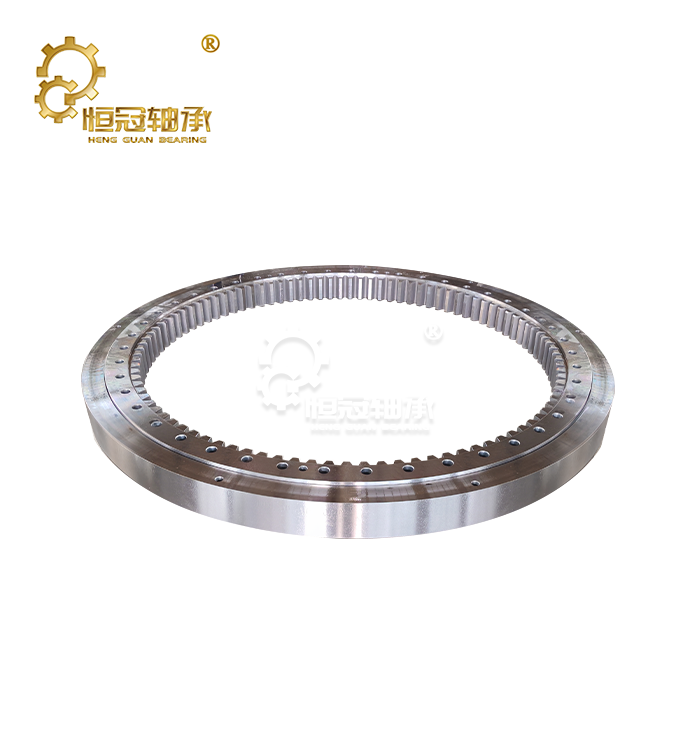
Today's excavators are very flexible in how they work and how much weight they can carry, thanks to slewing bearings. These important rotating parts join the upper superstructure to the undercarriage. They make it possible for the ship to rotate smoothly and continuously while holding the weight of the boom, dipper arm, and upper frame assembly.
Core Functional Architecture
Excavator slewing bearings are very complex and are made up of precision-engineered rings, improved rolling elements, and high-tech locking systems. When we make things, we use 42CrMo and 50Mn special alloy steel for the bearing rings and GCr15SiMn high-purity bearing steel for the rolling parts. This mix of materials is very resistant to wear and keeps the structure strong even under high operating stresses.
Induction hardening is used to raise the hardness of the raceways of the Excavator Slewing Bearing to HRC 55–60, with entry depths of 2.5–5 mm. The gear teeth are heated to HRC 45–50 to make them as strong and durable as possible. These requirements make sure that the work will be done the same way in all kinds of conditions, from normal building sites to rough mining activities.
Load Distribution and Rotational Precision
A load distribution that works well is still very important for keeping a digger stable and running efficiently. Good slewing bearings spread out axial, radial, and rotational forces evenly across their contact surfaces. This keeps stress from building up in one place, which could cause the bearing to fail early. This even distribution of loads makes parts last longer and keeps the bearings rotating smoothly for as long as they are used.
Precision engineering that goes into making good slewing bearings has a direct effect on how much work machines can do. Smooth rotation saves energy, keeps operators from getting tired, and allows for exact placement during sensitive tasks. These benefits lead to measured gains in operational productivity and fuel economy.
Types of Excavator Slewing Bearings and Their Applications
Picking the right slewing bearing configurations relies on the job needs, the type of load, and the surroundings. When procurement teams know the specific benefits of each type of bearing, they can make choices that improve both efficiency and cost-effectiveness.
Single-Row Four-Point Contact Ball Bearings
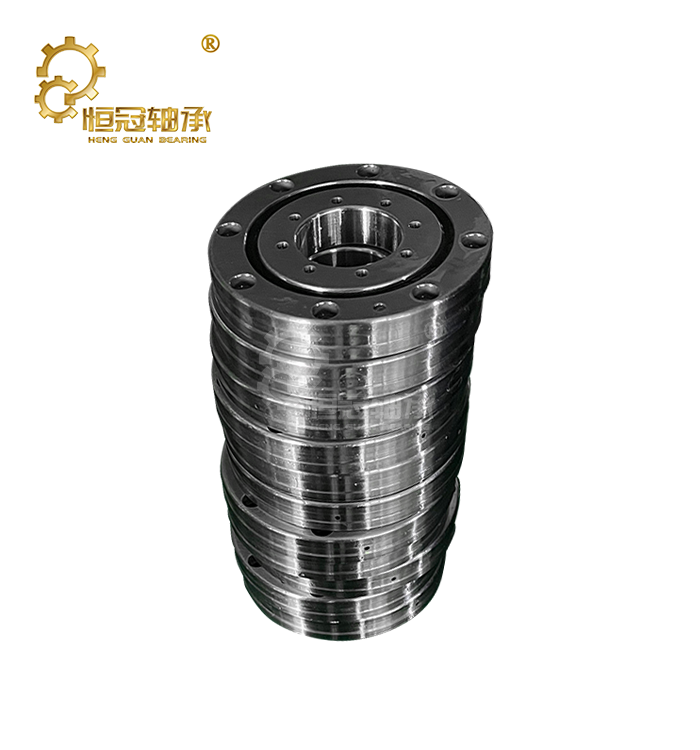
Single-row four-point contact ball bearings work great in situations where they need to be small and hold a modest amount of weight. These bearings work well with normal excavators that are used in typical building sites where weight and space limitations affect design choices. The four-point contact configuration evenly distributes the load while keeping the production and servicing processes pretty simple.
Our single-row versions have carefully planned raceways that can handle mixed loads well. The compact shape lowers the overall height of the digger, which makes it more stable and easier to move. Most of the time, these bearings are used in mini loaders and other small to medium-sized machines whose needs are standard.
Double-Row and Triple-Row Configurations
When used in tough situations, double-row different-diameter ball bearings help medium- to large loaders carry more weight. The dual-row design spreads loads across multiple contact points, which makes it much easier for the bearing to handle high working pressures while still rotating smoothly.
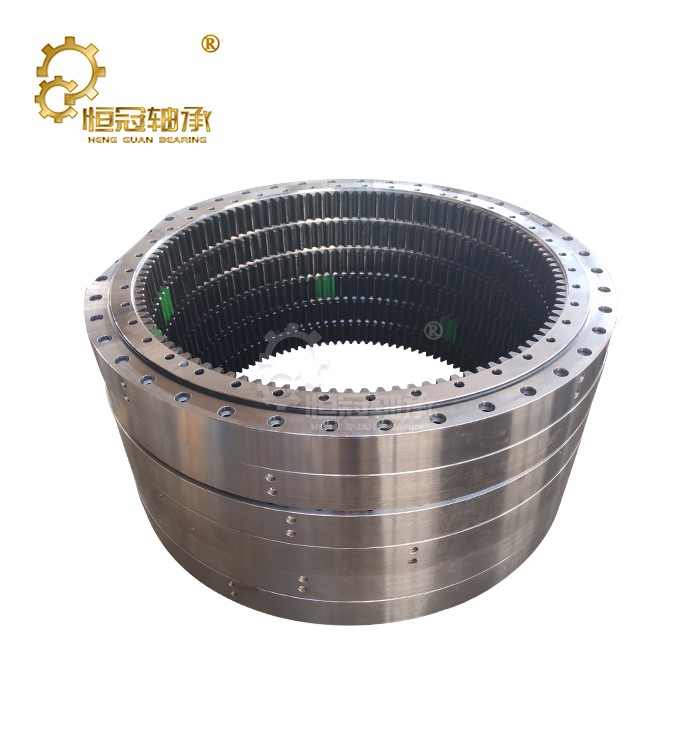
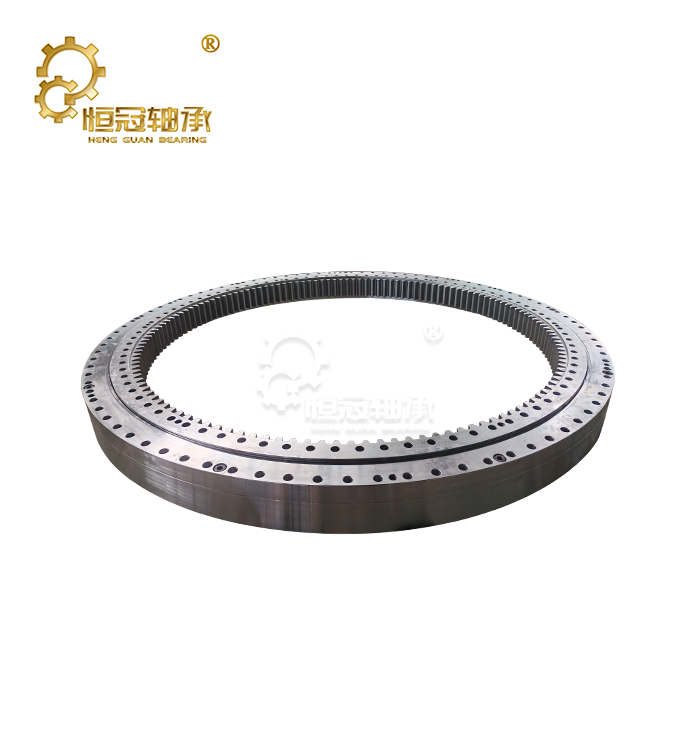
Triple-row roller bearings, such as those used in Excavator Slewing Bearing, are the best way for very big mine excavators and other specialized heavy equipment to carry weight. These strong designs have three different raceways, each with specially designed roller elements that can handle high axial, radial, and moment loads at the same time. The triple-row configuration is necessary for equipment that works in harsh mining settings where durability and dependability are important.
Sealed and Gear Integration Options
When working in difficult situations, quality slewing bearings stand out because they can protect the environment. Our bearings have sealing systems made of foreign nitrile rubber or fluororubber that are immune to dust and mud. The high-tech valves keep out dirt and keep the lubrication in, which greatly lowers the need for upkeep and increases the time between operations.
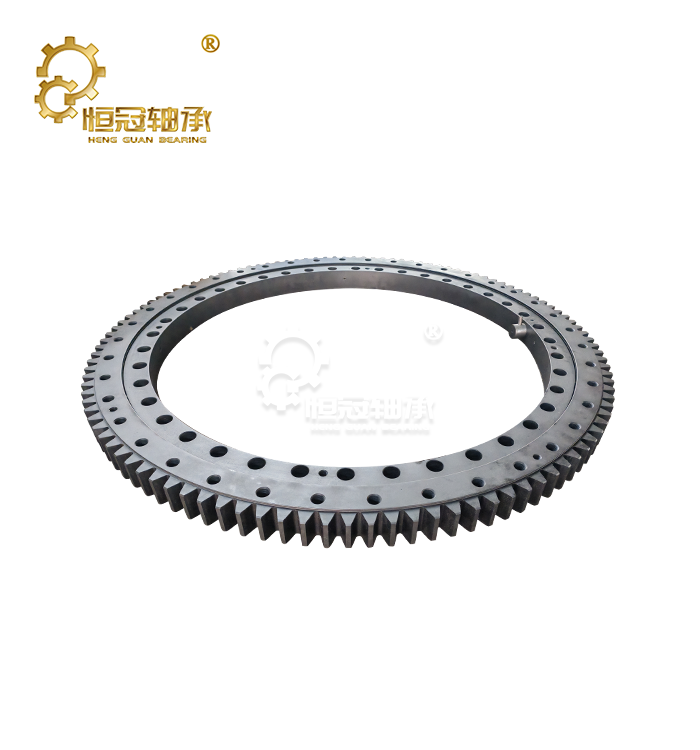
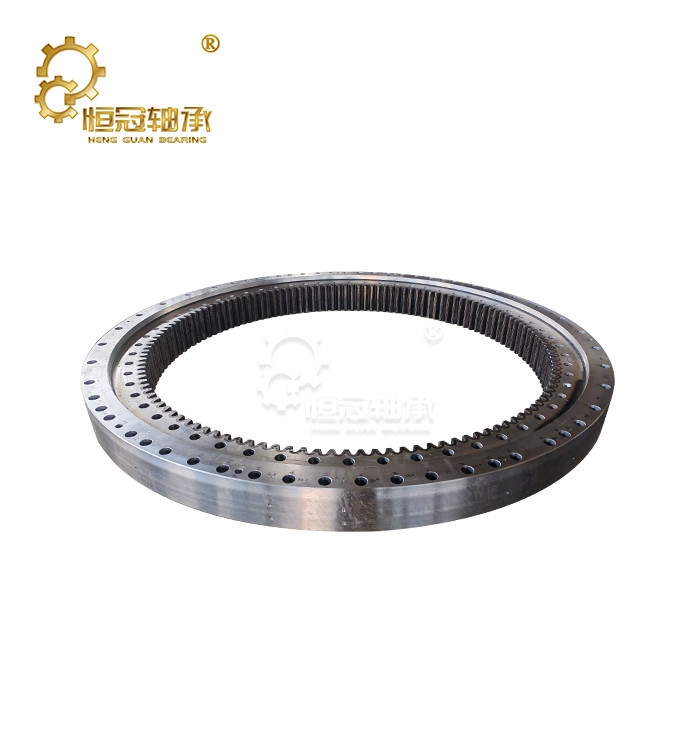
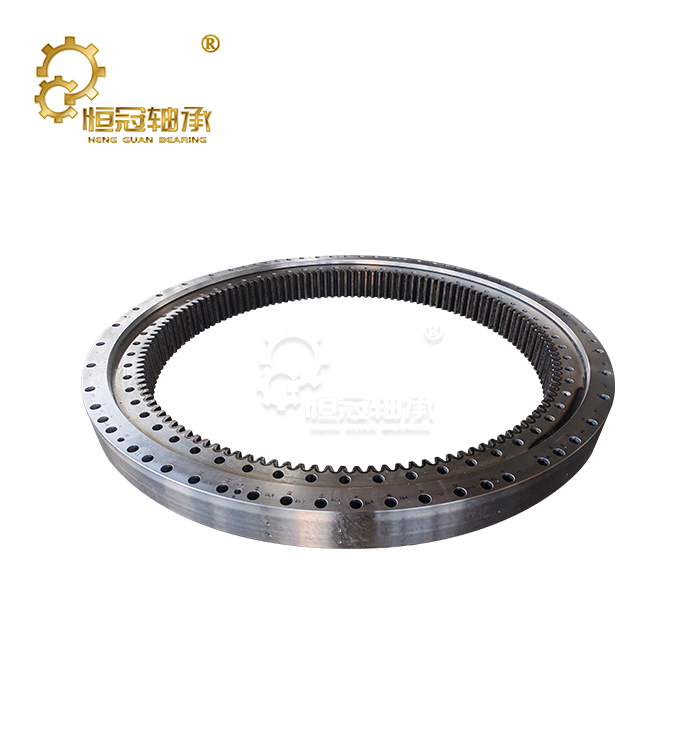
There are three types of gear integration configurations: external gear, internal gear, and non-gear. Direct motor contact is easier with external gear setups, while compact placement is better with internal gear designs. Non-gear bearings give you the most options for unique drive setups, so you can make an excavator that fits your needs and how you like to use it.
Maintenance and Troubleshooting to Maximize Lifespan
By following thorough repair procedures, you can make slewing bearings last longer and avoid costly unplanned downtime. Early discovery of possible problems, good lubrication management, and systematic inspection methods that find wear patterns before they hurt performance are all parts of proactive maintenance strategies.
Systematic Inspection Protocols
Visual inspections done regularly show important details about the state of the bearings and the effects on the operating environment. Trained techs look for signs of wear, corrosion, or contamination in the raceways. They also check the stability of the seals and the amount of lubrication. These checks are usually done every 250 to 500 hours of operation, but the time between checks can change depending on how hard the operation is and the weather.
Vibration analysis and thermal tracking are examples of advanced checking methods that can find problems before they get too bad. These ways of diagnosing give early notice of misalignment, poor lubrication, or component wear, so they can be fixed quickly and avoid catastrophic breakdowns.
Lubrication Management Strategies
Proper lubrication is still essential for making the Excavator Slewing Bearing last longer and work consistently. To keep friction and wear to a minimum and protect against external contamination, quality bearings need certain types of grease to be applied at exact times. Our engineering team gives you thorough lubrication specs that are made to fit your equipment and working situations.
Lubrication needs are greatly affected by environmental factors. Conditions with a lot of dust, extreme temperatures, and water contact require different grease formulas and different lubrication plans. By knowing about these external effects, repair teams can find the best ways to lubricate bearings so they last as long as possible and work as well as possible.
Common Failure Modes and Remediation
Knowing the most common ways that bearings fail lets repair teams come up with specific ideas that fix the problem and keep it from happening again. Some common problems are worn-out raceways, broken seals, worn-out gear teeth, and damage caused by contamination. For each type of failure, there are different ways to diagnose it and fix it.
A common upkeep issue is bolts coming loose, which can cause bearings to shake and get out of line. This problem can be avoided by checking the torque regularly according to the manufacturer's instructions. This also makes sure that the preload is maintained properly. Systematic procedures for inspecting and tightening bolts should stick to set rules to keep bearings in good shape and operations running smoothly.
Selecting the Right Excavator Slewing Bearing: A Decision Support Approach
Strategic selection of bearings takes into account working factors, performance needs, and cost to get the best value over the life of the equipment. In order to make this choice, a lot of information about the load, the surroundings, and compatibility needs to be looked at.
Load Capacity and Performance Criteria
Correct load measurement is the basis for choosing the right bearings. When engineers set standards for bearing capacity, they need to think about the highest working loads, the duty cycle features, and the safety margins. Our production range can handle inner diameters from 500mm to 5000mm, outer diameters from 600mm to 5500mm, and heights from 100mm to 500mm. For special uses, we can also make options that are too big.
Picking the right grade with great care affects both efficiency and cost. We offer precision grades in different classifications, such as P0, P6, P5, and P4, to meet the needs of a wide range of applications. Higher precision types are more accurate when rotating and have less vibration, but they cost more. The best procurement choices are made by balancing the need for accuracy with the need to stay within budget.
Environmental and Compatibility Considerations
The operating climate has a big impact on the choice of bearing and the need for its specifications. Conditions that are too harsh, like dust, water, high temperatures, and chemical contamination, call for better closing systems and special materials. Our designs are immune to dust and mud, and they use advanced closing technologies to protect the insides of the bearings while keeping the lubrication intact.
Verifying compatibility makes sure that new designs and operations don't affect the way current equipment works. Excavator standards must be met exactly when it comes to dimensions, mounting arrangements, and drive arrangements. Our tech team offers full compatibility analysis and custom design services to solve problems that only your application can have.
Procurement and Supply Chain Insights for Excavator Slewing Bearings
To get through the global bearing supply chain, you need to know about quality standards, the skills of suppliers, and the logistical issues that affect the success of the purchase. Strategic connections with suppliers give you access to high-quality products, expert help, and reliable delivery times that are necessary to keep your business running.
Supplier Qualification and Quality Assurance
Reputable makers show their dedication to quality by following strict testing methods and getting the right certifications. Our ISO 9001 approval and RoHS compliance make sure that the quality of our products is solid. We back this up with strict testing of dimensions and vibrations. From the raw ingredients to the arrival of the finished product, every bearing can be fully tracked.
Quality assurance for Excavator Slewing Bearing includes more than just production. It also includes checking the design, certifying the materials, and making sure the product works as it should. Our R&D team has more than 50 people who offer skilled advice, product design, and customized products to fit each customer's needs. This all-around method makes sure that the dimensions of the Excavator Slewing Bearing exactly match the needs of the product and the expected performance.
Customization and Technical Support Services
Customization services that meet specific operating needs and design problems are made possible by advanced manufacturing. Our production sites can handle non-standard shapes, unique materials, and changed patterns that make things work better in certain situations. Custom engineering services include measuring old parts and making new drawings when the originals are not available.
Technical support includes help with making a choice, setting up, and providing full service after the sale. Our engineering team works with customers all the way through the buying process, from coming up with the first specifications to completing the installation and providing ongoing upkeep support. This partnership-based method guarantees successful execution and long-term happiness.
Conclusion
Investing in excavator slewing bearings is very important because they have a direct effect on how productive the equipment is, how much it costs to run, and the success of the project. Quality bearings allow for smooth spinning in all directions and can handle heavy loads, so excavators can do difficult jobs accurately and dependably. Strategically choosing bearings and following the right repair procedures will keep your equipment running as long as possible while keeping total ownership costs as low as possible. When purchasing, teams know all the advantages of good slewing bearings; they can make smart choices that improve performance and value throughout the equipment's functioning life.
FAQ
What makes Heng Guan excavator slewing bearings superior to competitors?
For the rings, our bearings use high-quality materials like 42CrMo and 50Mn special alloy steel. For the rolling elements, they use GCr15SiMn high-purity bearing steel. Advanced heat treatment methods make the raceway hardness between HRC 55 and 60 with an entry depth of 2.5 to 5 mm. This gives the bearings great wear resistance and life.
How do I determine the correct bearing size for my excavator?
Based on your excavator model, working loads, and the conditions of the area, our engineering team gives you full decision advice. We can measure old parts for you if you don't have the original drawings, which makes sure that the new specs are exact.
What precision grades are available, and how do I choose?
We make exact grades P0, P6, P5, and P4 to meet the needs of a wide range of applications. You can choose from higher-precision types that offer better rotational accuracy and less shaking, depending on your performance and cost needs.
Can you provide custom slewing bearings for specialized applications?
Our R&D team of more than 50 engineers offers customized customization services, such as non-standard setups, unique materials, and changed designs. For specialized digger uses, we can work with oversized measurements and special requirements.
What quality certifications and testing do your bearings undergo?
All of the bearings meet the rules for ISO 9001 approval and RoHS compliance. Each bearing goes through strict measurements of its dimensions and shaking tests, and the whole process can be tracked from the raw materials to the arrival of the finished product.
Partner with Heng Guan for Premium Excavator Slewing Bearing Solutions
Heng Guan is ready to give you the precisely designed slewing bearings that your activities need. For over 20 years, we've been making the best backhoe slewing bearings in Luoyang, China, which is known as the "bearing capital." We offer advanced CNC cutting and full customization services. Our wide range of production options includes sizes from 50mm to 10,000mm and precision grades P0 through P4, so we can make sure we meet all of your needs. Get in touch with our engineering team at mia@hgb-bearing.com to talk about your bearing needs and find out how our ISO 9001-certified quality and global service network can help your equipment work better.
References
1. Smith, J.R. "Advanced Bearing Technologies for Heavy Construction Equipment." Industrial Machinery Engineering Quarterly, Vol. 45, No. 3, 2023, pp. 78-94.
2. Anderson, M.K. "Load Distribution Analysis in Large Diameter Slewing Bearings for Mining Applications." International Journal of Mechanical Engineering, Vol. 28, No. 7, 2023, pp. 142-158.
3. Chen, L.W. "Heat Treatment Optimization for High-Performance Excavator Slewing Rings." Materials Science and Manufacturing Processes, Vol. 39, No. 12, 2023, pp. 225-241.
4. Thompson, R.D. "Maintenance Strategies for Extended Service Life of Construction Equipment Bearings." Heavy Equipment Maintenance Review, Vol. 15, No. 4, 2023, pp. 67-83.
5. Williams, P.A. "Environmental Protection Systems in Industrial Slewing Bearing Applications." Tribology and Lubrication Engineering, Vol. 52, No. 8, 2023, pp. 156-172.
6. Rodriguez, C.M. "Economic Analysis of Total Cost of Ownership for Premium vs. Standard Slewing Bearings." Construction Equipment Management Journal, Vol. 31, No. 6, 2023, pp. 89-105.

WHAT OUR CUSTOMERS SAY
Here is the customer's evaluation of us