



Crane Slewing Bearing Buying Guide: What Should You Know?
When a Crane Slewing Bearing breaks in the middle of a lift, the problems don't end with the new part. Work has to stop, project deadlines are missed, and there are serious safety risks for the team on the ground. The problem is that the rotational joint has to meet different needs for each crane. For example, a truck crane needs to be small and light, a tower crane needs to be stable when the wind blows, and a port crane needs to be able to handle salt spray and constant job cycles. That's where Heng Guan Bearing comes in. The company is based in Luoyang, which has a long history of making bearings. They have over 20 years of production experience and a professional team of 50 engineers who work on every crane project. This guide talks about load rates, materials, seals, and how to find a slew bearing crane plant that you can trust before you buy.
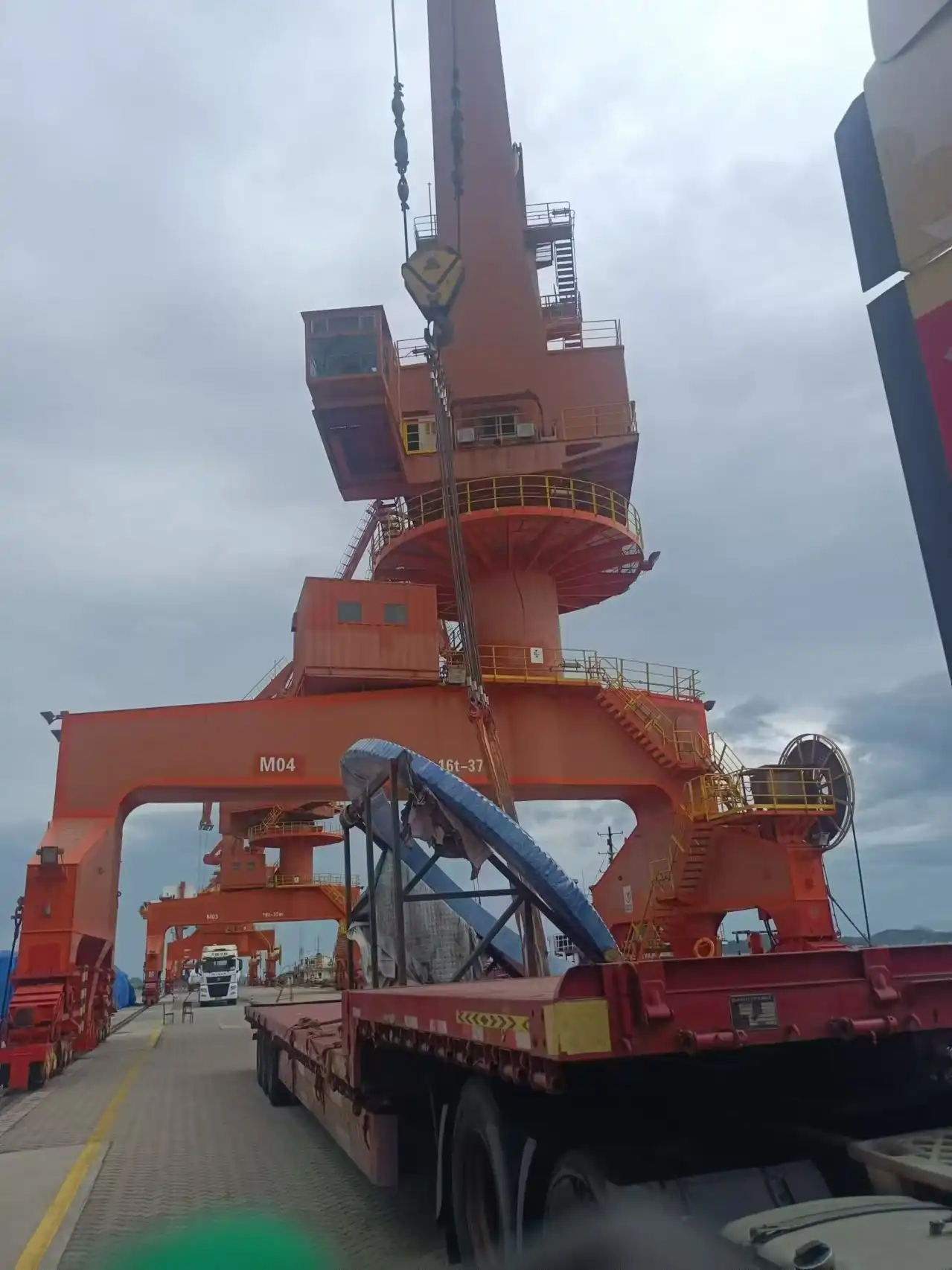
How Do You Choose the Right Crane Slewing Bearing for Your Application?
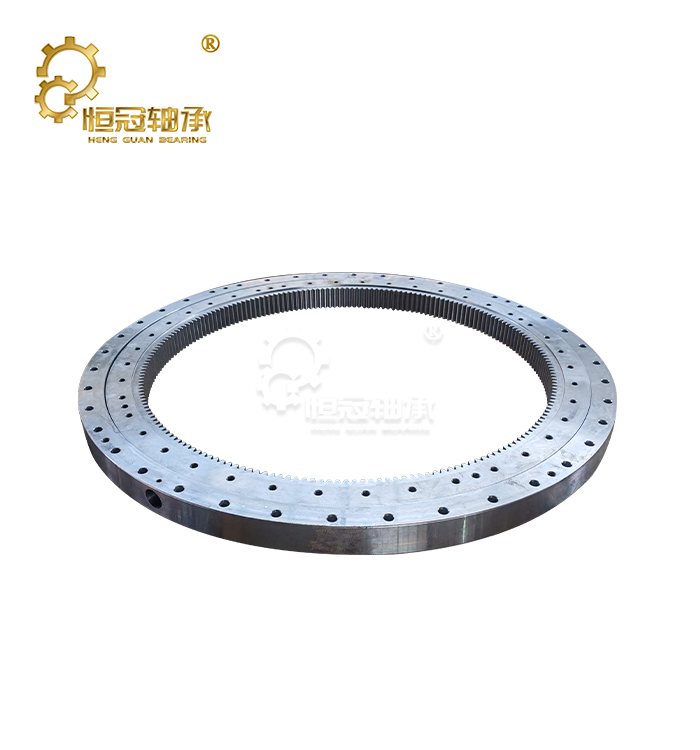
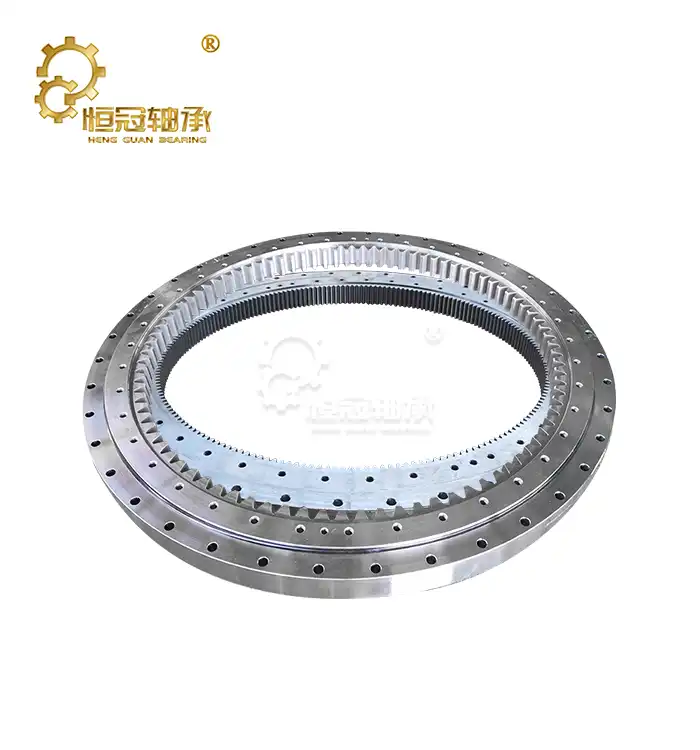
Before you choose a Crane Slewing Bearing, you should know what kind of crane you have and where it will be used. A truck crane working on a dusty building site has different problems to deal with than a port crane dealing with salt spray or a tower crane working at a high level where wind loads it up. The structure choices can be easily broken down by use:
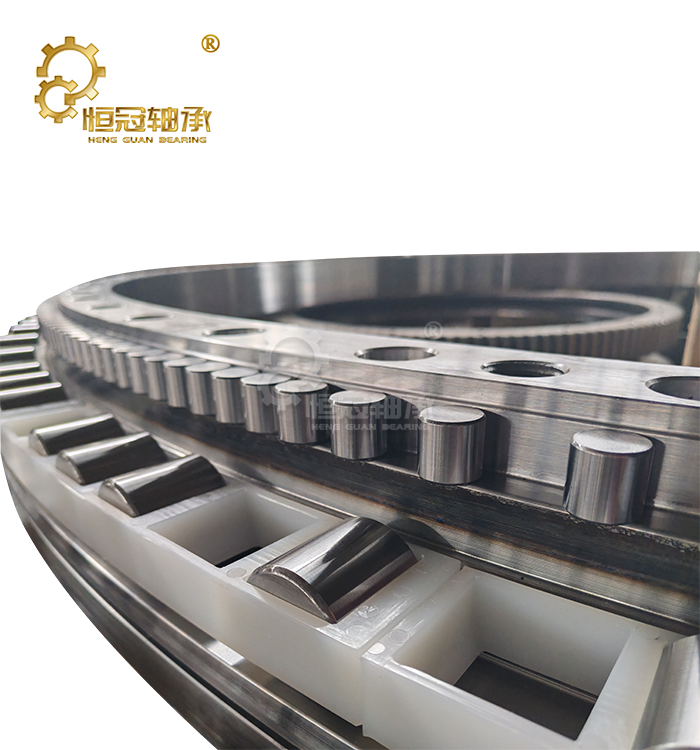
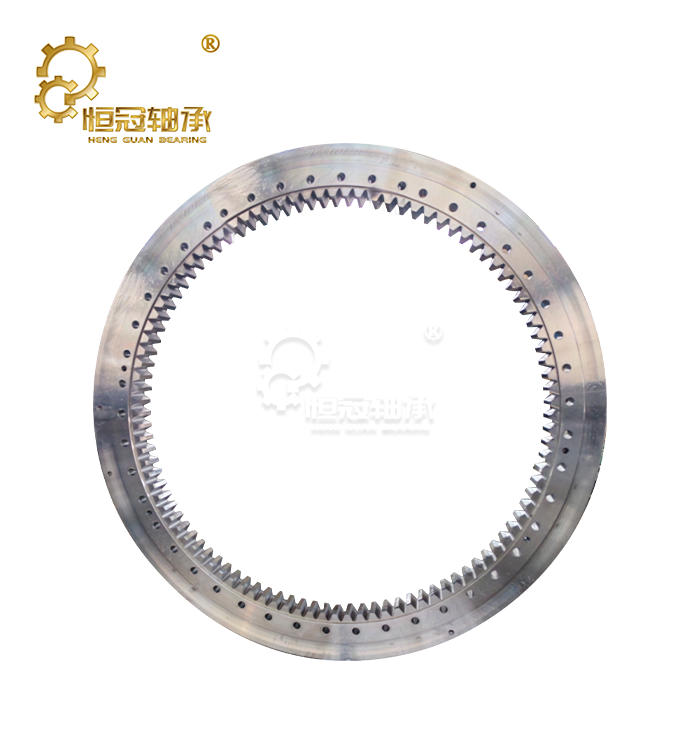
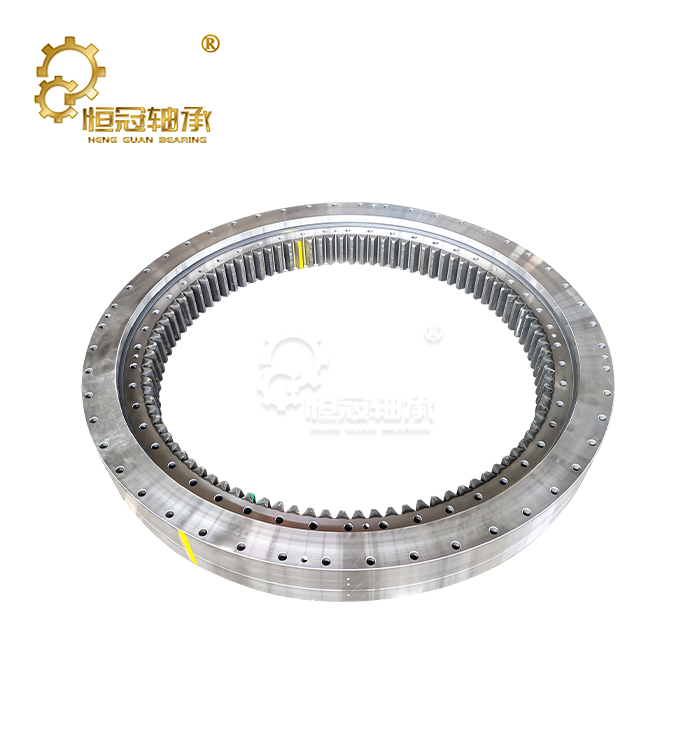
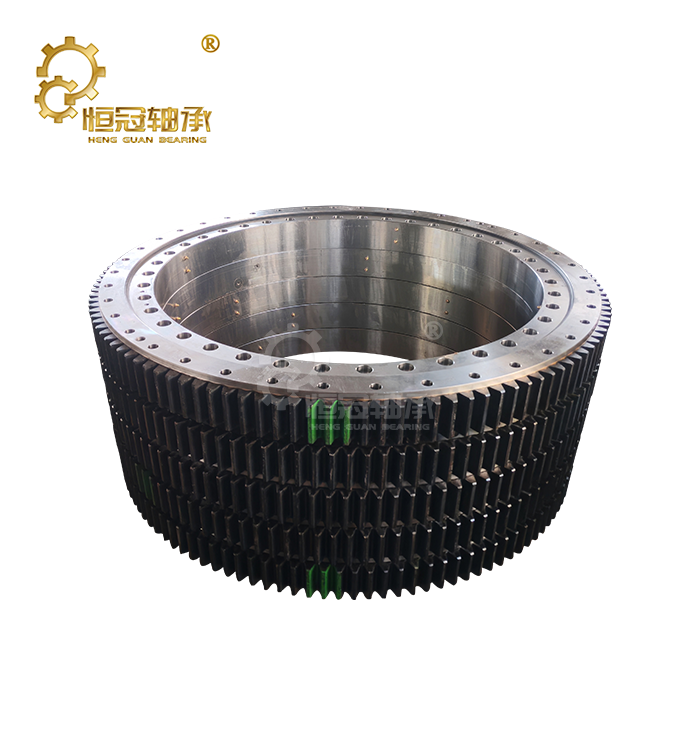
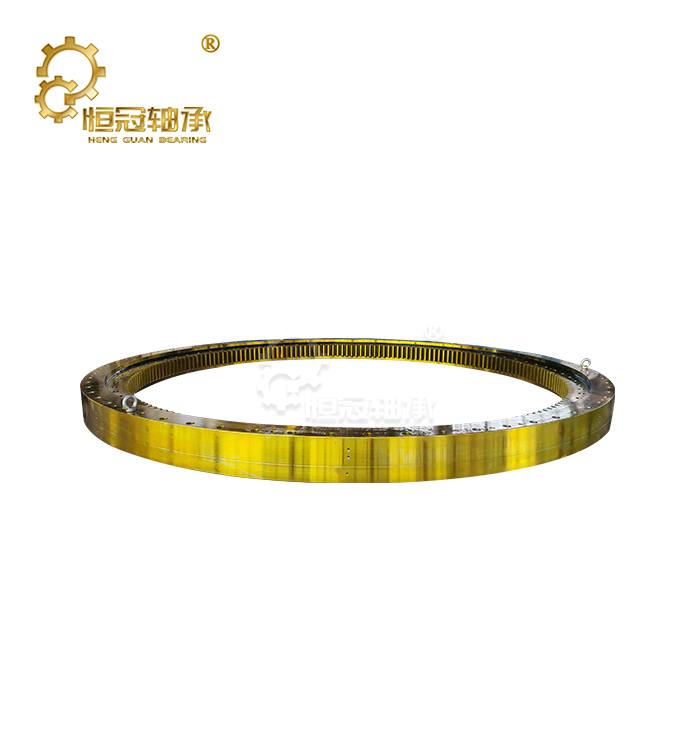
Single-row four-point contact ball bearings spread the load across four contact points. They are small and light, which makes them perfect for truck cranes where every kilogram counts. Adding a second row of precision steel balls to double-row ball setups increases both the horizontal and axial loads and the safety factor. This makes them perfect for tower cranes that need to be stable under changing loads. Three-row roller designs have three rows of circular rollers that split axial, radial, and moment loads into different raceways. This lets the largest port cranes, gantry cranes, and ocean lifting equipment work at their best.
| Structure | Key Characteristic | Typical Crane Application |
|---|---|---|
| Single-row four-point ball | Compact, lightweight, 4-point load distribution | Truck cranes, mobile cranes (weight-sensitive) |
| Double-row ball | Enhanced radial/axial capacity, higher safety factor | Tower cranes (stability under wind sway) |
| Three-row roller | Independent raceways for each load type, with a maximum capacity | Port cranes, gantry cranes, offshore (extreme loads) |
If you are unsure which configuration fits your machine, it helps to consult a specialized slew bearing crane factory that can review your drawings and duty cycle. Heng Guan Bearing's engineers routinely help customers match bearing diameter, gear type, and mounting style to their exact crane model — including reverse engineering from physical samples when original drawings are unavailable.
What Load Capacity and Performance Factors Matter Most When Buying a Crane Slewing Bearing?
Load ability is the first thing that comes to mind when looking at a Crane Slewing Bearing, but it should never be the only thing that you think about. Cranes rarely only feel one type of force at a time, so the axial load, radial load, and tilting moment all need to be taken into account. The track is put under extra stress by wind loads, shock from rapid moves, and shaking from hydraulic systems. It's also important to know the accuracy grade. A P0 grade is good for most general uses, while a P6 or higher grade lowers vibration and improves positioning accuracy for delicate lifting tasks.
Heng Guan Bearing makes crane slewing bearings with a wide range of specifications and offers full customisation:
| Parameter | Specification |
|---|---|
| Inner diameter | 50 mm – 8,000 mm |
| Outer diameter | 80 mm – 10,000 mm |
| Height | 20 mm – 500 mm |
| Precision grade | P0, P6, P5, P4 |
| Gear options | Internal, external, or gearless |
| Operating temperature | −30°C to +80°C |
| Rolling element material | GCr15SiMn high-purity bearing steel |
| Cage material | Brass, steel, or engineering plastic |
| Surface treatment | Zinc plating, phosphating, or special coatings |
| Standards compliance | ISO 9001, RoHS |
A trustworthy slew bearing crane factory will also share rotational speed limits, dynamic versus static load ratings, and test data before you commit. The following crane model matching examples show how Heng Guan Bearing maps real crane models to specific bearing dimensions and structures:
| Crane Model | OD (mm) | ID (mm) | Height (mm) | Crane Type | Structure |
|---|---|---|---|---|---|
| KOTO NK450B-V | 1552 | 1201 | 120 | Truck crane | Internal gear, 4-point ball |
| POTAIN MDT 178 | 1476 | 1084 | 110 | Tower crane | External gear, 4-point ball |
| Liebherr LTM1250 | 2310 | 1912 | 122 | Truck crane | External gear, 3-row roller |
| Terex-Demag AC200 | 2044 | 1641 | 125 | Truck crane | External gear, 3-row roller |
| EVERDIGM KH310 | 2027 | 1615 | 150 | Tower crane | External gear, cross roller |
| Liebherr 70k | 1892 | 1605 | 95 | Tower crane | External gear, 4-point ball |
Crane Slewing Bearing Material, Sealing, and Lubrication Selection Guide
The choice of material has a direct effect on how long a Crane Slewing Bearing lasts. To make sure that all of the rings are the same hardness and wear pattern, they are forged from 42CrMo or 50Mn alloy steel, and then CNC quenched to harden them along the raceway. The rolling elements are made of GCr15SiMn high-purity bearing steel. The cage material is chosen based on the application's load and speed profile and can be brass, steel, or industrial plastic.
Sealing is just as important, especially in outdoor or sea settings. Heng Guan Bearing has imported NBR (nitrile rubber) seals as normal and fluoroelastomer seals for tough environments. Both types of seals are made to keep oil in and stop sharp contaminants. Cranes that work in harsh environments are better protected against corrosion by surface treatments like zinc plating, phosphating, and special coating systems.
Lubrication planning should be discussed with your supplier before purchase. Each bearing ships with a tailored lubrication schedule, and grease is applied through dedicated lubrication ports — rotate the bearing several times after greasing to distribute lubricant evenly across the raceway. For specific lubrication recommendations based on your crane's duty cycle, reach out to mia@hgb-bearing.com, and the engineering team will provide a schedule matched to your operating conditions.
| Factor | Options | Application Guidance |
|---|---|---|
| Ring material | 42CrMo / 50Mn alloy steel | 42CrMo for highest strength; 50Mn for cost-effective toughness |
| Raceway treatment | CNC induction hardening | Uniform hardness, consistent wear, extended service life |
| Rolling element | GCr15SiMn bearing steel | High purity for fatigue resistance under cyclic loading |
| Seal material | NBR (standard) / fluoroelastomer (harsh) | Fluoroelastomer for salt spray, chemical, or high-temp exposure |
| Surface treatment | Zinc plating/phosphating / special coating | Special coatings for corrosive or marine environments |
| Cage material | Brass/steel/engineering plastic | Selected by load, speed, and noise requirements |
How Can You Evaluate Crane Slewing Bearing Quality, Service Life, and Manufacturer Reliability?
Quality assurance is where buyers should slow down and ask more questions. A reputable Crane Slewing Bearing manufacturer should be transparent about heat treatment processes, hardness testing, and dimensional inspection procedures. Heng Guan Bearing operates CNC vertical lathes, CNC quenching equipment, gear shapers, and precision grinding machines in its ISO 9001 certified facility, with vertical integration that ensures strict tolerance control from raw material to finished product.
Experience matters — a slew bearing crane factory with 20+ years of production history and exports to 50+ countries has likely encountered and solved the design challenges your crane presents. Heng Guan Bearing participates regularly in international exhibitions, including Bauma China, Shanghai Maritime Exhibition, and CTT Russia, demonstrating ongoing engagement with global industry standards.
Proper installation and maintenance are equally important to long-term reliability. Before installation, check the mounting surface flatness and cleanliness, remove burrs, and confirm bolt hole alignment. Apply anti-corrosion coating to contact surfaces, then tighten bolts in a star (diagonal cross) pattern using a calibrated torque wrench. After lubrication, rotate the bearing several times to distribute grease evenly. The following maintenance schedule helps maximize service life:
| Interval | Action |
|---|---|
| Monthly | Check for abnormal noise or vibration during operation |
| Quarterly | Inspect seals for damage or wear; replenish lubricant |
| After the first 100 hours | Retorque mounting bolts to the specified value |
| Annually | Measure axial and radial clearance; full bearing assessment |
| Immediate | Investigate any abnormal noise, vibration, or temperature rise |
Standard products ship within 15–20 days; custom orders take 30–45 days, depending on specifications. Request sample certificates, export references, or arrange a factory visit to verify capabilities before placing a significant order.
Conclusion
Choosing the right Crane Slewing Bearing means balancing load capacity, material, sealing, and supplier reliability. With 20 years of manufacturing expertise, a 50-engineer technical team, and proven export experience across 50+ countries, Heng Guan Bearing combines engineering depth with responsive support to keep your crane running smoothly.
FAQ
Q: What is a crane slewing bearing used for?
A: It allows the crane's upper structure to rotate 360° smoothly while supporting axial, radial, and moment loads simultaneously — effectively functioning as the "smart joint" of the lifting equipment.
Q: Which slewing bearing type suits heavy-duty cranes?
A: Three-row roller designs separate axial, radial, and moment loads into independent raceways, offering the highest load capacity for port cranes, gantry cranes, and offshore lifting equipment.
Q: How often should a crane slewing bearing be lubricated?
A: Lubrication intervals depend on duty cycle and environment. Each bearing ships with a tailored schedule, and heavy-duty applications may require more frequent regreasing through dedicated lubrication ports.
Q: What materials are best for slewing bearing rings?
A: 42CrMo and 50Mn alloy steels are the industry standard, induction-hardened via CNC quenching for uniform raceway hardness. Rolling elements typically use GCr15SiMn high-purity bearing steel.
Q: How do I find a reliable slew bearing crane factory?
A: Look for ISO 9001 certification, documented testing procedures, 20+ years of experience, export references across 50+ countries, and responsive technical support — including reverse engineering capability when original drawings are unavailable.
Build a Stronger, Safer Lifting Solution
Stop risking downtime on undersized or generic bearings. Heng Guan Bearing delivers custom-engineered Crane Slewing Bearing solutions in 42CrMo / 50Mn steel, with three structure types, internal/external/gearless options, and P0–P4 precision — covering diameters from 50 mm to 10,000 mm. Standard orders ship in 15–20 days; custom designs in 30–45 days. Send your crane model, drawings, or load specifications to mia@hgb-bearing.com today and get a technical response within 24 hours.
References
1. American Bearing Manufacturers Association, Rolling Bearing Standards and Terminology.
2. American Society of Mechanical Engineers, Mobile and Locomotive Cranes Safety Standard (ASME B30.5).
3. American Gear Manufacturers Association, Design and Selection Guidelines for Slewing Ring Bearings.
4. International Organization for Standardization, ISO 76: Rolling Bearings – Static Load Ratings.
5. Society of Automotive Engineers, Handbook of Heavy Equipment Component Design.
6. National Institute of Standards and Technology, Guidelines on Steel Heat Treatment for Load-Bearing Components.

WHAT OUR CUSTOMERS SAY
Here is the customer's evaluation of us