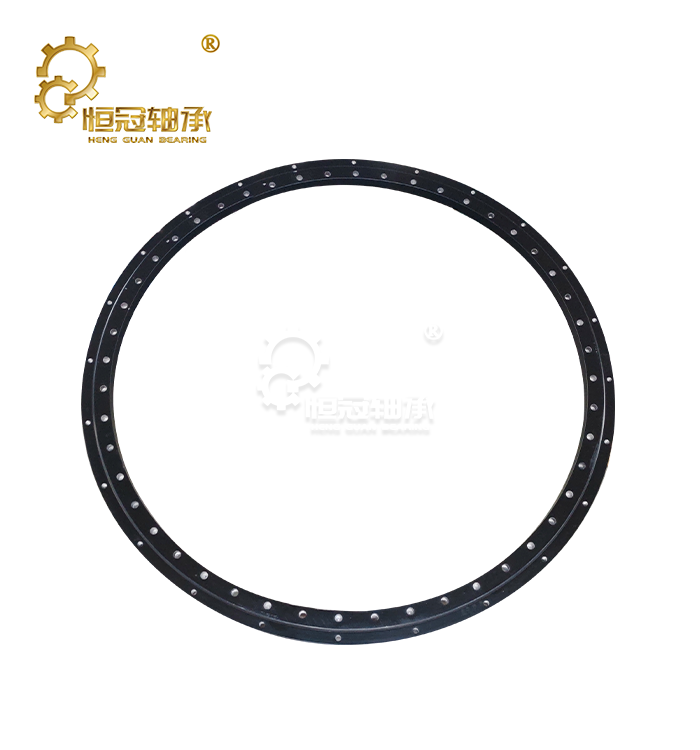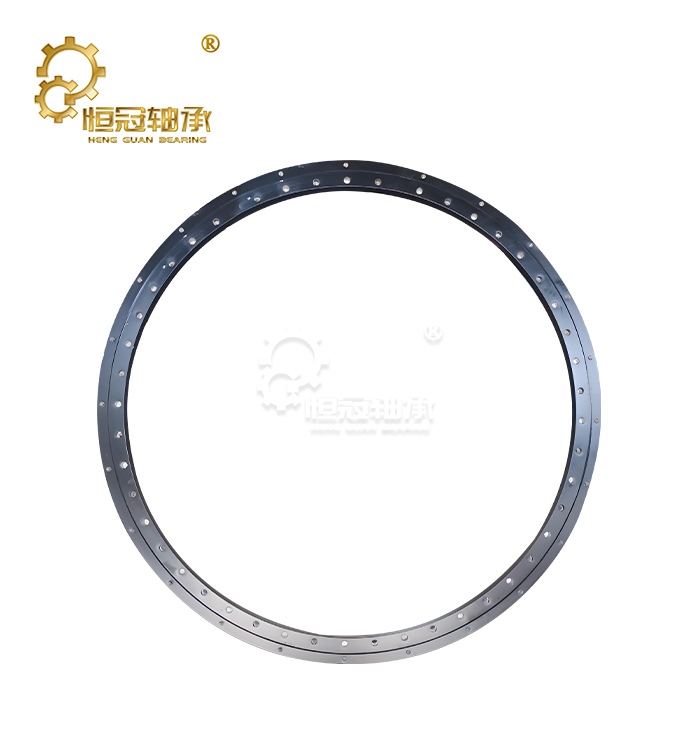




Advanced Ball Bearing Slewing Rings for Rotating Systems
For equipment that must rotate while carrying substantial axial, radial, or overturning loads, the bearing arrangement has a direct effect on positioning accuracy, operating stability, and maintenance requirements. Ball bearing slewing rings are designed for this type of application by integrating the raceways, rolling elements, seals, and mounting structure into a compact rotating assembly. A slewing ring provides you with both load support and rotational movement in one unit, rather than a separate Shaft and support structure as is the case with standard bearing arrangements. The design hence is highly suited for construction equipment, industrial automation systems, material-handling equipment, wind-energy equipment and other spinning platforms. However, diameter or load rating alone should not be the basis for selection of a slewing ring. The correct arrangement depends on the combination of axial load, radial load, overturning moment, speed of rotation, operational environment, mounting accuracy, lubrication and expected duty cycle. Awareness of these features allows engineers and purchasing teams to avoid choosing a bearing that appears good on paper but performs badly when installed.
Understanding the Engineering Behind Ball Bearing Slewing Rings
Raceways, Rolling Elements, and Load-Carrying Structure
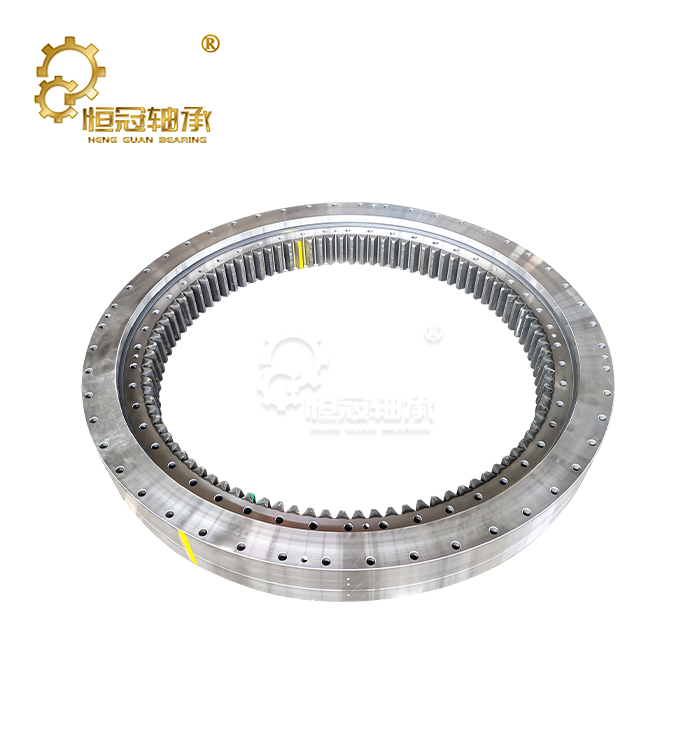
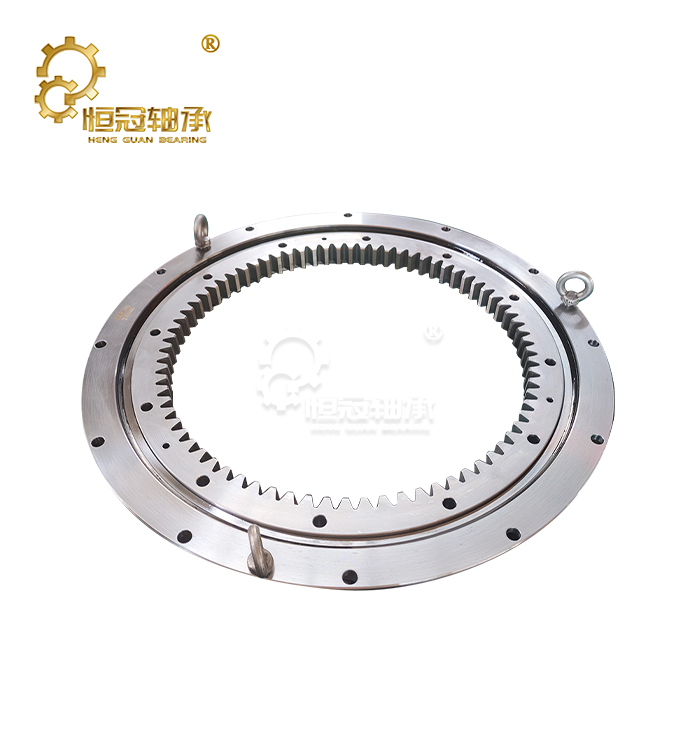
A ball bearing slewing ring typically comprises an inner ring, outer ring, rolling elements, cage or separator parts, seals, lubrication provisions, and mounting holes. The rings serve as the major structural load channel to transmit the loads to the machine frame, while the balls transfer the loads between the raceways during rotation of the assembly.
The geometry of the raceway is extremely essential. It governs the contact development between balls and raceways and hence affects load distribution, friction, stiffness, and service behavior. If the application involves both axial and radial loads, the contact arrangement should be selected on the basis of the actual load direction, not on the basis of the largest bearing available.
Material selection needs to be application-specific also. Bearing rings are usually made of bearing or alloy steels that can develop the combination of strength, machinability, and surface hardness necessary following heat treatment. The rolling pieces have to be hard enough and dimensionally consistent, since tiny changes can alter the load distribution and running behavior.
The cage or divider keeps the adjacent balls spaced properly. Its material and geometry should match with the rotation speed, lubrication method, temperature, and working environment. Seals perform another equally crucial function; they help maintain lubricant and inhibit ingress of dust, moisture, and other impurities.
Configuration Selection for Different Load Conditions
Industrial machines do not have the same loading patterns; hence, slewing rings come in varied internal layouts. Single-row ball arrangements might be useful for applications requiring small structure and moderate combined loading. Double-row arrangements can be used for machines requiring increased capacity or stability to provide more load-carrying capability.
Four-point contact designs are also used where a single bearing arrangement must accommodate combined axial, radial, and moment loading. Their applicability is decided by the actual load spectrum, the raceway shape, and the stiffness needed.
What matters is that the application should be followed by configuration and not the other way around. A bearing with a higher nominal capacity is not inherently the right one if its internal geometry, mounting arrangement, or operating speed does not fit the machine.
Therefore, engineers should consider the whole load case, including static loads, dynamic loads, acceleration, braking, shock loading, and overturning moments. If the loads are subject to large variations during operation, the selection process should also take into account the most demanding operating situation.
Why Integrated Slewing Bearings Can Simplify Machine Design?
One of the key advantages of a slewing ring is the ability to integrate rotational support and structural load transfer into a reasonably small unit. This can simplify the mechanical arrangement compared to systems with separate radial bearings, thrust bearings, shafts, and supporting components.
The resulting machine architecture can reduce the number of interfaces to be maintained and aligned. It may also give additional latitude to create spinning platforms, booms, arms, tables, and other structures.
But a compact bearing doesn’t mean precise installation is unnecessary. The supporting structure has to be rigid enough, the mounting surface has to be of the requisite flatness and geometry, and the mounting bolts have to be picked and fastened as per the manufacturer’s specifications.
Thus, the bearing performance is dictated by the bearing-machine system as a whole, not only the bearing.
How to Match a Slewing Ring to the Application?
Start With Axial Load, Radial Load, and Overturning Moment
Begin with axial load, radial load, and overturning moment.
The first step of choosing should be realistic loading analysis. There are three values of great importance:
axial load in the direction of the axis of rotation, radial load perpendicular to the axis, and overturning moment from an eccentric load.
In conjunction, these loads should be considered as a slewing ring, which is generally subjected to a mix of forces and not a single isolated force.
Engineers should also differentiate between static and dynamic circumstances. A stationary machine with a suspended load can be a very different load scenario from a rotating machine that accelerates, decelerates, and changes direction time after time.
Wherever possible, the calculation should consider the position of the load relative to the bearing center, the operating speed, duty cycle, acceleration, shock factors, and the estimated number of operating cycles. This information will be passed on to the manufacturer for the supplier’s engineering team to carry out a more precise evaluation of the bearing set-up.
Consider Speed, Accuracy, and Stiffness Together
Another essential factor in the choice is the rotation speed. The bearing designed for main heavy structural loading may not be suitable for application demanding continuous high-speed rotation.
Precision needs should be treated separately from fundamental load capacity requirements at the same time. Automated positioning equipment, robotic systems, rotary tables, and inspection gear require tight control of runout, clearance, or rotational accuracy, although massive construction equipment may not.
When the rotating structure has to retain its position under varying loads, stiffness is also critical. A bearing can have enough nominal capacity but still not be acceptable if the distortion is so big that the positioning precision of the machine is affected.
The capacity, speed, precision, stiffness, and operating cycle should be treated as an integrated technical challenge during the selection process.
Check the Operating Environment Before Finalizing Materials
The service needs of a bearing can be greatly influenced by the environment in which it operates.
Seals and lubrication for outdoor machinery can be affected by moisture, dust, muck, and temperature variations. Mining and bulk-material equipment can be subject to abrasive contamination, and industrial processing equipment can subject bearings to chemicals or high temperatures.
So, the following conditions should be agreed upon with the supplier before finalizing the design:
operation and ambient temperature,
exposure to water or humidity,
dust and abrasive particles,
corrosive chemicals,
cleaning techniques,
rotation frequency,
shock or vibration,
lubrication method and needed maintenance interval.
These details can influence the choice of the seal, the kind of grease, the treatment of materials, and the general configuration of ball bearing slewing rings.
Manufacturing Quality Matters as Much as Bearing Design
Heat Treatment and Raceway Quality
The performance of a slewing ring depends to a large extent on the quality of its raceways and rolling surfaces. The rings are made to the needed material qualities by heat treatment, and the dimensional features are set by machining and finishing operations.
The key consideration for purchasers is not whether a supplier claims they utilise high-quality steel. It is if the supplier has a controlled process for checking material qualities and finished dimensions.
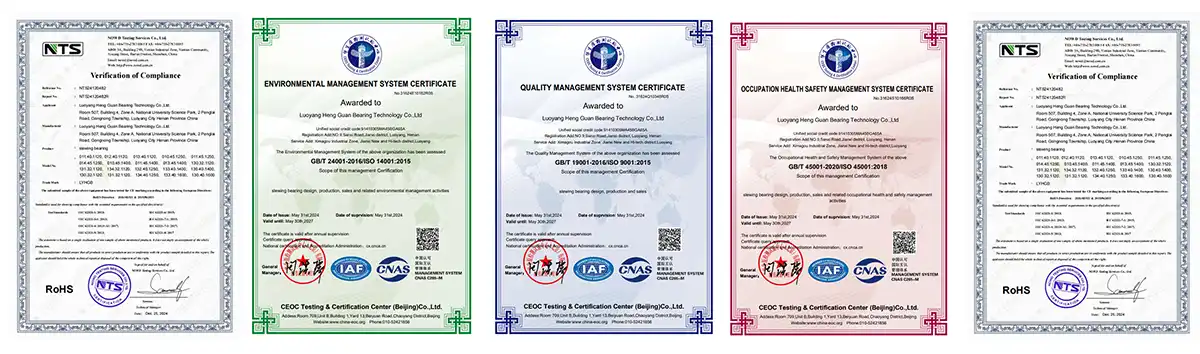
Useful quality paperwork will vary by product and application but may include material certificates, hardness records, dimensional inspection reports and other factory inspection data.
Raceway inspection is particularly critical since surface flaws, wrong geometry or inconsistent hardness can impair the rolling contact behaviour and therefore the bearing life.
Dimensional Accuracy and Mounting Interfaces
The slewing ring must be correctly fitted to the machine. Important dimensions can be the inner and outer diameters, bearing height, mounting-hole pattern, hole diameter, pitch-circle diameter, gear dimensions (if appropriate) and running clearance.
Special attention must be paid to the mounting interfaces since mistakes in the supporting structure can place additional loads on the bearing. Even a well-built bearing can be subjected to anomalous stress if the mounting surface is deformed or the installation process is wrong.
For custom projects, it is recommended that purchasers provide the machine drawing or mounting interface details wherever available. This enables the maker to check the dimensional compliance before manufacturing instead of encountering difficulties during assembly.
Sealing and Lubrication Should Be Specified Early
Seals are commonly considered a secondary component, yet they have a crucial role in protecting the raceways and preserving the lubricant.
The type of sealing arrangement is determined by the degree of exposure to water, dust, temperature, chemicals and anticipated movement. Lubrication considerations similarly rely on load, speed, temperature and bearing arrangement.
The procurement team should not only be looking for the cheapest or most available grease but should also be following the advice of the bearing manufacturer on lubrication. Even a perfectly built bearing can have problems when incompatible greases are used or the lubrication is not appropriate.
Choosing Between Ball and Roller Slewing Technologies
When Are Ball-Based Designs Appropriate?
Ball-based slewing rings are desirable for applications that need smooth rotation, compact design, and the capacity to handle combined loads. They are often used in rotating platforms, automation equipment, positioning systems, and other gear that has to incorporate rotational behaviour with structural support.
They still do the trick depending on the particular load and speed needs. Don't go for a ball-based design only because it spins.
When Are Roller-Based Designs More Suitable?
When the application has an increased need for load capacity, rigidity or resistance to particular heavy-duty loading circumstances, roller slewing bearings may be the better choice.
Thus, the decision between balls and rollers should be made according to the actual working envelope. Key topics of comparison are load magnitude, moment loading, speed, stiffness, available space, mounting conditions and cost.
It is normally more beneficial to ask a supplier to assess two or more applicable ball bearing slewing rings configurations against the same operational data for OEM projects than to make a decision based on a catalogue description alone.
How to Evaluate a Slewing Ring Manufacturer?
Review Manufacturing Capability and Quality Control
A reliable supplier should be able to explain how its products are manufactured and inspected. Buyers should look beyond general claims such as “advanced technology” and ask practical questions.
For example:
What materials are used for the rings and rolling elements?
How are raceways machined and inspected?
What heat-treatment process is used?
How are mounting dimensions verified?
What inspection equipment is available?
Can the supplier provide material and inspection documentation?
How are custom drawings reviewed before production?
What quality controls are performed before shipment?
Clear answers to these questions provide more useful evidence of manufacturing capability than generic marketing statements.
Confirm Engineering Support for Custom Applications
Standard catalog products may be sufficient for straightforward applications, but many industrial machines require customized dimensions, mounting holes, gear arrangements, clearances, seals, or lubrication specifications.
In these situations, engineering support becomes part of the product value. A capable manufacturer should be able to review application parameters and identify potential issues before production.
For OEM buyers, this can reduce the risk of ordering a dimensionally compatible component that does not have the required load capacity or operating characteristics.
Request Documentation Before Placing the Order
Technical documentation should be part of the qualification process rather than an afterthought.
Depending on the project, buyers may request:
product drawings;
technical specifications;
material certificates;
dimensional inspection reports;
hardness or heat-treatment records;
lubrication instructions;
installation recommendations;
quality certificates;
test reports where applicable; and
warranty information.
The exact documentation package should match the importance of the application and the buyer's internal quality requirements.
Maintenance Practices That Protect Bearing Performance
Inspect Mounting, Seals, and Running Condition
Regular inspection can identify problems before they develop into major failures. Operators should watch for unusual noise, vibration, temperature changes, abnormal movement, lubricant leakage, seal damage, and changes in rotational resistance.
Mounting bolts should also be inspected according to the equipment manufacturer's maintenance procedure. Loose or improperly tightened fasteners can change the load distribution and create additional stress within the bearing.
For critical equipment, vibration and temperature monitoring can provide useful trend information. The purpose is not to rely on a single measurement but to identify meaningful changes from the machine's normal operating condition.
Follow a Controlled Lubrication Schedule
Lubrication should follow the manufacturer's recommended procedure and take the operating environment into account. Heavy contamination, frequent movement, high loads, and demanding duty cycles may require more attention than clean, lightly loaded applications.
Before adding grease, the surrounding area should be kept clean to reduce the chance of introducing contaminants into the lubrication system.
If the bearing uses a specific grease type or lubrication method, substitutions should not be made without checking compatibility. Correct lubrication is one of the simplest ways to protect rolling contacts, but incorrect lubrication can have the opposite effect.
Replace Damaged Seals and Address Problems Early
A damaged seal should not be ignored simply because the bearing continues to rotate. Once contaminants reach the raceway, wear can accelerate, and the resulting damage may be more expensive to repair.
Similarly, unusual noise or increased backlash should be investigated rather than treated as normal aging. The underlying cause could involve lubrication, mounting, contamination, excessive loading, raceway damage, or another machine-level issue.
Early diagnosis allows maintenance teams to distinguish between a bearing problem and a problem caused by the surrounding structure or operating conditions.
Conclusion
Ball bearing slewing rings provide an integrated solution for applications that require controlled rotation while carrying combined loads. Their performance depends on more than the basic bearing size. Raceway geometry, rolling-element configuration, materials, heat treatment, seals, lubrication, mounting accuracy, and operating conditions all influence how the bearing performs in service.
For engineers and procurement teams, the most reliable approach is to begin with the actual load and operating requirements, then match those requirements to an appropriate bearing configuration. Supplier evaluation should include manufacturing capability, inspection procedures, technical documentation, customization support, and after-sales service rather than focusing only on unit price.
Proper installation and maintenance are equally important. Correct mounting, suitable lubrication, seal protection, and routine condition checks can help prevent avoidable failures and maintain predictable operating performance.
As rotating machinery becomes more compact, automated, and application-specific, manufacturers that can combine sound bearing design with controlled production, engineering support, and documented quality processes will be better positioned to support demanding OEM projects. Before ordering, buyers should provide complete application and mounting information to the manufacturer so that the selected slewing ring can be evaluated against the real operating conditions rather than a generic specification.
|
|

FAQ
1. What applications are best suited for ball bearing slewing rings?
Ball Bearing Slewing Rings are great for situations where you need both smooth movement and precise placement. Their low friction and precise positioning make them very useful for construction equipment, wind turbines, medical devices, automation systems, and precision machinery. When spinning speed and positioning accuracy are more important than highest load capacity, these bearings work especially well.
2. How do ball bearing and roller bearing slewing rings differ in performance?
Roller bearings are sometimes better at rotating accurately than ball bearings, but ball bearings usually have less friction. For high-speed tasks and precise placing, ball bearings work best. Roller bearings, on the other hand, can handle more weight for heavy-duty, slow-rotation tasks. The decision is based on the application's top goals in terms of speed, accuracy, load capacity, and the surroundings.
3. Can manufacturers provide customized slewing ring solutions?
Yes, trustworthy makers do offer a lot of customization options to meet specific application needs. Custom solutions include sizes that aren't standard, special materials, custom mounting arrangements, and performance improvement that is tailored to the application. Customization services often need a more in-depth look at the application and may have longer lead times than normal catalog goods.
Partner with Heng Guan for Your Ball Bearing Slewing Ring Requirements
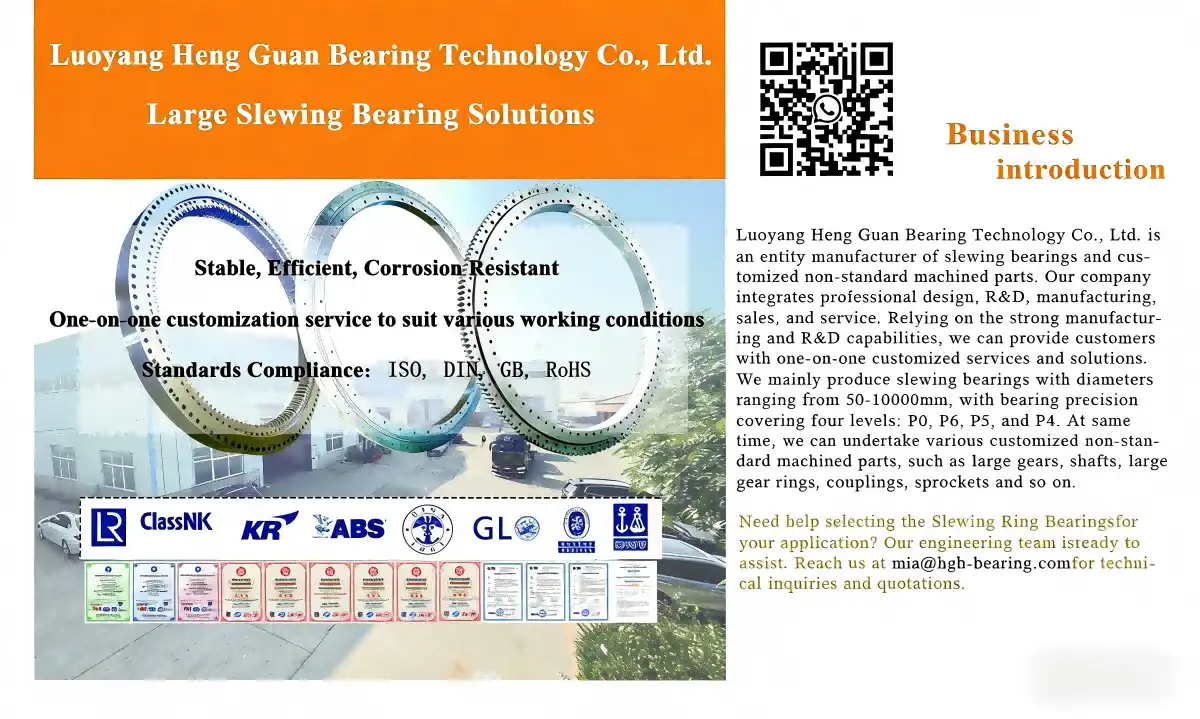
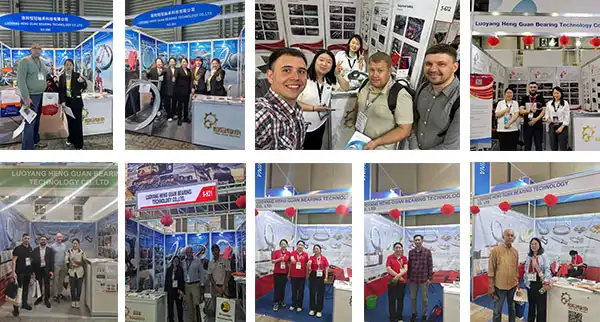
Luoyang Heng Guan Bearing Technology Co., Ltd. is a reliable company that makes ball bearing slewing rings and provides well-thought-out options for tough industrial uses. Our wide range of making options, from 20 mm to 10 000 mm in diameter, along with our accuracy levels ranging from P0 to P4, ensures that we can meet all of your needs. China's bearing manufacturing hub has state-of-the-art production facilities that give it a cheap edge while still meeting international quality standards. Email our expert team at mia@hgb-bearing.com to talk about the details of your project and find out how our custom method can help your rotating system applications work better and save you money.
References
1. Zhang, L., & Wang, M. (2023). "Advanced Materials in Large-Diameter Bearing Manufacturing for Heavy Machinery Applications." Journal of Mechanical Engineering Materials, 45(3), 234-251.
2. Johnson, R.K., Thompson, S.A., & Liu, H. (2022). "Performance Analysis of Ball Bearing vs. Roller Bearing Slewing Rings in Wind Energy Applications." International Conference on Renewable Energy Engineering Proceedings, 12(2), 445-462.
3. Martinez, C.E., & Kim, J.S. (2023). "Predictive Maintenance Strategies for Large-Scale Rotating Machinery Bearing Systems." Industrial Maintenance & Reliability Engineering Quarterly, 28(4), 156-173.
4. Anderson, P.J., et al. (2022). "Precision Manufacturing Techniques for High-Performance Slewing Bearings in Aerospace Applications." Aerospace Engineering Materials Review, 39(7), 89-104.
5. Chen, W.L., & Brown, D.K. (2023). "Global Supply Chain Optimization for Industrial Bearing Procurement: A Comparative Study." International Journal of Industrial Engineering Management, 31(5), 278-295.
6. Taylor, R.M., & Patel, V.S. (2022). "Load Distribution Analysis in Multi-Row Ball Bearing Configurations for Heavy Equipment Applications." Mechanical Systems and Signal Processing, 167, 108-125.

WHAT OUR CUSTOMERS SAY
Here is the customer's evaluation of us