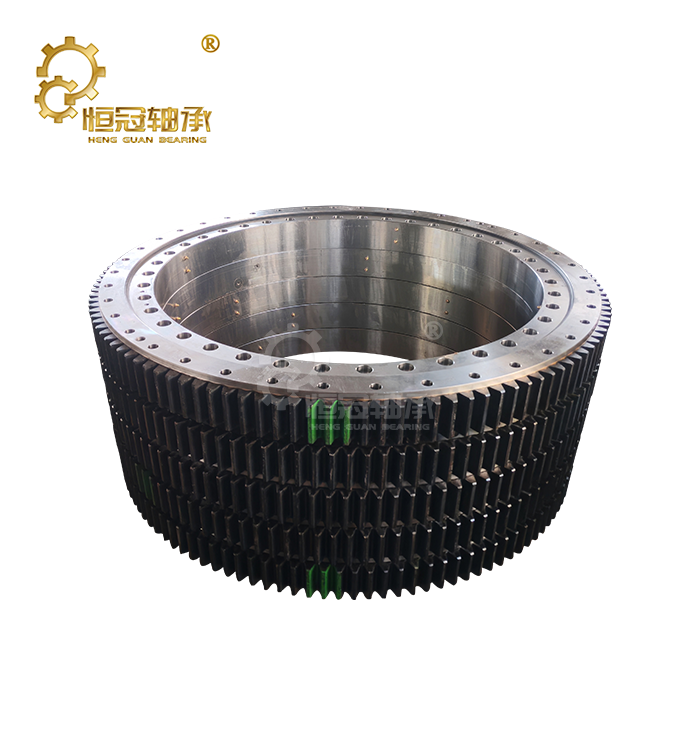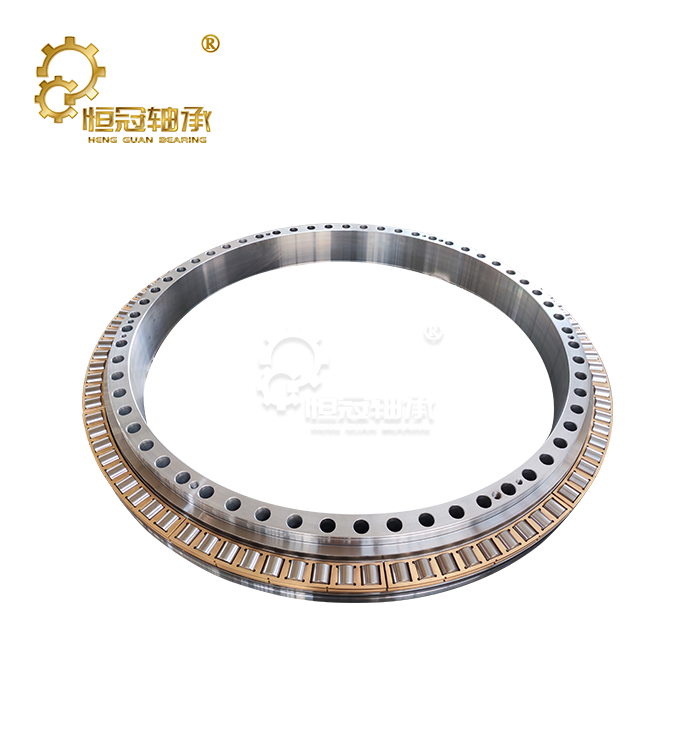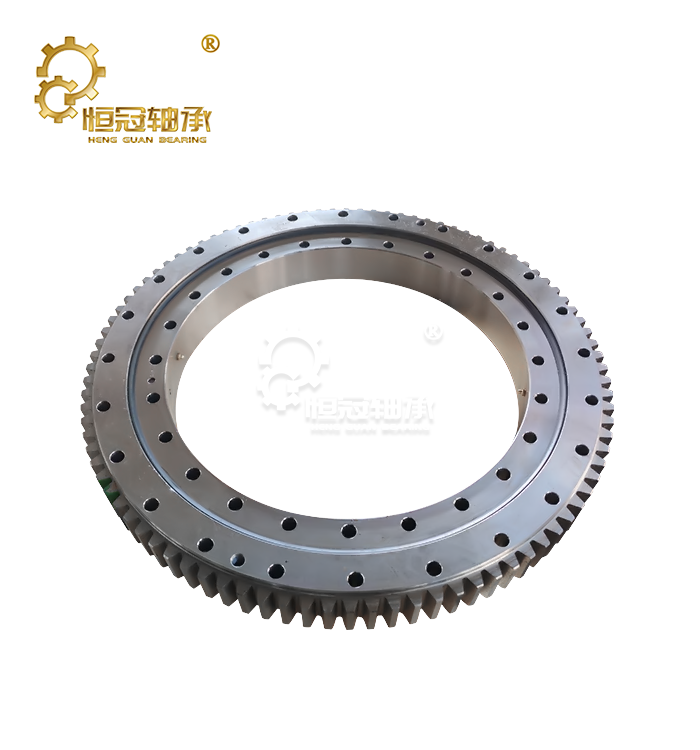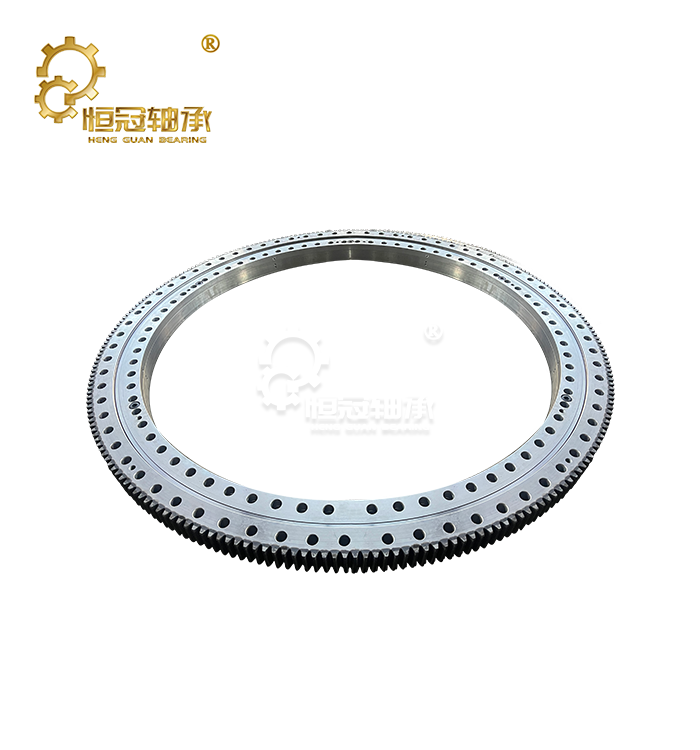




What are the Key Features of a high-quality slewing ring?
How can you tell whether a slewing ring will truly last in heavy-duty operation—or fail long before its expected service life? In real industrial applications, slewing rings are exposed to combined axial, radial, and overturning loads, often under continuous rotation and harsh environmental conditions. A small defect in material, design, or sealing can quickly lead to downtime and expensive system damage. At Luoyang Heng Guan Bearing Technology, with manufacturing capability ranging from 100mm to 10,000mm slewing rings, we help OEMs and equipment operators identify what truly defines a high-quality slewing ring. This guide breaks down the four key technical factors that determine performance, reliability, and service life.
Why Material Quality Defines the Foundation of a Slewing Ring?
Material selection is the starting point of slewing ring performance. It determines fatigue life, load resistance, and long-term dimensional stability under stress.
For bearing rings, industry-standard materials include 42CrMo and 50Mn alloy structural steel.
- 42CrMo offers superior strength and impact resistance, making it suitable for heavy-load and shock-prone applications.
- 50Mn provides excellent fatigue resistance and toughness under continuous cyclic loading.
Rolling elements typically use GCr15SiMn high-purity bearing steel, ensuring consistent hardness and long-term geometric stability.
To further enhance durability, raceways are induction hardened to HRC 55–60, with a hardened depth of 2.5–5mm, forming a wear-resistant surface supported by a tough core structure.
For corrosive or special environments, stainless steel variants are also available upon request.
| Material | Application Strength | Typical Use Case |
|---|---|---|
| 42CrMo alloy steel | High impact resistance | Mining, construction, wind power |
| 50Mn alloy steel | High fatigue resistance | Port machinery, metallurgy |
| Stainless steel | Corrosion resistance | Marine, chemical environments |
| GCr15SiMn | Stable hardness & precision | Rolling elements in all applications |
Luoyang Heng Guan Bearing Technology provides full material traceability and heat treatment reports for every batch, ensuring compliance with engineering and procurement requirements.
How Does Bearing Structure Influence Slewing Ring Performance?
The internal structure of a slewing ring directly determines its load capacity, rigidity, and suitability for different operating conditions.
The most common structure is the single-row four-point contact ball bearing, which can simultaneously handle axial, radial, and moment loads. It is widely used in cranes, construction machinery, and compact rotating systems.
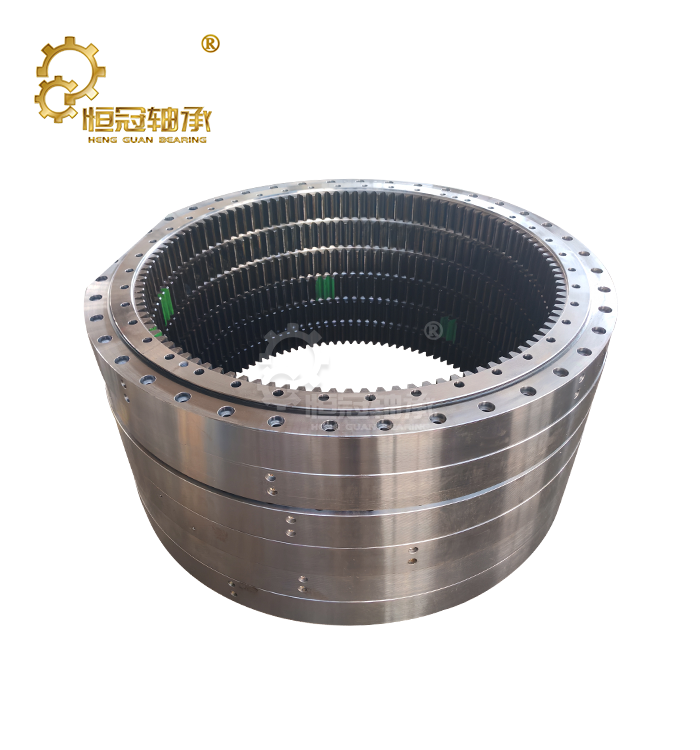
For higher load requirements, double-row or triple-row roller structures provide significantly greater rigidity and load-carrying capacity, making them suitable for heavy excavators, port equipment, and metallurgical machinery.
Gear integration is also critical. Slewing rings can be designed with:
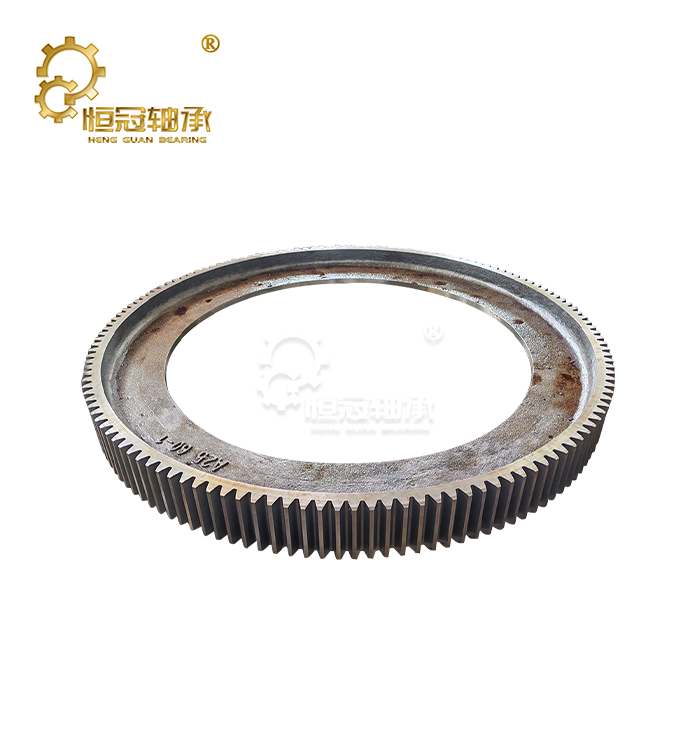
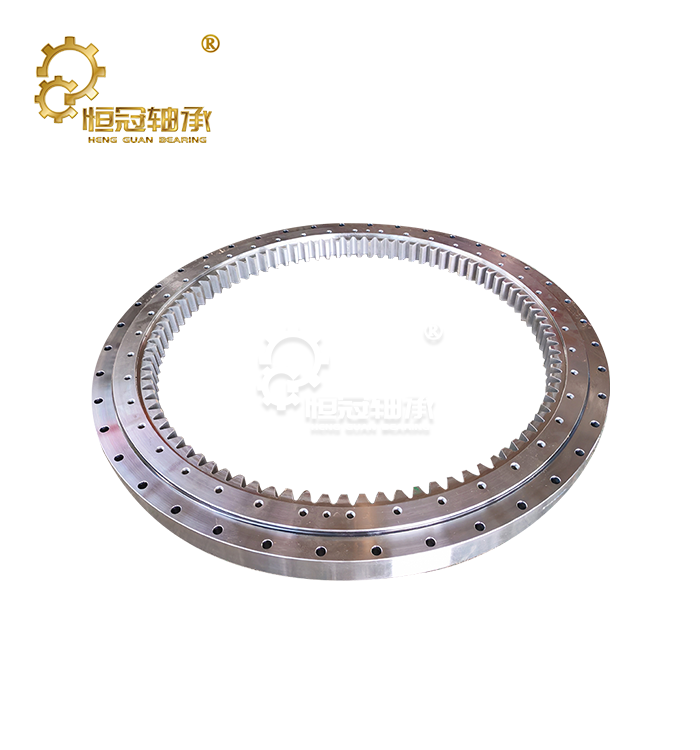
- Internal gear
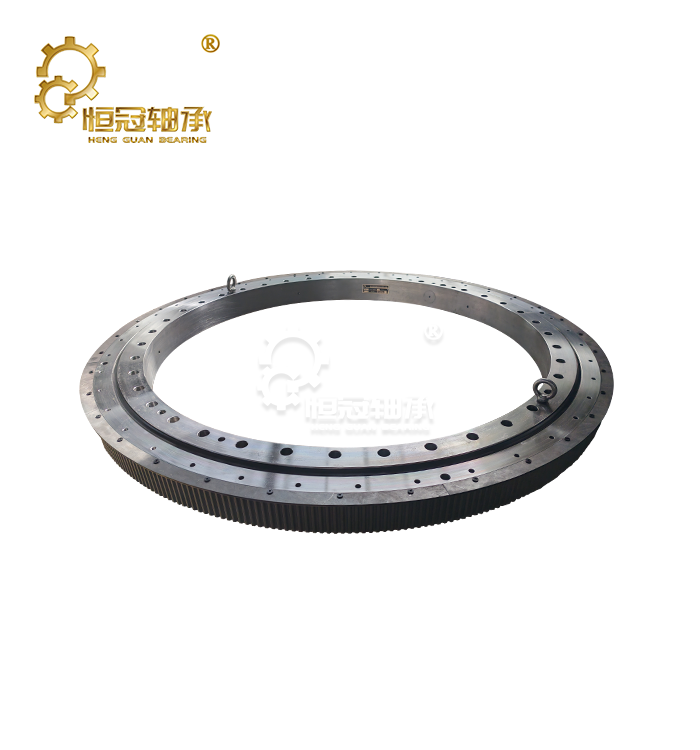
- External gear
Gear teeth are typically induction hardened to HRC 45–50, ensuring smooth meshing and long service life under continuous drive conditions.
Precision grades also affect system performance. Luoyang Heng Guan Bearing Technology manufactures slewing rings in:
- P0 (standard industrial)
- P6 (precision)
- P5 (high precision)
- P4 (ultra precision)
This allows engineers to match accuracy requirements with application demands rather than overdesigning or overspending.
Technical Specifications of Slewing Ring
To help engineers and procurement teams quickly evaluate compatibility, the key technical parameters are summarized below:
| Parameter | Specification |
|---|---|
| Bearing Type | Single-row, Four-point Contact Ball |
| Standard Size | 1960mm × 48mm |
| Diameter Range | 50mm – 10,000mm |
| Base Material | 42CrMo, 50Mn Special Alloy Steel |
| Rolling Elements | GCr15SiMn High-purity Bearing Steel |
| Precision Grades | P0, P6, P5, P4 |
| Operating Temperature | -20°C to +80°C |
| Sealing Type | Double-sealed |
| Lubrication | High-quality Grease |
These specifications provide a balanced design framework for both standard and customized slewing ring applications across multiple industries.
|
|
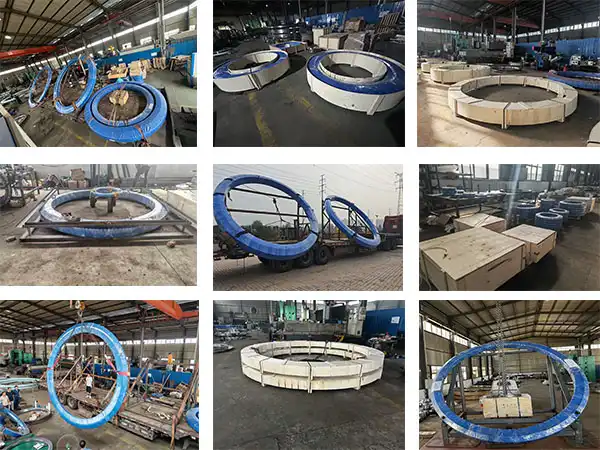
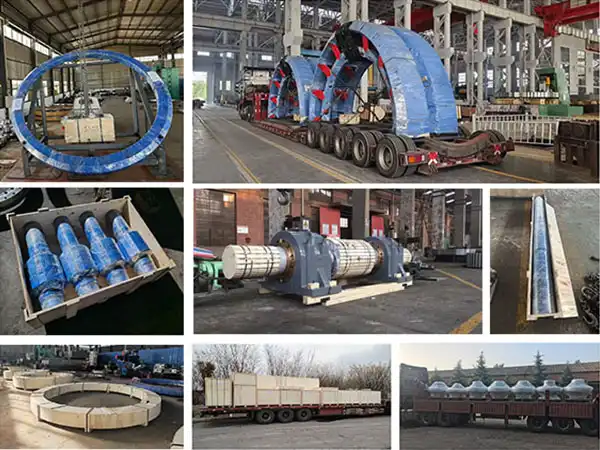
What Role Do Sealing and Lubrication Play in Service Life?
Even with high-quality materials and precise machining, poor sealing or lubrication can significantly reduce slewing ring lifespan.
Seals are responsible for:
- Preventing dust, water, and debris ingress
- Retaining internal lubrication
- Maintaining stable operating conditions in harsh environments
Depending on application requirements, sealing systems may use:
- Lip seals for general industrial use
- Labyrinth seals for high-contamination environments
Lubrication reduces friction, dissipates heat, and protects both raceways and gear teeth. Most industrial applications use lithium-based high-viscosity grease, with maintenance intervals defined by load, speed, and duty cycle.
For application-specific sealing or lubrication recommendations, Luoyang Heng Guan Bearing Technology engineering support is available at mia@hgb-bearing.com.
|
|
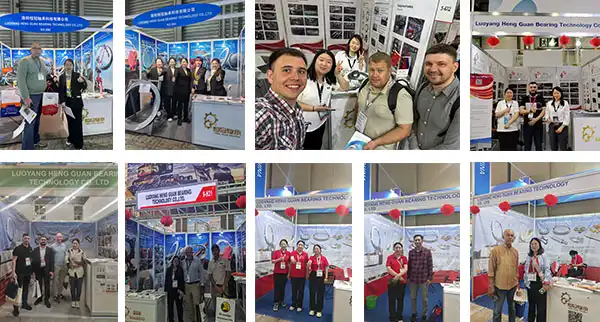
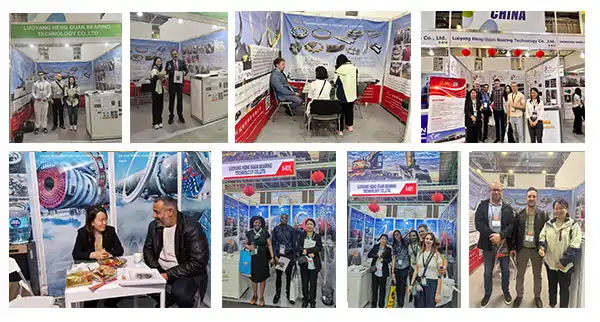
How to Identify a Reliable Slewing Ring Manufacturer?
Beyond product specifications, supplier capability is equally important in ensuring long-term reliability.
Key indicators of a qualified manufacturer include:
- ISO 9001 quality management certification
- Complete material traceability and inspection records
- In-house machining, heat treatment, and grinding capability
- Precision gear cutting and induction hardening systems
- Availability of custom non-standard designs
- Direct technical support from engineering teams
Luoyang Heng Guan Bearing Technology operates as a factory-direct manufacturer in Luoyang, China’s bearing production hub, equipped with CNC machining centers, quenching systems, gear shaping machines, and precision grinding equipment.
We support slewing ring production from 100mm to 10,000mm, including custom engineering for non-standard industrial applications.
| Quality Indicator | What It Ensures |
|---|---|
| Material Certification | Traceable steel quality |
| Heat Treatment Report | Verified hardness and depth |
| Dimensional Inspection | Accurate assembly fit |
| Gear Inspection | Smooth transmission performance |
| Rotation Test | Stable operational performance |
| Custom Capability | Application-specific engineering |
Conclusion
As one of the world’s trusted slewing ring suppliers, Luoyang Heng Guan Bearing Technology integrates material quality, structural design, sealing performance, and precision manufacturing into its production system, delivering reliable slewing ring solutions from standard catalog sizes to fully customized engineering designs for demanding industrial applications.
FAQ
Q1: What diameter range do your slewing rings cover?
A: We manufacture slewing rings from 100 mm to 10,000 mm, including custom designs.
Q2: What materials are used in your slewing rings?
A: 42CrMo and 50Mn for rings, GCr15SiMn for rolling elements. Stainless steel is also available.
Q3: What precision grades are available?
A: P0, P6, P5, and P4 for different application requirements.
Q4: Can you provide customized slewing ring designs?
A: Yes, we support custom dimensions, gear types, and engineering specifications.
Q5: Do you provide quality documentation?
A: Yes, including material certificates, hardness reports, and inspection records.
Get the Right Slewing Ring for Your Application
Whether you need a standard model or a custom-engineered solution, Luoyang Heng Guan Bearing Technology, a professional slewing ring supplier, provides full technical support from design to production. Send your requirements to mia@hgb-bearing.com, and our engineering team will respond with a tailored solution to meet your precise operational needs.
References
1. Harris, T. A., & Kotzalas, M. N. (2006). Rolling Bearing Analysis: Essential Concepts of Bearing Technology (5th ed.). CRC Press.
2. ISO 9001:2015. Quality Management Systems — Requirements. International Organization for Standardization.
3. Hamrock, B. J., Schmid, S. R., & Jacobson, B. O. (2004). Fundamentals of Fluid Film Lubrication (2nd ed.). Marcel Dekker.
4. Brändlein, J., Eschmann, P., Hasbargen, L., & Weigand, K. (1999). Ball and Roller Bearings: Theory, Design and Application (3rd ed.). John Wiley & Sons.
5. Zaretsky, E. V. (1992). STLE Life Factors for Rolling Bearings. Society of Tribologists and Lubrication Engineers.
6. Shigley, J. E., & Mischke, C. R. (2001). Mechanical Engineering Design (6th ed.). McGraw-Hill.

WHAT OUR CUSTOMERS SAY
Here is the customer's evaluation of us