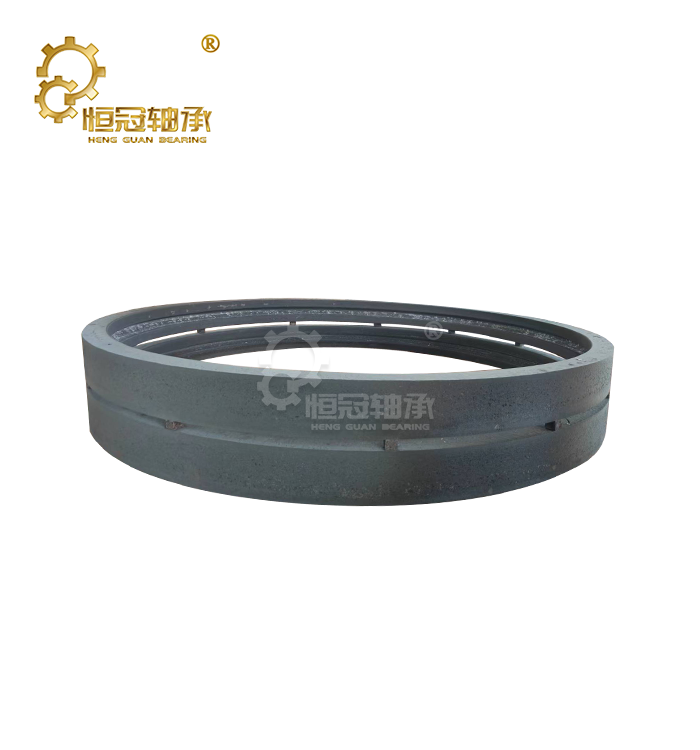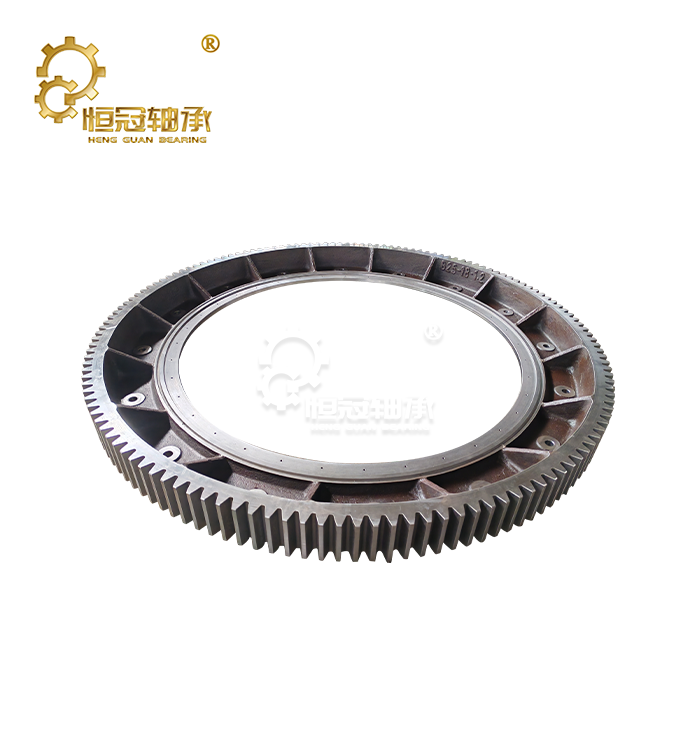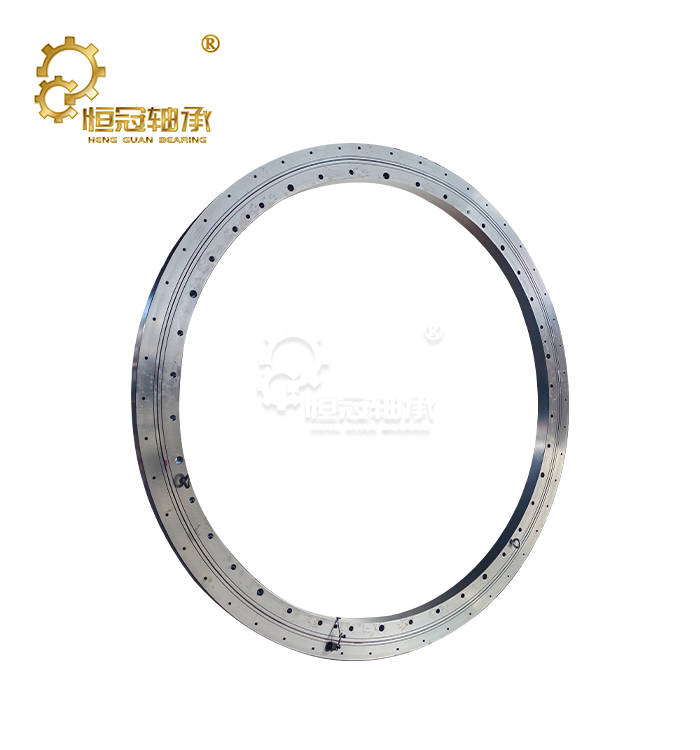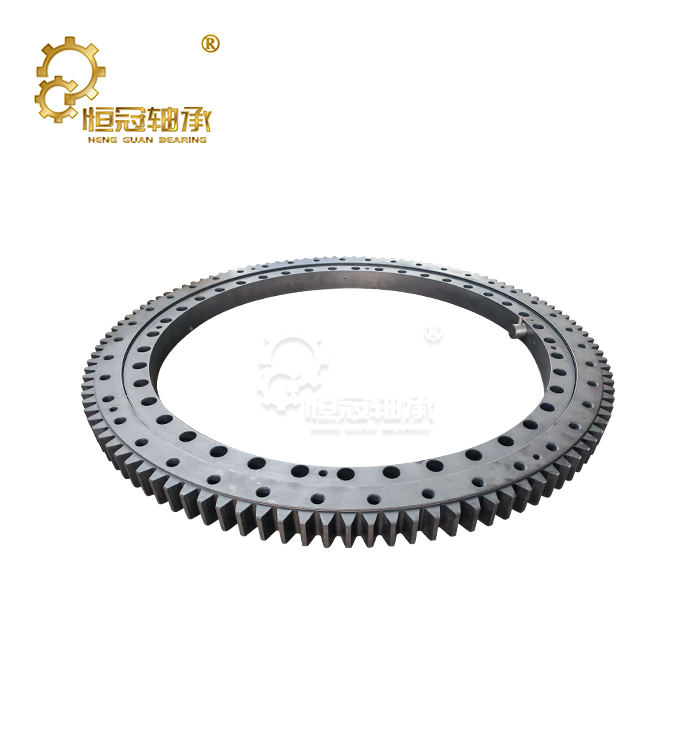




Top Port Crane Slewing Bearing Types and Load Capacities
Port crane slewing bearing systems are important moving parts that make it possible for big harbor cranes to move easily while carrying heavy loads that are always changing. The stable and spinning parts of port equipment are connected by these bearings, which handle complicated mixes of axial forces, radial forces, and tipping moments while the equipment is moving goods. For different crane uses, different bearing types are needed. Single-row four-point contact ball bearings, double-row ball slewing bearings, and three-row roller slewing bearings all have their own benefits when it comes to load capacity, installation space, and reliability. When equipment makers, maintenance teams, and procurement experts know about these differences, they can choose the best bearing solution for harsh marine environments.
Understanding the Main Types of Port Crane Slewing Bearings
Some of the toughest technical conditions in the industry sector are found in port cranes. Continuous movement, big loads, shaking, and being in salty conditions put a lot of stress on the performance of slewing bearings.
If you choose the right heading, it must:
- Rotation that stays stable with changing loads
- Very good resistance to wear and tear
- Reliable performance in places where corrosion is a problem
- Service life that is long and maintenance needs that are predictable
Single-row four-point contact ball bearings, double-row ball slewing bearings, and three-row roller slewing bearings are the most common types.
Single-Row Four-Point Contact Ball Slewing Bearings
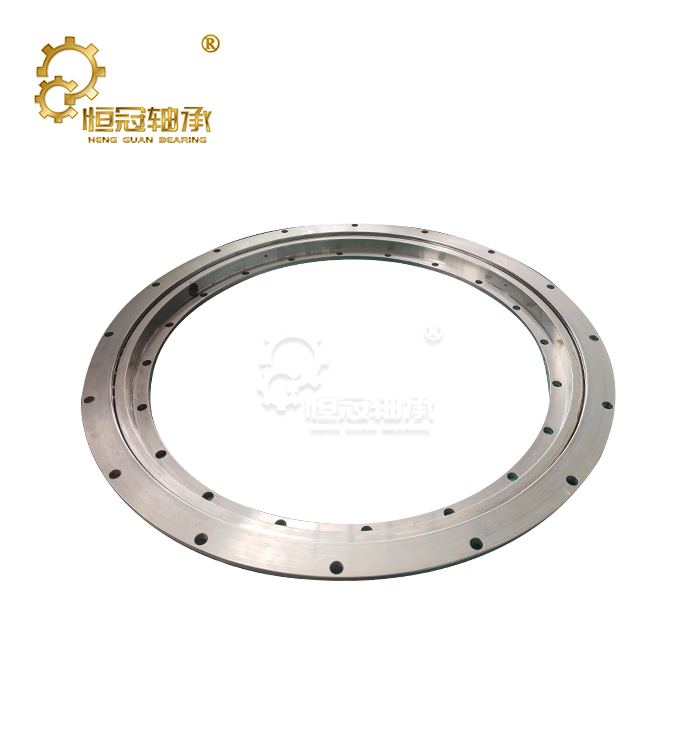
Single-row four-point contact ball bearings are often used in small pieces of equipment that need to be able to handle loads reliably. Their raceway design lets each steel ball touch the track four times, which means that the bearing can handle axial loads, rotational loads, and moment loads all in one row.
These are the main benefits of this design:
- Small measurements for fitting
- Less weight all around
- Mounting system made easier
- Good performance when both types of loads are applied
The four-point contact design spreads forces over a lot of contact areas. This helps keep the rotation smooth, even when the crane's load changes while it's in use. Because of these features, this type of bearing works well for smaller port cranes, mobile harbor cranes, and equipment that needs to be installed in a small area.
How well a single-row bearing works relies on a number of things, such as:
- Size of the bearing
- Shape of the raceway
- Quality of materials
- Speed of operation
- The real load conditions
This design strikes a good balance between performance and cost for uses that only need to lift light things.
Double-Row Ball Slewing Bearings for Medium-Duty Port Equipment
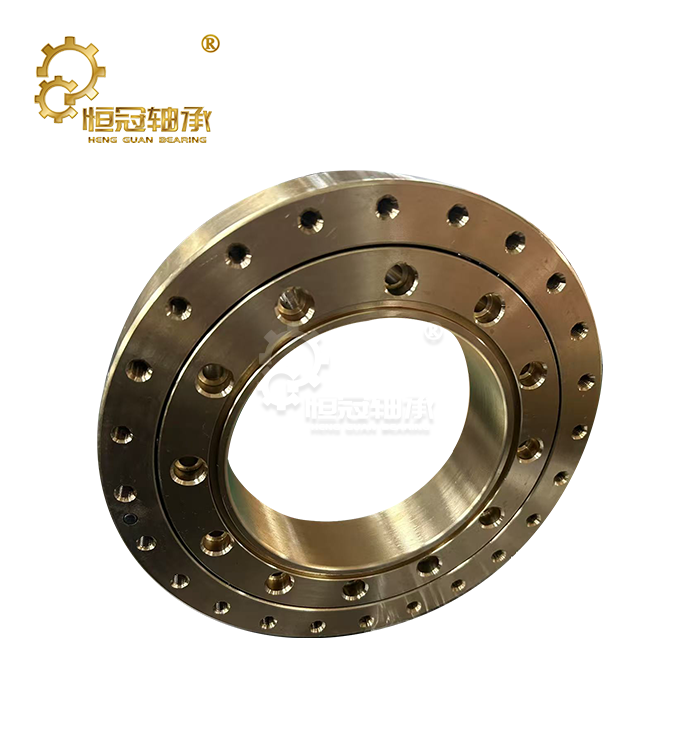
When compared to single-row versions, double-row ball slewing bearings can hold more weight because they have two rows of moving parts. The extra raceway structure makes it easier for them to handle higher radial loads while still moving steadily in a circle.
These bearings are often chosen for port cranes that come across:
- More weight in cargo
- A lot of rotation cycles
- horizontal and radial loads added together
- Extended business hours
The two-row layout gives the moving parts and raceways a bigger area to touch each other. This lets the bearing spread out the load more widely and makes it less likely to deform while it's running all the time. When compared to single-row bearings, double-row designs can hold more weight while still being relatively small. They are commonly found in dock cranes, tools for moving containers, and medium-sized material handling systems that need to be reliable and easy to set up.
Three-Row Roller Slewing Bearings for Heavy-Duty Crane Applications
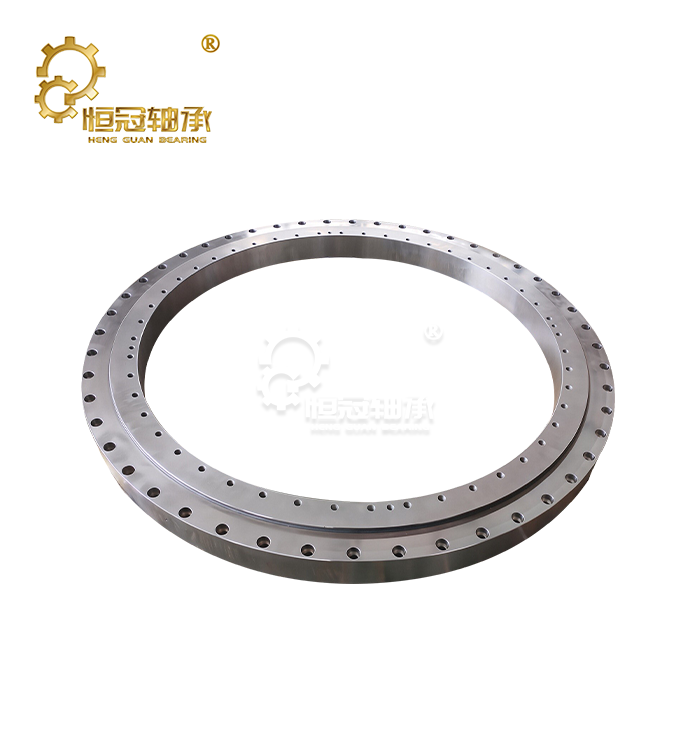
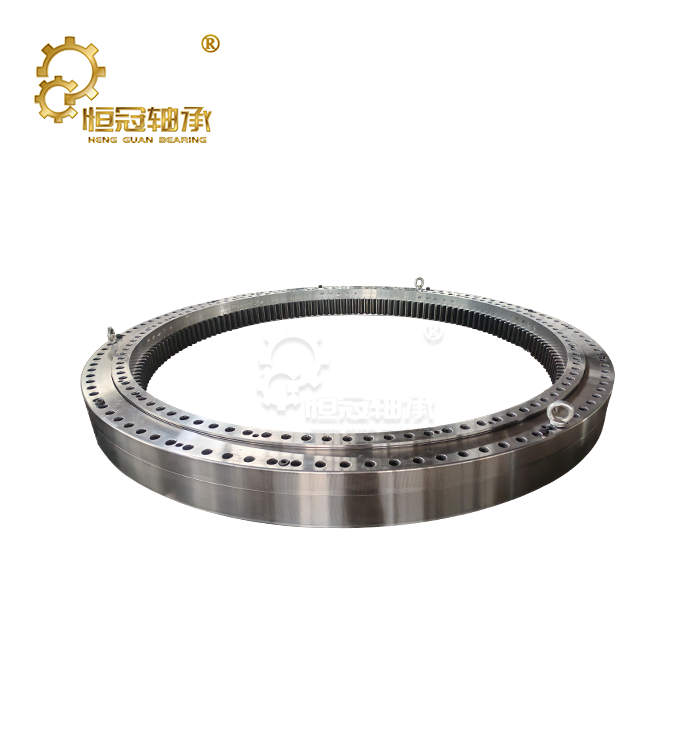
Three-row roller slewing bearings are made for uses that need to handle very heavy loads and have strong structures. These bearings are different from ball-type ones because they have separate rows of rollers for each direction of load.
The usual set-up has these parts:
- Radial loads are supported by two rows of rollers.
- Axial loads are supported by one row of rollers.
This different load division makes it easier for the bearing to handle large combined forces, especially when there are heavy toppling moments.
High-strength materials like 42CrMo alloy steel and 50Mn steel are often used to make three-row roller bearings. The right heat treatment raises the hardness, resistance to fatigue, and stability of a structure under repeated loading.
People often use these bearings in:
- Big cranes for containers
- Loaders for ships
- Sorters and stackers
- Heavy-duty equipment for lifting in the harbor
Three-row roller designs give large port machinery that works all the time in rough sea conditions, the load capacity and durability needed for long-term use.
Comparing Load Capacities of Different Slewing Bearing Designs
To choose the right bearing, you need to know how different loads affect how the crane works. Port cranes are affected by a number of different forces at the same time, such as:
- Radial loads brought on by the weight of the goods and the structure
- Axial loads are created when the boom is moved and lifted
Moment loads occur when booms are extended, and cargo is placed in different places. Instead of just considering the crane's maximum lifting capacity, the design of the bearings needs to take into account how they will be used in real life.
Radial Load Performance Analysis
Radial loads are mostly caused by horizontal forces acting on the crane structure and the way the weight of moving parts is distributed. Most of the time, single-row four-point contact bearings work well for middle rotational loads and small designs. How much weight they can hold varies on the size of the bearings, how the raceways are designed, and how they are used. Because the two-row structure spreads forces across more moving parts, double-row ball bearings can handle more rotational loads. Because of this, they can be used on cranes that need to work more often and keep loads more stable. When it comes to popular slewing bearing types, three-row roller bearings can handle the most rotational load. Because they have a bigger roller contact area, they can handle much higher pressure while also lowering the contact stress on each rolling element.
Axial and Moment Load Considerations in Port Cranes
Axial loads are important when cranes lift heavy things up and down or when the movement of the boom changes the direction of the forces acting on it. A good slewing bearing must keep the spinning stable and be able to handle both upward and downward rotational forces. Moment loads are often the most important thing in uses involving big port cranes. The load and spinning axis are far away from each other when the boom is extended away from the bearing center. This creates a large toppling moment.
Moment loads on big container cranes can get very high because:
- Long towers with booms
- Heavy weights for containers
- Frequently accelerating and slowing down
- When there is open water, wind forces
Most of the time, three-row roller bearings are chosen for these uses because the separated roller arrangement makes them better at resisting overturning forces.
- Table for comparing performance
- How to pick the right slewing bearing for a port crane
- Standards for materials and production
- Plan for maintenance
- Pricing and supplier evaluation
Performance Comparison Between Different Slewing Bearing Types
Each slewing bearing design provides different advantages depending on crane structure, load requirements, and operating environment. Selecting the correct type requires balancing load capacity, installation limitations, maintenance requirements, and expected service life.
| Bearing Type | Main Advantages | Typical Applications |
|---|---|---|
| Single-row four-point contact ball bearing | Compact structure, flexible installation, suitable for combined loads | Mobile harbor cranes, small and medium port equipment |
| Double-row ball slewing bearing | Higher load capacity with moderate installation requirements | Container handling cranes, medium-duty lifting systems |
| Three-row roller slewing bearing | Maximum load capacity and strong moment resistance | Heavy-duty container cranes, ship unloaders, large harbor equipment |
Single-row designs are usually preferred when space limitations and cost efficiency are important considerations. They provide reliable performance without requiring a large mounting structure.
Double-row ball bearings offer a balance between size and load capability. They are suitable for applications where cranes require improved capacity while maintaining relatively simple installation and maintenance procedures.
Three-row roller bearings are selected when load conditions become more demanding. Although they require larger installation spaces and more precise mounting procedures, their ability to handle extreme forces makes them essential for large-scale port machinery.
How to Select the Right Port Crane Slewing Bearing for Your Application
Choosing the correct bearing requires more than comparing load ratings. Engineers need to evaluate operating conditions, crane design, environmental exposure, and long-term maintenance expectations.
A properly selected Port crane slewing bearing can improve equipment reliability, reduce unexpected downtime, and lower total operating costs throughout the crane’s service life.
Evaluate Operating Conditions Before Selection
The first step in bearing selection is understanding how the crane operates.
Important factors include:
- Maximum lifting capacity
- Rotation speed
- Working cycle frequency
- Expected operating hours
- Load distribution during operation
- Installation dimensions
For example, a ship-to-shore container crane handling heavy containers several thousand times per month requires a different bearing solution compared with a smaller mobile harbor crane used for occasional cargo movement.
Engineers should also consider dynamic conditions such as:
- Sudden load changes
- Crane acceleration and braking
- Wind forces
- Vibration levels
These factors directly influence bearing fatigue life and structural performance.
Consider Marine Environment and Corrosion Protection
Port equipment operates in environments where moisture, salt spray, and temperature changes can accelerate component degradation.
Important protection measures include:
- High-quality sealing systems
- Corrosion-resistant surface treatments
- Marine-grade lubricants
- Proper drainage and contamination protection
Advanced sealing systems using materials such as nitrile rubber or fluororubber help prevent seawater, dust, and contaminants from entering the bearing structure. For cranes operating near coastal areas, corrosion protection should be considered during the initial design stage rather than treated as a maintenance issue afterward.
Material Quality and Manufacturing Requirements for Slewing Bearings
The performance and service life of a bearing depend heavily on material selection and manufacturing precision. High-quality manufacturers typically use specialized bearing steels and controlled production processes to ensure consistent mechanical properties.
Bearing Steel Selection and Heat Treatment
Common materials used in large slewing bearings include:
- GCr15SiMn bearing steel for rolling elements
- 42CrMo alloy steel for high-strength components
- 50Mn steel for large bearing rings
These materials provide:
- High wear resistance
- Improved fatigue strength
- Better dimensional stability
- Reliable performance under repeated loading
Heat treatment processes such as quenching and tempering improve hardness distribution and help the bearing withstand long-term operating stress.
Manufacturing Accuracy and Quality Inspection
Precision manufacturing directly affects the Port crane slewing bearing performance. Small deviations in raceway geometry, clearance, or mounting dimensions can increase friction and accelerate wear.
Professional bearing manufacturers usually perform inspections, including:
- Dimensional accuracy testing
- Raceway surface inspection
- Hardness testing
- Ultrasonic material inspection
- Gear accuracy inspection for geared slewing bearings
- Load and rotation testing
These quality control procedures help ensure that the bearing meets the mechanical requirements of heavy industrial applications.
Maintenance Practices to Extend Slewing Bearing Service Life
Even a high-quality bearing requires proper maintenance to achieve its expected operating life. Regular inspection and preventive maintenance help identify early problems before they lead to expensive crane downtime.
Lubrication and Sealing Management
Lubrication is one of the most important factors affecting slewing bearing reliability.
Marine crane bearings require lubricants that can withstand:
- Saltwater exposure
- Heavy mechanical pressure
- Temperature variations
- Contamination risks
A regular lubrication schedule helps reduce:
- Raceway wear
- Rolling element damage
- Friction-related heat generation
Operators should also inspect sealing systems regularly. Damaged seals can allow moisture and contaminants to enter the bearing, reducing lubrication effectiveness and accelerating internal damage.
Bearing Inspection and Fault Diagnosis
Early detection of problems allows maintenance teams to take corrective action before major failures occur.
Common warning signs include:
- Abnormal operating noise
- Increased rotation resistance
- Excessive vibration
- Lubricant contamination
- Increased clearance
- Loose mounting bolts
Modern monitoring methods, including vibration analysis and torque measurement, can help identify developing problems during normal operation.A planned inspection program is usually more cost-effective than emergency repairs after bearing failure.
Procurement Considerations: Price, Supplier Capability, and Warranty Support
Purchasing a Port crane slewing bearing is a long-term investment decision rather than a simple component purchase. The lowest initial price does not always provide the best overall value.
Procurement teams should evaluate:
- Manufacturing capability
- Material quality
- Inspection procedures
- Delivery reliability
- Technical support
- After-sales service
Factors Affecting Port Crane Slewing Bearing Prices
The price of a slewing bearing depends on several technical factors:
- Bearing diameter
- Structural complexity
- Material grade
- Load capacity requirements
- Gear design requirements
- Customization level
Large three-row roller bearings usually have higher costs because they require more raw materials, complex machining processes, and stricter quality control. Customized solutions may involve additional engineering costs, but they can provide better performance compared with standard designs when cranes operate under special conditions.
Choosing a Reliable Bearing Manufacturer
A good manufacturer should give you more than just the bearing. It is just as important to have technical help during the choosing, production, and installation steps.
Some important skills a supplier should have are:
- Advice on engineering
- Customization for OEM
- Systems for certifying quality
- Capacity for production
- Documentation for inspection
- Help with spare parts
When customers work with experienced makers like Heng Guan Bearing Technology, they can get solutions that are made just for their needs based on the crane's needs, how it will be used, and their performance goals.
Key Information Required Before Ordering a Slewing Bearing
Customers should get detailed information ready before buying a new or special bearing. This information should include:
- Dimensions of existing bearings
- Needs for inner and outer diameter
- Specifications for mounting holes
- Conditions of load
- Speed of rotation
- Setting up for work
- What gear do you need
- How long should it last
Giving makers correct information about how the crane is used helps them make a bearing that works well in that environment.
Conclusion
To choose the right Port crane slewing bearing, you need to know a lot about the load, the tools that will be used, the surroundings, and your long-term goals for the business. For modest uses, single-row four-point contact ball bearings are a small and adaptable option. For medium-duty equipment, double-row ball slewing bearings can hold more weight, while three-row roller slewing bearings are made for the toughest port crane jobs that involve high radial loads and big overturning moments. Aside from choosing the right bearing type, other factors that affect equipment dependability are the quality of the materials, the accuracy of the production process, the control of greasing, and the knowledge of the provider. By carefully looking at these factors, port operators and equipment makers can make cranes work better, save money on maintenance, and last longer in harsh marine environments.
FAQ
1. What is the typical lifespan of port crane slewing bearings?
Under normal circumstances and with regular care, port crane slewing bearings can usually last 100,000 hours. Service life varies a lot on the type of load, the climate, and how well the equipment is maintained. Heavy-duty uses may need new bearings every 8–10 years, while moderate-duty setups can go 15–20 years without any problems.
2. How frequently should port crane slewing bearings undergo maintenance?
Maintenance times depend on how the machine is used and how often it is used. Visual checks once a month and lubrication every three months are the bare minimum for most uses. For heavy-duty tasks, maintenance may need to be done every two weeks, but for smaller tasks, it can be done every six months. Continuous tracking tools check on important applications in real time to see how they're doing.
3. Can generic turntable bearings replace specialized port crane bearings?
For port crane uses, standard turntable bearings don't have the right materials, locking systems, or load rates. Marine settings and heavy loads require specially designed bearings that are more resistant to rust and can hold more weight. Using generic bearings instead of original ones usually leads to early failure and higher operating risks.
Partner with Heng Guan for Superior Port Crane Slewing Bearing Solutions
Heng Guan Bearing Technology delivers exceptional port crane slewing bearing solutions backed by over 20 years of specialized manufacturing experience. Our comprehensive product range spans single-row four-point contact, double-row ball, and three-row roller configurations with customizable sizing up to 10,000mm diameter. Contact our engineering team at mia@hgb-bearing.com to discuss your specific requirements and discover how our ISO9001-certified quality systems and advanced CNC manufacturing capabilities can optimize your port equipment performance. As a trusted port crane slewing bearing manufacturer, we provide competitive pricing, expedited delivery, and comprehensive technical support to ensure your operations achieve maximum efficiency and reliability.
References
1. International Organization for Standardization. "Rolling Bearings - Slewing Bearings - Geometrical Product Specifications and Tolerance Values." ISO 12043:2018 guide.
2. American Society of Mechanical Engineers. The ASME B31.1-2020 standard talks about "Slewing Bearings for Construction and Mining Equipment."
3. Technical Guidelines for the Maritime and Port Authority. This is the 2023 edition of "Crane Safety Standards for Port Operations."
4. International Association of Ports and Harbors. The technical report from 2022 is called "Heavy Lifting Equipment Standards and Best Practices."
5. European Committee for Standardization. Part 2 of EN 13001-2:2014 is called "Cranes – Safety Requirements for Design: Load Actions."
6. Society of Naval Architects and Marine Engineers. "Marine Terminal Engineering and Design Guidelines." SNAME Technical Manual 2023.

WHAT OUR CUSTOMERS SAY
Here is the customer's evaluation of us