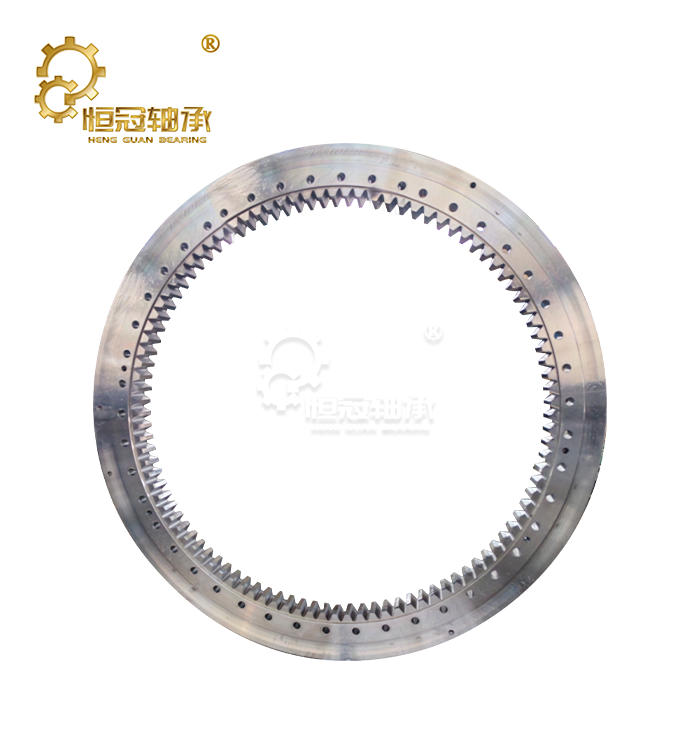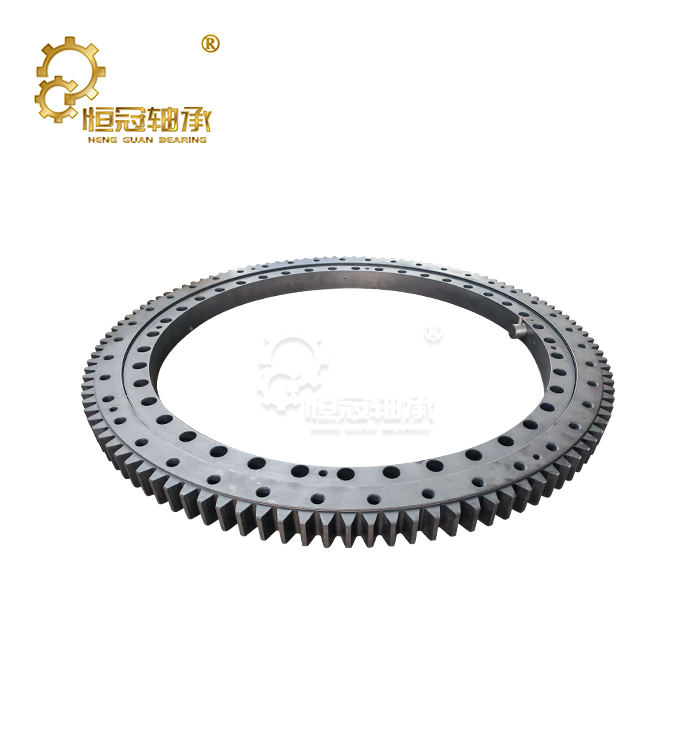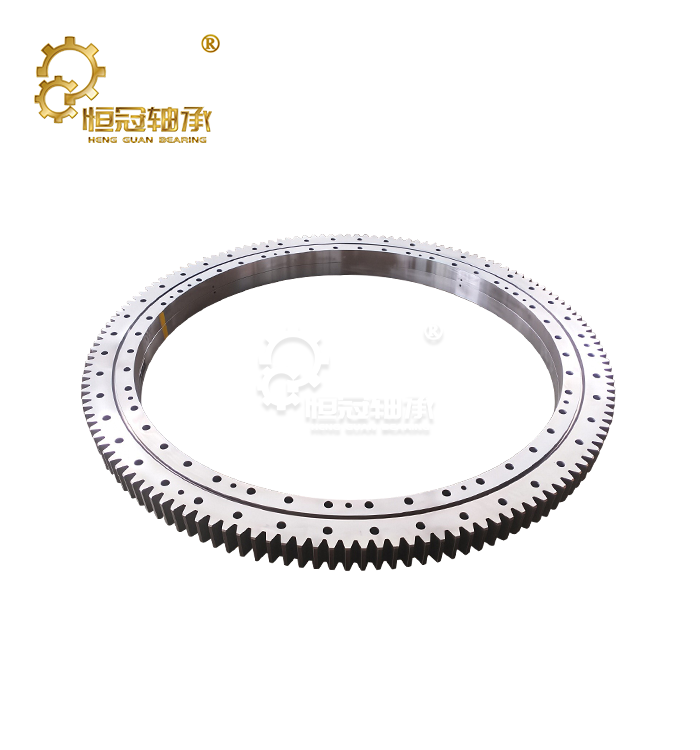




Professional Slewing Bearing for Tower Crane Maintenance
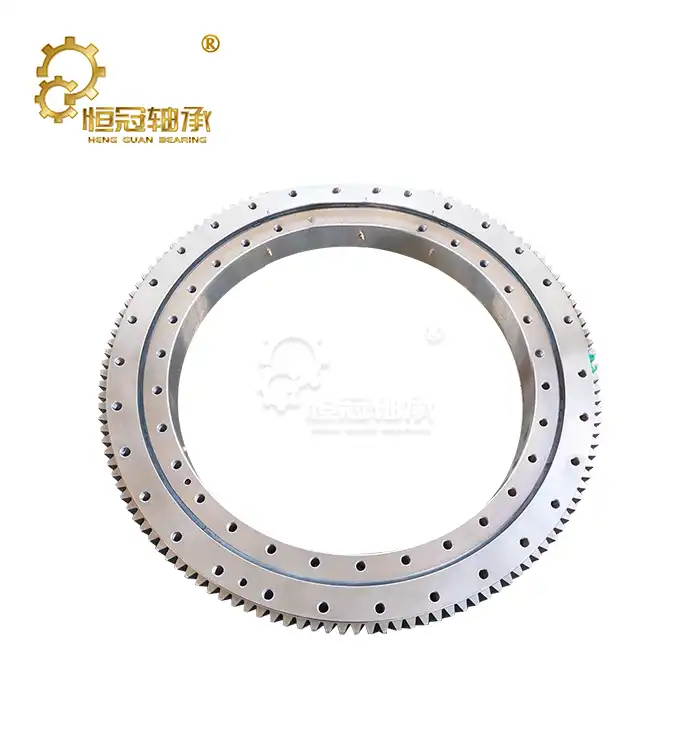
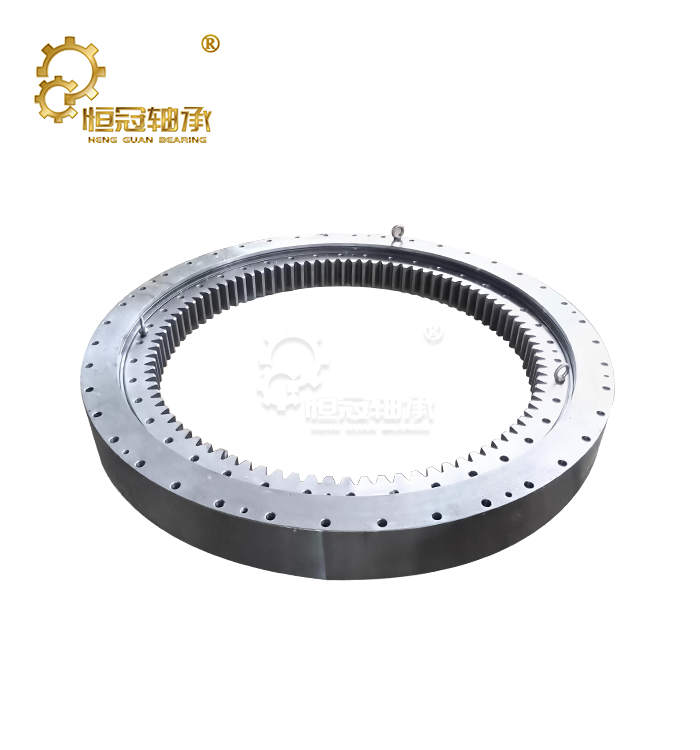
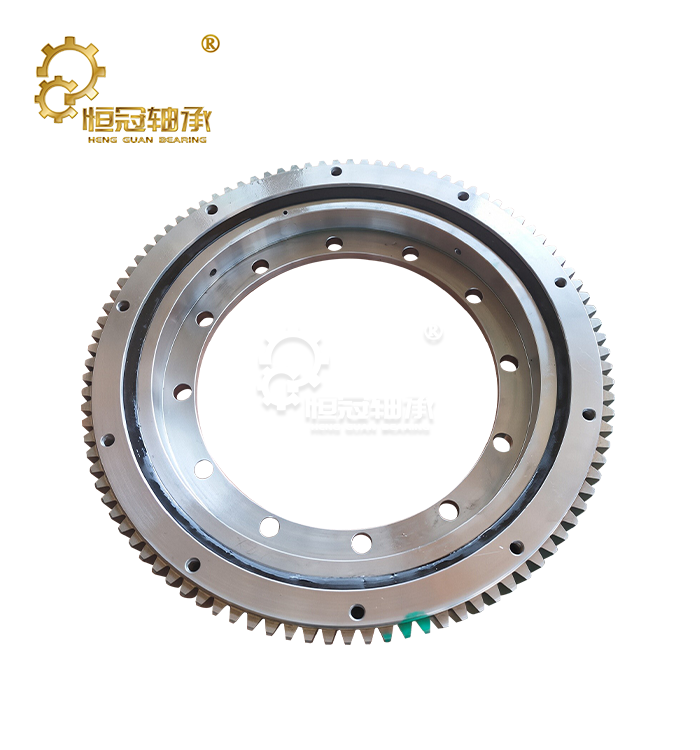
Professional slewing bearing for tower crane maintenance is an important aspect to ensure the safety, stability and productivity of tower crane operation. The spinning is done via a slewing bearing. This results in the crane jib and upper structure being able to rotate freely under the load of large buildings. If this component fails, it could result in unscheduled downtime, expensive repairs and even safety issues on building sites.
Luoyang Heng Guan Bearing Technology Co., Ltd. realises that tower crane applications require bearing with great load capacity, wear resistance and long-term reliability. High-quality slewing bearings may realise stable performance in harsh construction situations with proper material selection, correct production, lubrication management and regular inspection.
Unlike conventional industrial bearings, tower crane slewing bearings experience simultaneous axial loads, radial forces and overturning moments. So maintenance is not merely changing the lubricant and looking for outward defects. This demands a systematic technique of condition monitoring, structural inspection, lubrication control and professional technical evaluation.

Why Are Slewing Bearings Critical Components in Tower Crane Operation?
Tower cranes are often utilised in high-rise buildings, bridges, industrial plants, and huge infrastructure projects. The crane is often rotated throughout the work with large loads, which causes stress to the slewing bearing system.
The slewing bearing connects the stationary lower structure to the spinning top structure. Its primary duty is to carry different kinds of loads and at the same time allow easy and precise rotation. The correct design of the bearing allows the retention of the position accuracy of the crane even in shifting load situations.
Most of the tower crane slewing bearings are as follows:
- Parts of inner and outer rings;
- Rolling elements, e.g., balls or cylindrical rollers;
- Precision machined ways;
- Sealing systems.
- Channels for lubrication and distribution structures of the grease.
The common materials for crane slewing bearings are 42CrMo, 50Mn and other high-strength alloy steels. These materials, following adequate heat treatment, offer good mechanical strength, fatigue resistance and durability.
In the case of tower cranes, the bearing structure is carefully selected according to the crane model, lifting capability, rotation speed and working environment. If the wrong bearing is selected, it can wear out too quickly, vibrate abnormally or fail early.
Understanding Different Slewing Bearing Structures for Tower Cranes
Different bearing designs are needed for different tower crane applications. Engineers typically choose bearing configurations depending on the nature of the loads, the operating frequency and the space constraints.
Four-Point Contact Ball Bearings for General Tower Crane Applications
Single-row four-point contact ball bearings are a common choice in tower cranes since they represent a compromise between the load capacity and the rotation flexibility.
The design allows the balls to contact the raceway at four locations and allows the bearing to carry:
- Axial loading;
- Radial loads.
- Tilting moments
The structure has lower friction and smoother rotation, which is ideal for tower cranes that require frequent slewing motions during building activities.
Cylindrical Roller Slewing Bearings for Heavy-Duty Loads
When higher lifting capacities are required, cylindrical roller slewing bearings are commonly used. Roller-type designs offer bigger contact surfaces and better load distribution than ball-type designs.
Benefits include:
- Higher load-carrying capacity;
- higher resistance to large impact loads;
- Better stability at extreme working conditions.
These bearings are typically used in heavy construction where tower cranes are working under constant high-load circumstances.
Three-Row Roller Bearings for Maximum Load Performance
Three-row roller slewing bearings are suitable for applications with very high load capacity. This arrangement divides the axial and radial load channels by various roller rows, which is an effective way to disperse mechanical stress.
This construction delivers good performance but does require correct installation and routine maintenance. Misalignment or lubrication problems can drastically impair service life.
Common Causes of Slewing Bearing Failure in Tower Cranes
The tower crane slewing bearing operates under complex loading circumstances, and numerous factors can influence its service life. Maintenance personnel can prevent unplanned breakdowns by understanding the common reasons for failure.
Lubrication Problems & Grease Pollution
Lubrication is one of the most critical elements that determine the performance of bearings. Lubrication provides a protective coating between the rolling elements and the raceways, reducing friction and preventing direct contact of the metal surfaces.
Many bearing failures, however, result from:
- Not enough grease supply;
- Wrong lubricant.
- Lubrication at irregular intervals;
- Greasy filth.
Damaged seals allow dust, water and building debris to enter the bearing and increase wear of the raceways. The lubrication schedule for tower cranes operating outside should be modified according to the weather conditions and the task to be accomplished.
Professional maintenance crews should routinely check:
- State of grease;
- Seepage at sealing places;
- Lubrication ports:
- Grease discolouration abnormality
Early diagnosis of lubrication problems can avert more significant interior damage.
Excessive Loading and Improper Crane Operation
Slewing bearings for tower cranes are developed for the individual load requirements. Running above rated capacity puts unnecessary stress on raceways, rolling elements and mounting structures.
Some common reasons are:
- Lifting overloads regularly;
- Sudden braking while turning;
- Unequal distribution of load;
- Installation angles incorrect.
Overloading can produce distortion of the raceway, surface fatigue or greater internal clearance. In severe circumstances, it may result in reduction of bearing service life and safety issues.
Crane operators should check crane load charts to minimise these difficulties and ensure that lifting activities are within the designed working limits.
Corrosion and Environmental Damage
Slewing bearings have to survive harsh situations, as tower cranes are frequently installed outdoors for long periods of time.
Bearings in coastal building sites, humid places and industrial sectors may be exposed to:
- Salt spray;
- Dampness;
- Chemical pollution.
- Temperature variation.
As the sealing performance of the slewing bearing for tower crane deteriorates, corrosive chemicals might penetrate the bearing system and damage the raceways or rolling elements.
Inspection of seals and protective coatings on a regular basis will assist in maintaining corrosion resistance. In severe situations, manufacturers could suggest specific surface treatments or better sealing solutions.
Professional Inspection Methods for Tower Crane Slewing Bearings
Periodic examination is one of the most effective methods of preventing an unexpected failure of a tower crane slewing bearing. Many internal disorders progress gradually, and a mere visual inspection might not be appropriate. Professional maintenance combines condition monitoring, observation, and measurement.
Visual Inspection and Basic Condition Checks
Stage 1: Visual Inspection: The first step in bearing condition examination. The maintenance personnel should check the outside surface of the bearing and adjacent parts for any abnormal operating circumstances.
Important points of inspection are:
- Grease leaking from the sealing areas;
- Sealing structures with fractures or damage;
- Unusual signs of rusting;
- Loosened bolts,
- Unusual rotation noise
Loose bolts are especially important, as the slewing bearing distributes large stresses from the crane's upper structure down to the lower structure. If the bolt preload is decreased, the stress distribution will be uneven, and the bearing wear will proceed faster.
Routine visual inspections are beneficial and easy to do because they allow maintenance professionals to notice early warning signals before catastrophic breakdowns.
Measuring Clearance and Structural Changes
Changes in internal clearance may be an indicator of bearing degeneration. The rolling elements and raceways wear out with time. This can leave too much clearance between the interior sections.
Professional technicians can evaluate:
- Clearance, axial;
- Radial clearance:
- Tilt motion;
- Resistance to rotation
If measurements are out of limits, further inspection may be required to determine whether the bearing should be changed, fixed, or replaced.
Measuring large tower cranes periodically is particularly crucial, as the complete lifting mechanism can be affected by bearing failure.
Vibration and Temperature Monitoring
Modern maintenance programs are increasingly using condition monitoring technology to improve reliability.
Vibration analysis can discover abnormal operating conditions because:
- Rolling element damage
- Raceway failures;
- Loaded unevenly;
- Issues with lubrication.
Another good way is temperature monitoring. A sudden increase in running temperature might be an indication of high friction, insufficient lubrication, or internal damage.
By integrating vibration data with temperature trends, maintenance teams may more accurately predict upcoming problems and schedule repairs before equipment goes down.
Recommended Maintenance Practices to Extend Slewing Bearing Service Life
Maintenance is intimately related to the operating reliability and service life of the tower crane slewing bearings. Having a preventive maintenance plan is usually cheaper than repairing a broken bearing after it has failed.
Establishing a Proper Lubrication Program
Lubrication schedules should be based on the following:
- Frequency of use of cranes;
- Loading conditions;
- Environmental exposure;
- Manufacturer’s recommendations.
Cranes in continuous use on large construction projects may require a less frequent lubrication schedule than cranes used occasionally.
Good grade grease is good for:
- Less friction;
- Protect Race Track Surfaces
- Keep from rusting;
- Rotation must be smooth.
However, too much grease is not necessarily a good thing for a slewing bearing for tower crane. Excess lubricant can increase internal pressure and can reduce sealing performance. The maintenance workers shall use the correct amount according to the technical requirements.
Maintaining Seals and Preventing Contamination
The seal system protects the interior bearing components. Contaminants entering the bearing can damage precisely machined raceways and increase wear.
During maintenance checks, technicians should check the following:
- Distortion of the seal;
- Aging or cracking;
- Foreign material accumulation;
- Water ingress.
At dusty construction sites, tower cranes may need extra precautions. Such are improvements in sealing designs, protective covers, or more frequent cleaning.
Checking Mounting Bolts and Installation Accuracy
The performance of a slewing bearing is not only related to the bearing itself but also to the correct installation of the bearing.
Errors during installation may cause:
- Unequal burden.
- High stress concentrations
- Bolts will fail;
- More wear.
Technicians should confirm that bolts are tightened to the correct torque specifications when performing maintenance. The mounting surface shall be clean and well aligned so that the bearing rings are not distorted.
Correct installation and maintenance procedures help to ensure that the bearing operates to original design standards.
How to Select the Right Slewing Bearing for Your Tower Crane?
The selection of the suitable slewing bearing for tower cranes has to be done very carefully, considering technical requirements, operating conditions, and supplier capabilities. The lowest purchase price is not always the best solution. The quality of the bearing has a considerable impact on crane safety and future operating costs.
Identify load requirements and service conditions.
The first thing is to comprehend the real operational environment.
Important aspects are the following:
- Max. lifting capacity
- Revolution speed;
- Frequency of working cycle;
- Wind.
- Installation Area
- Expected service life.
Engineers have to consider both normal and abnormal operation cases. A bearing that works fine with standard loads can fail too soon if it repeatedly gets hit by overload or impact stresses.
Choose a Supplier with Technical Support Capability
The quality of the material has a direct effect on the bearing life.
The reliable slewing bearing manufacturers normally pay attention to:
- Alloy steel, chosen for excellent quality;
- Thermal therapy under control;
- Rigorously engineered.
- True geometry raceways;
- Strict dimensional inspection.
Properly treated 42CrMo steel has excellent strength and fatigue resistance and is employed in demanding crane applications.
Another consideration is manufacturing accuracy. If the raceway is designed differently or the rings are distorted, this can alter load distribution and lead to wear.
Improving Tower Crane Reliability Through Advanced Slewing Bearing Technology
A professional provider offers more than just bearing products. And no less important is the technical help for the whole product life cycle.
Advanced Materials and Heat Treatment Technology
Material performance determines how well a bearing withstands long-term mechanical stress.
Modern slewing bearings often use high-strength steels combined with advanced heat treatment processes. These technologies improve:
- Surface hardness;
- Fatigue resistance;
- Structural stability;
- Wear resistance.
Proper heat treatment creates a stronger internal structure while maintaining sufficient toughness. This balance allows bearings to handle repeated loading without premature cracking or deformation.
Optimized Structural Design for Better Load Distribution
Computer-aided engineering methods, including finite element analysis, allow engineers to optimize slewing bearing designs before production.
These simulations help identify:
- Stress concentration areas;
- Load distribution problems;
- Potential deformation points.
By improving raceway geometry and internal structures, manufacturers can create bearings with better stability and longer service life.
Modern sealing technologies also improve reliability by reducing contamination risks. Multi-layer sealing systems provide stronger protection against dust, moisture, and other environmental factors commonly found on construction sites.
Smart Maintenance and Predictive Monitoring
Future tower crane maintenance will increasingly rely on digital monitoring technologies.
Sensors and data analysis systems can help track:
- Bearing temperature changes;
- Vibration patterns;
- Operating conditions;
- Maintenance requirements.
Predictive maintenance allows companies to repair or replace components before unexpected failure occurs. This approach reduces downtime and improves overall project efficiency.
Conclusion
Investing in professional maintenance of slewing bearings for tower crane is an important investment in the safety, reliability, and efficiency of tower crane operation. Tower crane slewing bearings are subjected to intricate combinations of axial loads, radial forces, and tilting moments, which require proper selection, installation, lubrication, and maintenance throughout their service life.
Understanding the common causes of failure, following preventative maintenance procedures, and working with skilled manufacturers can go a long way in reducing equipment downtime and improving construction safety. In severe operating conditions, regular inspections, good lubrication management, and competent technical assistance will help to ensure that bearings will continue to perform reliably.
When selecting a slewing bearing for a tower crane, buyers should consider not only the product specifications but also the quality of the production, plus engineering support and long-term service capabilities. In the long run, construction companies that pick providers with a demonstrated competency will benefit from safer crane operation, lower maintenance costs, and better project performance.

FAQ
1. What factors decide how often slewing bearings need to be replaced?
How often they need to be replaced depends on how they are used, how much load they are under, how well they are maintained, and external factors. Bearings that are well taken care of and used in mild conditions can last for 100,000 hours, but in harsh conditions, they may need to be replaced more often. The most accurate way to figure out how much work life is left is to check the state on a regular basis.
2. How can I tell when a bearing is about to fail?
Noises that don't make sense, vibrations, temperature rises, seal leaks, and uneven spinning are all early signs of failure. Scheduling regular inspections lets you find problems early, so you can fix them before they get worse and cost a lot to fix.
3. What happens when bearing repair isn't done right?
Poor care can cause bearings to fail early, unwanted downtime, safety risks, and expensive fixes that need to be done right away. A catastrophic bearing failure can damage nearby crane parts and put people and the area around the crane at great risk of injury.
Partner with Heng Guan for Professional Tower Crane Solutions
Slewing bearing for tower crane options backed by decades of technical know-how and top-notch manufacturing. Our precision-made bearings have service lives of over 100,000 hours and safety factors higher than 2.5. We can also customize them to meet the specific needs of the building, mining, and lifting industries. As a reliable company that makes slewing bearings for tower cranes, we offer expert support, application engineering, and advice to make sure that your bearings work at their best for as long as they're in use. Email our engineering team at mia@hgb-bearing.com to talk about your unique needs and find out how our advanced bearing solutions can help your crane work better while lowering the total cost of ownership.
References
1. Zhang, L. (2023). "Advanced Slewing Bearing Design for Heavy Construction Equipment." Journal of Mechanical Engineering Applications, 45(3), 78-92.
2. Thompson, R. & Williams, K. (2022). "Maintenance Strategies for Tower Crane Slewing Bearings in Construction Operations." International Construction Equipment Review, 38(7), 145-162.
3. Chen, M. (2023). "Material Science Innovations in Large Diameter Slewing Bearing Manufacturing." Bearing Technology Quarterly, 67(2), 34-48.
4. Rodriguez, A. et al. (2022). "Failure Analysis and Prevention in Tower Crane Slewing Bearing Systems." Construction Safety Engineering, 29(4), 112-128.
5. Kumar, P. (2023). "Load Distribution Analysis in Multi-Row Slewing Bearing Assemblies." Heavy Equipment Engineering Journal, 52(1), 89-105.
6. Anderson, J. & Brown, S. (2022). "Environmental Impact Assessment of Bearing Lubrication Systems in Construction Equipment." Industrial Maintenance Technology, 41(6), 203-218.

WHAT OUR CUSTOMERS SAY
Here is the customer's evaluation of us