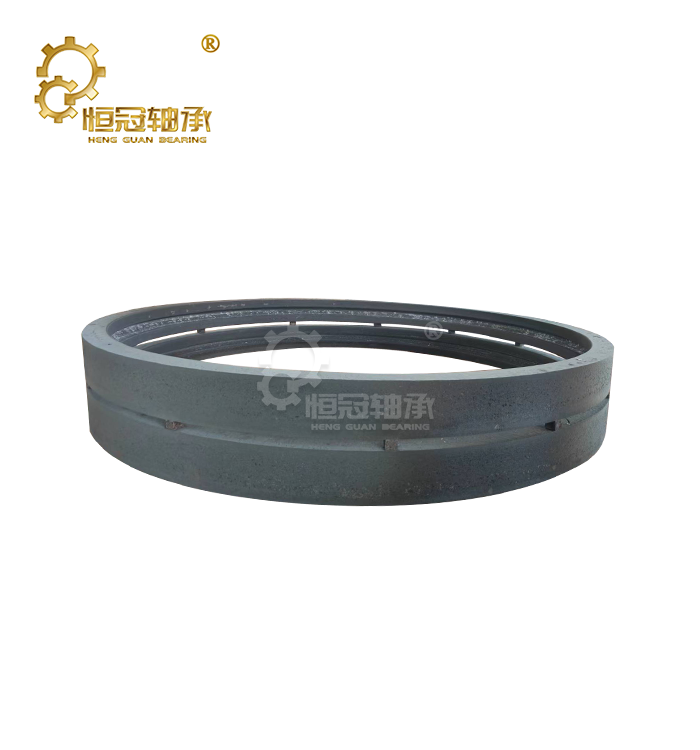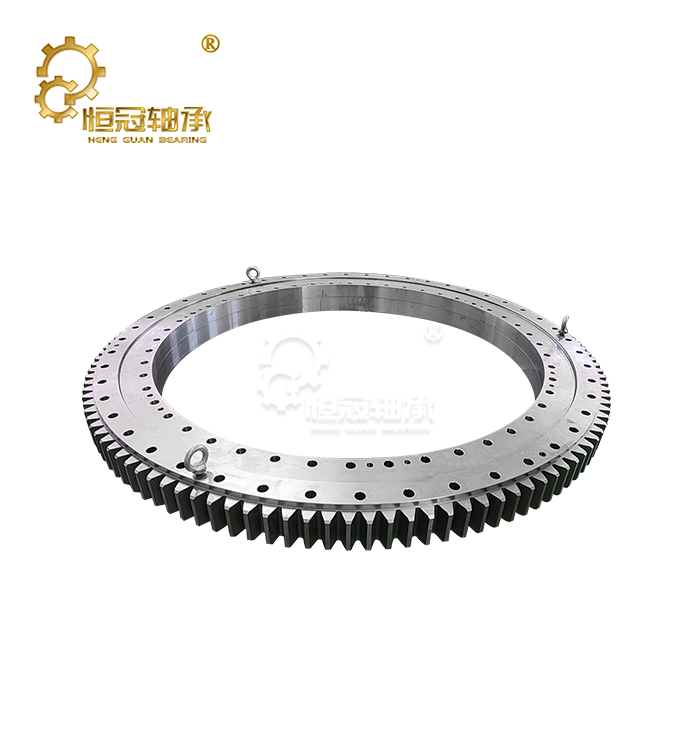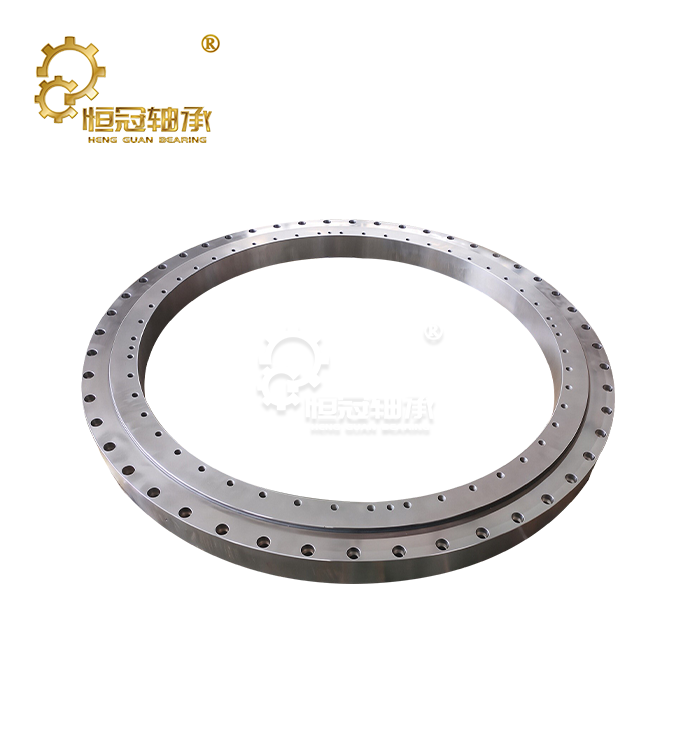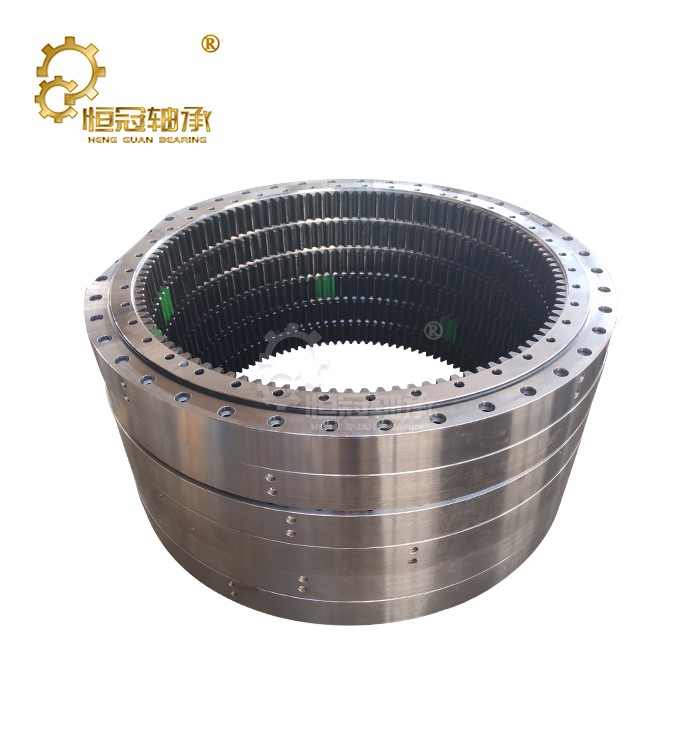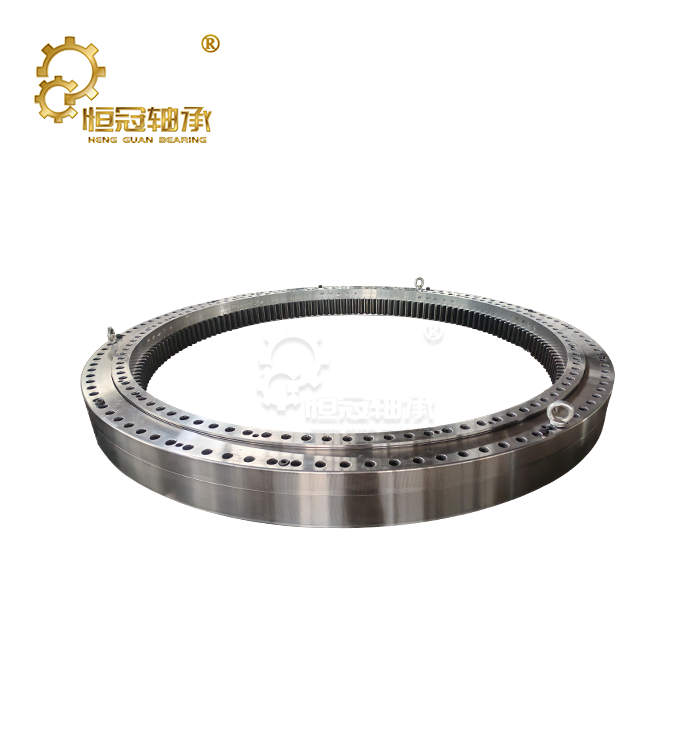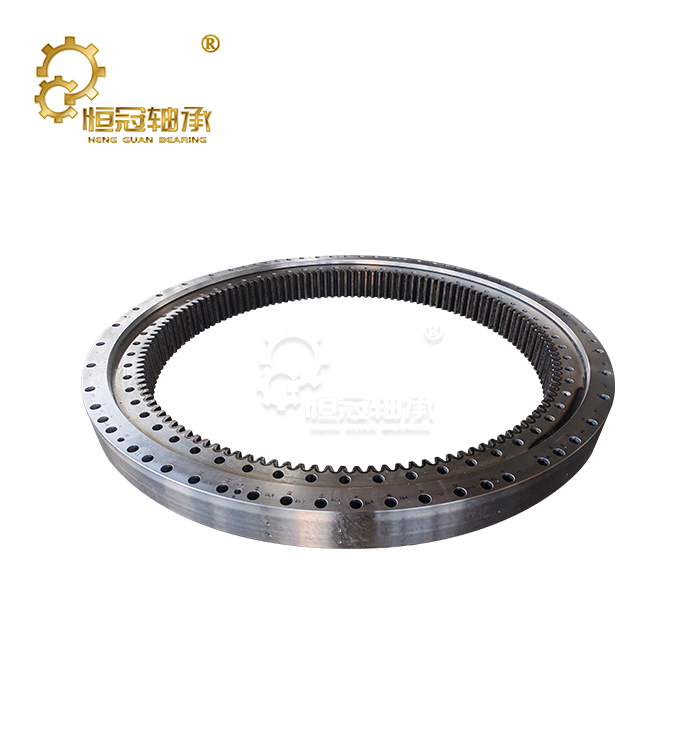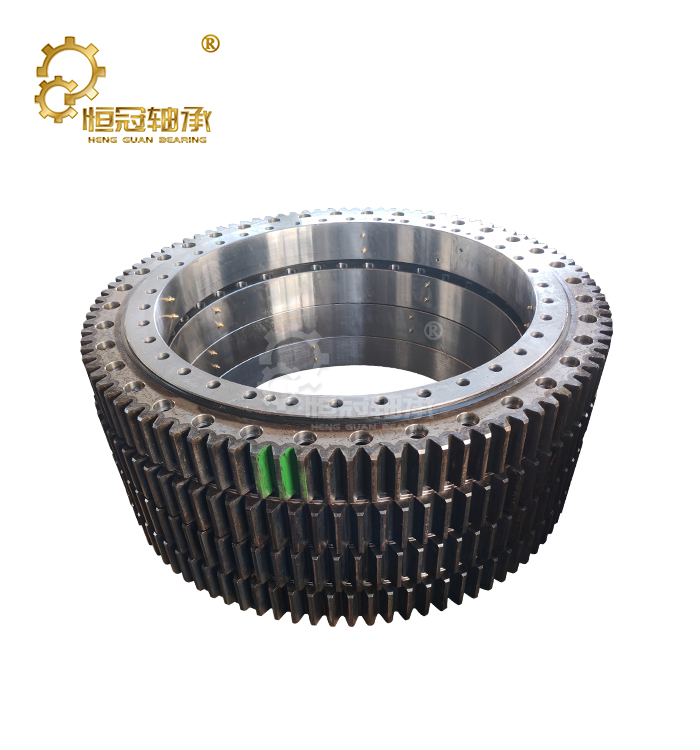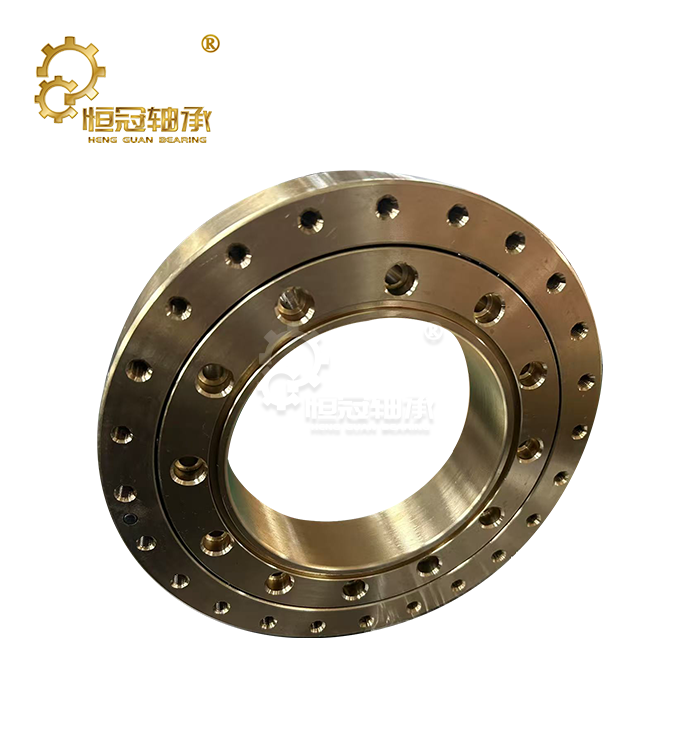




Industrial Port Crane Slewing Bearing for Large Shipyards
When heavy machinery in big factories needs reliable rotational support, industrial port crane slewing bearing options are the key to running a smooth business.In each lifting cycle, consistent rotation and precise placement are needed, and load support must be trustworthy. The port crane slewing bearing is the core connection element of the crane upper structure and the foundation, which directly influences the crane's safety, operation efficiency, and maintenance cost.
The ideal slewing bearing for large-scale shipyards is more than simply the load capacity. Material strength, raceway design, sealing performance, lubrication systems, installation precision, and long-term operating reliability are further considerations for engineers and procurement teams. The advanced three-row roller slewing bearing is built of high-strength alloy materials such as 42CrMo and precise rolling elements made of GCr15SiMn bearing steel. It is extensively utilized in heavy-duty fields with high safety standards and continuous work.
Reliable bearing suppliers, with expert manufacturing experience and stringent quality control systems, can supply bespoke solutions for shipyard cranes, ship-to-shore cranes, offshore lifting equipment, and other heavy rotating structures.

The Engineering Principles Behind Port Crane Slewing Bearings
Why Slewing Bearings Are Critical for Large Maritime Cranes
A port crane slewing bearing is the rotating interface between the crane body and the supporting structure. Unlike the traditional industrial bearings built to endure simpler load conditions, the crane slewing bearings need to withstand various forces created at the same time during the lifting operations.
The crane action subjects the bearing to the following:
- Suspended cargo weight axial loads
- Boom movement and crane rotation-related radial forces
- Moments of tilt resulting from uneven load distribution and extended outreach
These forces interact to produce a complicated stress state in the raceway system. A well-designed slewing bearing can spread forces over a number of rolling contact points. This reduces the load on any one place and improves stability of operation.
There are other issues too with big shipbuilding environments. Salt spray, humidity, temperature variations, dust, and continuous operating cycles can increase wear if the bearing construction and protective mechanisms are not appropriately constructed.
That’s why industrial crane bearings often have the following:
- Raceway geometry optimized for load distribution
- Robust sealing methods to avoid contamination
- Centralized lubrication channels for consistent grease distribution
- High-strength mounting structures for alignment maintenance
Well-designed bearing systems help cranes rotate more smoothly, increase maintenance intervals, and boost operating availability.
Common Structural Designs for Heavy-Duty Crane Applications
Different crane uses demand different slewing bearing constructions. The right design selection depends on the size of the crane, the lifting capacity, the frequency of operation, and the environmental circumstances.
Single-row ball slewing bearings
Single-row ball types are generally employed in applications where low load-carrying capability and simple motion requirements are needed. They have small size and cost advantages but are often not suitable for the highest-load shipyard crane applications.
Double Row Ball Slewing Bearings: 1.
Two rows of rolling parts are also used in double-row ball designs to increase load distribution. They have superior resilience to combined axial and radial loads compared to single-row versions.
They are widely used in:
- Medium Gantry Cranes
- Material handling machinery
- Industrial lifting machines
- Three-Row Roller Slewing Bearings
Three-row roller slewing bearings are more robust for large shipyard cranes and heavy lifting equipment.
The three independent roller rows are meant to absorb loads from different directions:
- One row of rollers supports axial loads.
- Another supports opposite axial forces.
- The third is for radial loading.
This structural structure enhances the surface of contact and minimizes the pressure concentration, which is favorable for cranes working with very heavy loads or working without interruption.
Large port and shipyard projects frequently choose three-row roller designs because of their greater resistance to overturning moments and improved long-term stability.
Material Selection and Manufacturing Quality Requirements
High-Strength Materials for Long-Term Crane Operation
High-Strength Materials for Long-Term Crane Operations
The service life of a bearing is directly affected by the choice of material. Heavy-duty crane bearing materials should have excellent tensile strength, fatigue resistance, and toughness.
The usual materials are:
42CrMo steel alloy
Because of its good mechanical qualities, 42CrMo is generally utilized for large bearing rings. It yields after suitable thermal treatment:
- High load-bearing capacity
- Increased fatigue resistance
- Strong resistance to deformation
Steel 50Mn
50Mn steel is also extensively used in large slewing bearing production due to its good hardness and structural durability for heavy industrial applications.
GCr15SiMn bearing steel
Rolling elements require very good wear resistance and dimensional stability. GCr15SiMn bearing steel offers the following:
- High contact fatigue strength
- Very good toughness after heat treatment.
- Consistent performance throughout multiple loading cycles
Crane operation is long-term, and the bearing has to work steadily for a long time, which requires that the ring material and rolling parts have high quality.
Precision Manufacturing and Quality Control
The dimensional mistake of the port crane slewing bearing will impair the performance of the crane, so it is necessary to have sophisticated production technology.
Important manufacturing processes are the following:
- CNC machine turning rings for bearings
- Raceway grinding (precise)
- Heat treatment under control
- Gear machining for external and internal gear design
- Pre-delivery dimensional inspection.
The quality inspection should have:
- Hardness Testing of Raceways
- Dimensional check
- Gear accuracy check
- Surface quality assessment
- Lubrication Channels Testing
Suppliers should also supply paperwork such as material certificates, inspection reports, and quality records to provide traceability throughout the project lifecycle for essential shipbuilding applications.
Key Factors When Selecting a Port Crane Slewing Bearing
Evaluating Load Capacity and Operating Conditions
Choosing the correct bearing requires a detailed analysis of actual crane working conditions rather than simply selecting a model based on lifting capacity.
Important selection factors include:
Maximum lifting load
The bearing must safely support the maximum rated cargo weight together with dynamic forces generated during operation.
Overturning moment
Large cranes experience significant tilting forces when the boom extends or loads move away from the rotation center. The bearing must provide sufficient moment resistance to maintain stability.
Operating frequency
Cranes working continuously in ports or shipyards require bearings designed for high-cycle operation and extended service intervals.
Environmental exposure
Marine applications require strong protection against:
- Saltwater corrosion
- Moisture intrusion
- Dust contamination
- Temperature variation
A complete evaluation of these factors helps engineers select a bearing configuration that balances performance requirements and lifecycle costs.
Installation and Maintenance Strategies for Reliable Crane Performance
Professional Installation Requirements for Large Slewing Bearings
The installation quality of a port crane slewing bearing directly influences the service life, rotation accuracy, and safety of the entire crane system. Even a high-performance bearing may experience premature wear if the mounting structure is not properly prepared or the installation process is not controlled.
Before installation, engineers should carefully inspect the crane mounting structure to confirm that the supporting surfaces meet required flatness and alignment specifications. Uneven mounting surfaces can create additional stress concentrations, causing abnormal raceway loading and accelerated fatigue.
Key installation procedures normally include the following:
- Checking mounting surface flatness and cleanliness
- Confirming bolt grade and tightening requirements
- Applying the correct tightening sequence
- Verifying bearing clearance and rotation resistance
- Completing initial lubrication before operation
High-strength bolts are especially important for large crane applications because they transfer operational forces between the bearing and the crane structure. Incorrect bolt preload may lead to uneven load distribution, bolt loosening, or structural deformation during repeated lifting cycles.
After installation, commissioning tests should be performed. These checks typically include:
- Rotation testing under no-load conditions
- Noise and vibration inspection
- Lubrication system verification
- Alignment measurement
- Initial operating temperature monitoring
A professional installation process ensures that the bearing performs according to its original design capability and reduces the risk of unexpected downtime.
Preventive Maintenance Programs for Extended Service Life
Large shipyard cranes often operate for long hours every day, making preventive maintenance essential. Instead of waiting for failures to occur, operators should establish inspection programs based on operating conditions, load cycles, and environmental exposure.
A comprehensive maintenance plan should include several key areas.
Lubrication management
Proper lubrication reduces friction between rolling elements and raceways while preventing excessive wear. Maintenance teams should regularly check the following:
- Grease quantity
- Lubrication distribution
- Contamination levels
- Lubricant aging condition
In marine environments, water contamination is a common concern because moisture can reduce lubrication effectiveness and accelerate corrosion inside the bearing structure.
Bolt inspection
Because slewing bearings transfer significant loads through their mounting connections, bolt condition should be monitored regularly. Inspection should focus on:
- Loose fasteners
- Abnormal bolt stress
- Corrosion around connection areas
- Condition monitoring
Modern maintenance programs increasingly use condition monitoring technologies to identify early warning signs.
Monitoring methods may include:
- Vibration analysis
- Temperature tracking
- Rotation resistance measurement
- Lubrication analysis
These methods allow maintenance teams to identify problems such as raceway damage, insufficient lubrication, or abnormal wear before they develop into major failures.
Improving Crane Efficiency Through Advanced Slewing Bearing Technology
Smart Monitoring and Predictive Maintenance Solutions
Digital technologies are changing how large industrial cranes are maintained. Traditional maintenance methods often depend on fixed schedules, while modern systems increasingly use real-time operating data to predict potential failures.
Advanced monitoring solutions can collect information, including:
- Bearing temperature changes
- Vibration patterns
- Lubrication conditions
- Rotation performance
By analyzing this data, operators can identify unusual operating trends and schedule maintenance before serious damage occurs.
For large shipyards, predictive maintenance provides several advantages:
- Reduced unexpected shutdowns
- Better spare parts planning
- Lower emergency repair costs
- Improved crane availability
This approach is particularly valuable for critical lifting equipment where unexpected bearing failure could interrupt shipbuilding schedules and create significant financial losses.
Surface Treatment and Design Improvements
Continuous improvements in port crane slewing bearing manufacturing have enhanced the durability of modern slewing systems.
Advanced production technologies include:
- Improved heat treatment processes
- Enhanced raceway surface finishing
- Optimized roller geometry
- Better sealing materials
Heat treatment improves material hardness and fatigue resistance, while precision machining helps achieve smoother contact between rolling elements and raceways.
Modern sealing systems also provide stronger protection against harsh working environments. High-performance sealing materials help prevent:
- Seawater penetration
- Dust contamination
- Lubricant leakage
- Chemical exposure
These improvements allow bearings to maintain stable performance during demanding marine operations.
Procurement Guide for Large Shipyard Crane Slewing Bearings
How to Evaluate a Reliable Bearing Supplier?
Selecting the right supplier is one of the most important decisions when purchasing large industrial bearings. A reliable manufacturer should provide not only products but also engineering support throughout the project lifecycle.
Important supplier evaluation factors include:
Manufacturing capability
Buyers should review whether the supplier has:
- Large-diameter machining capacity
- Professional heat treatment facilities
- Advanced inspection equipment
- Experience with heavy-duty applications
- Quality management system
A strong quality system demonstrates consistent production control. Buyers should consider suppliers with internationally recognized quality management practices, including ISO 9001 certification.
Engineering support
Large crane bearings often require customized solutions. Experienced suppliers can assist with:
- Bearing type selection
- Load calculation
- Installation guidance
- Maintenance recommendations
- After-sales service
Technical support after delivery is important because installation and commissioning directly affect long-term performance.
Customization Requirements for Specific Crane Applications
Not all shipyard cranes have identical operating conditions. A customized port crane slewing bearing solution may be required depending on the following:
- Crane capacity
- Rotation speed
- Installation dimensions
- Operating environment
- Expected service life
- Customization options may include:
- Different internal structures
- Customized mounting dimensions
- Special sealing systems
- Gear configurations
- Corrosion-resistant treatments
For example, a crane operating in an offshore environment may require stronger corrosion protection than equipment installed inside a protected shipyard facility.
Working with an experienced manufacturer during the design stage helps ensure that the bearing specification matches the actual application rather than relying on standard products that may not provide optimal performance.
Logistics Planning for Oversized Bearing Transportation
Large slewing bearings can exceed several meters in diameter and weigh multiple tons, making transportation planning an important part of project management.
Before shipment, buyers should consider:
- Packaging requirements
- Lifting equipment availability
- Transportation route limitations
- Installation schedule coordination
Because these components are often critical-path equipment, delays in delivery can affect the entire crane construction timeline.
Professional suppliers usually provide assistance with:
- Export packaging
- Shipping documentation
- Delivery scheduling
- Installation preparation
Effective logistics coordination helps ensure that the bearing arrives safely and can be installed according to the project schedule.

Conclusion
Slewing bearings for industrial port cranes are essential components that directly influence the safety, productivity, and reliability of large shipyard operations. Selecting the correct port crane slewing bearing requires careful consideration of load capacity, structural design, material quality, manufacturing precision, installation requirements, and long-term maintenance needs.
Modern three-row roller slewing bearing designs provide excellent load distribution and strong resistance against heavy operating conditions. Combined with high-strength alloy materials, precision manufacturing processes, advanced sealing technology, and professional maintenance strategies, these bearing systems can deliver stable performance in demanding maritime environments.
For shipyard owners and equipment manufacturers, working with an experienced bearing supplier helps ensure that the final solution meets technical requirements while reducing lifecycle costs. Through proper engineering evaluation, quality control, and long-term cooperation, advanced slewing bearing systems can support safer crane operation and more efficient industrial production.
FAQ
1. What size range is available for port crane slewing bearings?
Port crane slewing bearings are available in dimensions starting from 4238 mm x 270 mm, with custom sizes designed to meet specific application requirements. The size choice is based on the crane's ability, the loads that it will carry, and the mounting setup that is needed.
2. How do three-row roller bearings differ from single-row designs?
Three-row roller bearings let axial and radial forces travel along different load lines. This lets them handle more weight and spread out the force better. When it comes to heavy-duty uses, this layout works better than single-row designs.
3. What kinds of materials are used to make marine-grade slewing bearings?
For marine-grade bearings, the structural parts are made of 42CrMo and 50Mn special alloy steels. The rolling elements are made of GCr15SiMn high-purity steel, and the sealing systems are made of foreign nitrile rubber or fluororubber to keep out rust and dirt.
4. How often should port crane bearings be inspected?
The number of inspections depends on how busy the business is, but they usually include eye checks every day, lubrication checks once a week, and thorough inspections once a month that include vibration analysis and seal state assessment.
Partner with Heng Guan for Premium Port Crane Slewing Bearing Solutions
Heng Guan Bearing Technology is ready to help you with your big shipyard projects by providing you with the best port crane slewing bearing production skills and a wide range of professional services. Our ISO 9001-certified factory in Luoyang makes custom-engineered bearing solutions with diameters ranging from 20 mm to 10,000 mm. For the most demanding uses, precision grades reach P4 levels of accuracy. With more than 20 years of experience, we are a reliable provider of port crane slewing bearings. We use modern CNC machining and marine-grade materials to make sure that our products work at the highest level.Email our engineering team at mia@hgb-bearing.com to talk about your unique needs and find out how our custom solutions can help you run your business more efficiently while lowering the costs over its lifetime.
References
1. Marine Engineering Society. "Load Analysis and Bearing Selection for Heavy-Duty Port Cranes." Journal of Maritime Engineering, Vol. 45, 2023.
2. International Association of Classification Societies. "Guidelines for Slewing Bearing Installation and Maintenance in Marine Applications." IACS Technical Standards, 2024.
3. American Society of Mechanical Engineers. "Design Criteria for Large Diameter Slewing Bearings in Industrial Applications." ASME Standard B3.47, 2023.
4. European Committee for Standardization. "Port Machinery Safety and Performance Requirements." EN 14238:2024 Standards for Crane Bearings.
5. Society of Naval Architects and Marine Engineers. "Structural Analysis of Rotating Machinery Foundations in Shipbuilding Facilities." SNAME Technical Publication T&R-67, 2024.
6. International Organization for Standardization. "Rolling Bearings - Slewing Bearings - Geometrical Product Specifications and Tolerance Values." ISO 12043-2:2023.

WHAT OUR CUSTOMERS SAY
Here is the customer's evaluation of us