



Increase Uptime With Premium Port Crane Slewing Bearings
In current port facilities, port crane slewing bearing systems are the key differentiator between high working efficiency and expensive downtime. These special bearings make it possible for crane superstructures to rotate smoothly in all directions while holding huge loads in harsh coastal conditions. When equipped with high-quality slewing bearings, port cranes have amazing uptime rates of over 95%, which directly leads to higher output and lower running costs. The money spent on good bearings returns in the form of longer service life, less upkeep, and higher safety margins that keep cargo moving quickly through the biggest ports in the United States.

Understanding Port Crane Slewing Bearings: Types, Functionality, and Materials
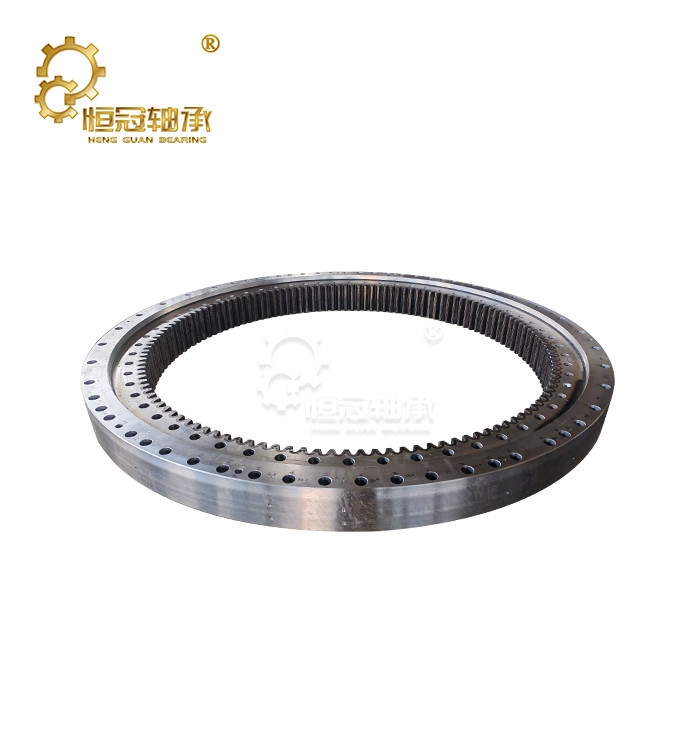
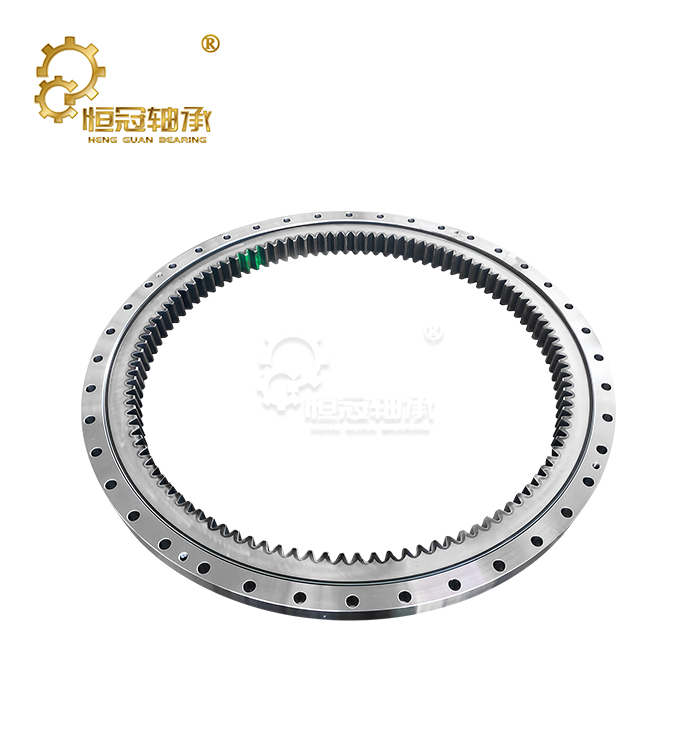
Heavy lifting equipment's rotational backbone is the port crane slewing bearing, which allows for smooth movement while carrying huge axial, radial, and moment loads at the same time. These precision-engineered parts are different from regular spinning bearings because they can handle forces in more than one way that are higher than 10,000 tons in some situations.
Structural Classifications and Load Distribution
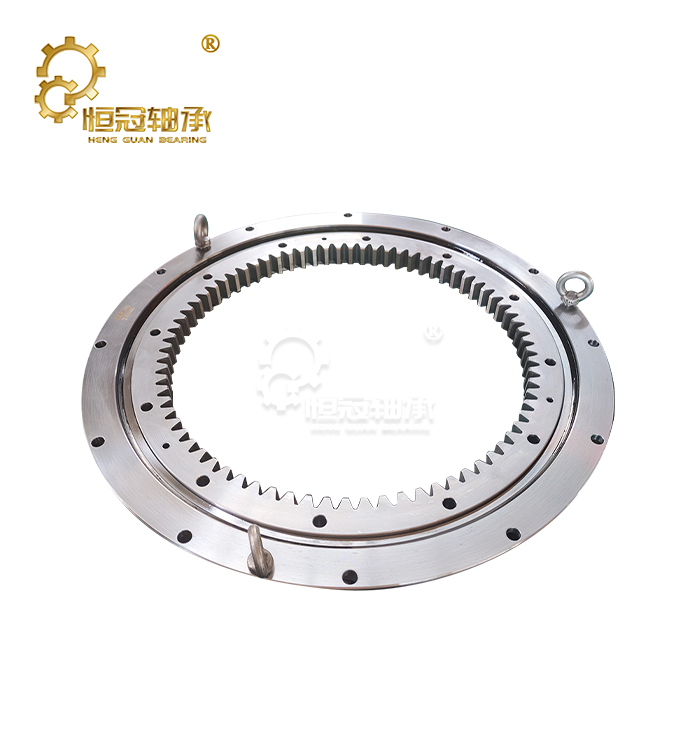
The engineering behind load distribution that works well decides how long a bearing lasts and how reliably it works. Single-row four-point contact ball bearings are small enough to fit in places where room is limited and transfer power efficiently thanks to their optimized contact angles. These bearings work great in places where the placement height is limited and still have enough load capacity for medium-duty tasks.
Double-row ball bearings can handle more radial load, so they can be used in heavy-duty situations where horizontal forces are important. The two-row design spreads stress over more than one load line, which lowers stress on individual parts and greatly increases their useful life compared to single-row designs.
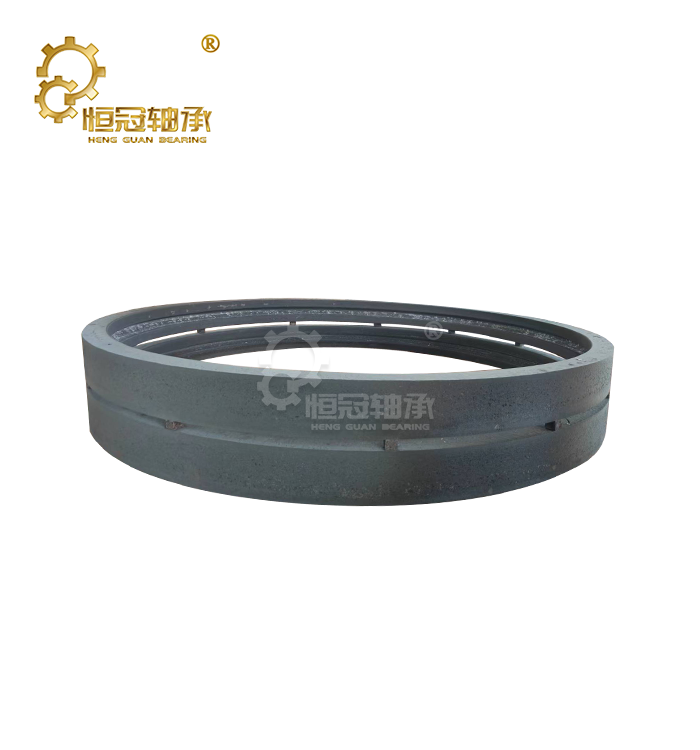
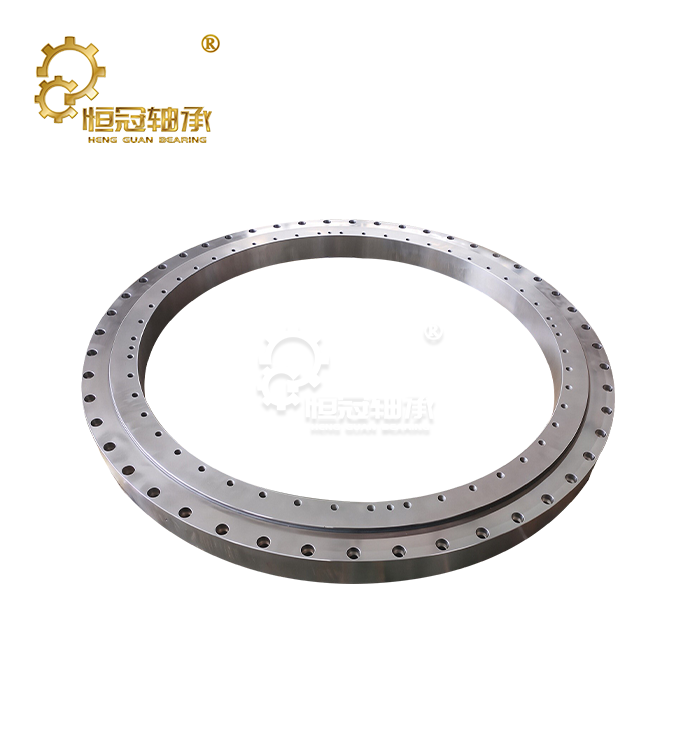
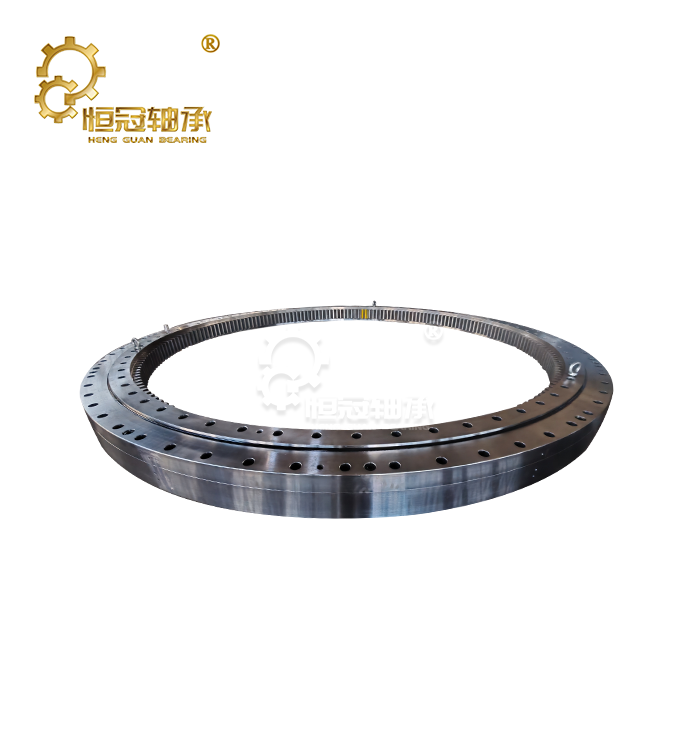
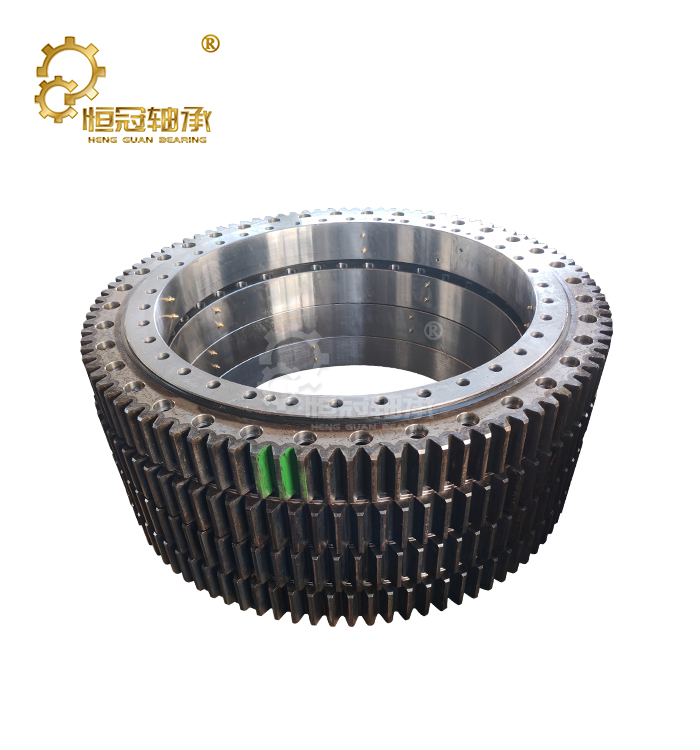
Three-row port crane slewing bearing are the best load-bearing equipment for the toughest jobs. Our three-row roller design, which starts at 4238mm x 270mm, evenly distributes load across stress points in multiple directions. Heavy-duty stackers and container tower cranes are just two of the most difficult port crane jobs that this design can handle.
Material Engineering and Environmental Resistance
The choice of material has a direct effect on how well a bearing works in coastal settings that are corrosive. Base materials made from 42CrMo and 50Mn special alloy steels have great strength-to-weight ratios and don't wear out even when loaded and unloaded many times. Specialized heat treatments are used on these metals to improve their resistance to stress concentration spots and grain structure.
GCr15SiMn high-purity bearing steel is used to make rolling elements that are very hard and stable in their dimensions. This choice of material provides consistent performance across the wide range of temperatures that are typical in ports, from very cold winters to very hot summers.
Imported nitrile rubber or fluororubber materials are used in sealing technology because they are good at resisting salt spray, humidity, and wave impact. These high-tech sealing systems make many barriers against contamination and keep the lubrication's integrity over long periods of time between repair intervals.
Boosting Uptime: Maintenance Tips and Troubleshooting for Port Crane Slewing Bearings
As an example, well-maintained slewing bearings can last more than 100,000 hours in ideal conditions, so proactive maintenance methods have a big effect on operational uptime. Systematic tracking finds possible failures early, stopping catastrophic failures that could shut down equipment for weeks.
Failure Indicators and Diagnostic Protocols
Acoustic signals that don't sound right are often the first sign that a bearing is wearing out. Sounds like grinding, clicking, or banging that don't make sense could mean that the track is damaged, the rolling elements are wearing out, or the lubrication is breaking down. These problems can be found by modern vibration research tools weeks before repair teams can see them.
Through frequency research, vibration patterns show important details about the state of the bearings. An uneven load distribution or broken rolling elements could be the cause of excessive radial vibration. On the other hand, axial vibration could mean that there are problems with the thrust race or that the installation is not aligned correctly. Temperature tracking helps vibration analysis by finding places where grease is breaking down or there is too much friction.
Lubrication Management and Environmental Protection
Using the right greasing methods can greatly increase the life of bearings while lowering the amount of friction and heat they produce. Marine-grade lithium complex greases can handle being exposed to salt water and keep their thickness over a wide range of temperatures. The amount of environmental exposure should affect how often bearings are serviced. Bearings in places with a lot of pollution should be serviced more often.
As part of protecting the environment, seals need to be checked and replaced on a frequent basis. When seals are damaged, contaminants can get in and speed up the wear rate dramatically. Using protection covers during long periods of shutdown stops moisture from building up and starting rust on important bearing surfaces.
Load management techniques make sure that bearings work within the limits of their design for the whole time they are in use. When there is a lot of wind or an emergency stop, operating methods should take dynamic load factors into account. Spreading the load evenly across several bearing points stops stress buildup that could cause the part to fail early.
Choosing the Right Port Crane Slewing Bearing: Brand and Product Comparisons
To choose the best bearing options, you need to look at the manufacturer's skills, the product specs, and the long-term support system. Leading makers set themselves apart by using high-quality materials, precise manufacturing, and technical knowledge that is specific to the application.
Performance Metrics and Durability Factors
Precision in manufacturing is directly linked to how smoothly things work and how long bearings last. Precision-machined raceways make sure that the load is spread out evenly and that there is as little contact loss as possible during spinning. Different levels of performance are available for tolerance standards meeting P4, P5, and P6 accuracy grades, based on the needs of the application and the budget.
Depending on how much the port crane slewing bearing is exposed to the surroundings, sealed bearings are better than open bearings. Sealed bearings protect against pollution better, but they may need more complicated upkeep. Open designs make it easier to check and grease, but they also require stricter environmental protection measures.
Custom production makes it possible to optimize for unique operating needs. Special sizing lets different crane shapes fit while keeping the structure strong. Custom seal designs are used to deal with problems like extreme temperature changes or chemical exposure that are common in certain types of port sites.
Value Analysis and Investment Considerations
When comparing price and worth, you need to look at the total cost of ownership as well as the initial buy price. Even though they cost more up front, premium bearings often give you a better return on your investment through longer service life, less upkeep, and better operating reliability. In busy port facilities, the costs of downtime can be higher than the costs of bearing replacement within hours of an unexpected shutdown.
Quality assurance badges give people faith in the standards of production and the stability of the product. Quality management systems that are ISO9001 approved make sure that manufacturing processes can be repeated and that quality is controlled throughout the whole production cycle. Advanced CNC cutting and heat treatment skills show that the company has invested in the precise tools needed to make high-quality products.
Procurement Guide: How to Source Premium Port Crane Slewing Bearings Efficiently
Procurement strategies that work well balance controlling costs with meeting quality standards and making sure that goods are delivered on time so that operations aren't interrupted too much. When judging a supplier, you shouldn't just look at price; you should also look at technical ability, manufacturing capacity, and infrastructure for help after delivery.
Supplier Assessment and Partnership Development
The first step in evaluating technical competence is to look at the engineering skills and application knowledge of the maker. Suppliers with a lot of experience with port cranes know how to deal with the unique problems that come up during operations and can make helpful suggestions for improving the design. Evaluations of manufacturing facilities show how much can be made, how quality is controlled, and how well the facility can keep its supply promises during times of high demand.
Premium suppliers are different from commodity-bearing suppliers because they offer custom design services. Being able to change common designs to fit unique needs guarantees the best performance while keeping costs low. If a supplier offers full engineering help, they can find ways to make things better during the planning phase, so changes that are needed after installation don't have to be expensive.
Negotiation Strategies and Contract Terms
Operators who are in charge of multiple crane setups can save a lot of money by ordering in bulk. Volume price systems encourage long-term relationships and make sure that supplies are always available. When prices are negotiated, they should include room for future orders so that costs can be predicted during budget planning stages.
After-sales support promises make sure that customers can get expert help, new parts, and emergency services for as long as the bearings are in use. Comprehensive support agreements can include on-site installation control, training in maintenance, and help with fixing that increases working uptime and builds up the company's own technical skills.
Maximizing Operational Efficiency: Installation and Design Standards for Port Crane Slewing Bearings
Following the right assembly steps and international design standards is the only way to get the full bearing performance potential while also making sure operating safety and following the rules. Installation mistakes are the main reason why bearings fail too soon, so following a set of steps is necessary for success.
Installation Framework and Quality Control
Step-by-step installation methods make sure that setup mistakes are kept to a minimum and that the results are the same for all installs. To avoid uneven load distribution that speeds up wear patterns, foundation preparation needs to be perfectly aligned and level. To get the right setting without putting too much stress on the bearings, the bolt pressure specs must be strictly followed.
During the installation of the port crane slewing bearing, quality control steps make sure that important factors are met before the equipment is turned on. Measuring the alignment makes sure the geometry is correct, and checking the movement makes sure it works smoothly when there is no load. Documentation standards make installation records that can be used to support guarantee claims and plan for future upkeep.
Standards Compliance and Future Technology Trends
International design standards, such as ISO and DIN specifications, make sure that the products can work with tools made by other companies around the world and meet safety standards in many different legal areas. Compliance paperwork makes it easier to certify equipment and get insurance approval, which are both necessary for business port activities.
Advances in material technologies are always changing to make things last longer and work better. Ceramic rolling parts are better at resisting wear and require less upkeep. Smart bearing technologies with built-in sensors allow tracking of state in real time and planned maintenance, which improves service intervals and stops sudden failures.
Conclusion
Premium port crane slewing bearings are important investments for modern port facilities that want to keep costs down, improve safety, and keep operations running smoothly. The right choice, installation, and upkeep of these precision parts have a direct effect on the uptime of equipment, the amount of goods that can be moved, and the revenue of the business. This article explains a complete method that buying professionals and maintenance teams can use to get the best bearing performance while keeping the total cost of ownership as low as possible over long service life cycles.
FAQ
What factors determine the service life of port crane slewing bearings?
Load management, lube quality, environmental protection, and precise fitting are the main things that affect how long something will last. Bearings that are well taken care of and work within their design limits can last 100,000 hours or more. Exposure to salt, extreme temperatures, and high levels of contamination all have a big effect on how long something lasts. This is why good sealing and lubrication are so important for marine uses.
How do three-row roller bearings compare to single-row designs for heavy-duty applications?
Three-row roller bearings spread loads across more than one contact point, making them more stable and able to handle more weight than single-row types. This arrangement is better at handling axial, radial, and moment loads when they are all added together. It's perfect for big container gantry cranes and large port equipment. The starting costs are higher, but the better load distribution usually means that the service lasts longer and needs less upkeep.
What maintenance practices are most critical for extending bearing life in marine environments?
The most important upkeep tasks are regularly greasing with marine-grade oils, checking and replacing seals on a regular basis, and taking steps to avoid contamination. Monitoring vibrations and temperatures can help find problems early on, and managing loads correctly can stop stress buildup that speeds up wear. Protecting the environment during long shutdowns stops rust from starting on important bearing surfaces.
Heng Guan: Your Trusted Port Crane Slewing Bearing Manufacturer
Luoyang Heng Guan Bearing Technology makes great port crane slewing bearing solutions that are designed to work reliably and with as little downtime as possible. With more than 20 years of experience in the field and a team of more than 50 specialized engineers, we only work on creating advanced bearing technologies that meet or exceed the strict requirements of the sea environment. We are in China's famous "Bearing Town," and we use modern CNC machining and quality control systems that are ISO9001 certified to make bearings with diameters from 20 to 10000 mm and precision grades that meet P0, P6, P5, and P4 standards. We have a wide range of products, including single-row four-point contact, three-row roller, and double-row ball designs that work best in port cranes. Email our technical team at mia@hgb-bearing.com to talk about your unique needs and find out how our custom design services can help your port crane work better.
References
1. International Organization for Standardization. "Rolling Bearings - Dynamic Load Ratings and Rating Life." ISO 281:2007, Geneva: ISO Press, 2007.
2. American Society of Mechanical Engineers. "Design and Application Guidelines for Port Crane Slewing Ring Bearings." ASME Standards Publication, New York: ASME Press, 2019.
3. Maritime Equipment Manufacturers Association. "Heavy Lifting Equipment Bearing Performance Standards in Marine Environments." Technical Report MEMA-2020-03, Washington D.C., 2020.
4. European Committee for Standardization. "Slewing Bearings - Dimensions, Tolerances and Load Ratings." DIN 12021-1:2018, Brussels: CEN Publishing, 2018.
5. Port Equipment Research Institute. "Maintenance Best Practices for Large-Scale Port Machinery Bearings." Industrial Bearing Technology Quarterly, Volume 45, Issue 2, 2021.
6 .Society of Naval Architects and Marine Engineers. "Corrosion Resistance and Material Selection for Marine Industrial Bearings." SNAME Technical Paper T&R-2019-15, Jersey City: SNAME Publications, 2019.

WHAT OUR CUSTOMERS SAY
Here is the customer's evaluation of us