




How to Select the Right Crossed Roller Internal Gear Bearing?
Choosing the right crossed roller internal gear bearing affects how smoothly, accurately, and reliably a rotating system performs. Any poor option is a loss positional precision, early wear and expensive redesign. Each parameter demands careful attention since this crossed roller internal gear bearing combines load support, accurate rotation, and an integrated gear in one compact package. At Heng Guan Bearing, we help engineers make these selections to ensure the final selection is suitable for the actual operating circumstances. Keep reading to see what things to examine first.
What Load Capacity and Gear Specifications Should You Check First?
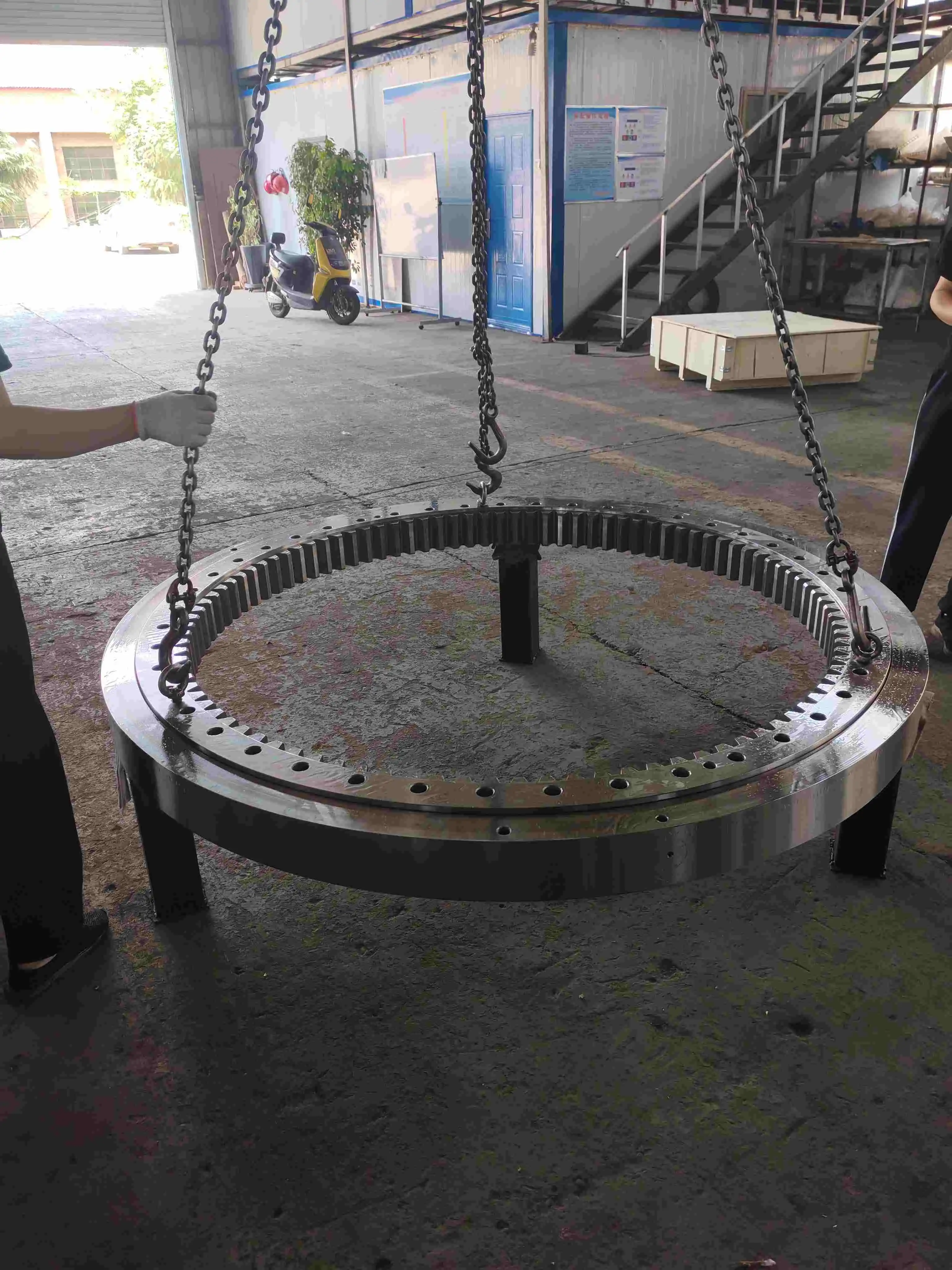
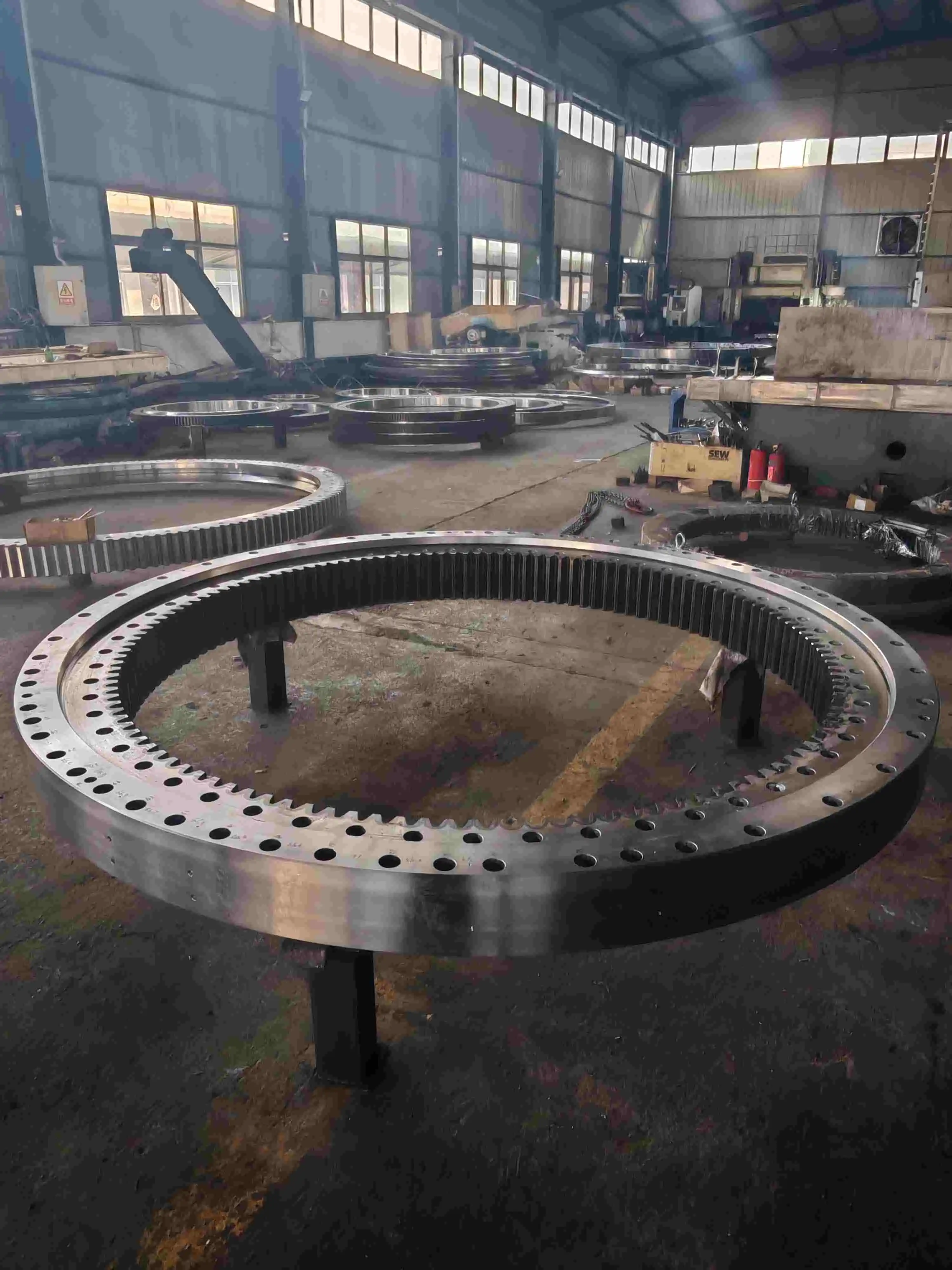
Begin with the loads your application produces. A crossed roller internal gear bearing handles axial loads, radial loads, and tilting moments simultaneously. You should state the maximum values together with the predicted duty cycle. The cylindrical rollers are arranged in a cross pattern between the raceways, providing high stiffness and strong moment capacity in a small section. These features make it suitable for robotics, medical equipment, and automation tables.
Then check the gearing: module, number of teeth, tooth hardness, and pinion position must correspond to your drive and the torque you have to transmit. The internal gears are CNC-shaped with an involute profile and a standard 20° pressure angle in modules M5 to M18, with the tooth surface treated to HRC 52–58. Heng Guan Bearing may change these gear specifications to suit your design, so that the bearing and drive are one system. Here is a table of the important things to check.
| Check Item | Why It Matters |
|---|---|
| Axial and radial load | Determines bearing size |
| Tilting moment | Affects raceway design |
| Module and tooth count | Matches the drive pinion |
| Gear tooth hardness | Wear resistance under drive torque |
Technical Specifications
| Parameter | Specification |
|---|---|
| Structure Type | Single-row crossed cylindrical roller, 90° arrangement |
| Gear Type | Internal gear, involute profile, 20° pressure angle (standard) |
| Gear Module | M5 – M18 (diameters customizable) |
| Ring Material | 42CrMo high-strength bearing steel (50Mn optional for ultra-heavy loads) |
| Raceway Hardness | HRC 55–62, induction hardened |
| Gear Tooth Hardness | HRC 52–58, surface hardened |
| Precision Grades | P0, P6, P5, P4 |
| Preload | Set during precision grinding of spacer rings; no shims |
| Seals | Dual-lip NBR contact seals (FKM optional for marine or high-dust use) |
| Lubrication | Grease nipples on the outer ring for re-lubrication without disassembly |
|
|
How Do Bearing Dimensions and Mounting Requirements Affect Selection?
Check it's clear, then validate the space available. The inner diameter, outer diameter, and height must suit your housing. Internal gear provides a compact arrangement, keeping the pinion within the ring. Additional considerations are bolt quality, mounting holes, and flange flatness, so a well-supported bearing spins smoothly and distributes stress to all crossed roller cages.
Heng Guan Bearing’s slewing bearing sizes range from 50mm to 10,000mm in diameter. Our team of engineers can adapt hole patterns, seals, and structural details to your equipment. The crossed roller cage internal gear bearing is engineered to fit your mounting surfaces, making installation easier and performance steady from the first spin. Send us your designs, and our engineers will assist in verifying the measurements before manufacturing. If you require a new bearing for an existing application, tell us the model number or specifications, and we can also measure and reverse engineer worn parts. Examples of our series 07 are shown in the table below.
| Model | Inner Diameter (mm) | Outer Diameter (mm) | Height (mm) | Gear Type | Preload |
|---|---|---|---|---|---|
| 07-0673-00 | 541 | 771 | 70 | Internal gear | Yes |
| 07-0770-00 | 635 | 872 | 70 | Internal gear | Yes |
| 07-1075-01 | 962 | 1,176 | 90 | Internal gear | Yes |
Accuracy, Rigidity, and Preload Requirements for Precision Applications
The motion of precision equipment must be exact and reproducible. Heng Guan Bearing provides accuracy levels from P0 to P4. You may choose the appropriate precision level for your machine, whether it is basic automation or a high-end medical or aerospace application. Crossed roller design provides rigidity, and the preload may be modified to reduce backlash and enhance alignment. Good design of crossed roller cages ensures that the rollers are consistently spaced and aligned, allowing for smooth rotation, stable torque, and silent operation.
If you want precision placement, ask your supplier about running accuracy, preload range, and torque stability in combination rather than individually. We don't require shims. We set our preload when we precisely grind the spacer rings. If you would like help setting these targets, email mia@hgb-bearing.com with your application details, and our team will suggest a suitable configuration. The table below summarizes how each requirement supports precision.
| Requirement | Benefit |
|---|---|
| Accuracy grade P0 to P4 | Matches precision level |
| Adjustable preload | Better positioning |
| Crossed roller cages | Smooth, even rotation |
| Hardened raceways (HRC 55–62) | Stable accuracy over long service |
How Do Operating Speed and Environmental Conditions Affect Bearing Life?
The service life of the bearing depends on speed, temperature, dust, and moisture. A crossed roller internal gear bearing operating at moderate speeds will benefit from consistent lubrication and well-fitted crossed roller cages that minimize friction and ensure roller alignment. In dusty mining sites or humid port equipment, protective seals and the right surface treatments keep the bearing clean and operating smoothly.
Extended service life is achieved by optimal grease selection, a regular inspection schedule, and careful tightening of mounting nuts. With regular maintenance and use within the rated capacity, service life may be extended to 20,000 to 50,000 operating hours. Our capability to adapt materials and sealing makes Heng Guan Bearing products custom-fit to your environment and trusted by construction, mining, port, wind power, and other sectors in China, Europe, America, and Asia. Standard models are normally sent within 15 to 20 days, and special configurations take 35 to 45 days. The appropriate fit means longer maintenance intervals and reliable production.
| Environment | Recommended Measure |
|---|---|
| Dusty mining sites | Protective seals and regular re-lubrication |
| Humid port or marine equipment | FKM seals and protective coatings |
| Chemical processing | Corrosion-resistant alloy options |
| Continuous operation | Regular inspection and bolt torque checks |
Conclusion
The selection of a crossed roller internal gear bearing is considered from the aspects of load, gear details, dimensions, accuracy, and environment combined. Heng Guan Bearing allows you to choose a reliable solution for every application with customized design and meticulous production.
FAQ
Q: What loads can a crossed roller internal gear bearing carry?
A: It handles axial loads, radial loads, and tilting moments together.
Q: Why is the internal gear useful?
A: It keeps the pinion inside the ring for a compact layout.
Q: Which accuracy grades are available?
A: P0, P6, P5, and P4.
Q: What do crossed roller cages do?
A: They keep rollers evenly spaced for smooth, quiet rotation.
Q: Can the bearing be customized?
A: Yes. Size, gear details, holes, and seals can be adjusted to your needs.
Q: What is the typical delivery time?
A: Standard models take about 15–20 days. Custom configurations take about 35–45 days.
Ready to Select Your Bearing? Contact Us Today
Contact Heng Guan Bearing for a tailored solution:
- Slewing bearings from 50 mm to 10,000 mm, P0–P4 precision
- ISO 9001-certified production, custom sizing, and gear options
- Engineering support for load analysis, bearing selection, and installation guidance
- Proven solutions for robots, medical equipment, marine cranes, and wind power
Send your load data and drawings to mia@hgb-bearing.com or Contact Us, and our engineers will recommend the right crossed roller internal gear bearing for your project. Let's build precise, reliable rotation together.
References
1. Harris, T. A., & Kotzalas, M. N. (2006). Essential Concepts of Bearing Technology. CRC Press.
2. Harris, T. A., & Kotzalas, M. N. (2006). Advanced Concepts of Bearing Technology. CRC Press.
3. International Organization for Standardization. (2007). ISO 281: Rolling Bearings – Dynamic Load Ratings and Rating Life.
4. Budynas, R. G., & Nisbett, J. K. (2014). Shigley's Mechanical Engineering Design. McGraw-Hill.
5. Hamrock, B. J., Schmid, S. R., & Jacobson, B. O. (2004). Fundamentals of Machine Elements. McGraw-Hill.
6. Rothe Erde. Slewing Bearings Technical Catalogue. Thyssenkrupp Rothe Erde.

WHAT OUR CUSTOMERS SAY
Here is the customer's evaluation of us