




What Are the Advantages of Conveying System Slewing Bearings?
A Conveying System Slewing Bearing is applicable for conveying and material handling equipment requiring controlled rotation and carrying heavy axial loads, radial loads and tilting moments. Compared with the traditional bearing, which is largely used to support the Shaft, the slewing bearing integrates the raceway, rolling body and mounting interface into a large-diameter rotating support. In applications such as ore conveyor systems, stacker-reclaimers, crusher feed equipment, cement conveying systems and concrete batching machines, the bearing has to perform more than just turn. It has to transmit the loads between the rotating structure and the stationary frame and keep an adequate running accuracy in continuous operation conditions. If the application has large combined loads, a three-row roller design is particularly effective. The layout of the roller rows to accommodate different major load components permits the design to be high load-carrying in a comparatively compact axial section. For example, the product specified by LYHGB for conveying applications adopts three-row roller construction, 50Mn or 42CrMo ring materials and GCr15SiMn rolling elements. The overall size is 2541 × 1878 × 260 mm . Custom dimensions are also available for applications with differing space or load requirements.

Why Slewing Bearings Matter in Conveying Equipment?
Conveying machinery often operates under conditions that are more demanding than those found in simple rotary mechanisms. The rotating structure may carry a conveyor boom, feed mechanism, reclaiming assembly, or other equipment while material loads vary continuously.
The bearing therefore has to accommodate several forces at the same time. A typical conveying application may experience:
- Axial forces caused by the weight of the rotating assembly and material load
- Radial forces transferred through the supporting structure
- Tilting moments generated by an offset load or long conveyor boom
- Shock and vibration caused by uneven material flow
- Contamination from dust, fines, moisture, and other environmental factors
- Repeated start-stop or continuous-duty operating cycles
A properly selected slewing bearing provides the interface between the rotating and stationary structures. The objective is not simply to select the bearing with the largest load rating. Engineers also need to consider mounting stiffness, bolt arrangement, lubrication, sealing, rotation speed, operating temperature, and the expected duty cycle.
Supporting Combined Loads
One of the main reasons to use a large slewing bearing is its ability to support combined loading. Three-row roller designs are particularly suitable for applications where axial, radial, and moment loads occur simultaneously.
The roller rows provide separate contact paths within the bearing assembly, allowing the main components of the applied load to be distributed through an appropriate part of the raceway system. This arrangement can provide a high load capacity compared with more compact bearing configurations when the application requires substantial structural support.
This does not mean that every three-row bearing automatically has a higher usable capacity than every alternative. The actual capacity depends on bearing dimensions, roller geometry, material properties, heat treatment, raceway design, mounting conditions, and the applied load combination. For this reason, bearing selection should be based on calculated operating loads rather than bearing type alone.
Maintaining Structural Stability During Rotation
Conveying systems can have large rotating structures with their center of gravity positioned away from the bearing center. This creates a tilting moment that can become significant even when the direct radial load appears manageable.
A large-diameter slewing bearing provides a wide support geometry between the rotating and stationary structures. This can help the system manage overturning moments while maintaining the required rotational relationship between the two assemblies.
For equipment such as stacker-reclaimers or rotating conveyor platforms, this structural function is especially important. The bearing is effectively part of the machine's load-transfer system rather than an isolated replacement component.
Key Advantages of a Conveying System Slewing Bearing
The main advantages come from matching the bearing architecture to the operating conditions of conveying equipment. These benefits include high combined-load capacity, structural support, design flexibility, and suitability for demanding operating environments.
High Load-Carrying Capability
A three-row roller configuration is one of the most important features for high-load conveying applications. Compared with simpler bearing arrangements, it can provide substantial load capacity in applications where axial, radial, and moment loads must be considered together.
This makes the configuration suitable for equipment that supports heavy rotating assemblies or experiences significant overturning forces. Ore-handling equipment, stacker-reclaimers, crusher feed systems, and other bulk-material machinery can benefit from this arrangement when the calculated loads justify its use.
The key advantage is not simply a high nominal rating. A correctly selected bearing distributes the applied forces through the raceways and rollers while maintaining acceptable contact stress. This helps engineers design a Conveying System Slewing Bearing rotating support that is capable of handling the actual load spectrum rather than only the static weight of the equipment.
Better Suitability for Heavy and Continuous-Duty Applications
Many conveying systems are expected to operate for extended periods, sometimes as part of continuous production processes. In these environments, the bearing is exposed to repeated loading cycles rather than occasional movement.
The conveying-system bearing listed by LYHGB is specifically described for continuous-duty material-handling applications and provides a three-row roller structure intended for high load capacity.
However, continuous operation should always be treated as a design condition rather than a blanket performance guarantee. Bearing life depends on load magnitude, rotation frequency, lubrication condition, contamination, mounting accuracy, temperature, and maintenance.
When these parameters are properly controlled, the bearing can provide stable support over a long operating period and reduce the likelihood of premature raceway or rolling-element damage.
Strong Support for Large Rotating Structures
Conveyor platforms and material-handling machines can have considerable structural dimensions. A conventional shaft-and-bearing arrangement may require additional structural components to transmit loads and support the rotating assembly.
A slewing bearing provides a large-diameter interface that can simplify the mechanical arrangement. The inner and outer rings can be bolted to the mating structures, creating a direct load path between the rotating assembly and its base.
This is particularly valuable when the equipment requires a large opening through the center or when the rotating structure is too large for a conventional shaft bearing arrangement.
Material and Heat-Treatment Flexibility
Material selection has a direct effect on raceway strength, fatigue resistance, and overall bearing performance. The product information for this conveying application identifies 50Mn and 42CrMo as ring materials and GCr15SiMn as a rolling-element material.
These material choices should not be viewed independently from manufacturing and heat treatment. The final performance of a slewing bearing depends on the complete combination of material grade, forging or forming process, machining accuracy, raceway treatment, hardness, dimensional control, and inspection.
For demanding applications, buyers should therefore ask for material certificates, heat-treatment records where applicable, dimensional inspection data, and product documentation rather than evaluating the material name alone.
How the Three-Row Structure Works?
Understanding the bearing structure helps engineers determine whether this configuration is appropriate for their conveying equipment.
Separate Roller Paths for Different Load Components
A three-row roller slewing bearing uses three sets of rollers arranged within the bearing raceway system. The geometry is designed to accommodate the main axial, radial, and moment components of the applied load.
The load is transferred from the rotating structure through the inner or outer ring, into the rolling elements and raceways, and finally into the stationary support structure. Because the bearing incorporates multiple roller paths, the design can achieve high load capacity without requiring an excessively large axial section.
The actual distribution of load between the roller rows depends on the bearing geometry and applied load combination. Engineers should therefore use manufacturer load-rating data and application calculations rather than assuming that each row carries an identical portion of the load.
Sealing Against Dust and Contaminants
Material-handling equipment frequently operates in dusty environments. Mining, cement, aggregate, and bulk-material applications can expose bearing assemblies to abrasive particles that may accelerate raceway and roller wear.
Integral sealing can reduce the entry of external contaminants and help retain lubricant inside the bearing. The product information specifically identifies sealing as a feature for conveying applications exposed to dust and contaminants.
Seals are not a substitute for maintenance, however. Damaged seals, excessive contamination, or prolonged exposure to water can still affect bearing performance. Seal condition should therefore form part of the regular inspection program.
Comparing Three-Row Roller Bearings with Other Slewing Bearing Designs
A three-row roller bearing should not automatically be considered the best option for every conveying application. Different slewing bearing configurations are designed for different combinations of load, speed, space, accuracy, and cost.
Three-Row Roller Versus Single-Row Designs
Single-row ball slewing bearings can be attractive when the applied loads are moderate and the equipment benefits from a simpler, lighter configuration. They may also offer advantages in applications where rotational resistance and cost are important selection factors.
Three-row roller bearings become more attractive when load capacity and structural support are the dominant requirements. Their multi-row roller arrangement can accommodate substantial combined loading and tilting moments.
The correct comparison should therefore consider the complete load case, not just the purchase price or nominal bearing diameter.
When a More Compact Bearing May Be Appropriate?
Not every conveyor requires a large three-row bearing. If the rotating structure is relatively light, the applied moment is small, and the operating cycle is less demanding, a more compact slewing bearing may provide a more economical solution.
Using a larger bearing than necessary can increase purchase cost, mounting requirements, structural weight, and drive requirements. Engineers should balance capacity against the actual operating envelope.
This is also why a load calculation should precede procurement. A supplier can recommend the appropriate configuration more accurately when the customer provides actual load and operating information.
Maintenance Practices That Protect Bearing Performance
Even a correctly selected bearing can fail prematurely if installation and maintenance are neglected.
Monitor Lubrication and Seals
Operators should inspect the conveying system slewing bearing for signs of grease leakage, seal damage, abnormal noise, unusual temperature rise, and contamination.
The manufacturer's maintenance guidance recommends monitoring bearing temperature, checking mounting bolt torque, and inspecting seals during scheduled maintenance.
The specific lubrication interval should be established from the manufacturer's recommendations and the actual operating conditions.
Inspect Mounting Bolts
Bolt condition is an important part of slewing-bearing reliability because the bearing transfers substantial structural loads through its mounting connection.
Periodic bolt inspection should follow the bearing manufacturer's specified procedure and tightening values. SKF guidance, for example, calls for attention to attachment-bolt preload and recommends periodic checks based on operating conditions.
A bearing should not be considered correctly installed simply because all bolts are physically tight. Correct bolt grade, tightening method, preload, mounting-surface condition, and sequence all matter.
Track Changes in Operating Behavior
Unexpected changes in temperature, noise, vibration, rotation resistance, or grease condition can indicate developing problems.
For large conveying equipment, condition monitoring can help maintenance teams identify changes before they develop into a major failure. The goal is to move from emergency replacement toward planned inspection and maintenance.
Standard or Customized Conveying System Slewing Bearing?
The choice between a standard bearing and a customized design depends on the machine's dimensional and load requirements.
When Standard Bearings Make Sense?
A standard configuration can be suitable when the equipment has established dimensions and load conditions that correspond closely to an existing bearing design.
Advantages can include shorter engineering cycles, easier replacement planning, and a more predictable procurement process.
However, the standard option should still be checked against the actual load calculation, mounting pattern, drive arrangement, lubrication system, and environmental conditions.
When Custom Engineering Is Better?
Customization becomes valuable when the equipment has unusual mounting dimensions, limited installation space, special load requirements, or an existing bearing that needs to be replaced without major structural modification.
LYHGB states that it supports custom dimensions, product design based on customer specifications, and old-product mapping for non-standard applications.
For OEM projects, this can be particularly useful because the bearing can be evaluated as part of the complete machine rather than selected as an isolated component.
What Should Buyers Provide to the Manufacturer?
A detailed inquiry helps the manufacturer perform a more meaningful technical evaluation.
When requesting a conveying system slewing bearing, buyers should ideally provide the following:
- Bearing outside and inside diameter requirements.
- Overall bearing height or available installation space
- Maximum axial load
- Maximum radial load
- Maximum tilting moment
- Rotation speed and duty cycle
- Operating temperature
- Environmental conditions
- Mounting-hole pattern
- Lubrication requirements
- Gear or drive requirements, if applicable
- Existing bearing drawings or identification information
- Expected service life or maintenance requirements
A drawing is especially useful for replacement projects. If a drawing is unavailable, photographs, dimensions, existing bearing markings, load data, and application information can help the manufacturer identify a suitable configuration.
This approach is more reliable than requesting a bearing based only on outside diameter.
Why Supplier Capability Matters?
For large industrial slewing bearings, supplier selection should cover more than price.
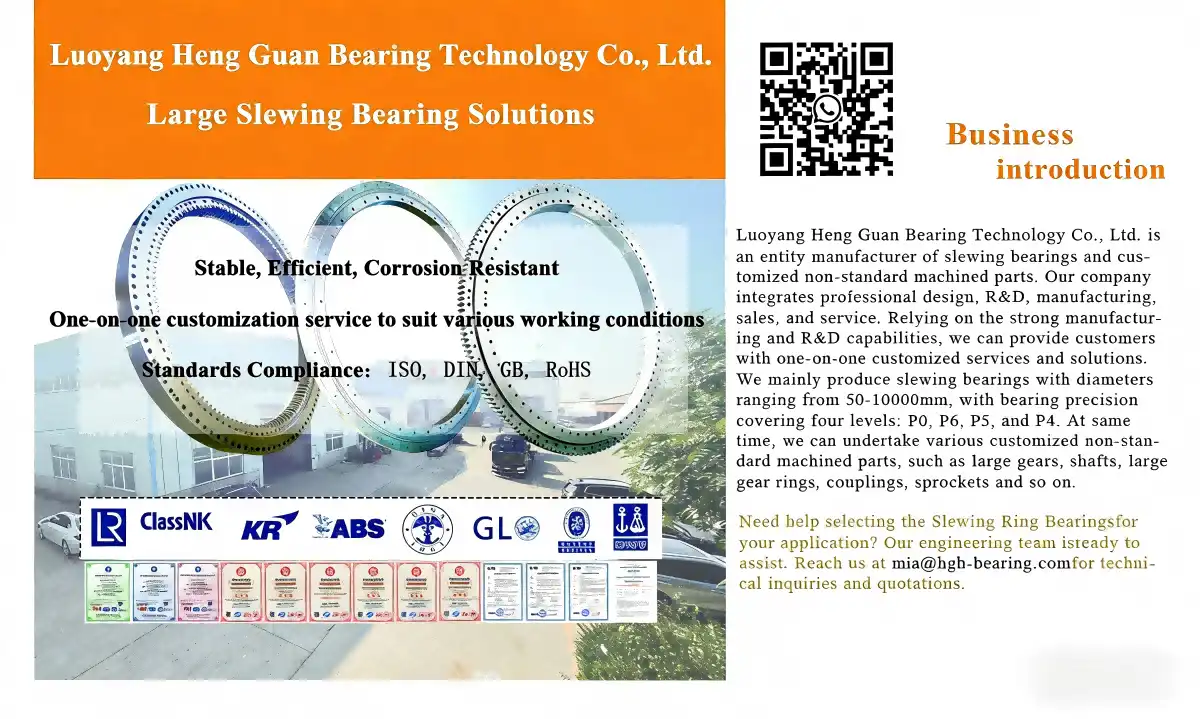
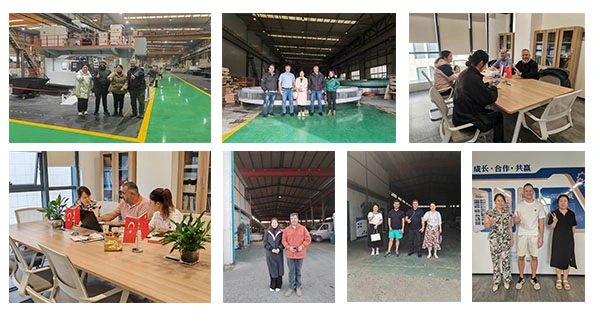
A capable manufacturer should be able to demonstrate appropriate machining equipment, inspection capability, material control, heat-treatment processes, and engineering support.
The LYHGB product page identifies CNC vertical lathes, CNC quenching machines, and CNC gear-shaping equipment and states that its facility maintains ISO 9001 certification and RoHS compliance. It also states that the company supports custom engineering and customers in multiple international markets.
For procurement teams, these claims should be evaluated together with project-specific documentation, quality records, inspection reports, production capability, and technical communication.
A supplier that can review drawings, calculate loads, support installation, and provide replacement mapping may create more value than a supplier that only provides a catalog price.
Conclusion
A conveying system slewing bearing can provide an effective rotating support solution for demanding material-handling equipment where high combined loads, structural stability, and continuous-duty operation are important. Its three-row roller configuration is particularly suited to applications involving substantial axial loads, radial loads, and tilting moments, while large-diameter construction allows the bearing to support rotating structures without relying on a conventional shaft-and-bearing arrangement.
The advantages, however, depend on correct engineering rather than bearing type alone. Load calculations, mounting-surface accuracy, bolt preload, lubrication, sealing, operating environment, and maintenance all influence actual performance and service life. A three-row roller bearing may be an excellent choice for heavy conveying machinery, but a more compact configuration can be more economical when the load requirements are lower.
For OEMs and replacement buyers, the most effective procurement process is to provide complete operating parameters and drawings and work with a manufacturer capable of application evaluation and customization. By treating the slewing bearing as part of the complete conveying system—not simply as a replaceable component—engineers can make a more reliable decision on capacity, installation, maintenance, and long-term operating cost.
|
|
FAQ
1. What factors influence bearing lifespan in conveying applications?
The quality of the material is the main thing that affects how long a bearing lasts in harsh transportation conditions. When compared to regular carbon steels, high-strength alloy steels like 50Mn and 42CrMo are better at resisting stress and wear. Operating factors, such as load levels, pollution exposure, and the quality of the lubricant, have a big effect on how long a bearing lasts.
Extreme temperatures, water contact, and abrasive contamination in the environment can speed up bearing wear if the right safety steps are not taken. These environmental problems can be lessened by using the right sealing systems and lubricants, which also increases the service life.
2. Can bearings be customized for specialized industrial requirements?
Customization options let you get the best results for your application, taking into account things like size limits, load needs, and external factors. When normal goods can't meet the needs of an application, custom bearing designs can be made to fit specific mounting arrangements, sealing needs, and integrated gear systems.
During the customized process, the application is carefully analyzed, loads are calculated, and speed needs are spelled out. Engineers from experienced makers help with the planning process to make sure that the best bearings are chosen and that the system works well.
3. How do you evaluate supplier reliability and service capabilities?
When evaluating a supplier, you should look at their quality licenses, manufacturing skills, and expert support services. ISO certifications and qualifications specific to the business show that quality management is organized and that methods for constant growth are in place. Audits of manufacturing facilities show how well the facility can make things and how it controls quality.
Technical support services like application engineering, installation help, and service after the sale add a lot of value on top of the quality of the product. Bearing installation goes smoothly and performs at its best for a long time when suppliers offer full expert help.
Partner with Heng Guan for Premium Conveying System Solutions
Luoyang Heng Guan Bearing Technology Co., Ltd. stands as your trusted Conveying System Slewing Bearing manufacturer, combining decades of expertise with advanced manufacturing capabilities to deliver exceptional bearing solutions. Our comprehensive product range covers 20-10000mm diameter slewing bearings with precision grades from P0 to P4, ensuring optimal performance for your most demanding conveying applications. Located in China's renowned bearing manufacturing hub, we leverage state-of-the-art production equipment and rigorous quality control systems to manufacture bearings that exceed international standards. Contact our technical team at mia@hgb-bearing.com to discuss your specific requirements and discover how our customized bearing solutions can enhance your operational efficiency and reliability.
References
1. Johnson, M.R. & Peterson, K.L. "Advanced Slewing Bearing Design Principles for Heavy Industrial Applications." International Journal of Mechanical Engineering, Vol. 45, No. 3, 2023, pp. 127-143.
2. Chen, W.H. "Load Distribution Analysis in Three-Row Roller Slewing Bearings for Material Handling Equipment." Bearing Technology Quarterly, Vol. 28, No. 2, 2023, pp. 89-105.
3. Anderson, S.P. "Maintenance Strategies for Industrial Slewing Bearings in Harsh Environments." Maintenance Engineering Journal, Vol. 52, No. 4, 2023, pp. 234-251.
4. Liu, X.M. & Thompson, R.J. "Material Selection and Heat Treatment Optimization for Heavy-Duty Slewing Ring Applications." Materials Science and Engineering Review, Vol. 41, No. 1, 2023, pp. 78-94.
5. Rodriguez, C.A. "Comparative Performance Analysis of Conveying System Bearing Configurations." Industrial Equipment Engineering, Vol. 36, No. 6, 2023, pp. 156-172.
6. Miller, D.K. "Economic Impact of Bearing Selection on Material Handling System Lifecycle Costs." Industrial Engineering Economics, Vol. 29, No. 3, 2023, pp. 201-218.

WHAT OUR CUSTOMERS SAY
Here is the customer's evaluation of us