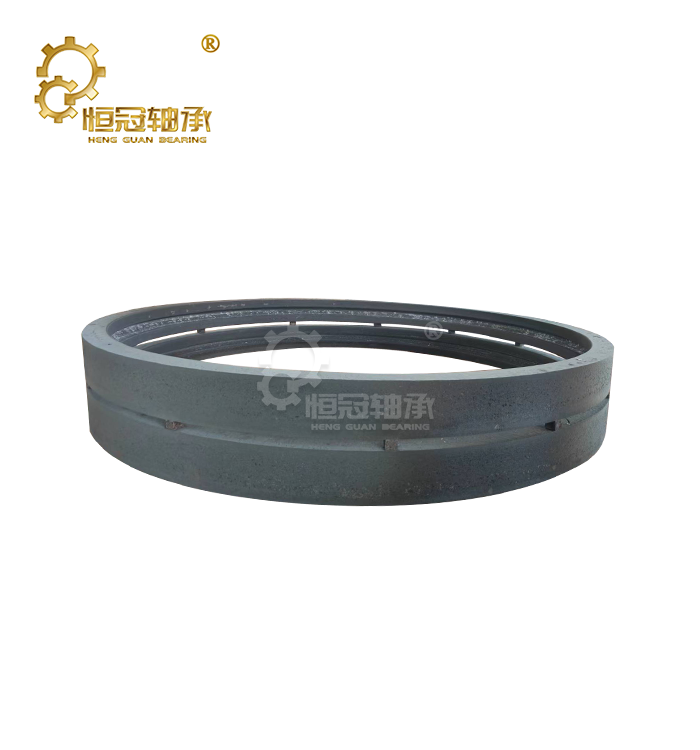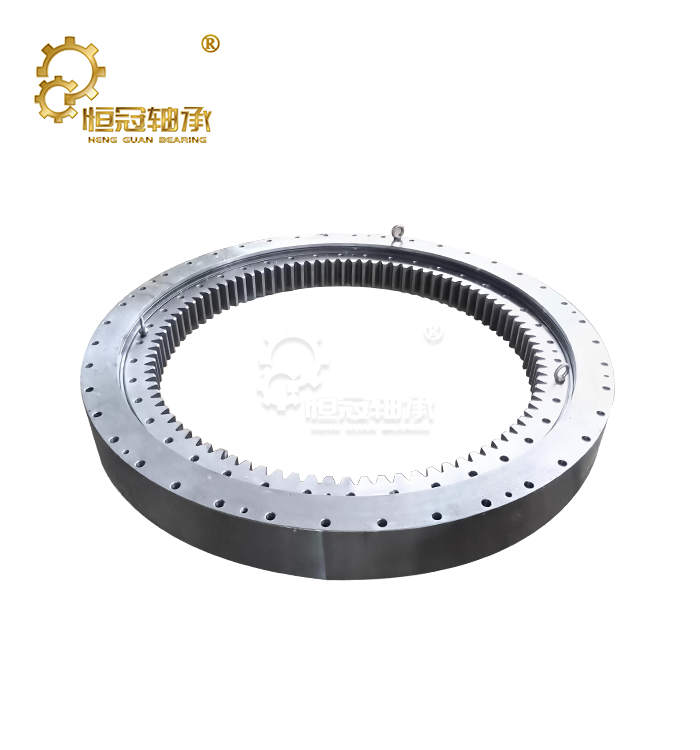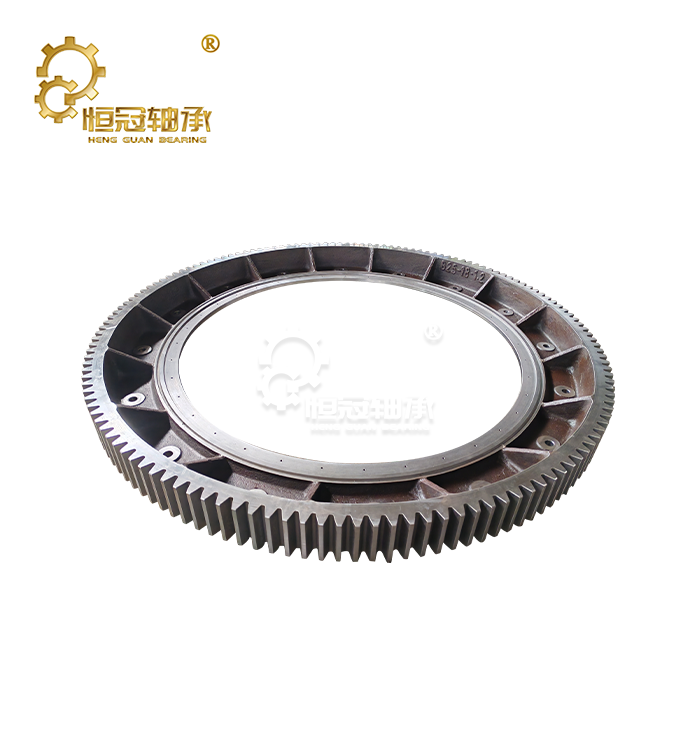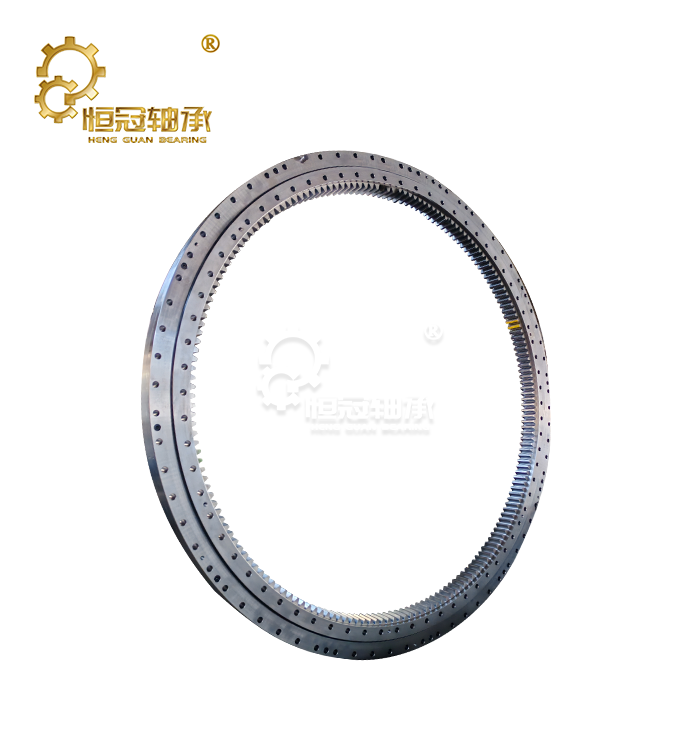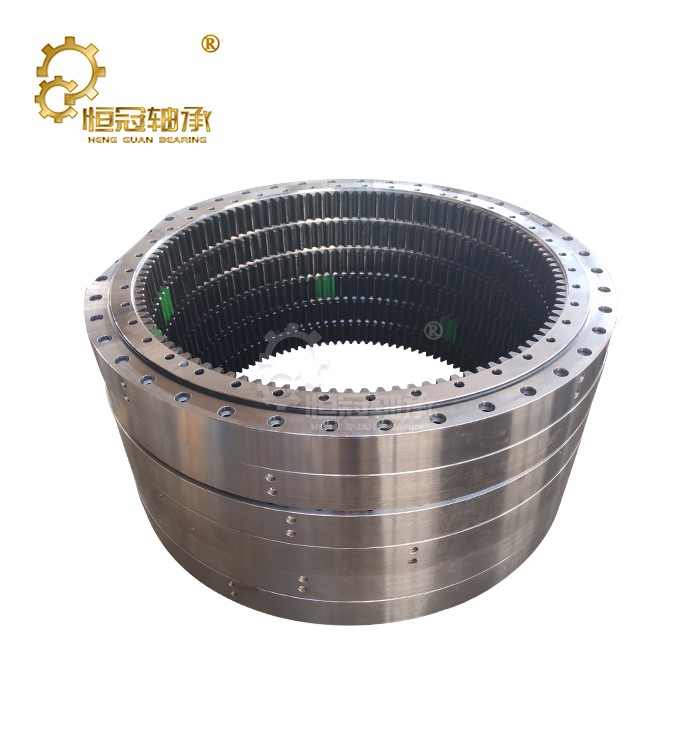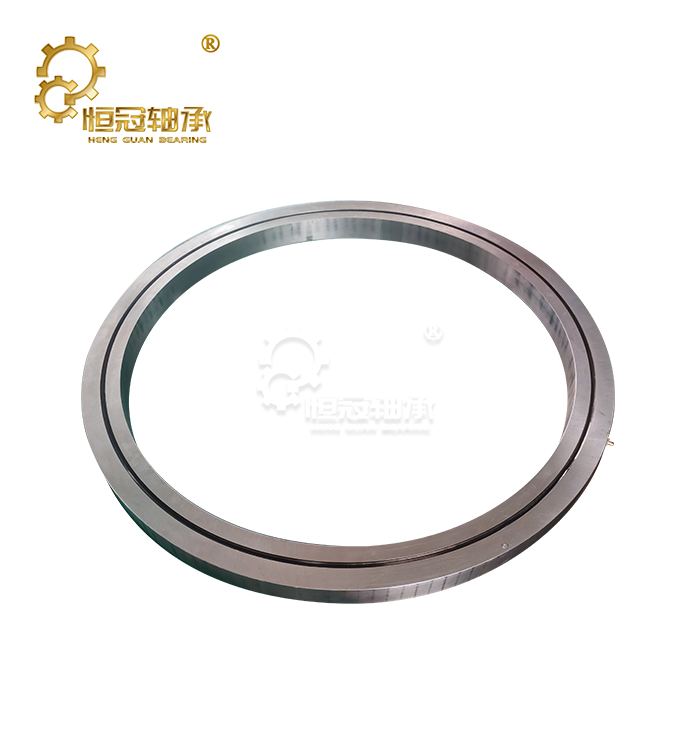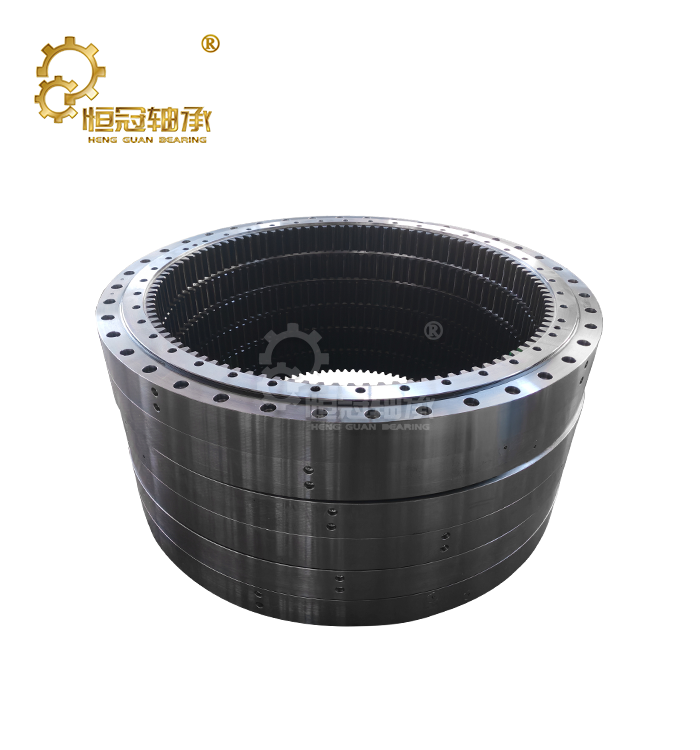




Looking for a Reliable 4 Point Contact Ball Bearing Supplier?
Finding the right 4 Point Contact Ball Bearing Choosing a provider is a critical decision for firms that want precision, reliability, and long service life from their rotating equipment. Four-point contact ball bearings offer an alternative to typical bearing solutions where space is limited yet a combined axial and radial load capacity is required. The special raceway construction allows one bearing to carry loads from several directions, simplifying bearing arrangements.
But the choice of the proper provider is not just a matter of comparing product pricing. A good manufacturer should offer constant manufacturing quality, precise machining, material control, technical assistance, and tailored solutions for special operating situations. In industries such as construction machinery, robotics, wind power equipment, and industrial automation, the supplier capacity is strongly linked to the performance and cost of maintenance for equipment.

Why Are 4-Point Contact Ball Bearings Preferred in Space-Limited Applications?
The fundamental benefit of a 4-point contact ball bearing is in its specific inner geometry. This design uses a Gothic arch raceway profile rather than just the one or two contact points of a normal bearing, allowing each ball to produce four contact points with both the inner and outer ring.
This arrangement enables the bearing to accommodate axial loads in both directions and radial loads and be compact in size. This translates into lower assembly complexity, saved installation space, and better overall system efficiency for equipment manufacturers.
Understanding the Unique Raceway Design
The raceway geometry is one of the most critical elements influencing the bearing performance. The contact angle between rolling elements and raceways is controlled by a properly constructed Gothic arch racetrack so that forces are more uniformly dispersed during operation.
A well-designed four-point contact structure serves to cut down on unwanted friction, enhance rotation stability, and provide dependable operation under variable load situations. This is especially useful in applications where equipment is regularly started, stopped, or reversed.
Manufacturers with advanced machining capabilities can achieve tighter raceway accuracy by using precision grinding, CNC processing, and careful dimensional inspection. These production controls directly impact bearing vibration levels, operating noise, and servicing reliability.
Load Performance for Demanding Industrial Equipment
Many industrial systems require bearings that can sustain combined loads without increasing the equipment size. A 4-point contact ball bearing is a suitable solution since it can handle axial loads in both directions and also modest radial forces.
Common uses include:
Lifting equipment and crane
Robots for industry
YAW AND PITCH SYSTEMS FOR WIND TURBINES
Rotary tables:
Packaging equipment
Equipment for automation
In these systems, bearing failure can lead to unplanned downtime and expensive repairs. Therefore, purchasers are usually concerned about load capacity, as well as production consistency, lubrication design, sealing performance, and supplier technical assistance.
How Do Reliable Suppliers Improve Bearing Performance and Reliability?
Selecting a bearing provider isn’t simply a case of purchasing a part. It's about finding a manufacturing partner who can keep the quality consistent with recurrent orders.
A good provider should know the relationship between material selection, machining accuracy, heat treatment, and the final bearing performance.
accuracy, heat treatment, and final bearing performance.
Material Selection and Manufacturing Control
Choosing the right material is the first step in producing quality bearings. Common bearing ring materials include high-strength alloy steels such as 42CrMo and 50Mn, offering exceptional mechanical strength and endurance for demanding applications.
High-grade bearing steel like GCr15 is commonly used to make bearing balls. Manufacturers can use precision grinding and surface treatment to get the smooth contact surfaces required for stable rolling performance.
The production techniques, in addition to the material choices, also impact the ultimate quality of the bearing. Some important steps in production include:
Production of rings or forging
Thermal Conditioning
Machining, CNC
Raceway-grinding
Assembly management
Final performance audit
Suppliers who maintain tight control over every step can decrease variability across production batches and deliver more consistent product performance.
Quality Inspection and Testing Capabilities
The reliable manufacturer of 4-point contact ball bearings must have complete inspection methods before items leave the factory.
Significant quality checks can include:
Measurement of size accuracy
Measurement of raceway profile
Hardness measurement
Surface finish assessment
Rotational testing
Testing for vibration and noise
These inspections are used to verify the design requirements of bearings and the stability of long-term operation.
For industrial customers, seeking inspection reports, material certificates, and quality paperwork before purchase can help to eliminate potential risks during installation and operation.
Comparing Four-Point Contact Bearings With Other Bearing Solutions
Distinct bearing designs, including 4 point contact ball bearing solutions, have distinct requirements for operation. Understanding these distinctions can help engineers and purchasing teams select the right solution for their needs.
Four-Point Contact Bearings vs. Angular Contact Bearings
Angular contact bearings are widely employed in applications of high-speed rotation and precision placement. However, the conventional angular contact bearings are typically required to be fitted in matched pairs in the presence of bi-directional axial loads.
In a four-point contact design this function is combined into a single bearing arrangement. This helps to simplify assembly, reduce the number of components, and preserve critical installation space.
In equipment where compact construction and multi-directional load support are important considerations, four-point contact bearings can give a more efficient design solution.
Comparing Four-Point Contact Bearings With Other Bearing Solutions
The operation of different bearing designs has varied requirements. Knowing the distinctions helps engineers and buying teams pick the most appropriate solution.
Four-Point Contact Bearings vs. Deep Groove Ball Bearings
A deep-groove ball bearing is frequently utilized due to its simple structure and strong performance of radial loads. However, they cannot handle heavy bidirectional axial loads to the same extent as specialist four-point contact systems.
When equipment requires both axial support and radial stability in a compact placement, a 4-point contact ball bearing is used. Often, one four-point contact bearing is sufficient to handle the load requirements of the application instead of extra thrust components and various bearing configurations.
This is a very essential benefit, especially in machines in which components have a limited space to be mounted, and having fewer components might facilitate maintenance.
Four-Point Contact Bearings vs. Cross Roller Bearings
Cross roller bearings are characterized by high stiffness and great rotational accuracy, which makes them ideal for precision applications like semiconductor equipment and robotic systems. However, they usually have a more complex internal structure and may require more stringent installation circumstances.
Four-point contact bearings offer a compromise of load capacity, compact size, and cost. They are frequently chosen for applications where equipment needs reliable movement control but doesn't require the exceptionally high stiffness level of cross roller systems.
These variations can be understood by purchasers, and they can select bearings according to the real operating conditions rather than only comparing products based on their specifications.
What Should Buyers Evaluate When Choosing a 4-Point Contact Ball Bearing Supplier?
The supplier is selected after a rigorous review of the manufacturing competence, technical know-how, quality management, and long-term service capacity. The provider with regular items may not always be able to match the demands of particular industrial applications.
Manufacturing Experience and Technical Expertise
A good bearing manufacturer would have real experience in manufacturing components for numerous industries and operating situations.
Important elements to review include:
Decades of experience in bearing manufacture
Production Equipment Capacity
Engineering team capabilities
Quality management processes
Experience with custom specifications
Experienced manufacturers know diverse applications provide different obstacles. For example, in crane applications, the bearing may need to withstand large loads, whereas the bearing in automation equipment may demand superior rotation precision and lower vibration.
A provider with sound engineering knowledge can suggest acceptable materials, internal structures, lubrication systems, and sealing alternatives based on the actual working conditions.
Customization Capability for Special Applications
The needs of each machine design are not always met by standard bearing dimensions. In these circumstances, the supplier’s choice is mainly driven by its customization capability.
Professional manufacturers should be able to support modifications, including:
Different bearing sizes
Modified raceway designs
Custom sealing solutions.
Special cage constructions
Alternative material options
Special lubrication requirements
OEM equipment manufacturers who need bearings to be embedded in customized mechanical systems will find the customization aspect comes in handy.
A supplier that can offer engineering cooperation can help customers avoid unnecessary redesigns and increase overall equipment reliability.
Production Capacity and Delivery Reliability
Another crucial consideration for industrial purchasers is the ability to supply stably. Production delays can impact timetables for manufacture, assembly of equipment, and pledges to deliver to customers.
When assessing suppliers, companies should consider the following:
Capacity of factories' production
Ability to control inventory
Production lead times
Consistency in bulk order quality
A good supplier will have efficient production methods and will make sure quality standards are at the same level for smaller trial orders as for high-volume production.
For international buyers, export experience and skilled paperwork support are particularly vital, as they help ensure smoother procurement processes.

Quality Assurance and After-Sales Support for Long-Term Cooperation
Purchasing a 4 point contact ball bearing is not the end of the supplier relationship. Long-term equipment performance depends on continuous technical support, quality follow-up, and effective communication.
Verification Before Shipment
Before bearings are delivered, professional suppliers should complete detailed verification procedures.
Typical checks include the following:
Material inspection reports
Dimensional inspection records
Hardness test results
Performance evaluation documents
Packaging protection verification
These records provide buyers with confidence that products meet the required specifications before installation.
For critical industrial applications, suppliers that provide complete documentation can help customers improve traceability and quality management.
Technical Support During Installation and Operation
Proper installation has a direct influence on bearing service life. Incorrect mounting methods, insufficient lubrication, contamination, or excessive loading can shorten operating performance.
A dependable supplier should provide guidance related to:
Installation methods
Lubrication recommendations
Operating conditions
Maintenance schedules
Troubleshooting solutions
Technical support is particularly valuable for companies using bearings in complex equipment because it helps prevent avoidable failures and reduces downtime.
Building a Long-Term Supplier Partnership
The best supplier relationships are based on continuous cooperation rather than one-time transactions.
Long-term partnerships allow manufacturers and customers to improve products through:
Performance feedback
Application optimization
Product development cooperation
Process improvement
When suppliers understand customers’ equipment requirements and operating challenges, they can provide more effective bearing solutions over time.
For companies purchasing industrial components regularly, working with a technically capable supplier can improve supply stability, reduce procurement risks, and create better overall value.
Procurement Tips for Purchasing 4-Point Contact Ball Bearings
A structured purchasing process helps companies avoid quality problems and select suppliers that can support long-term business requirements.
Confirm Technical Requirements Before Ordering
Before requesting quotations, buyers should clearly define their application requirements, including:
Bearing dimensions
Load conditions
Rotation speed
Operating environment
Temperature conditions
Lubrication requirements
Expected service life
Providing accurate technical information allows suppliers to recommend suitable products and prevents performance issues caused by incorrect selection.
Evaluate Total Cost Instead of Only Unit Price
The lowest purchase price does not always represent the lowest overall cost. Poor-quality bearings may lead to the following:
Frequent replacement
Production downtime
Additional maintenance expenses
Equipment reliability problems
A higher-quality bearing with stable performance can provide better value throughout its operating life.
When comparing suppliers, buyers should consider product quality, technical support, delivery reliability, and after-sales service together.
Request Professional Documentation
Before confirming cooperation, buyers should request relevant technical documents, such as:
Product specifications
Material certificates
Inspection reports
Quality certificates
Test records
These documents help verify supplier capability and provide important references for future maintenance and quality control.
Conclusion
To find a dependable 4-point contact ball bearing provider, you need to look at their technical skills, quality processes, and customer service. Four-point contact design gives these bearings special benefits that make them necessary for modern industrial uses that need to save space and handle a variety of loads. Long-term relationships with providers who show consistent quality, responsive support, and a dedication to ongoing growth are key to successful procurement strategies. By knowing the differences between these specialized bearings and using thorough source evaluation methods, procurement workers can get the best results for both short-term purchases and long-term operations.
When selecting a supplier, companies should focus on more than product availability. A manufacturer with strong engineering capability, strict quality control, customization experience, and reliable after-sales support can provide greater confidence throughout the entire product lifecycle.
For businesses looking for a stable 4 point contact ball bearing supply partner, working with an experienced manufacturer helps reduce procurement risks and ensures that bearings continue to perform reliably in demanding industrial environments. A professional supplier can support not only current purchasing needs but also future equipment upgrades and long-term cooperation.
|
|


FAQ
1. What makes 4 Point Contact Ball Bearings different from standard angular contact bearings?
The main difference is in the shape of the track and the way the contacts are set up. Standard angular contact bearings only make contact between the balls and the raceways at one point, so they need to be paired up to handle axial loads going in both directions. Gothic arch raceways in four-point contact designs make it possible for four separate contact points per ball. This means that single-row bearings can handle axial loads in both directions as well as rotational loads at the same time.
2. How do I determine the right precision grade for my application?
The choice of precision grade depends on the rotational accuracy needs of your product and the situations under which it will be used. The P6 grade is good for general business uses that don't need a lot of accuracy. The P5 grade makes machine tool wheels and robotic equipment more accurate. For military uses and ultra-precise positioning systems that need the most accuracy, the P4 grade is the best choice.
3. What sizes of diameters do four-point contact ball bearings come in?
These days, makers make diameters ranging from 50mm to 10,000mm, so they can be used for a wide range of tasks, from small, precise instruments to huge industrial turntables. This wide range makes sure that there are choices that work for wind turbines, building tools, medical equipment, and specialized automation systems in many different fields.
4. How can I be sure of the quality of the bearings before I put them?
Reviewing the material certificate, dimensional inspection records, and performance test documents should all be part of quality control. Quality signs can be seen right away by looking at the surface finish, the stability of the cage, and the correct application of lubrication. Reliable providers give full test results that include checking the load capacity, measuring the noise level, and making sure the geometry is correct.
Partner with Heng Guan for Premium Bearing Solutions
Heng Guan Bearing Technology makes high-quality 4 Point Contact Ball Bearing solutions engineered for demanding industrial applications. Located in Luoyang's renowned bearing manufacturing hub, we combine decades of expertise with advanced production capabilities to serve global customers across construction, mining, automation, and precision equipment sectors. Our comprehensive diameter range from 50mm to 10,000mm, precision grades P4 through P6, and custom engineering capabilities ensure optimal solutions for your specific requirements. Contact our technical team at mia@hgb-bearing.com to discuss your four-point contact ball bearing supplier needs and find out how our proven production excellence can improve the performance and stability of your operations.
References
1. Harris, Tedric A., and Michael N. Kotzalas. "Advanced Concepts of Bearing Technology: Rolling Bearing Analysis, Fifth Edition." CRC Press, 2006.
2. Palmgren, Arvid. "Ball and Roller Bearing Engineering: Third Edition." SKF Industries Inc., 1959.
3. Eschmann, Paul, Ludwig Hasbargen, and Karl Weigand. "Ball and Roller Bearings: Theory, Design and Application, Second Edition." John Wiley & Sons, 1985.
4. ISO 492:2014. "Rolling bearings - Radial bearings - Geometrical product specifications (GPS) and tolerance values." International Organization for Standardization, 2014.
5. Hamrock, Bernard J., and William J. Anderson. "Rolling-Element Bearings." NASA Reference Publication 1105, 1983.
6. Zaretsky, Erwin V. "Rolling Bearing Life Prediction, Theory, and Application." NASA Technical Publication 215928, 2013.

WHAT OUR CUSTOMERS SAY
Here is the customer's evaluation of us